by Skip Via
skip@westvalleynaturalists.org
Editor’s note: This article is a followup to this article from August 2024. The many uses of hemp are discussed in detail in that article.
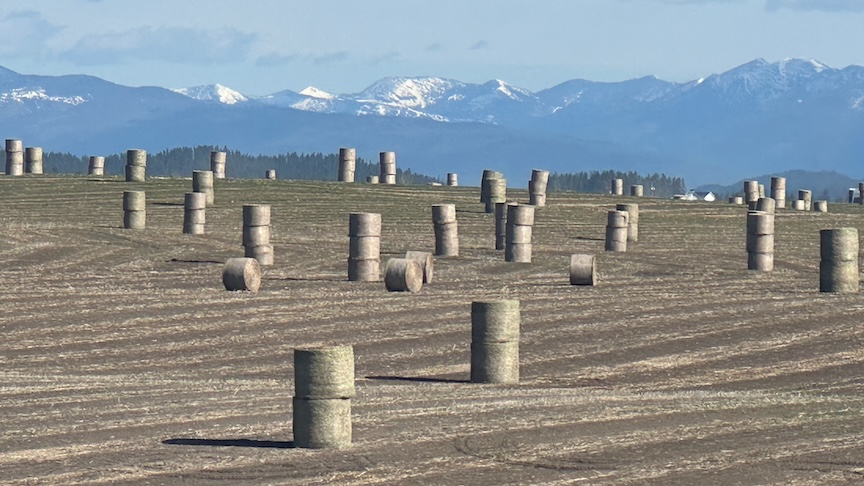
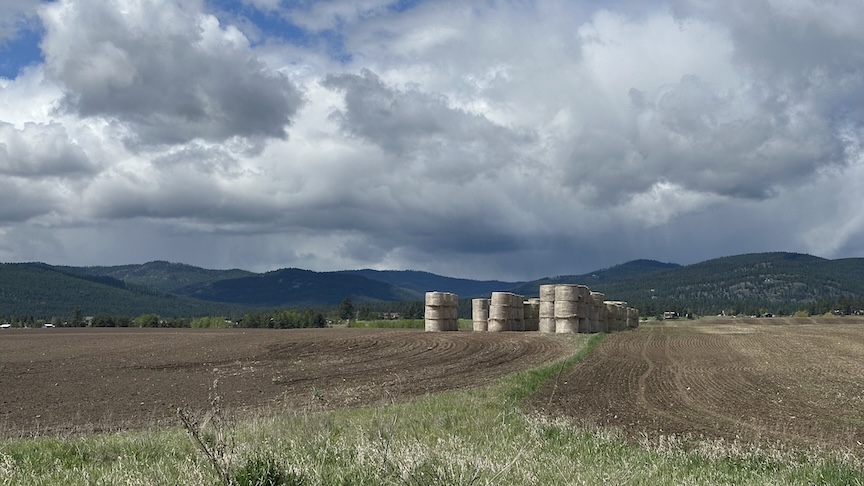
If you have driven down West Valley Drive north of West Reserve this spring, you have probably noticed the large number of hemp bales in the fields on either side of the road near the intersection with Coclet.. There are only two hemp growers in the valley and this operation of about 400 acres total between the two fields is one of them.
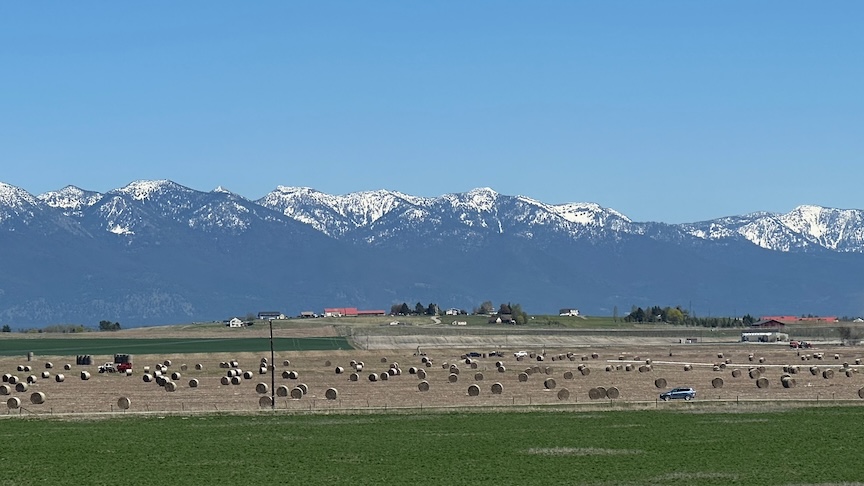
While a small amount of the hemp was baled last fall, the vast majority of it sat in the fields all winter. At the end of April, windowing and baling began. This post explains why, below.
There were an estimated 2800 bales of hemp when the process was completed during the second week of May. At some point in the near future, the stacked bales will be loaded on flatbed trucks and be transported to Ft. Benton to be processed there. (See this earlier post for more information.) One flatbed truck can hold 40 bales, so that is a lot of truckloads. As of this writing, the bales have been stacked and moved aside to make way for this season’s plowing and planting.
The outside hemp fibers can be used for things like hempcrete or insulation and the inside–called hurd–can be used for things like animal bedding. The hemp had 0.3% THC when it was harvested and by now the THC content is probably 0.0%. And for those who are curious, any marijuana in Montana must be grown inside. You will never see marijuana growing in the fields in West Valley.
After the hemp is cut in late summer, the stalks lie in the field and are stiff and solid. Microbes work to separate the bonds that hold the stalks together. But the microbes only work if the hemp stays moist. So to encourage microbial action, irrigation must continue into the fall even though the hemp has been cut down. The hemp being baled this spring looked quite dry.
This year the West Valley fields will be full of canola but another hemp crop is possible in the coming years.
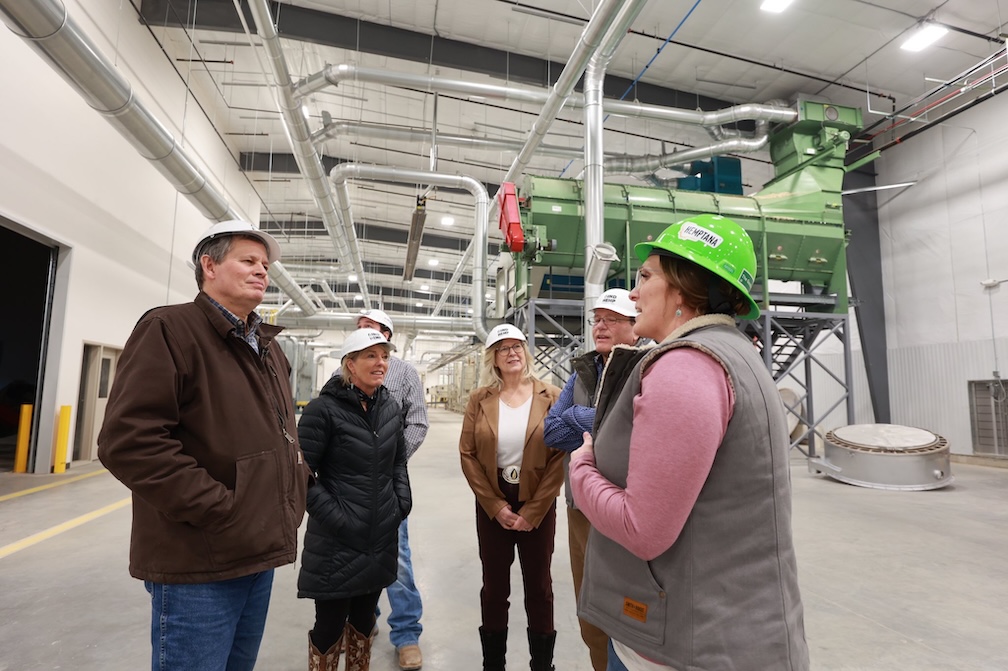
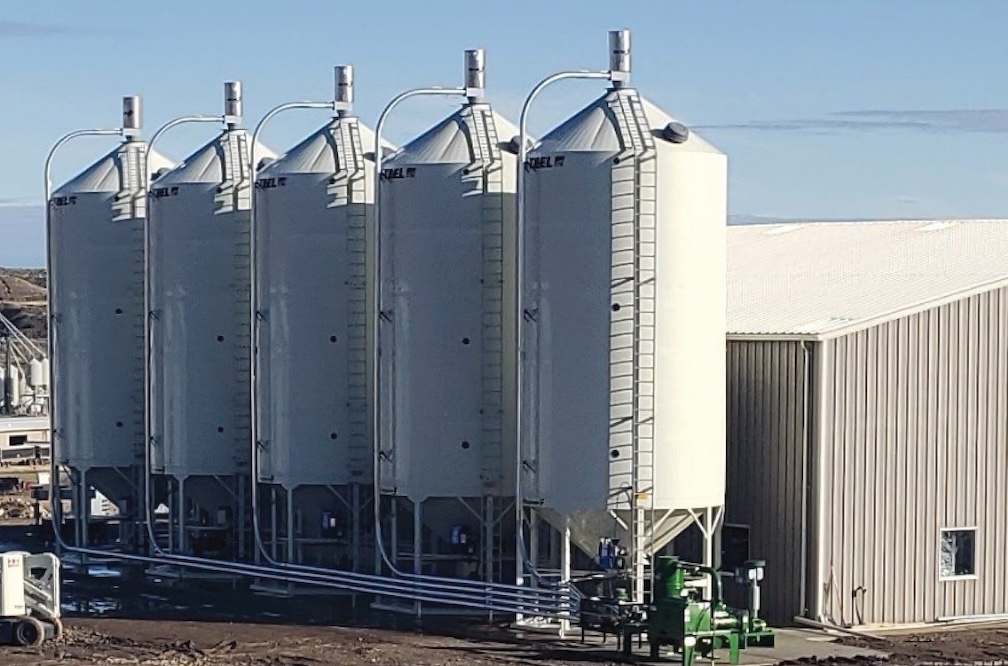
The following images are of the Ind Hemp processing facility at Ft. Benton, Montana. Their story is quite interesting and worth learning more about.