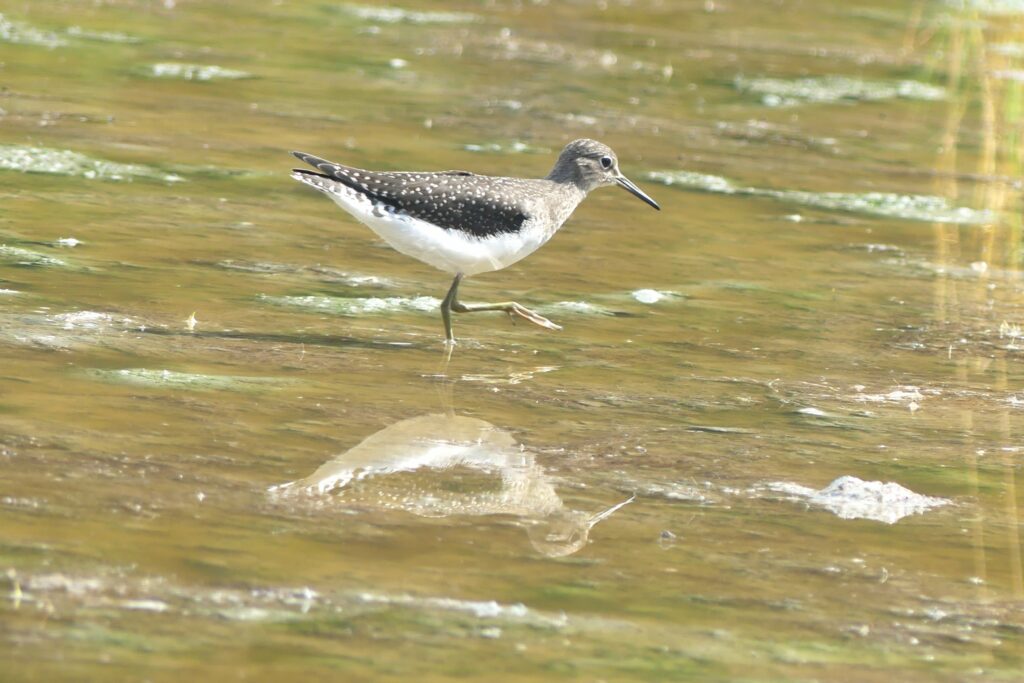
Solitary Sandpiper at Bowser Lake in West Valley on August 8, 2026
During the first three weeks in August, I was drawn to visit Bowser many times to observe the early-migrating Shorebirds as they arrived and departed and to learn how this small saline lake attracted them. Read on to enjoy the little-known activity.
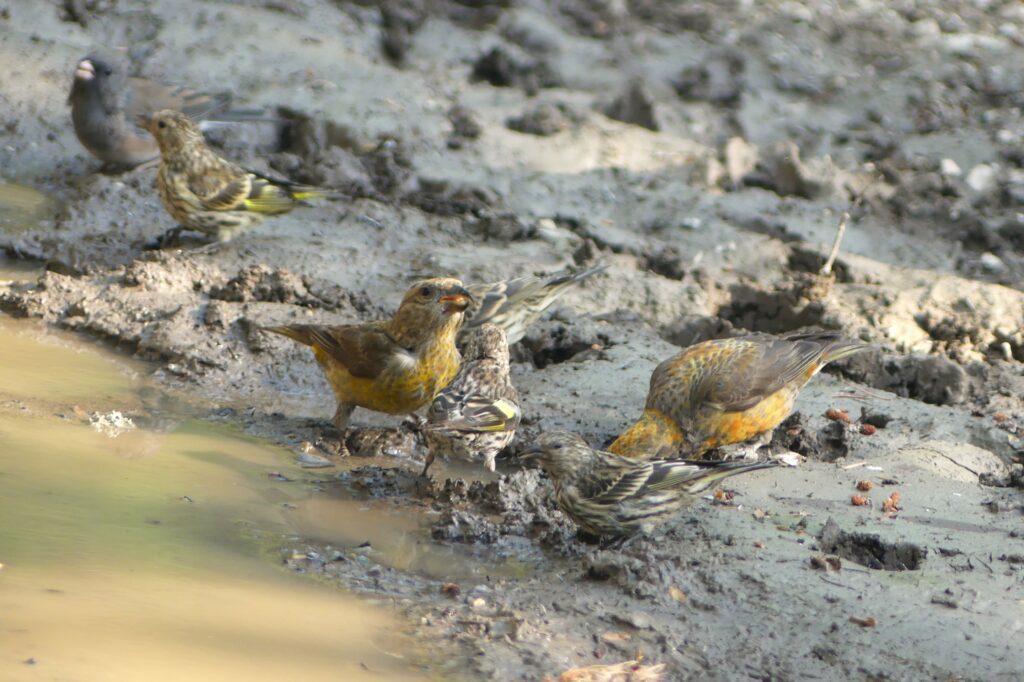
Thirsty birds taking advantage of a puddle in the woods 8.26.25
Birds use water much as people do: they drink it to rehydrate; they bathe in the same pool they drink from. They are seen introducing their offspring to puddles. Somehow, they seem to communicate about water sources and appear to plan a gathering there. I’ve been delighted, amazed, and delayed by coming upon a gathering of birds at their “oasis”. Read on to see some of the sights I’ve observed as I walk in natural areas.
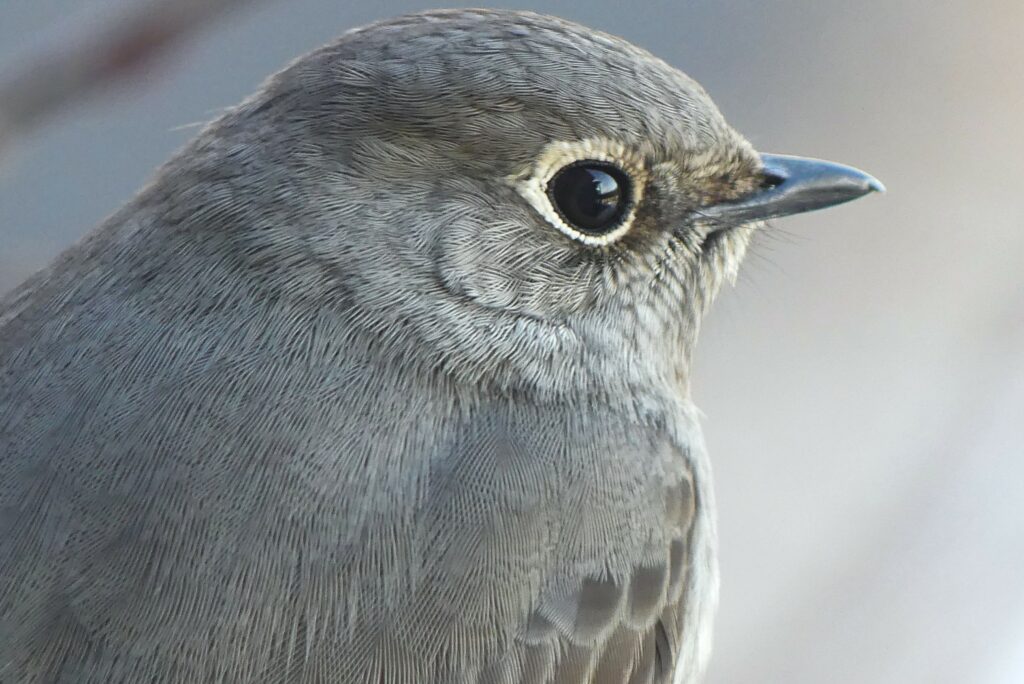
This Townsend’s Solitaire’s bright white eye rings are what helps many birders recognize the species in a flash. Many other birds have a similar feature that not only help people, but other birds to identify others of their kin. Read on to see a number of variations of this feature.
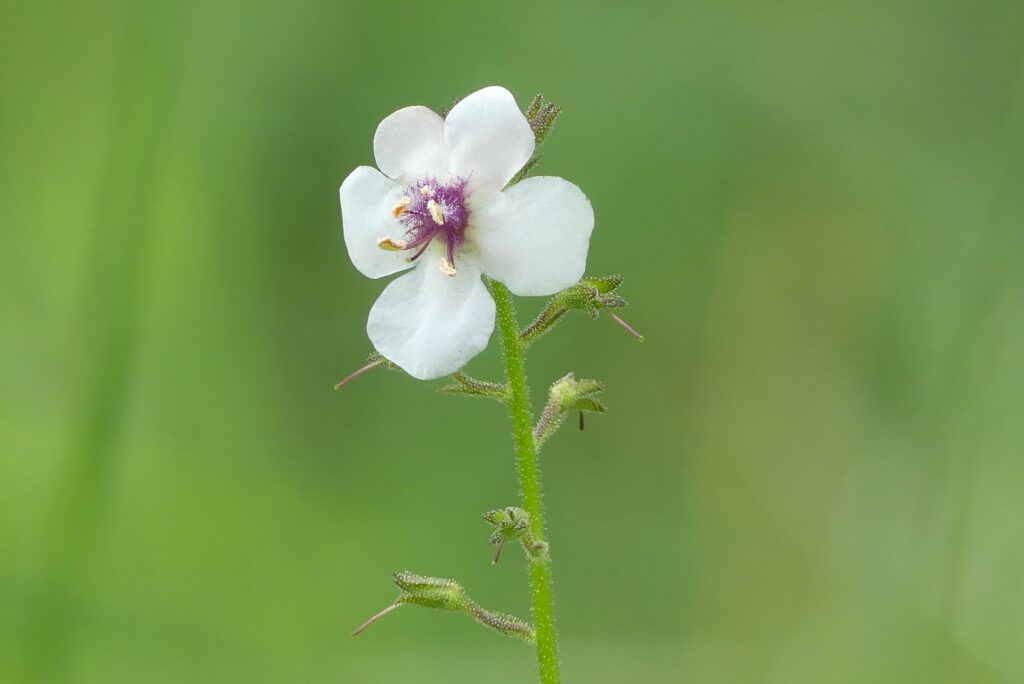
There are two species of Mullein in the West Valley; both are non-native plants with potential for spreading extensively. Read on to see images of both and to learn about their characteristics.
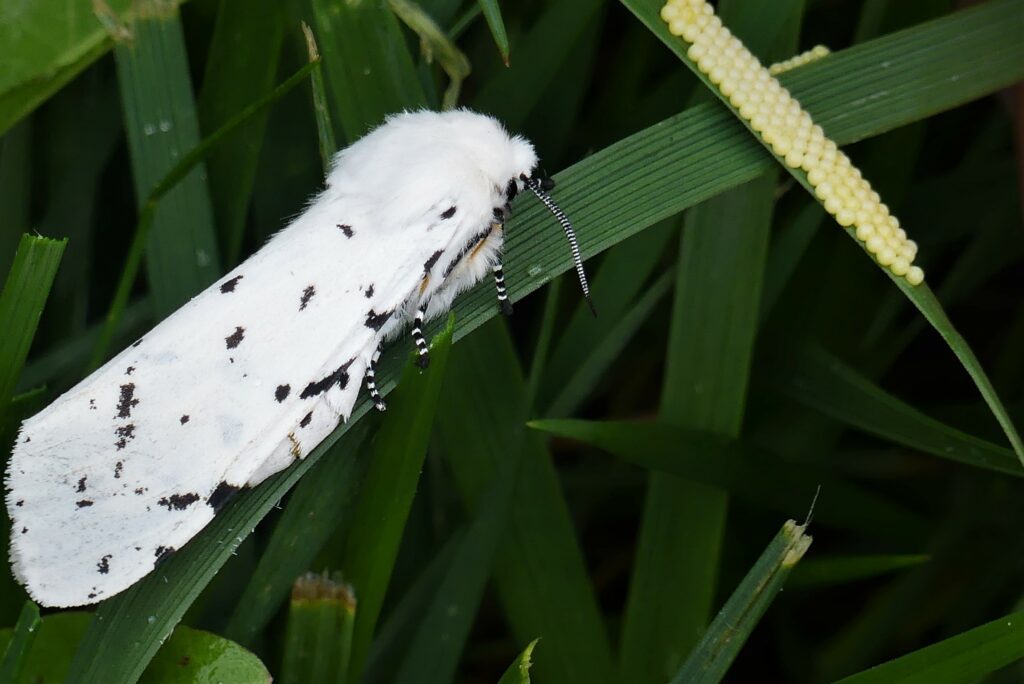
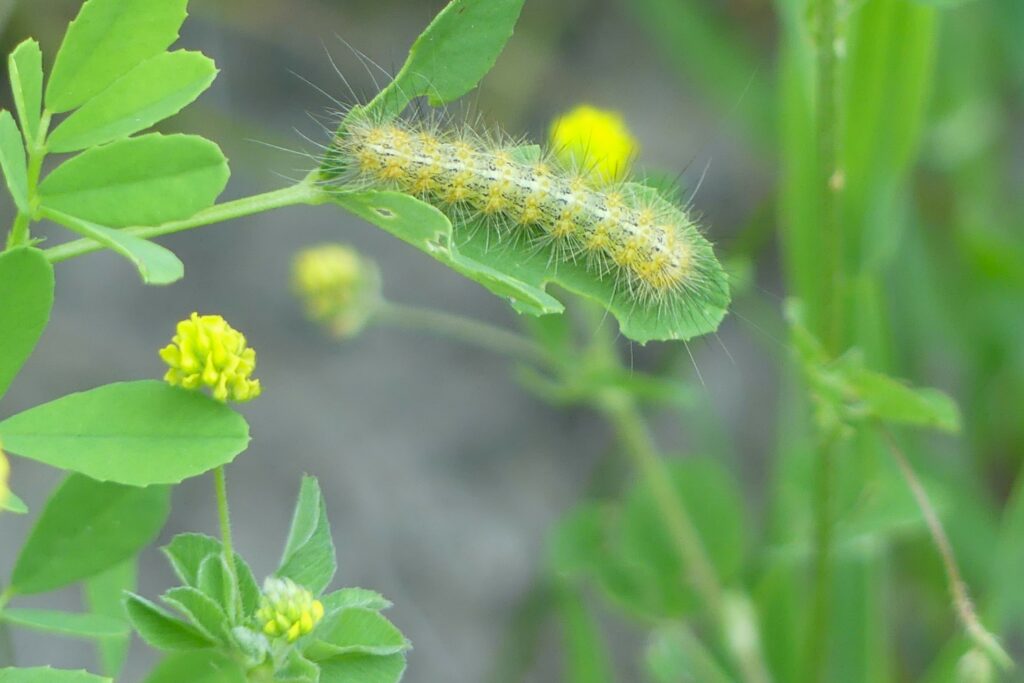
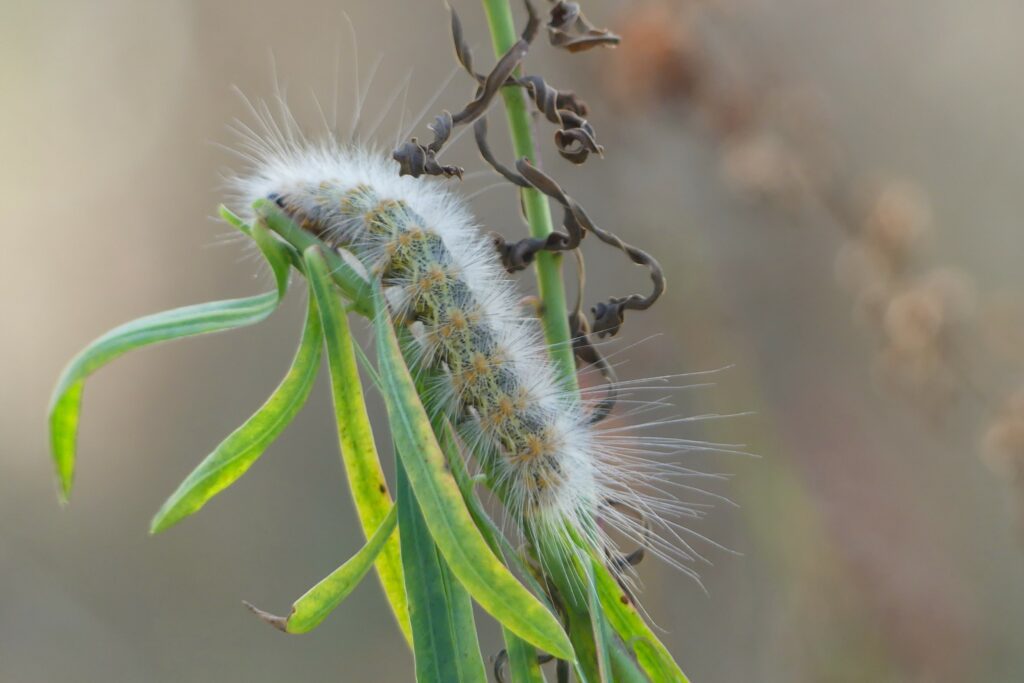
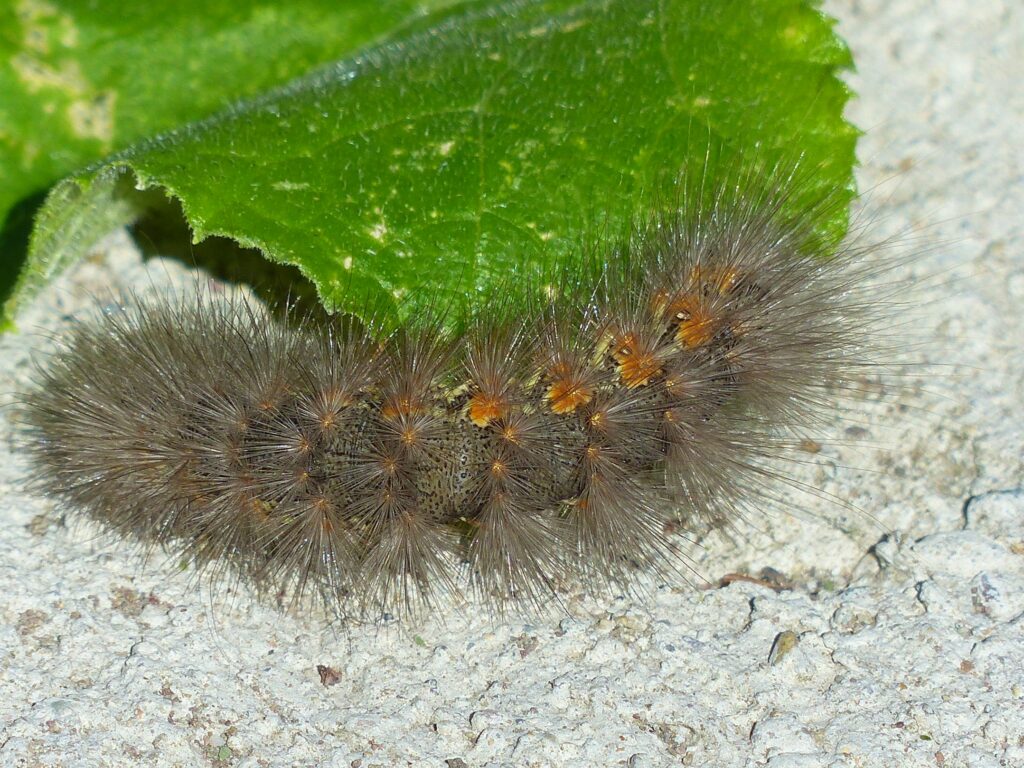
Saltmarsh Moth with eggs and three views of Saltmarsh Moth caterpillars
Connecting a caterpillar you find with its parent butterfly or moth is an interesting puzzle. Read on to see some of the connections I have made in the West Valley.
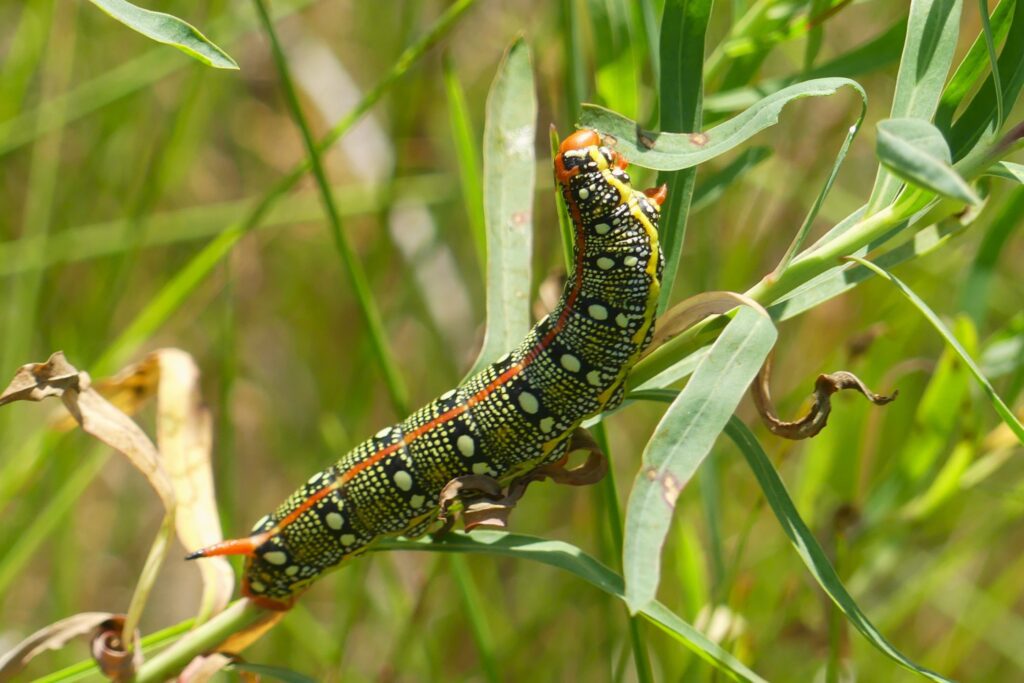
My first sight of Euphorbia esula, Leafy Spurge, in the West Valley was thanks to this caterpillar as I walked through an abandoned field. This 3 1/2 inch caterpillar’s appearance entranced me! Curiosity pulled me headlong into research and the information that follows.
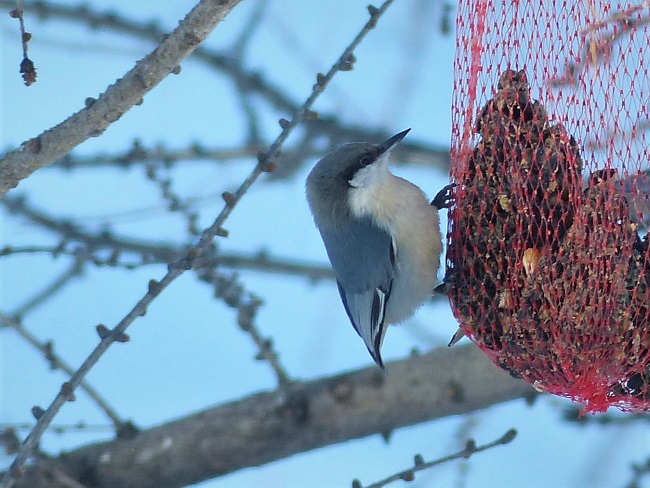
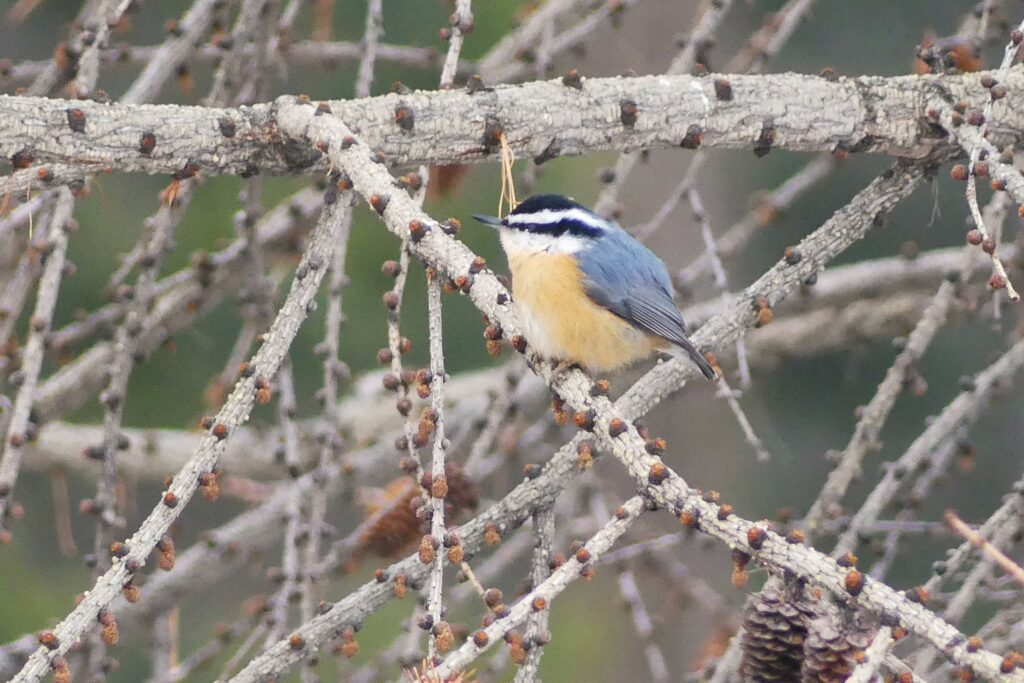
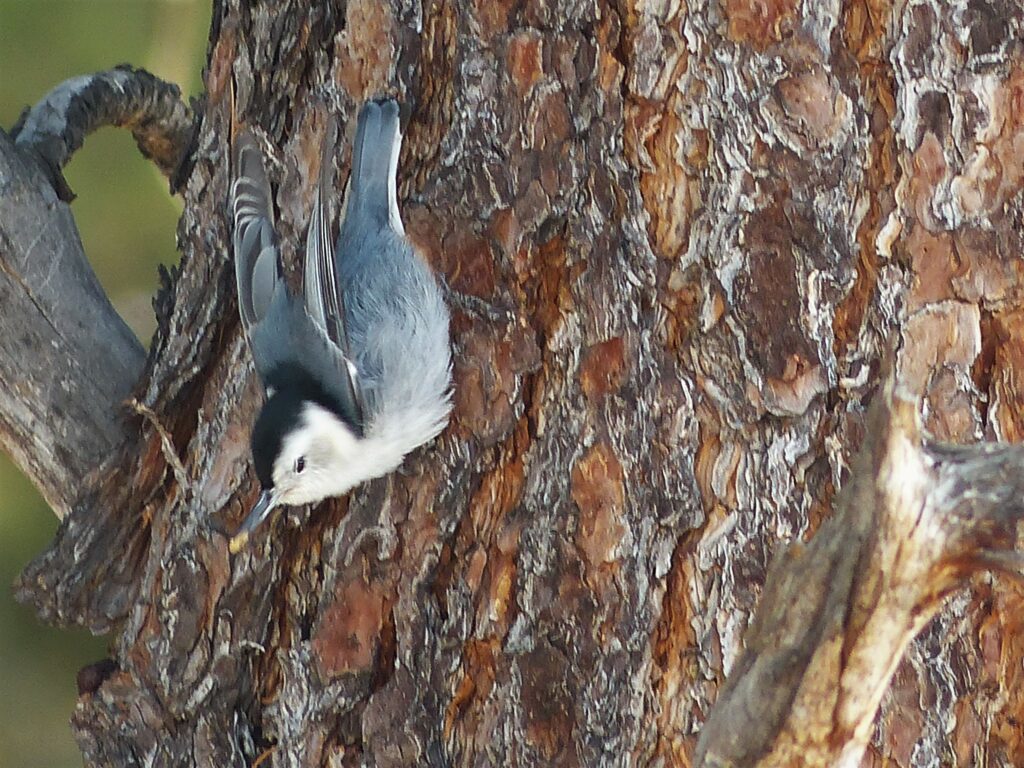
The Pygmy, Red-breasted, and White-breasted Nuthatches are very familiar here in the West Valley. Tiny, acrobatic, vocal birds that usually stay here year ’round, they are fun to watch. Read on to see what I have discovered about their unique gifts.
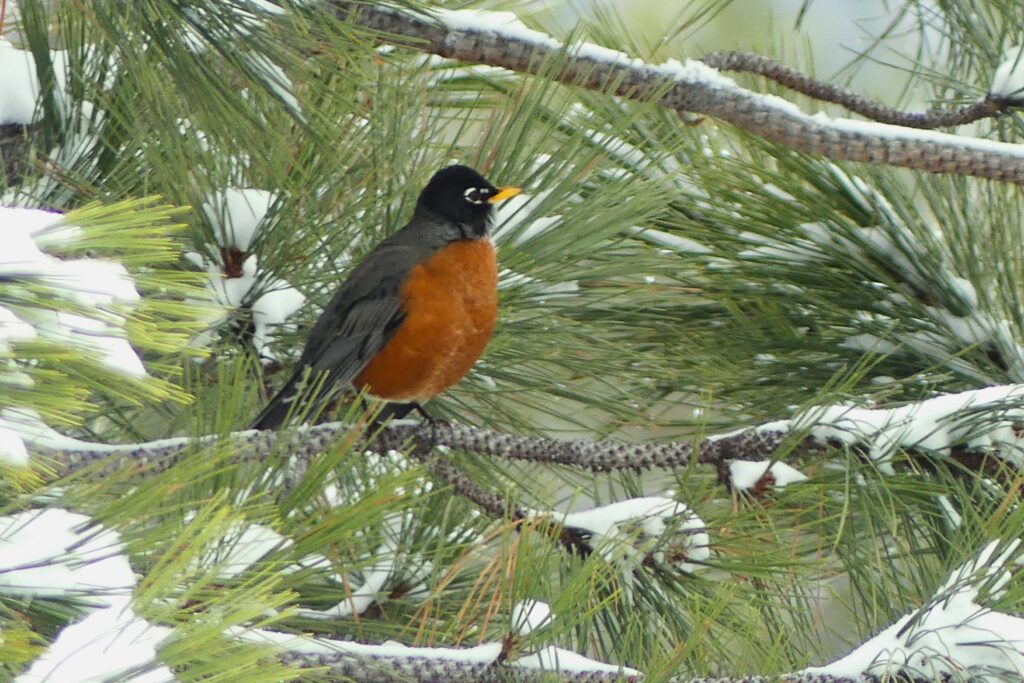
The American Robin may be the most familiar of the Thrush (Turdidae) family of birds. We used to think of their arrival as a sign that winter was over, but more recently, they have become a common sighting year ’round. In addition to pulling earthworms out of thawed earth and capturing a great variety of other insects, Robins feed on Juniper cones as well as frozen fruit and berries when the ground is frozen. Read on for more stories and pictures about members of the Thrush family that I’ve seen in the West Valley.
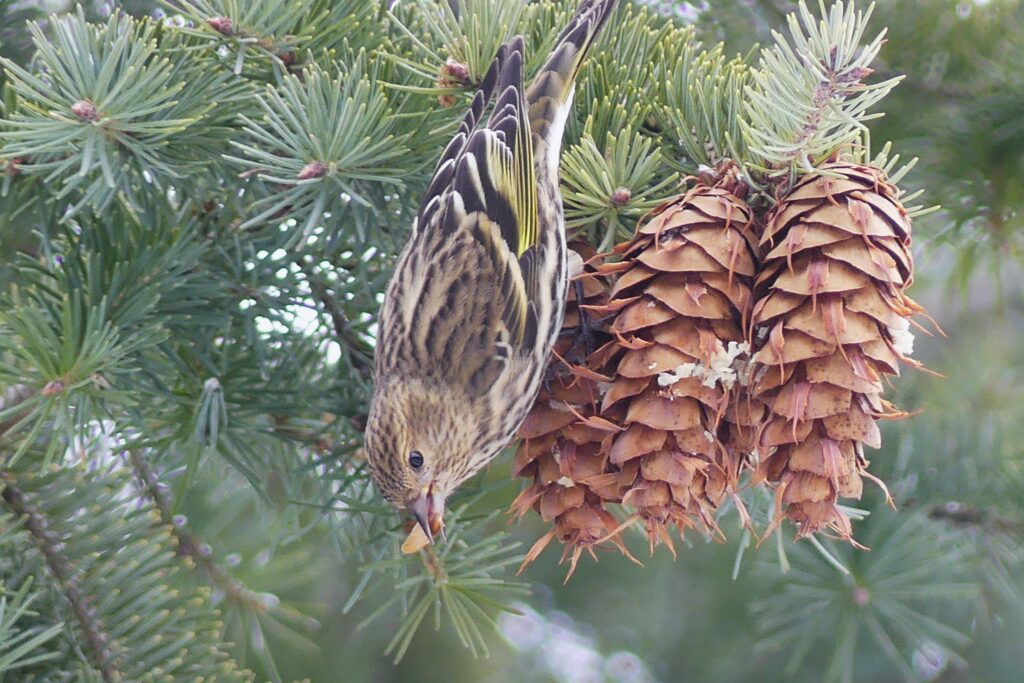
Pine Siskins are nomadic little finches that wander the northern hemisphere, taking advantage of plentiful food supplies. This has been a “cone year” in our area, and the Pine siskins have been abundant. Gregarious little birds, they travel in flocks of up to 1000, their high-pitched chatter announcing their presence. Some years we don’t see them at all; other times, the Christmas Bird Count reports their numbers in the thousands.
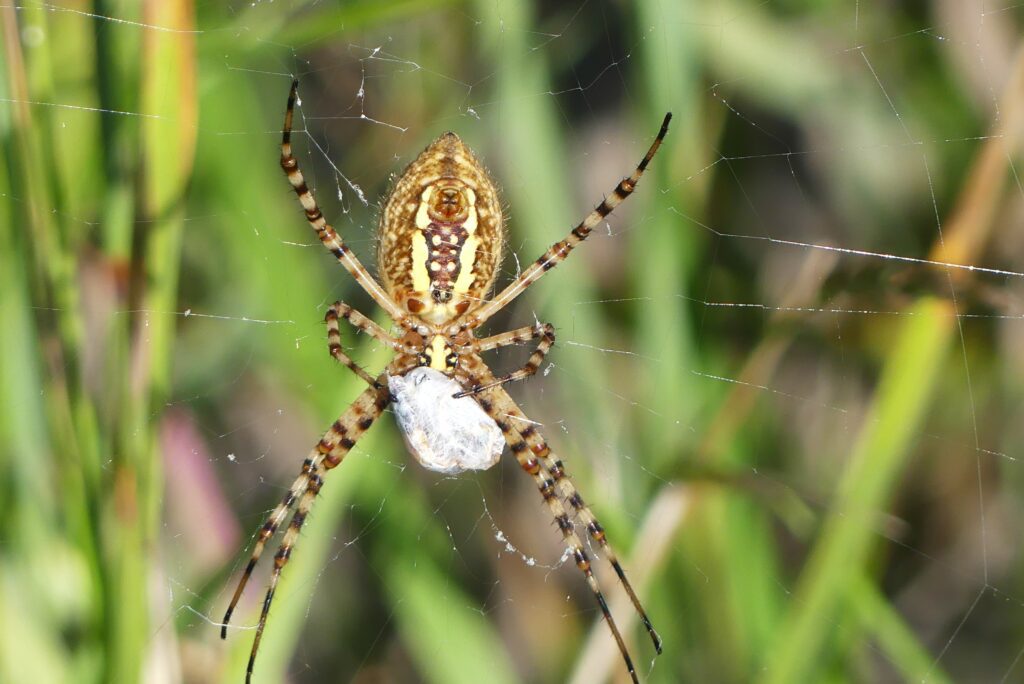
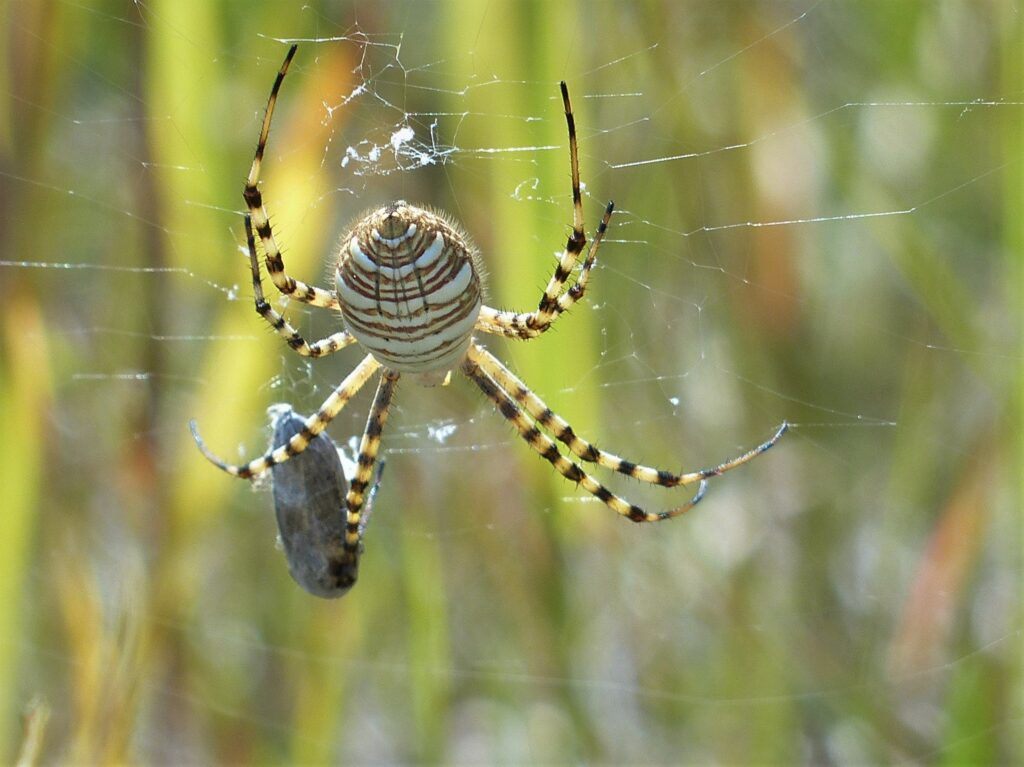
Spiders can be called creatures of one summer that hatch or emerge from diapause as the weather warms and reach maturity in late summer. These predatory insects employ various means to capture their prey.
The large Banded garden Spider lays in wait at the edge of the web; when it senses an insect in their web, it attacks with a bite that stuns the prey and liquifies their inner parts. It encases the stunned insect cocoon-like before devouring the liquid nutrients.
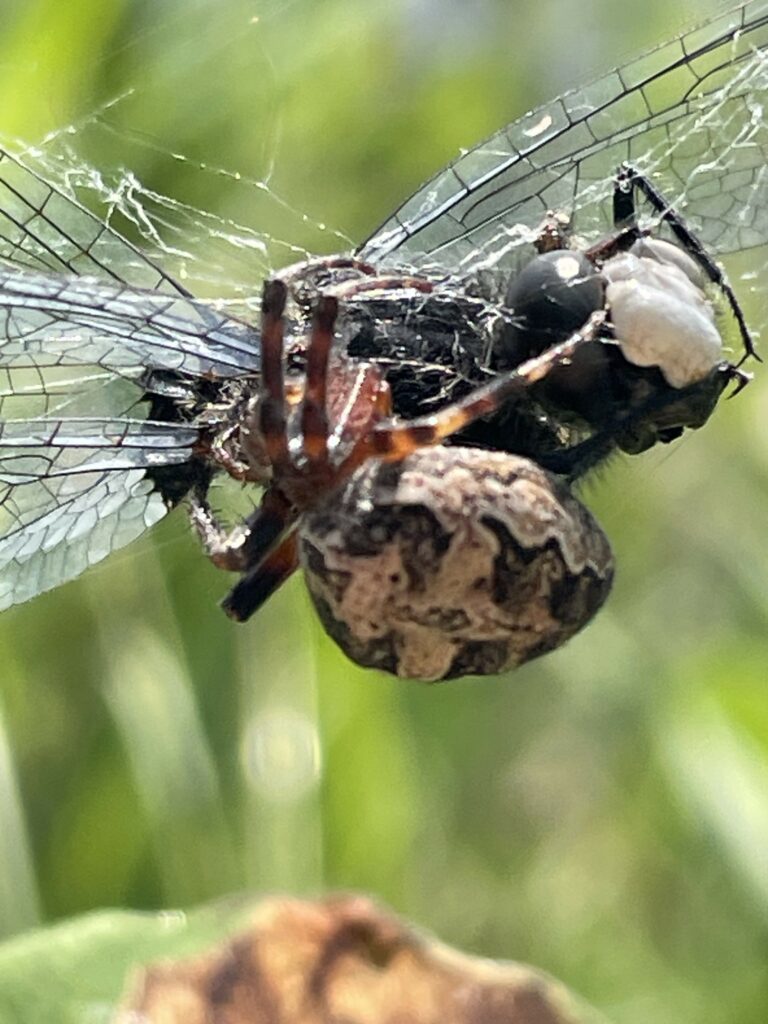
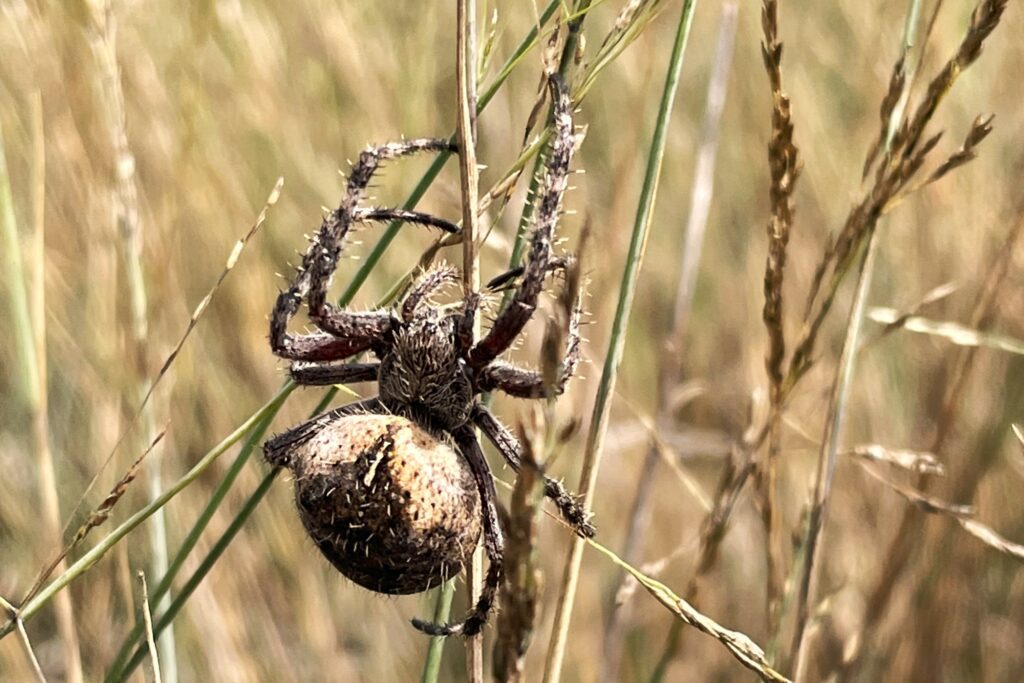
Bordered Orb weaver Spider with dragonflyOrb Weaver in grass
All of the above Orb weavers catch their prey in a trap they spin.
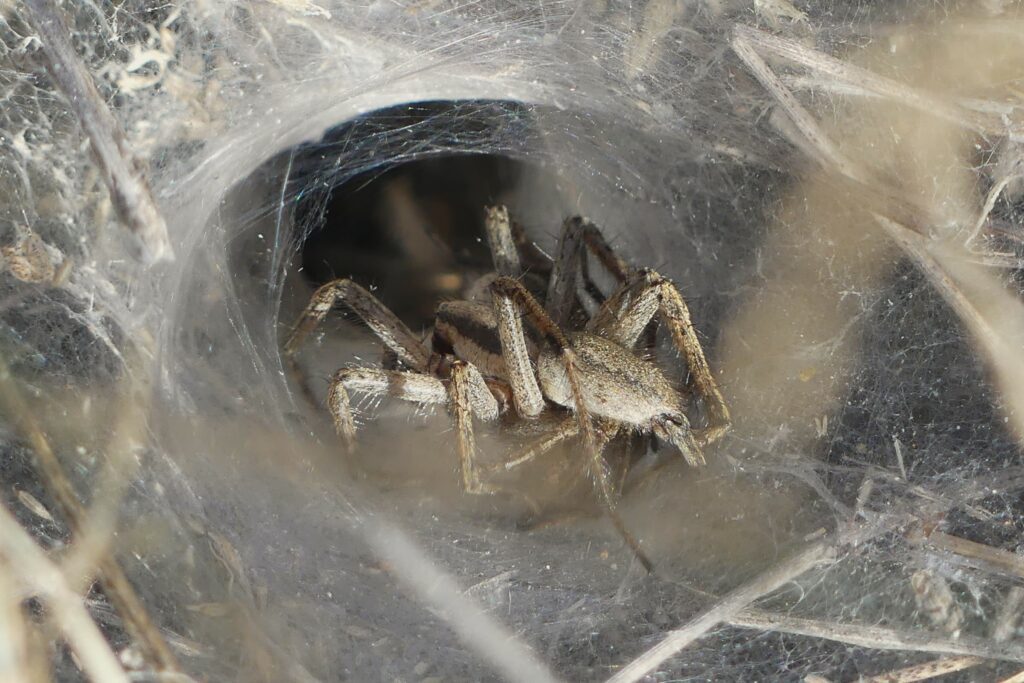
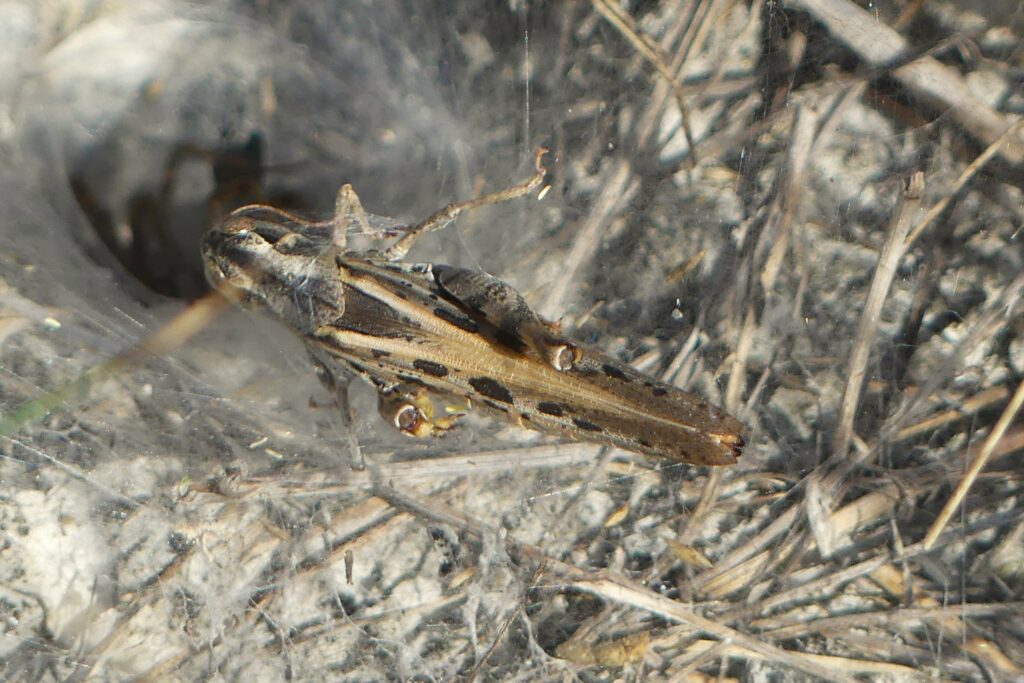
Funnel-web Spider Clear-wing Grasshopper in funnel web
The Funnel-web spider spins a sheet-like web shaped like a funnel on the ground. The spider usually lies in wait at the end of the tube; when an insect becomes entangled, it pulls the prey down into the ground where it devours it.
White-banded Crab Spider
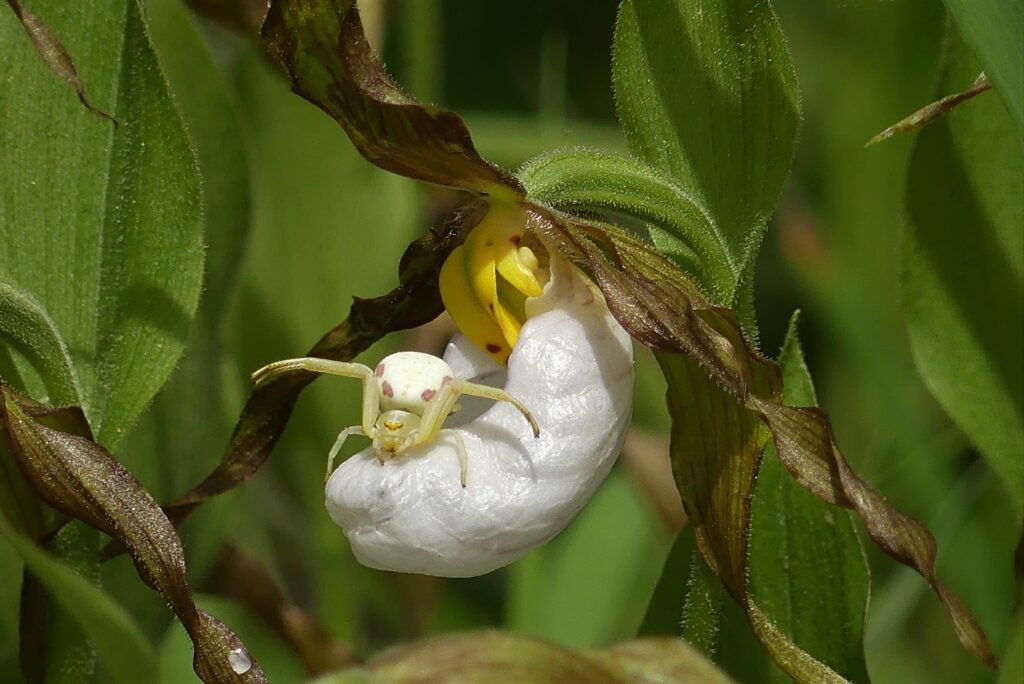
Crab spiders, sometimes called ambush bugs, lie on a flower in wait for an insect to visit the plant. When the visitor becomes engrossed in its work, the Crab spider dashes in and paralyzes the insect with venom in its bite.
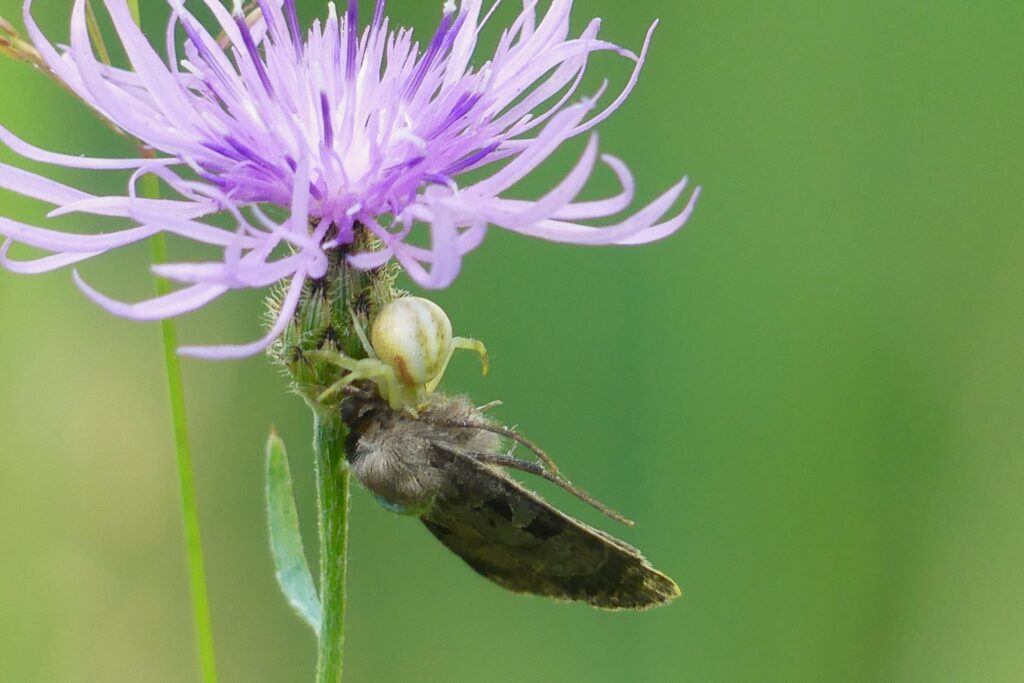
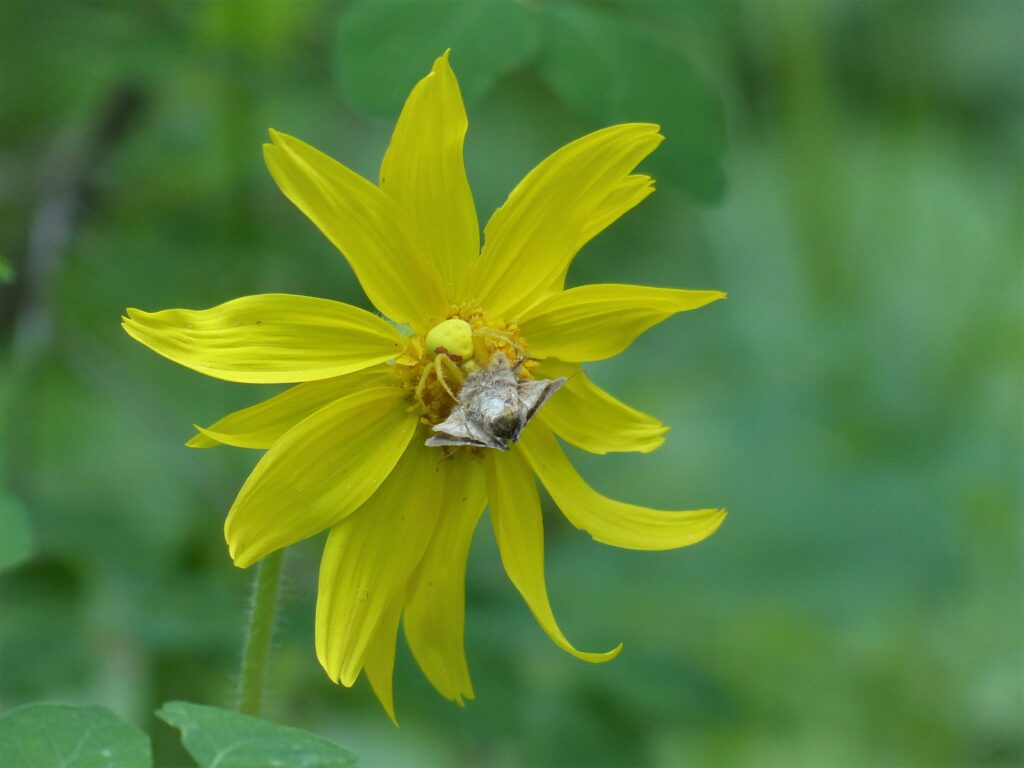
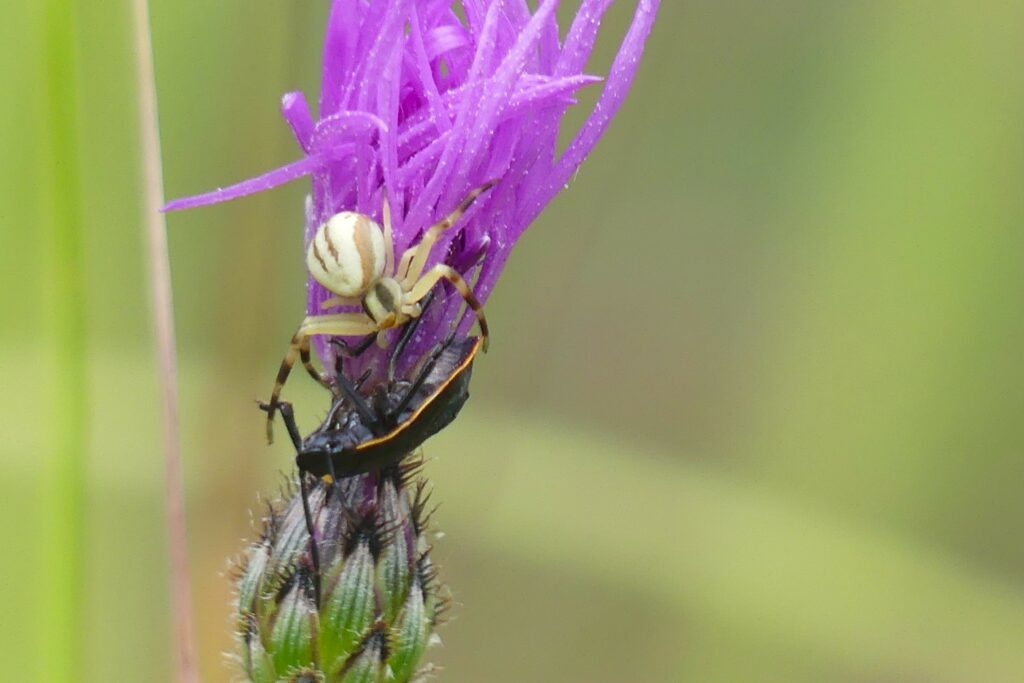
Goldenrod Crab Spider with mothGoldenrod Crab Spider with Bordered plant bugMountain Lady’s Slipper with Goldenrod Crab Spider
Goldenrod Crab spiders are able to change color to match the flower it chooses. It takes a few hours after it arrives at the flower where it will spend time in wait. Most of the Goldenrod Crab spiders I have seen were colored like the one on the Spotted Knapweed, regardless the color of the flower.
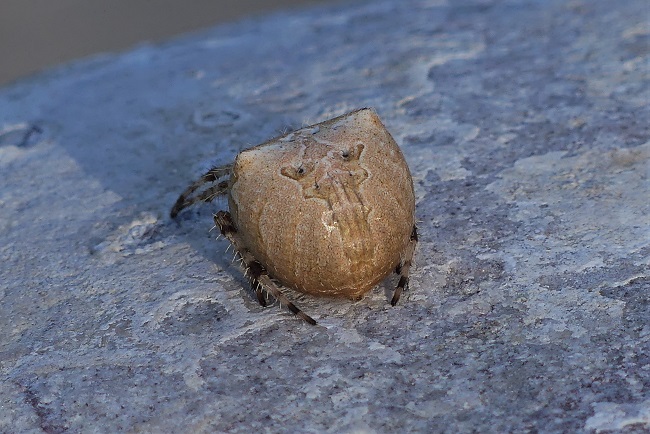
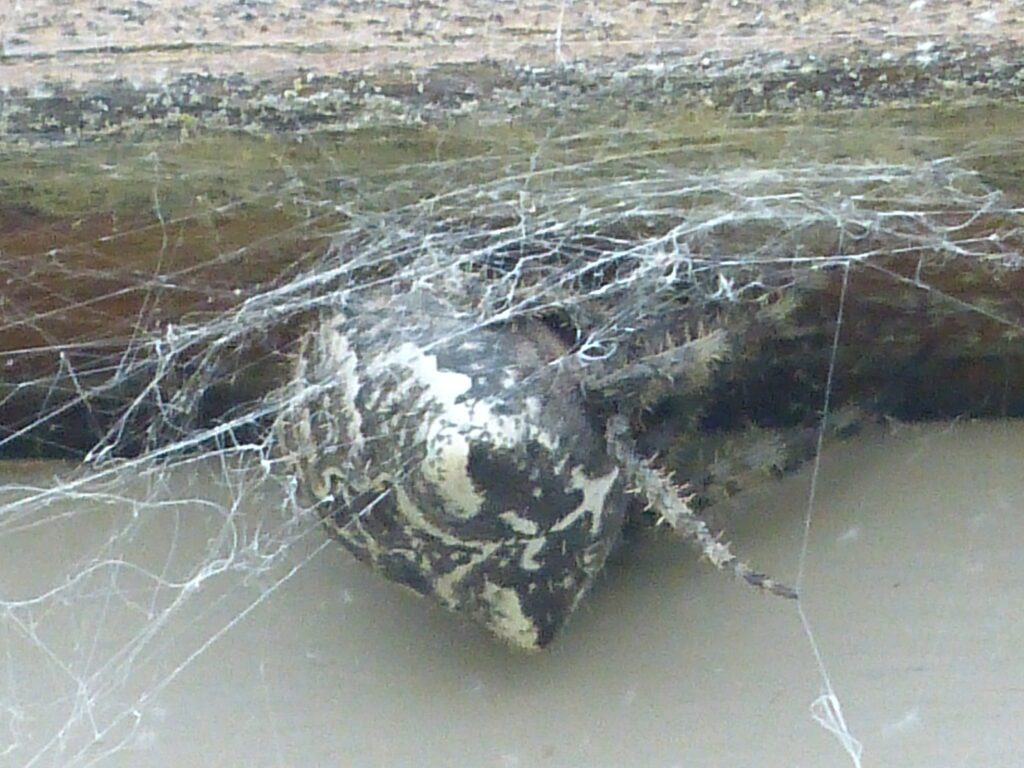
Cat-faced SpiderCat-faced Spider in web
The Cat-faced spider at right was gone the next time we checked this web site under a window sill. In its place was an egg sac. These spiders die after laying their eggs, just before a hard frost. The eggs will hatch in spring and live to predate on other insects around the house.
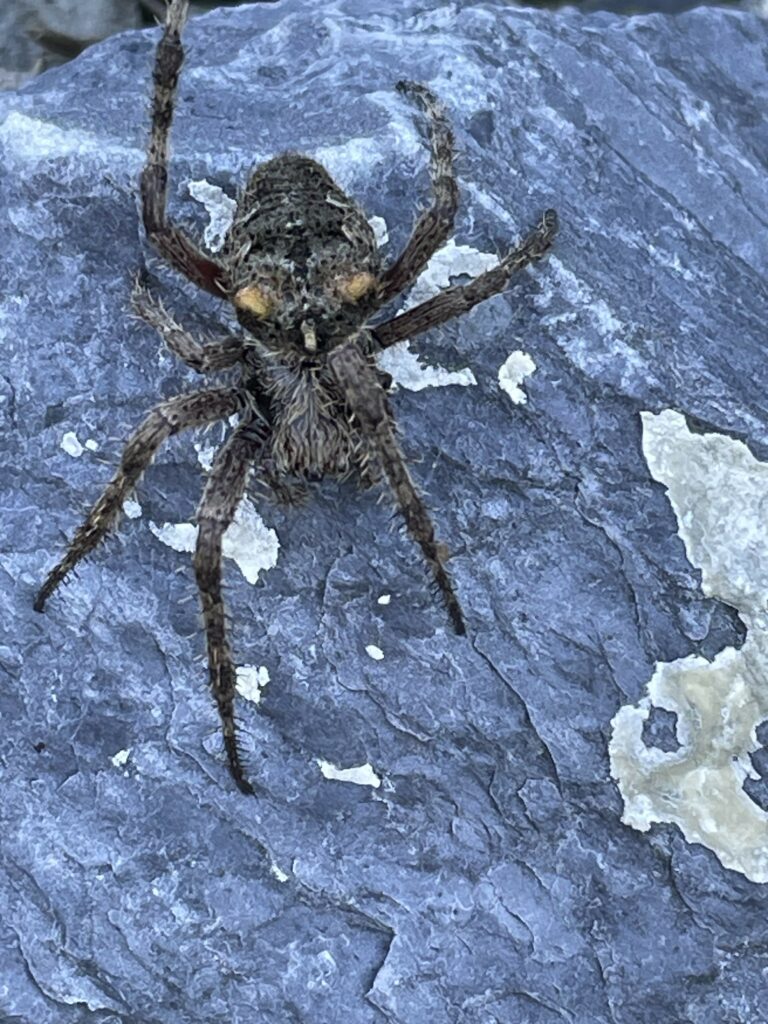
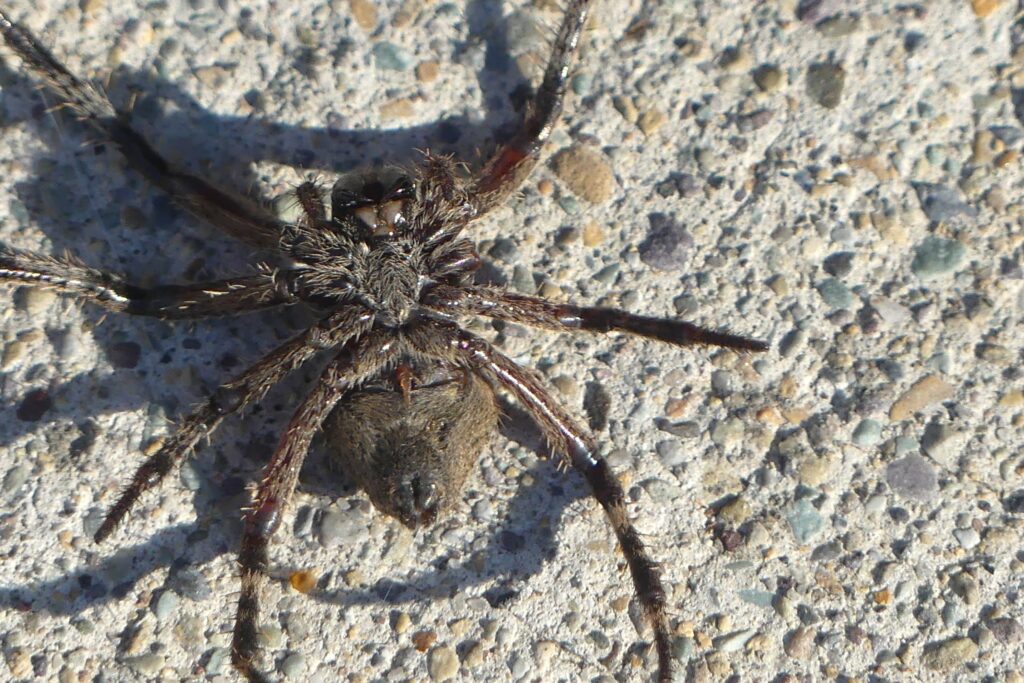
Fierce Orbweaver 9.2025Fierce orbweaverFierce Orbweaver dorsal side
This Fierce Orbweaver (identified with help of iNaturalist), was climbing up the door to my house. Not recognizing it, nor wanting to invite it inside, I very cautiously lured it away with a stiff plant stem. If I got too close, it reared back and waved its front legs as if boxing. While it moved across the driveway, it left a string of silk from the hole visible in the right photo; it seemed to use it as an anchor to help flip onto its back. The Fierce Orbweaver is listed as a native species in Montana.
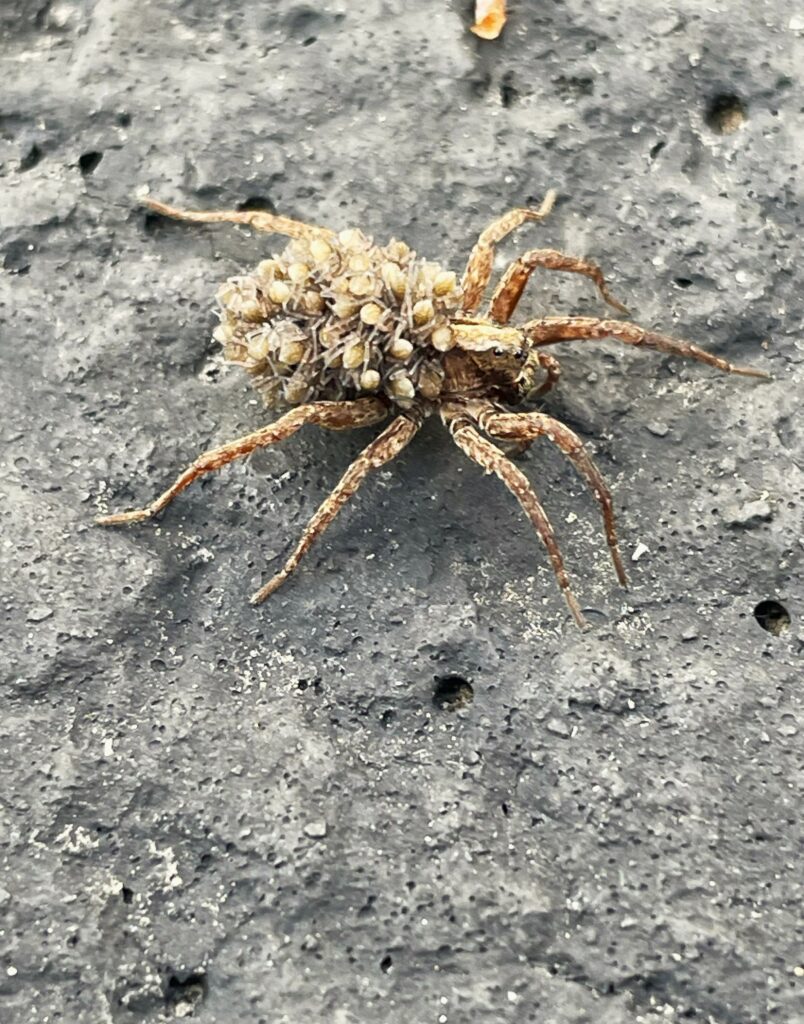
Wolf Spider with spiderlings on her back
Female Wolf Spiders carry their egg sac on their back; when they hatch, the babies ride there. They will fall off in leaf litter where they go into diapause until spring. This spider was crossing a sun-warmed driveway in early evening in September.
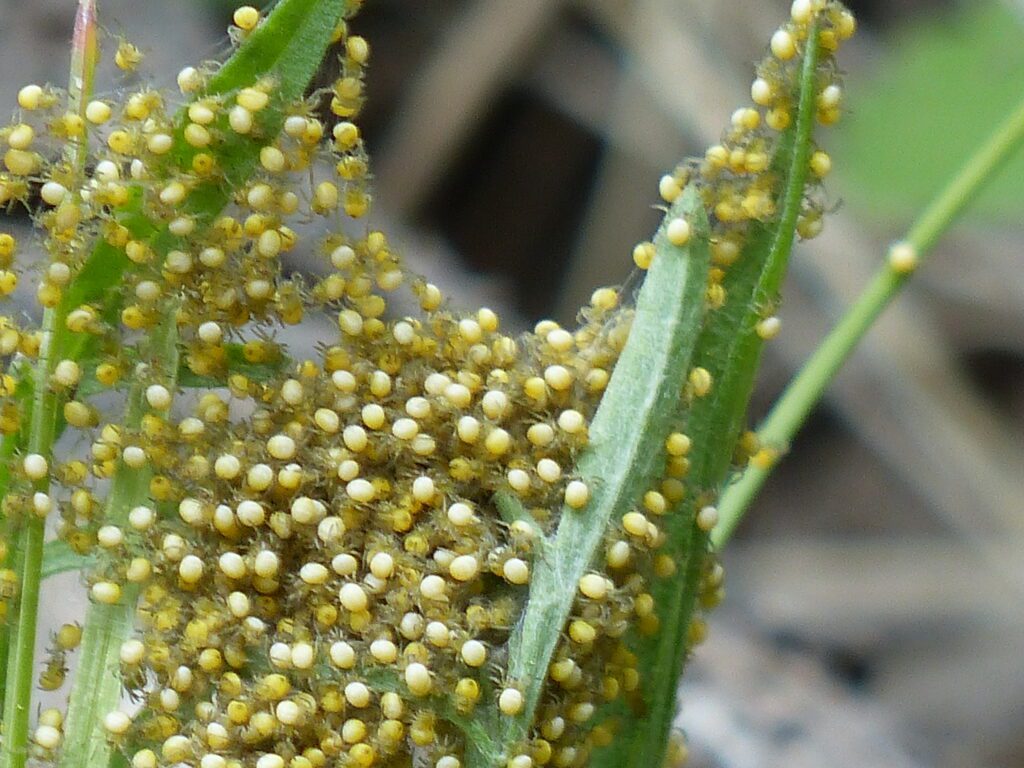
Nest of spiderlings on May 23. While I watched, the babies would crawl up a blade of grass and float off on a spinneret in the wind. I did not wait long; only a few had dispersed over the nearby wetland.
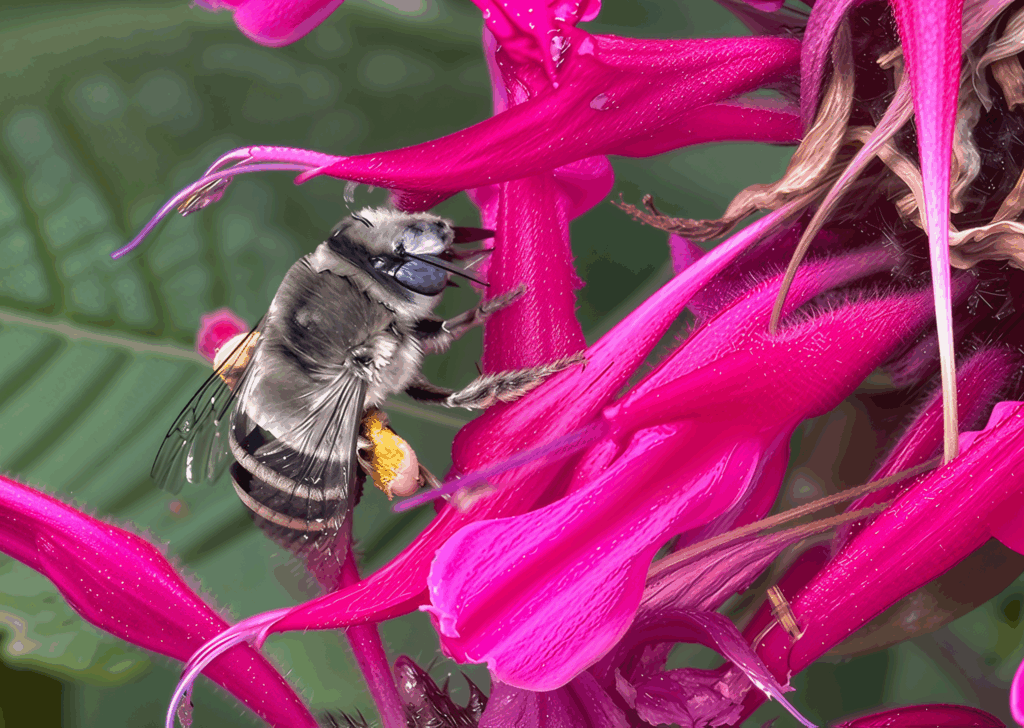
We have several beds of bee balm (bergamot), both native varieties and cultivars, planted around our property to attract bees and hummingbirds, which it does in huge numbers. It’s not uncommon find more than a dozen species of bees foraging for nectar on a single bed.
Lately, I’ve noticed a virtual invasion of a bee species that is new to me–a small, gray striped bee that looks like a cross between a honey bee and a bumblebee. True to form, it’s neither. It turns out that this is an urbane digger bee (Anthrophora urbana).
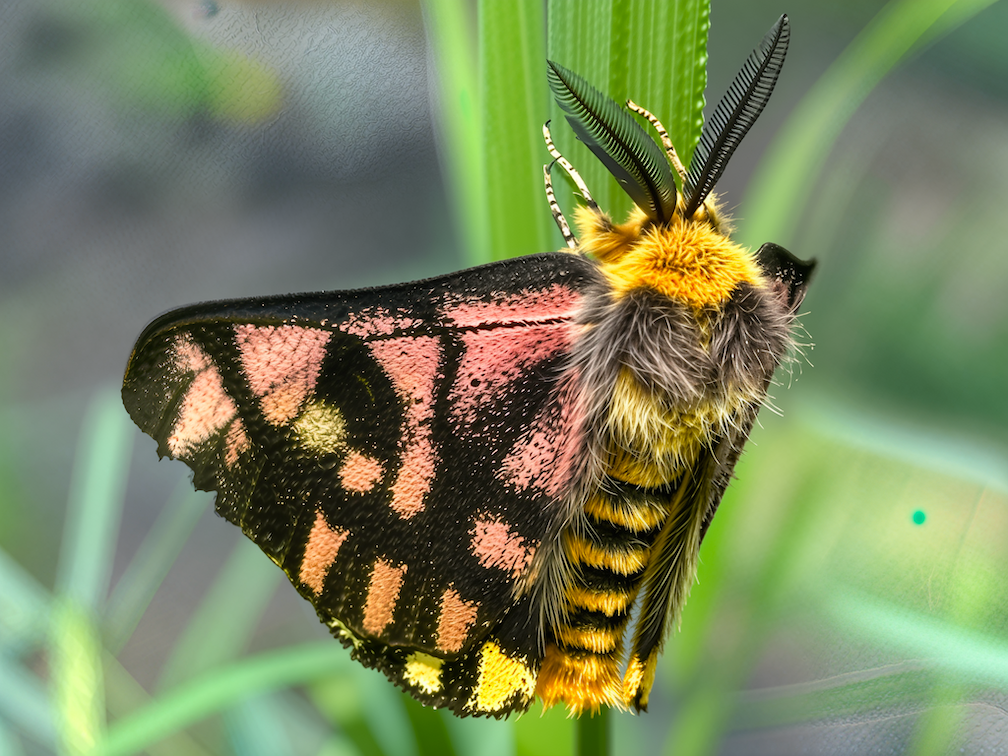
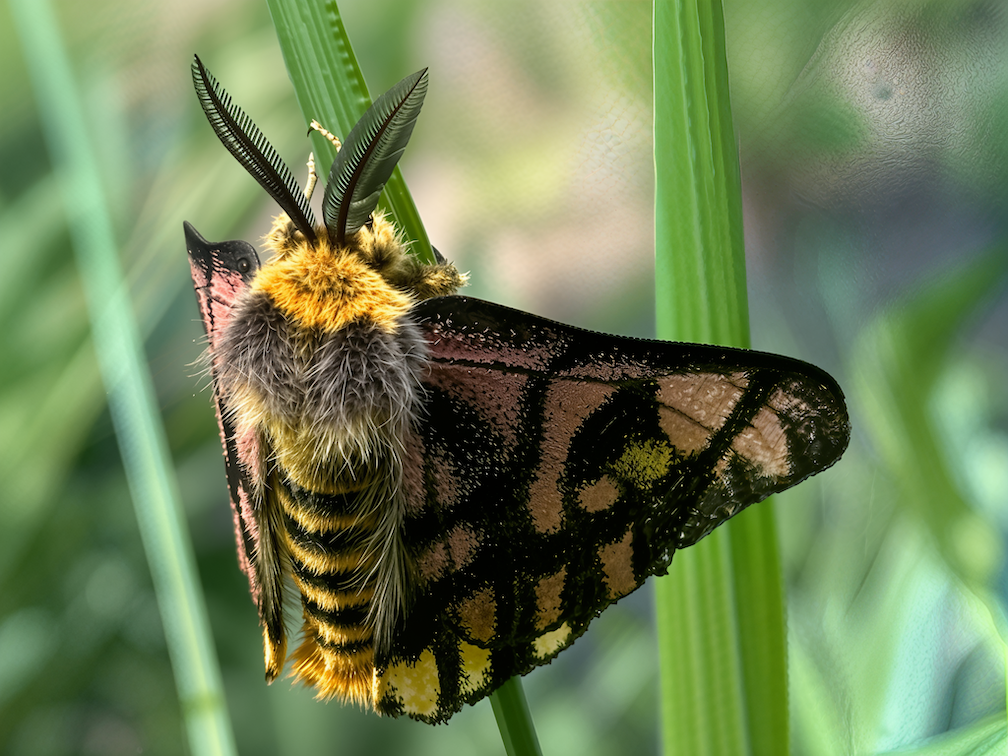
It’s always fun to run across a species that you have never encountered before, and that was the case for me today when I observed this Western Sheep Moth while I walking the trails in Happy Valley.
Western Sheep Moths are native to the western US. Their main range is southern California and the Sierra Nevada mountains, and while they are not common here in the valley, there are several reports on iNaturalist of encounters with them in our area.
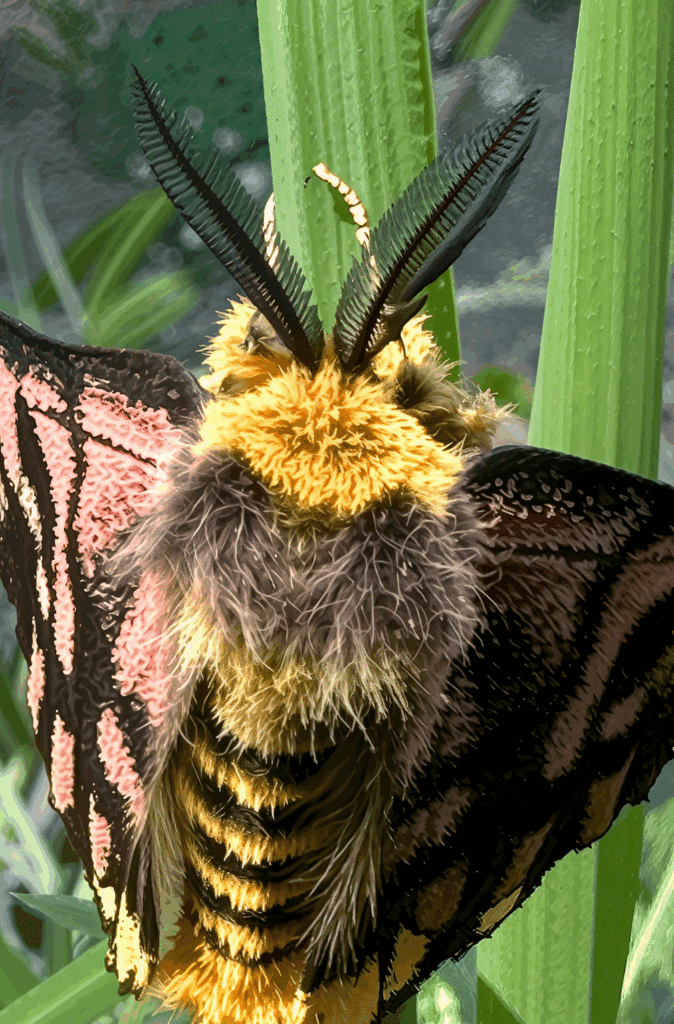
Unlike many moth species, Western Sheep Moths are daytime flyers, and rather large as local moths go–a bit smaller than a Luna Moth with an average wingspan of roughly three inches. Their identifying characteristics include pink, orange and yellow wing spots, black and yellow striped abdomen, prominent feathery antennae, and a tuft of bright yellow fur across the top of the thorax.
Antennae and thorax detail.
Western Sheep Moths lay their eggs in the summer months on roses (Rosaceae), both wild and cultivated. Their caterpillars (larvae) feed on them. They are also known to feed on buckthorns, an invasive species here in Montana. While they are not important pollinators, they are known to inadvertantly serve this function.
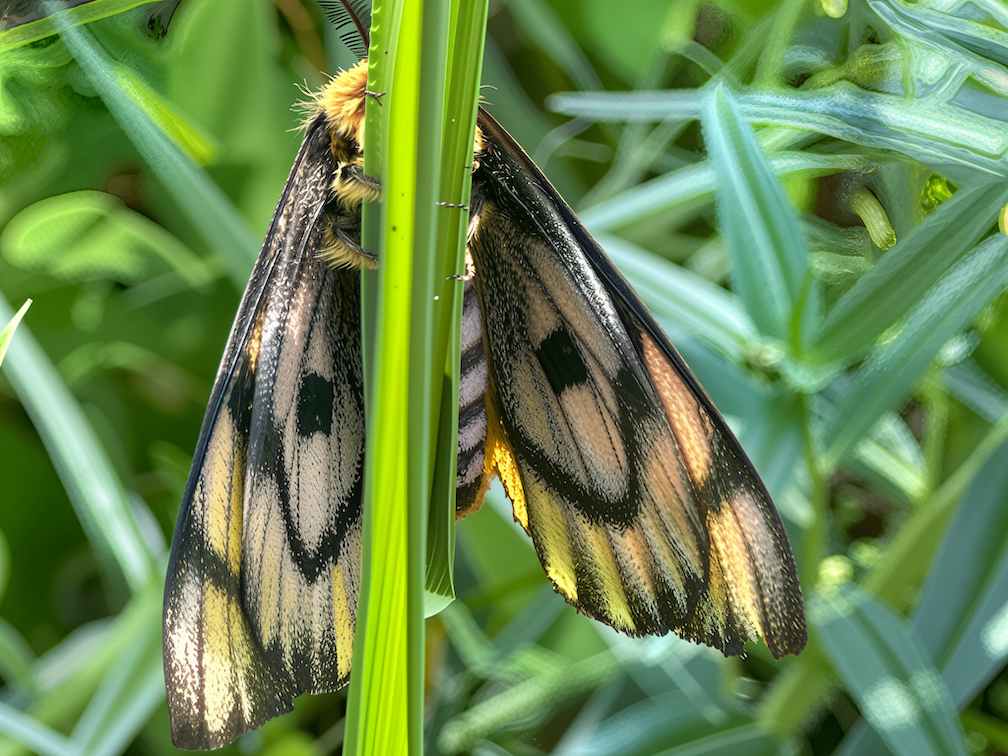
Wester Sheep Moth underwing.
Why are they called Sheep Moths? It turns out that they can be pests for sheep farmers, as adultsthelarvae (see Parker’s clarifying comment, below) will feed on the wool of domesticated sheep, degrading the quality and quantity of the wool. Sheep moths can cause a 15% drop in the quantity of wool produced by a flock.They are also known to invade homes and feast on wool and other clothing. They are prey for many birds species, and they are known to eat some insects.
Have you encountered a sheep moth in your wanderings? Do you see them as pests? Part of the ecosystem? Let me know in the comments.
Editor’s Note: The smaller images on this page my be enlarged by clicking on them.
Part I focuses on some of the local birds that raise their offspring in cavities, that is, holes in trees, man-made house-like structures, and holes in earthen areas. Part II will cover some of the birds I have discovered raising their young in more exposed locations. I marvel at their ability to overcome the challenges that weather, predators, and life with dependents without physical barriers must present.
A Western Wood-Pewee fashioned a nest of grass, rootlets and bits of other natural material on a lichen-covered limb of a Douglas fir tree. There are many needle-laden branches overhead that provide shade and divert rain drops. When she returns to the nest, she always lands on a different branch and little by little approaches the nest site as if she doesn’t want to reveal the location to others. I had the unique opportunity to observe all of this in reverse. I was in the area to visit a plant I was studying. As I cast my gaze around the location so I could note landmarks to help me return, I noted “something looks different about this branch.” Indeed, the lump overhead looked like a little nest! At first, I wondered if the nest had overwintered. It was a few feet higher than I could reach, so I only could observe, not touch. As I continued to look up, movement caught my attention: it was the owner of the nest, intent on getting to the empty nest. I froze in place and before I could blink, the bird arrived. I paused just close enough to get a couple of pictures before abandoning the area. I returned several times that summer to monitor the plant; I’d look to see if the bird was on the nest before getting close, but finding the well-camouflaged nest was never easy.
Editor’s Note: The smaller images on this page may be enlarged by clicking on them.
Beautiful West Valley is the chosen home of many species of birds thanks to the varied agricultural uses, ponds and wetlands, and forested areas. Locating an appropriate homesite and constructing a new nest every year must be a daunting task for animals with a beak and two wings as principal tools! Observing birds making nests and raising their families every spring is a delightful time of discovery for me. In the following pages, I will share some of the avian nesting activities I have been fortunate to observe in our area.
There’s a bite of cold in that wind and snow on the mountains. Back roads slip from ice to mud in a single step. Winter visitors wing over snow-bent grasses as if to say “Farewell!” and Pintails fill the open water still enclosed by ice. FOY (First-of-the-Year) birds, flowers, songs meet with excitement. In sheltered places, the sun warms the ground and our faces. Let’s check it out!