by Skip Via
skip@westvalleynaturalists.org
Click on images to enlarge them.

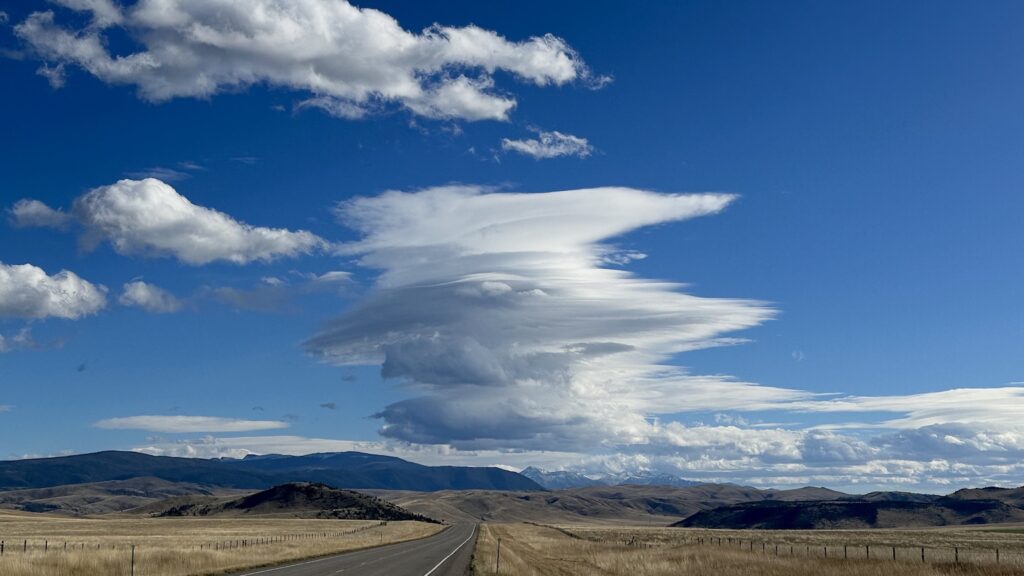
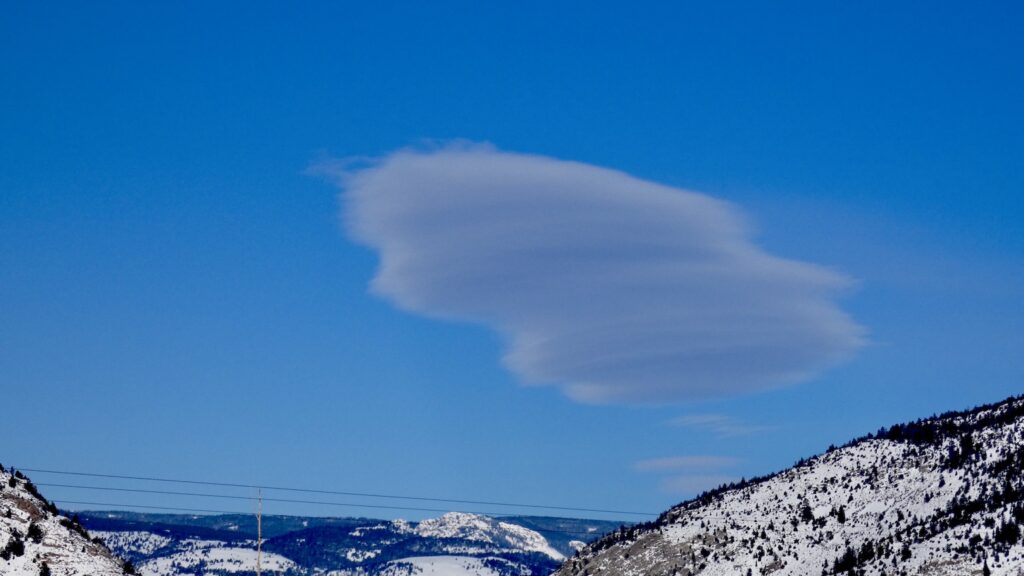
Lenticular clouds are stationary, lens-shaped clouds that typically (but not always) form over or near mountains. The word “lenticular” comes from the Latin word lens, which describes their smooth, curved shape. (“Lentil” also comes from this root, appropriately enough.) Unlike most clouds that drift across the sky, lenticular clouds often stay in the same place for hours. The wind is still moving through them, but the cloud itself keeps forming and evaporating in the same spot, making it appear motionless.
Lenticular clouds typically form when strong winds blow across mountains or other large obstacles on the landscape. As the air moves up and over the mountain, it creates waves in the atmosphere, similar to the ripples you see when water flows over rocks in a stream.
As the air rises through these waves, it cools enough for water vapor to condense into clouds. As the air sinks, it warms and the cloud evaporates. When the conditions are right, this process creates smooth, lens-shaped clouds that hover in place, usually downwind of the obstruction. Because they depend on strong winds and specific atmospheric conditions, they are not seen every day–not uncommon here in the northern Rockies, but unusual enough that they always catch my attention.
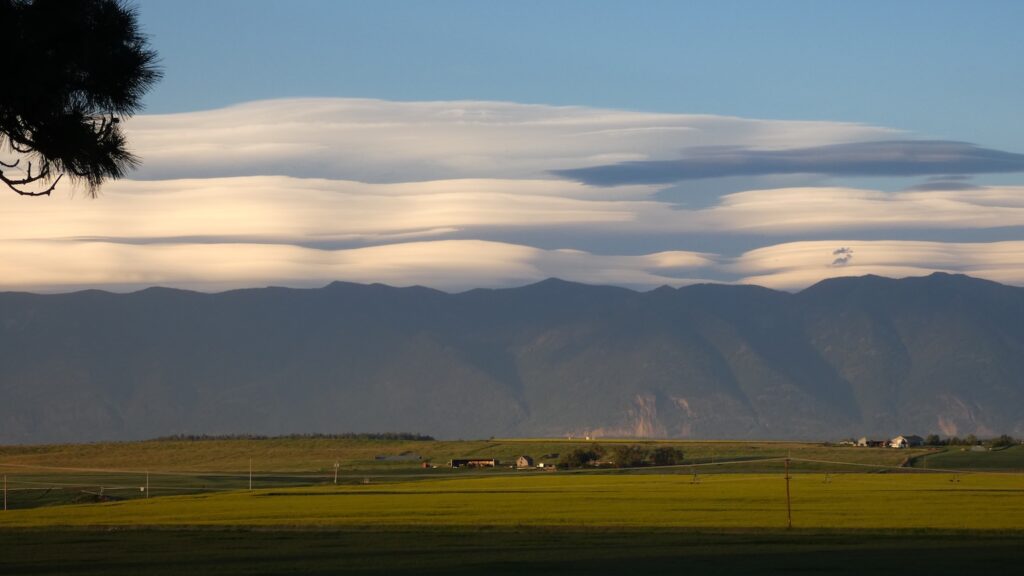
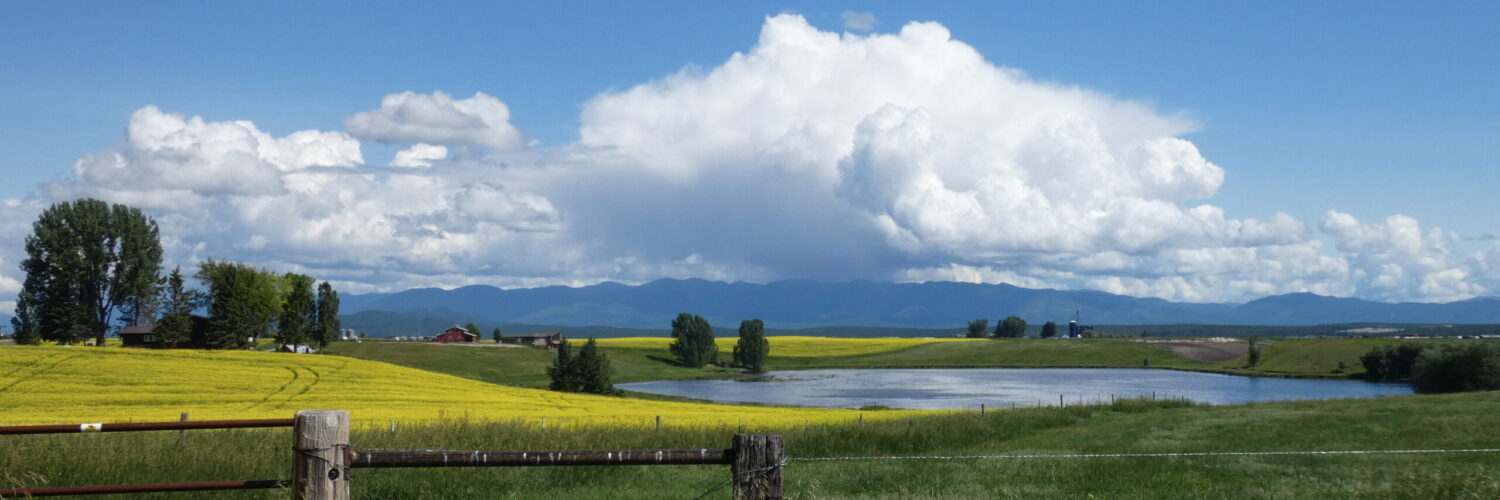
Lenticular clouds are easy to identify. Most cloud types are formed of turbulent, swirling air, which is why they appear fluffy or ragged. Lenticular clouds form in smoother, more organized air flows, which is why they develop their distinctive appearance. Sometimes several layers of lenticular clouds stack on top of each other, creating a dramatic “pile of flying saucers” effect as in the photo above.
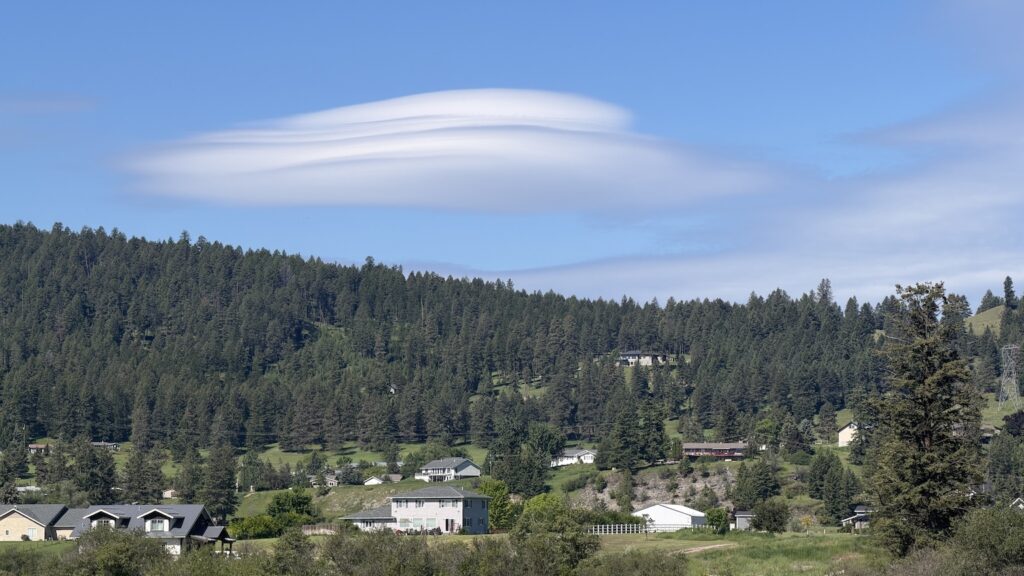
Lenticular clouds are often a sign of strong, turbulent winds high in the atmosphere. For pilots, this can indicate powerful air currents called mountain waves. These waves can help gliders soar to great heights but can also create turbulence for other aircraft. Seeing lenticular clouds can mean that windy weather may be approaching the area. Pilots invariably avoid them.
Lenticular clouds can be quite dramatic as seen in the photos below: