by Pat Jaquith
pat@westvalleynaturalists.org
Click on images to enlarge them.
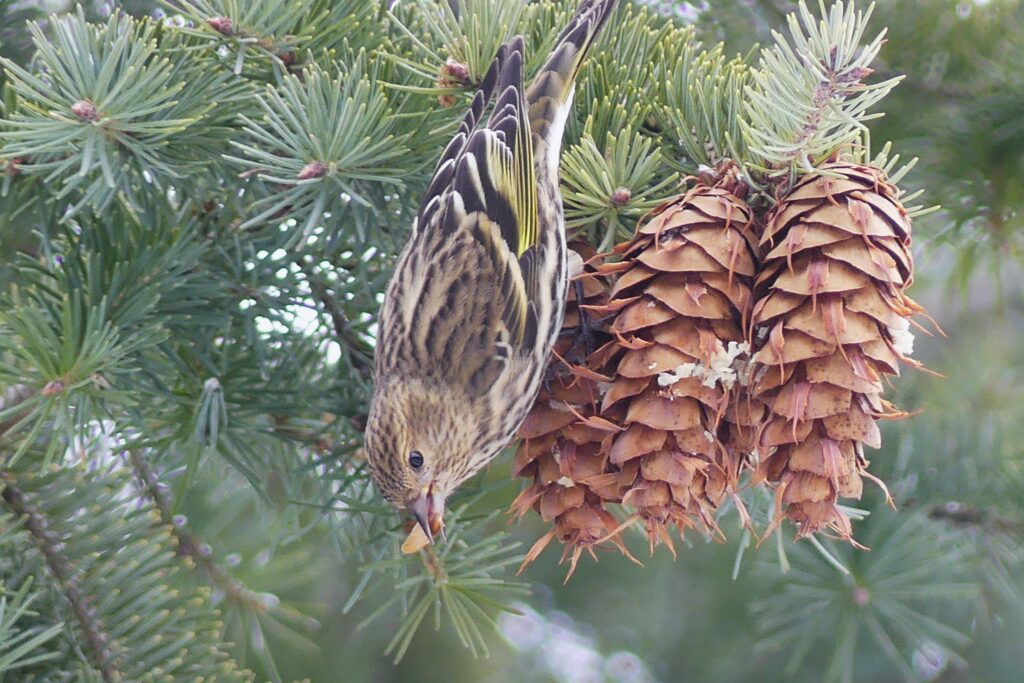
Pine Siskins are nomadic little finches that wander the northern hemisphere, taking advantage of plentiful food supplies. This has been a “cone year” in our area, and the Pine siskins have been abundant. Gregarious little birds, they travel in flocks of up to 1000, their high-pitched chatter announcing their presence. Some years we don’t see them at all; other times, the Christmas Bird Count reports their numbers in the thousands.
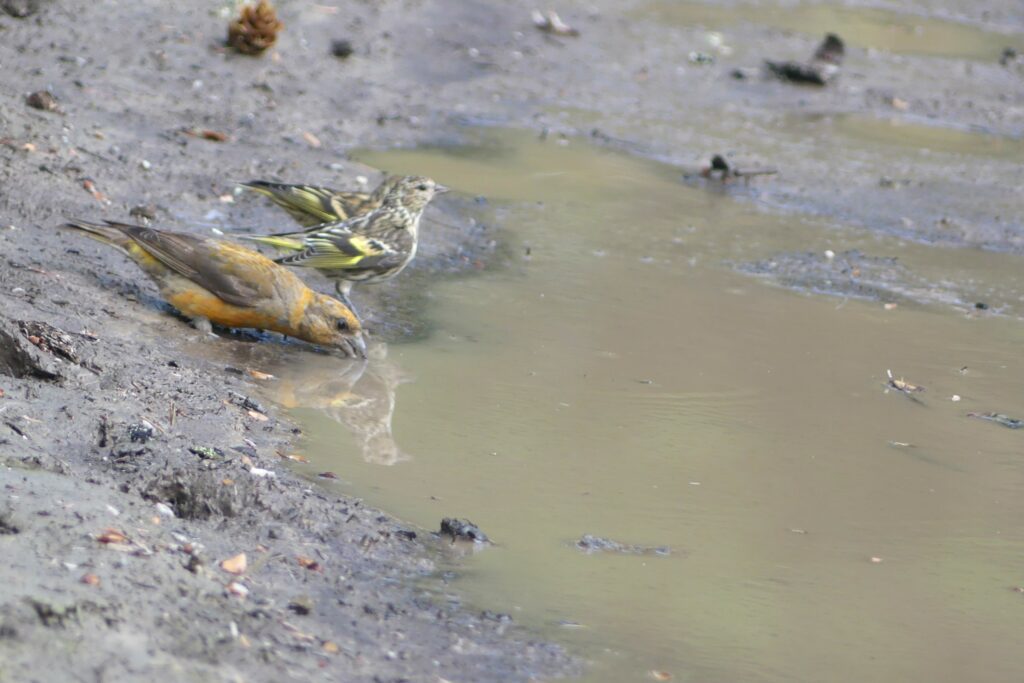
I started seeing Pine Siskins in great numbers in August; they were traveling with a flocks of Red Crossbills, taking advantage of the work of the big-billed Crossbills. At that time of year, Douglas fir cones hold their seeds tight, and it takes a strong bill to open the scales to harvest the seeds. A flock of chattering Crossbills would descend on a well-laden fir: using their strong crossed bills, they could pry open the scales and grasp the enclosed seed with their tongue. Pine Siskins worked over the piles of discarded cone scales under the tree and ate seeds that had slipped away. It looked like a well-planned partnership!
Summer rain had filled puddles in the forest; Crossbills and Siskins, as well as other birds, slaked their thirst and bathed in those puddles. Those working/feeding partners shared the water peacefully.

Pine siskins are not limited to following birds that can harvest their food for them! As thistles blossomed and their seeds developed, the siskins that weigh about 1/2 ounce could pull the thistle down with seed attached and make their own feast.
By winter, Douglas fir cones have dried out, and Pine siskins are able to poke their tiny pointed beak into the space between the scales and harvest the seeds independently. The acrobatic little birds flitted among the trees loaded with cones and filled their crops.
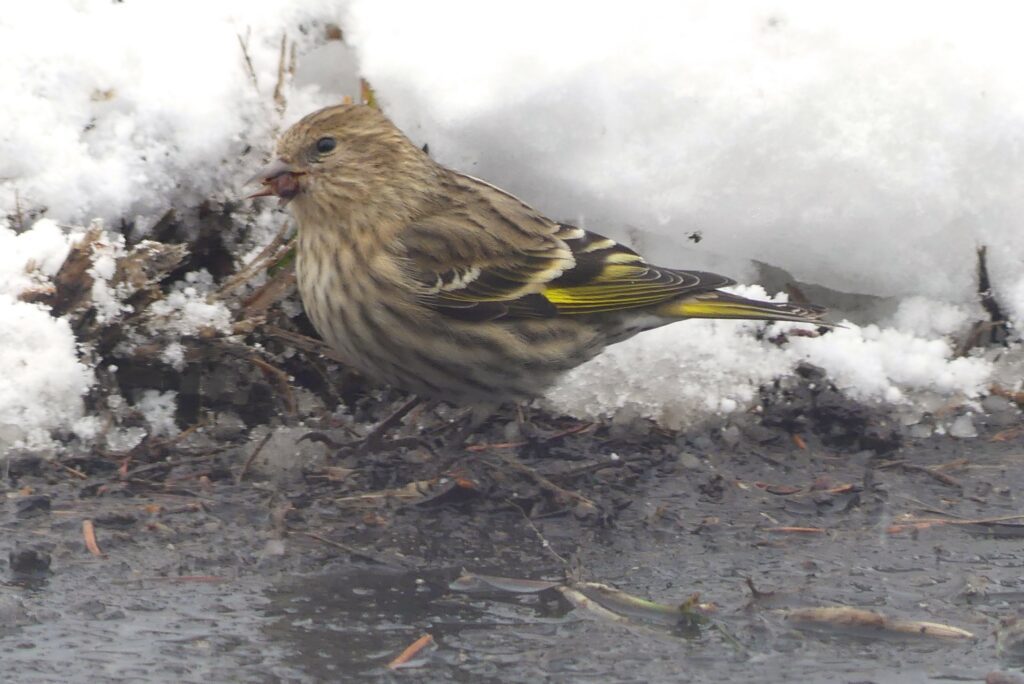
Pine Siskins lined the roadside picking up bits of seeds and the mineral product (potassium, magnesium, and calcium) used for melting ice.
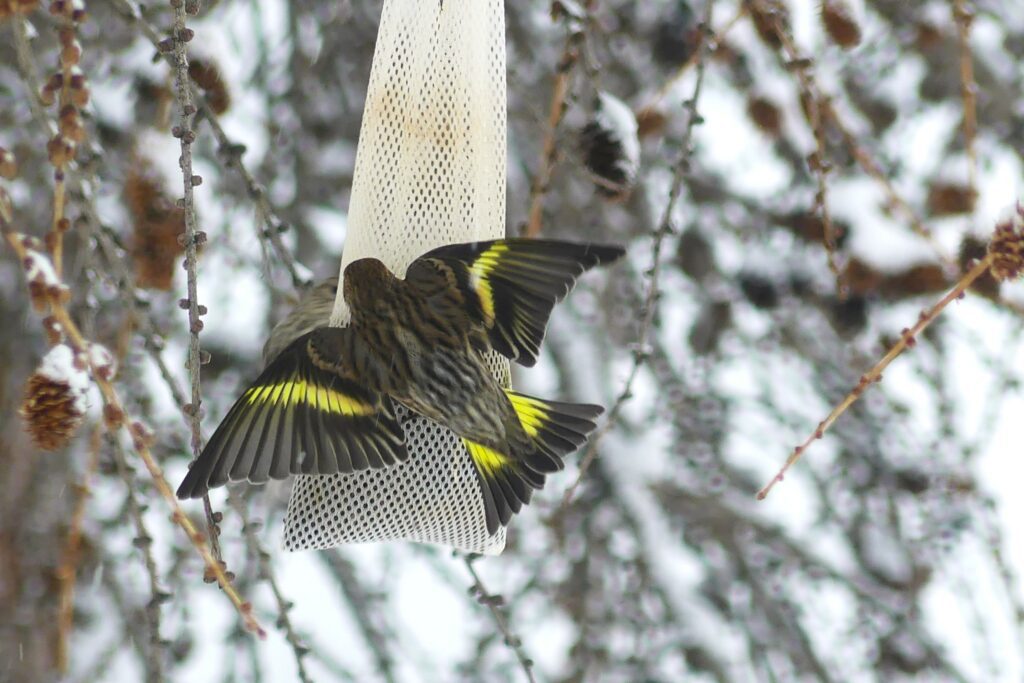
We had just had a snowstorm that loaded Douglas fir branches, making it hard to get at the cones, but the resourceful little Pine Siskins took advantage of seeds that we provided. By late afternoon, there seemed to be a little competition, and some of them appeared more aggressive than usual.
It will be interesting to see how long the Pine Siskins stay in the area this year. Their musical chatter will be missed when these little migrants move on.
3.27.2026 Update: This morning I watched a pair of Pine Siskins on our back lawn; the female hopped around picking up bits of grass, twigs, and a lot of dog hair in her beak while the male kept an eye on her from his perch nearby. It seems hopeful that we may have a family of Pine Siskins in the Douglas fir tree nearby!
