by Pat Jaquith
pat@westvalleynaturalists.org
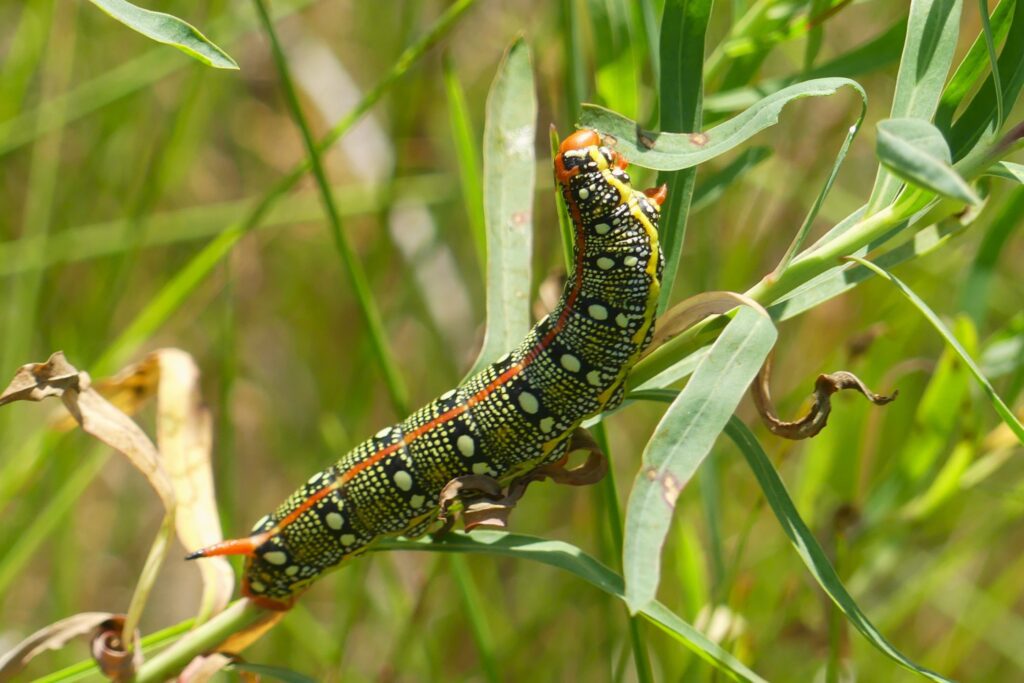
My first sight of Euphorbia esula, Leafy Spurge, in the West Valley was thanks to this caterpillar as I walked through an abandoned field. This 3 1/2 inch caterpillar’s appearance entranced me! Curiosity pulled me headlong into research and the information that follows.
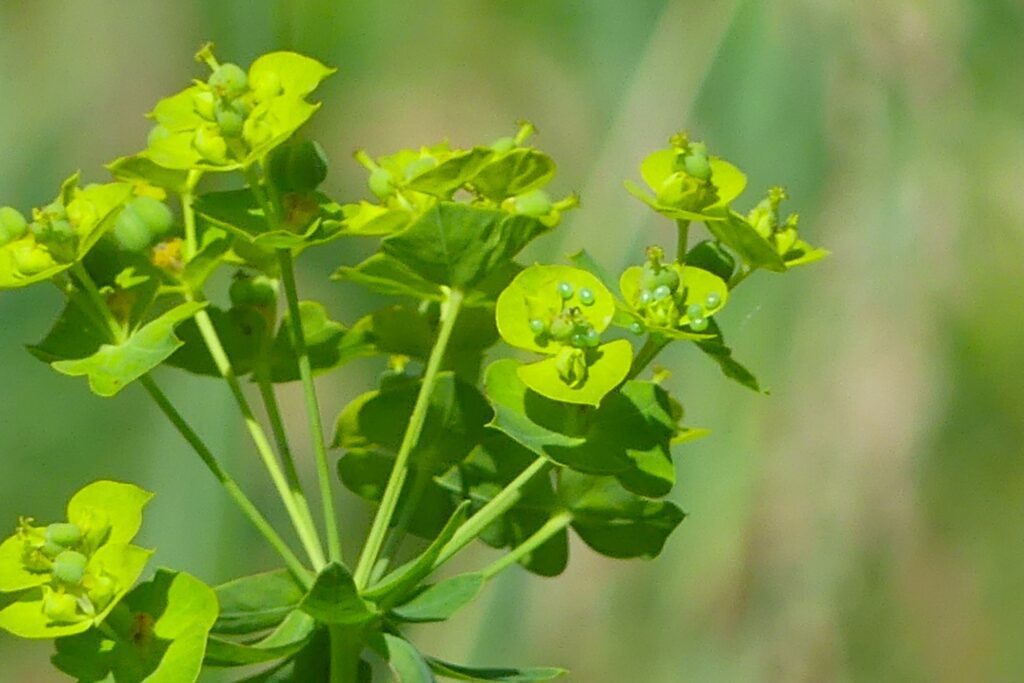
Leafy Spurge (Euphorbia esula) is a long-lived perennial native to Eurasia that arrived in the United States as a seed impurity in about 1827. It has been reported to cause “colic, vomiting, reddening and swelling or blistering of the skin, eye irritation, weight loss when exclusively fed leafy spurge, diarrhea, and excessive salivation” in cattle and horses. Each flowering stem can produce up to 130 seeds which can remain viable in the ground up to 8 years. Roots that can extend to ten feet below the soil surface have buds that can regenerate shoots rapidly if the seedling is injured. With these capabilities, eradicating established plants is challenging.
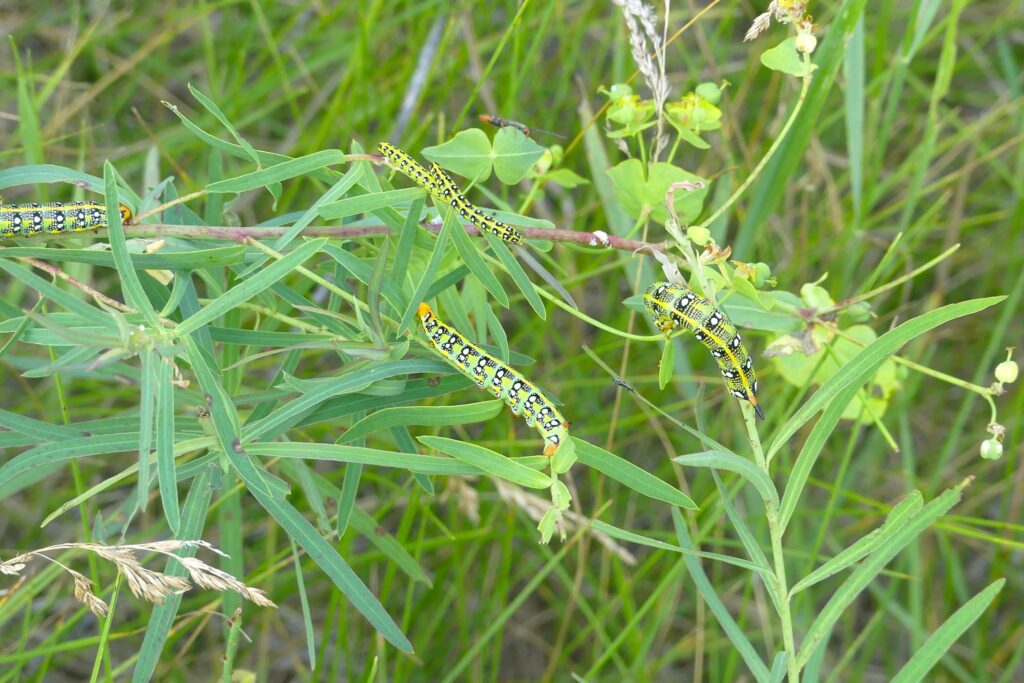
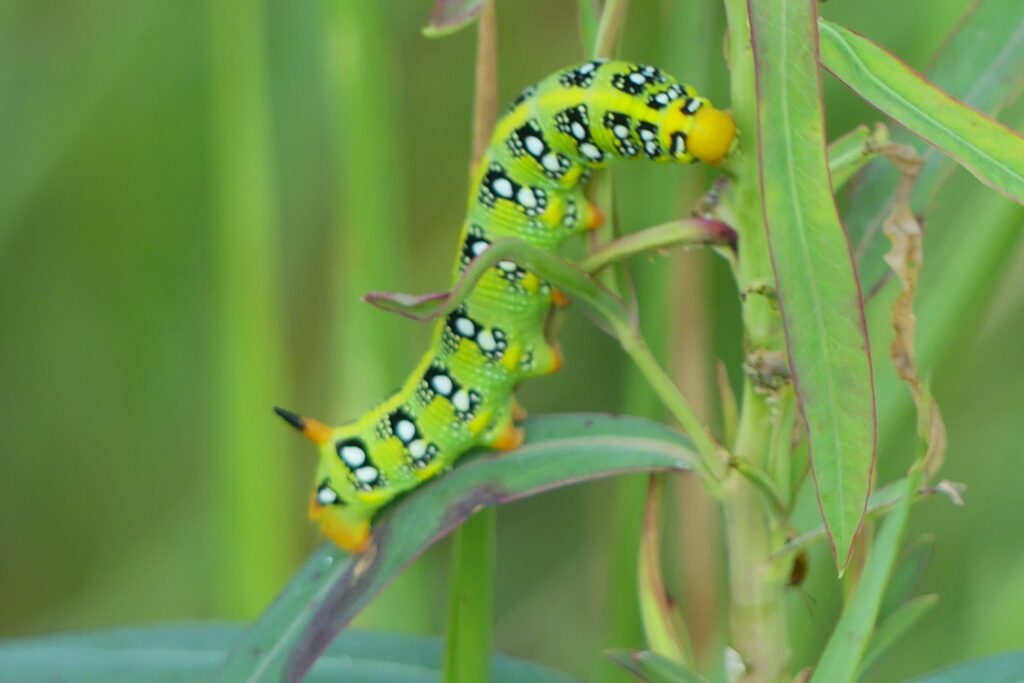
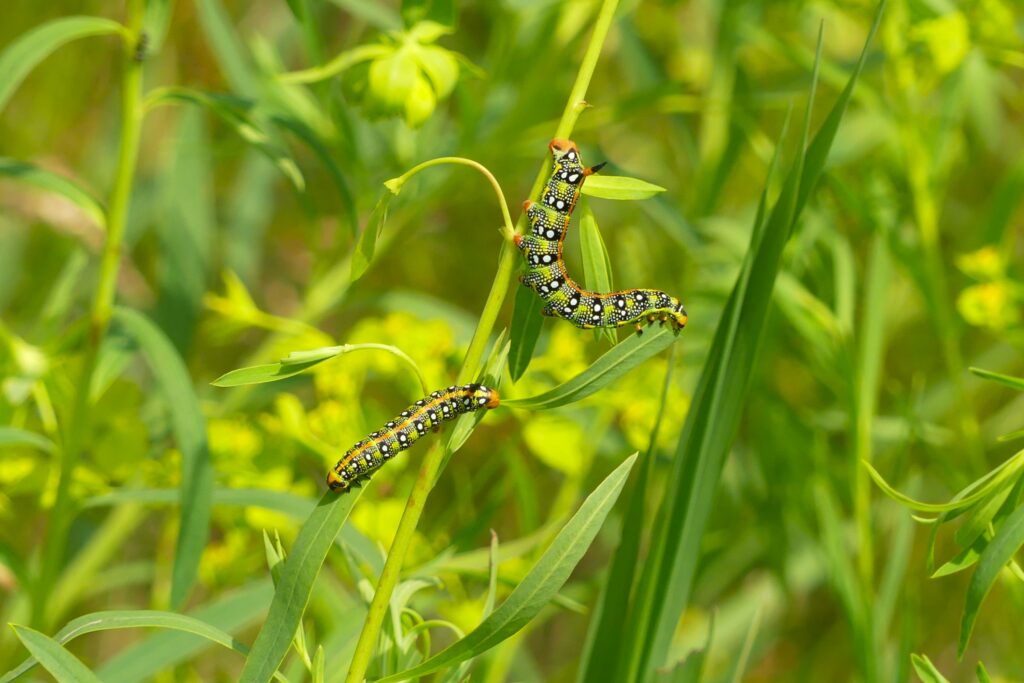
Non-native plants that were not notably problematic in their native habitats can easily become invasive when the conditions that kept them in control are no longer present. Scientists have developed methods for importing some of those controls without their becoming problematic, too. Pictured above, The Spurge hawk moth’s larvae feed exclusively on the vegetation of Leafy spurge plants. There are 5 different colorations of various stages of the larvae.
There are two additional moths, six Flea beetle species and two flies that are licensed species of Biological Control insects that contribute to the management of Leafy Spurge. The various insects work on various sites – root, foliage, stem, flower, root crowns, leaves, and bracts. I have found no records of which controls have been released in West Valley nor when it may have occurred.
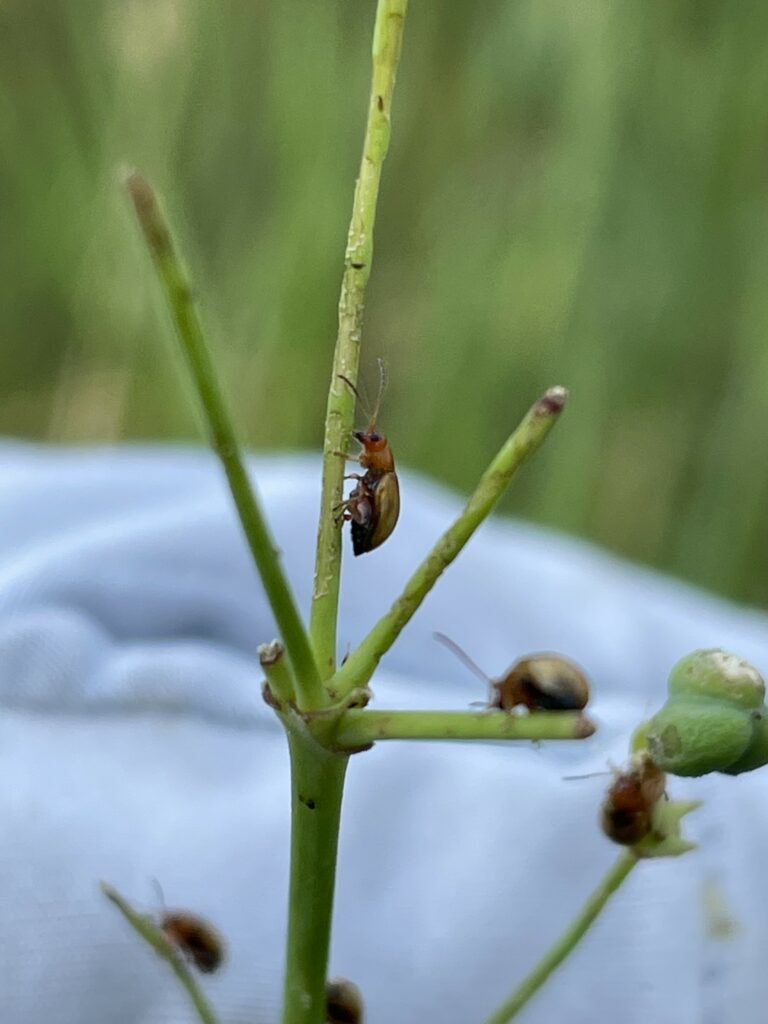
With the aid of a 30x hand lens, I was able to observe these very small beetles clustered on the stem of a Leafy Spurge plant.
In addition to biological controls, chemicals are commonly used to control Leafy Spurge.
References: Weeds of the West, 10th ed. 2009. Ecology and Management of Leafy Spurge, USDA, 2008. USDA-NRCS, MSU, and UW, 2020 Plants Poisonous to Livestock in Montana and Wyoming.
