by Pat Jaquith
pat@westvalleynaturalists.org
Click on the images to enlarge
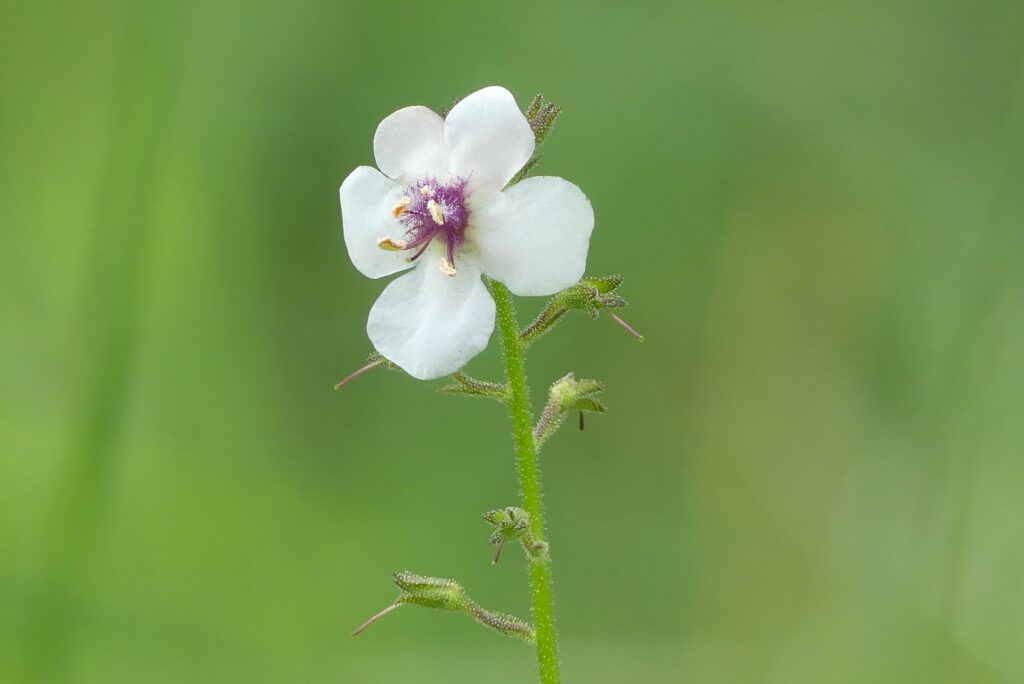
Moth Mullein (Verbascum blattaria)
There are two species of Mullein in the West Valley; both are non-native plants with potential for spreading extensively. Read on to see images of both and to learn about their characteristics.
COMMON MULLEIN (Verbascum thapsis)
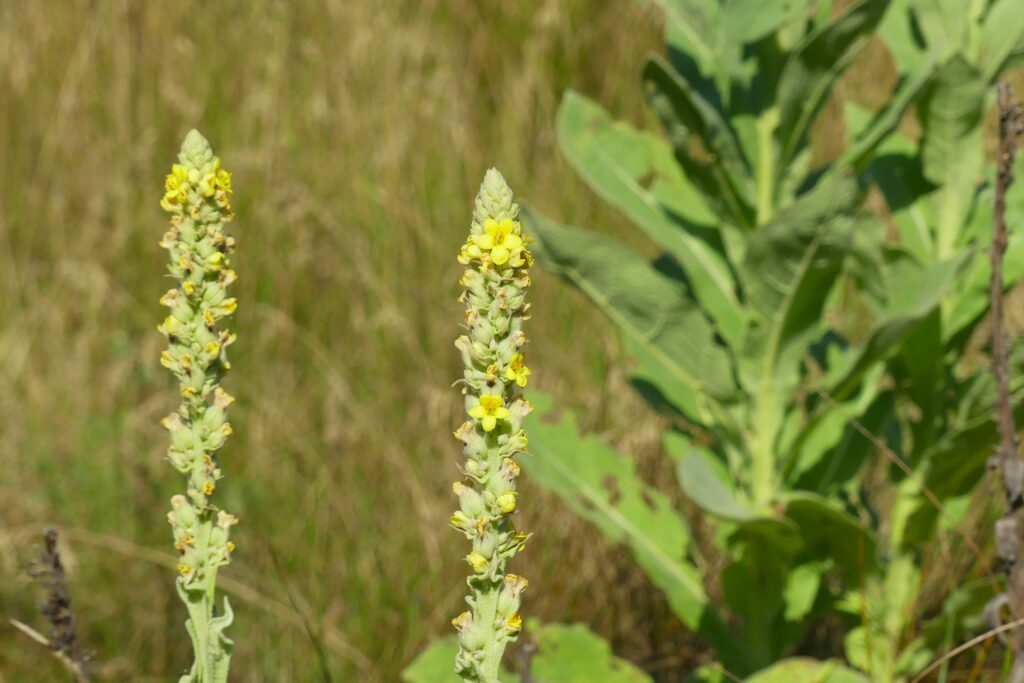
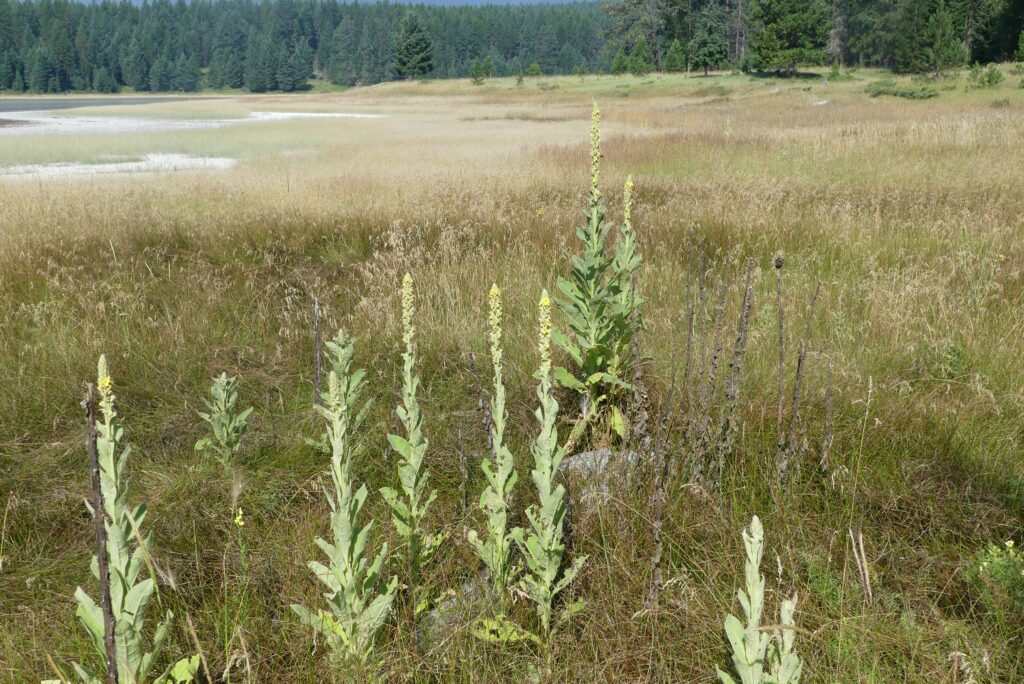
Common Mullein is an imposing plant in many places where the soil has been disturbed. Its big woolly leaves climb up the stem that becomes a corn cob style display of yellow five-petalled flowers. Whether by accident or deliberately, this Native to Eurasia arrived in the United States in the 18th century. By 1900, it was recorded in Flathead County. It has a history of uses from medicinal to substitute bath tissue to shoe liners.
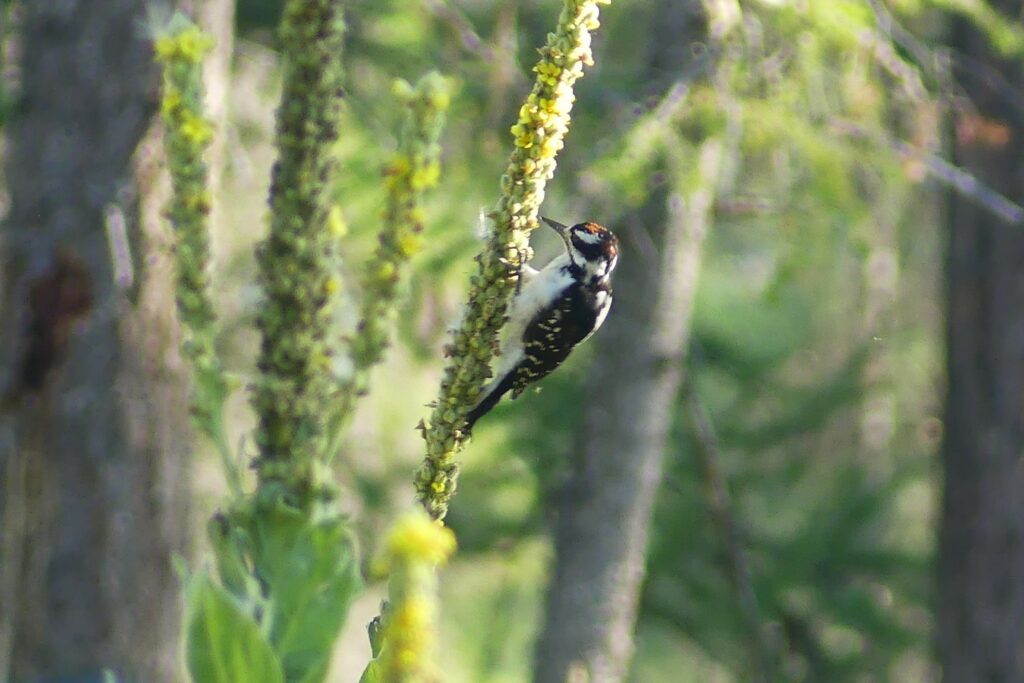
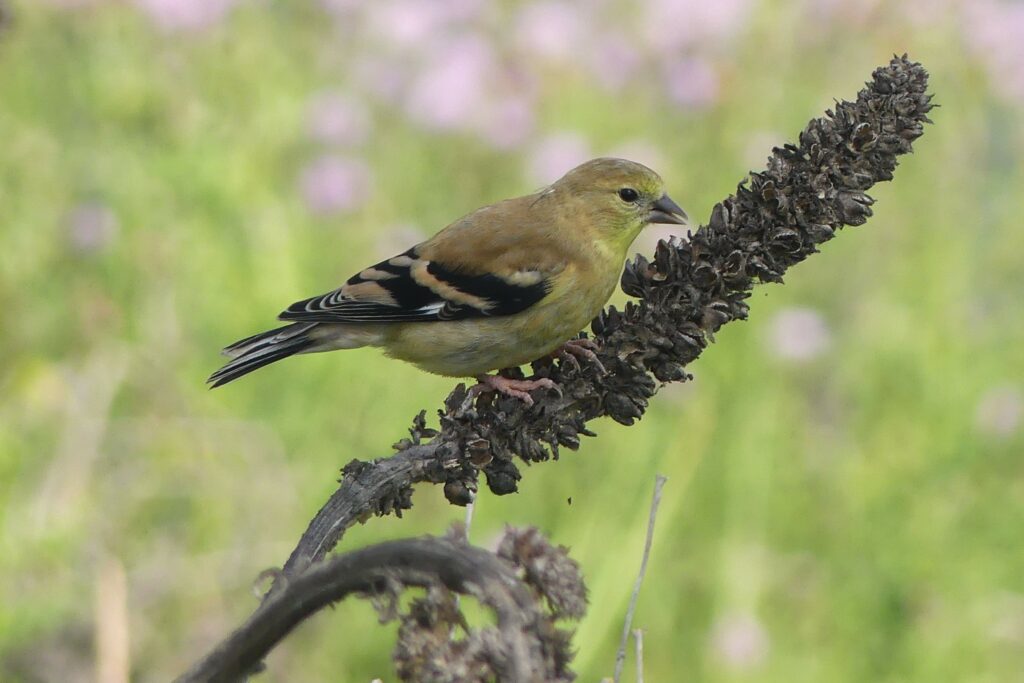
Mullein is a biennial plant; the first year, it forms a woolly rosette of leaves; the second year it sends up the stalk and flowers; after setting seeds, it dies. Birds, such as the Hairy Woodpecker, Chickadee and American Goldfinch that feed on the abundant seeds from late summer through winter play a big role in the distribution of the plants. The dropped seeds remain viable in the soil for 35 years.
Though it covers a lot of acres in Montana, as of 2024, only 12 counties have declared it a noxious weed.
MOTH MULLEIN (Verbascum blattaria)
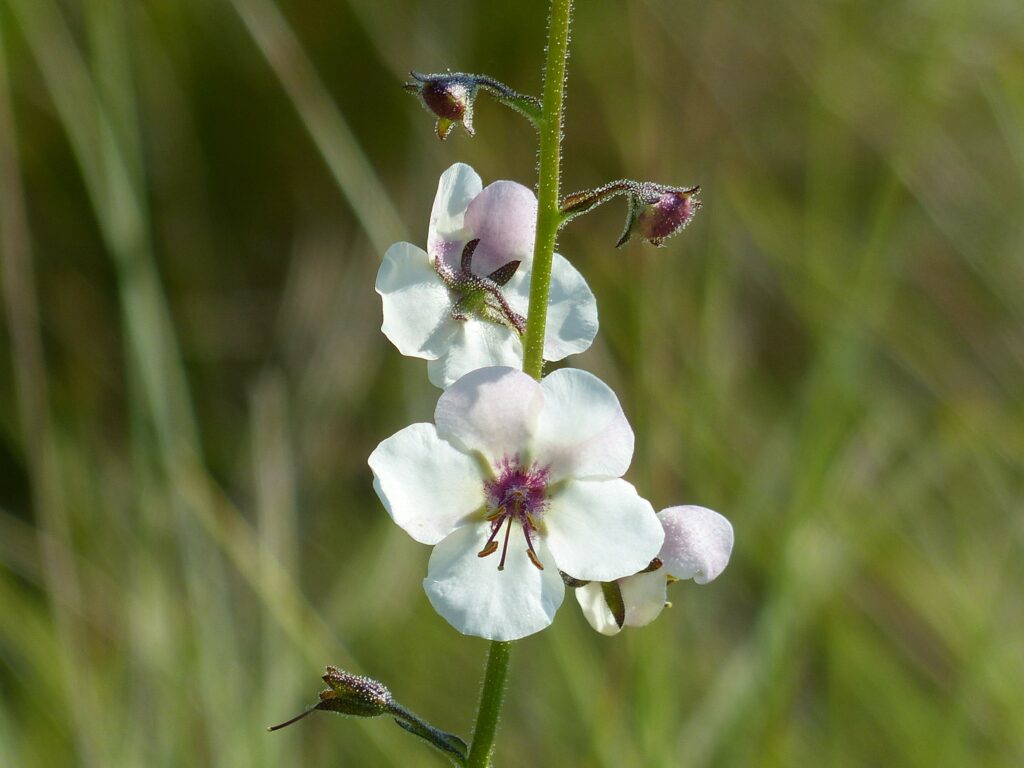
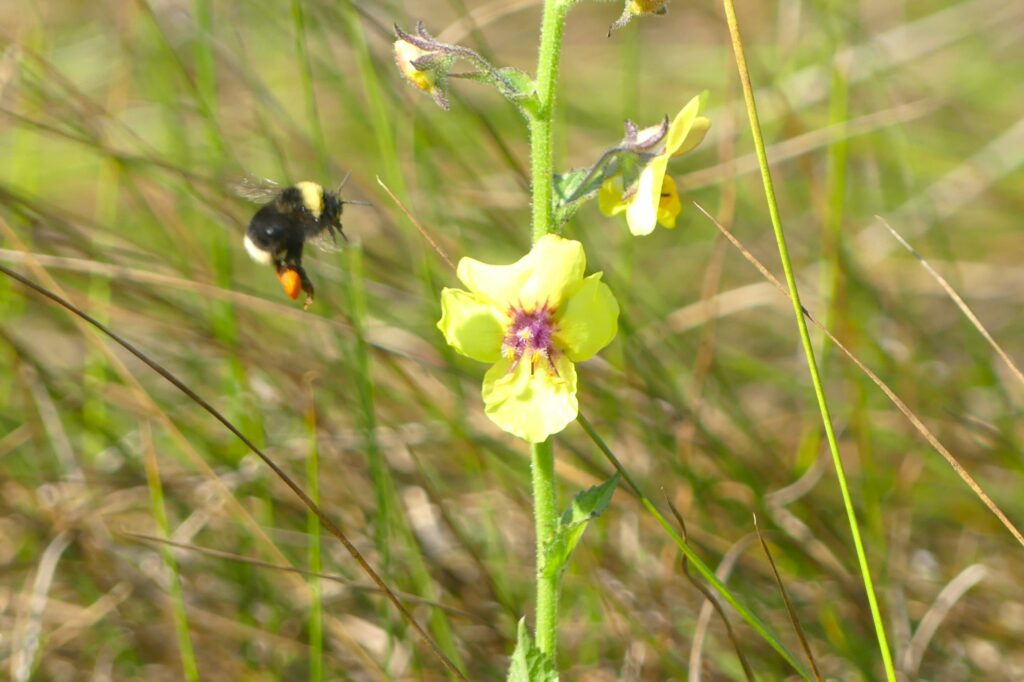
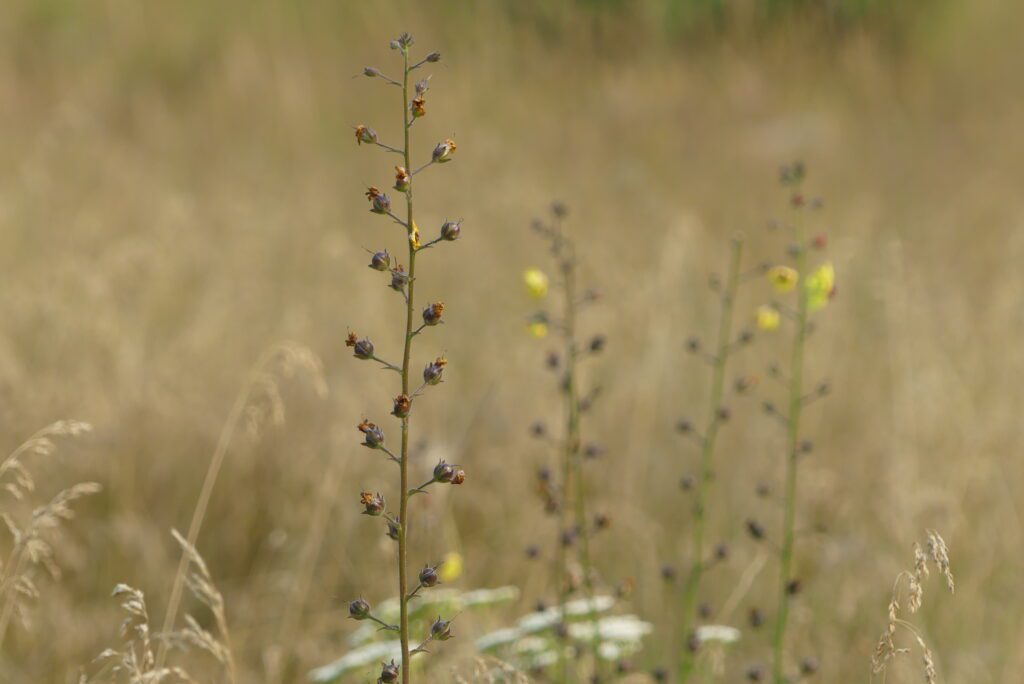
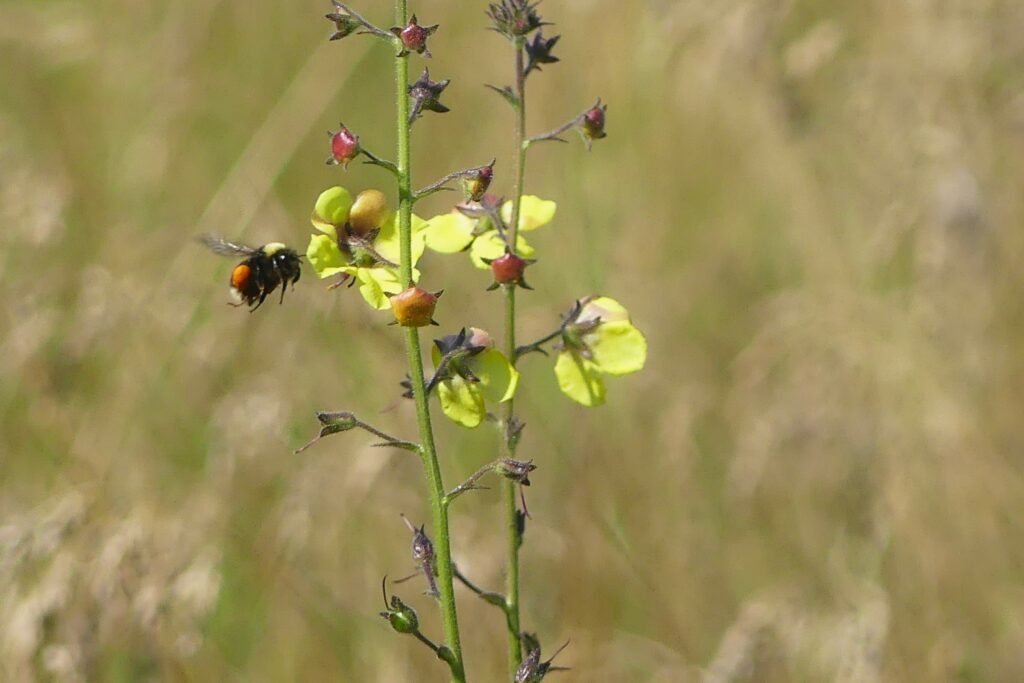
Moth Mullein is pollinated by Bumble Bees. A California Bumble Bee with its pollen pouch full is visiting this plant. Moth Mullein is a biennial that disappears after setting seed in its second year. Each seed pod splits and the seeds drop to the ground nearby. A mature plant is said to produce as many as to 100,000 seeds that remain viable for 90 years.
I once observed a field in Utah that was a monoculture of Moth Mullein. Learning that each plant can replace itself to this extent was a good lesson in understanding how that field of stiff stems came to be.
