Pat Jaquith
pjaquith@westvalleynaturalists.org
Click on images to enlarge them
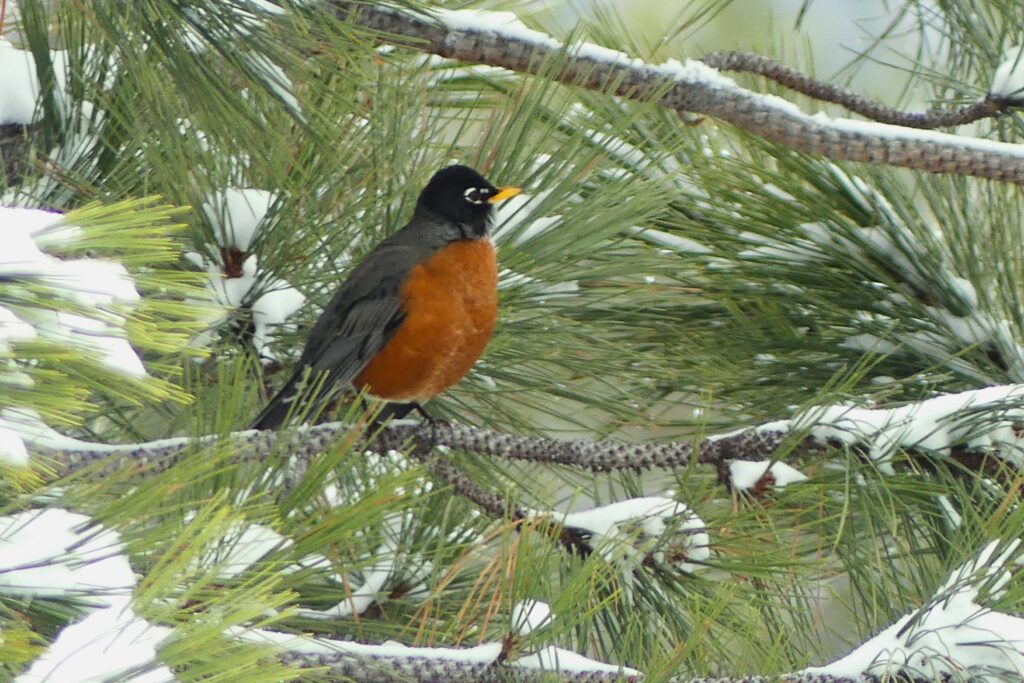
The American Robin may be the most familiar of the Thrush (Turdidae) family of birds. We used to think of their arrival as a sign that winter was over, but more recently, they have become a common sighting year ’round. In addition to pulling earthworms out of thawed earth and capturing a great variety of other insects, Robins feed on Juniper cones as well as frozen fruit and berries when the ground is frozen. Read on for more stories and pictures about members of the Thrush family that I’ve seen in the West Valley.
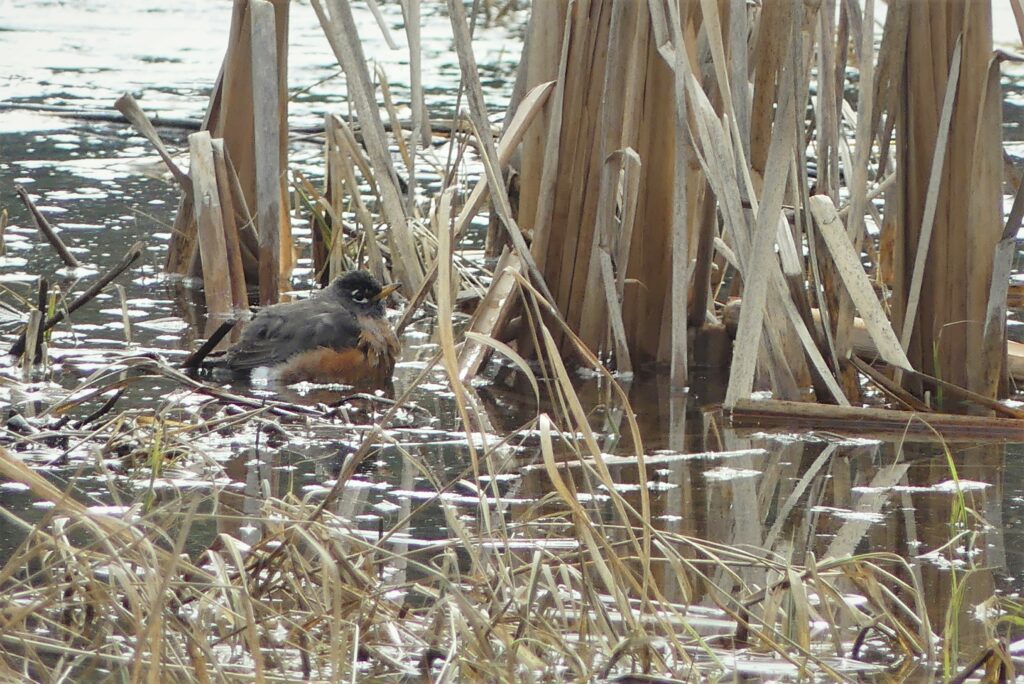
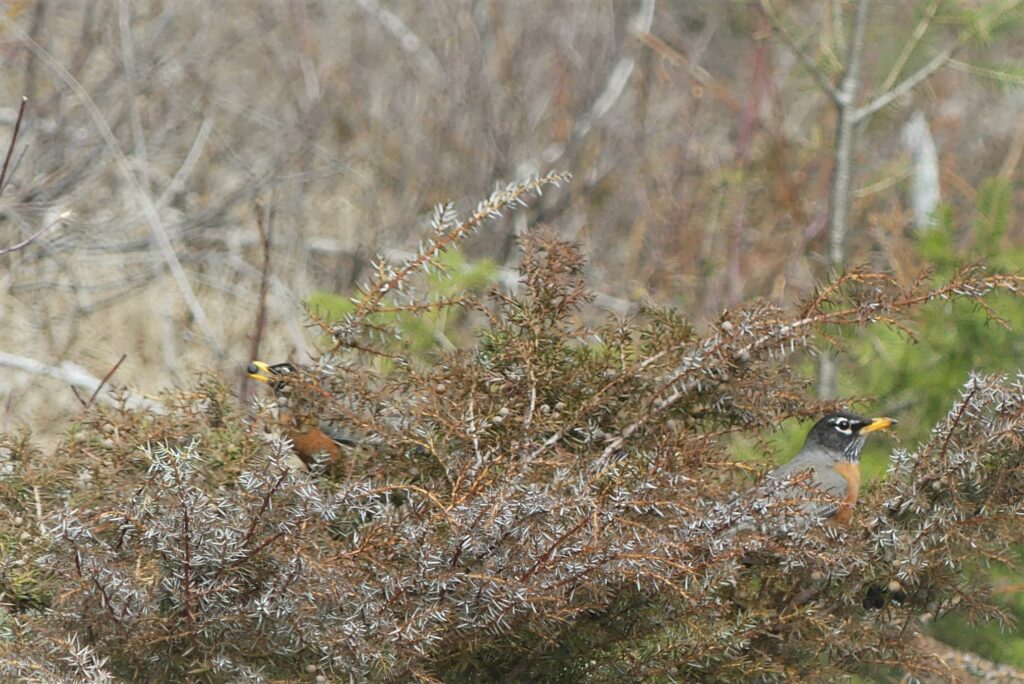
The robin at left was taking a bath in the edge of Cliff Lake where the ice was just starting to recede in the last week of March. At right, a flock of Robins flew up from a big clump of Common Juniper near Baney Lake in mid-March. They were harvesting the cones (sometimes called berries) that had ripened the previous year. When I was in that area in late fall/early winter, Robins by the dozen flew up out of those shrubs as I walked through.
Robins start nesting early and raise successive families ’til summer is over:
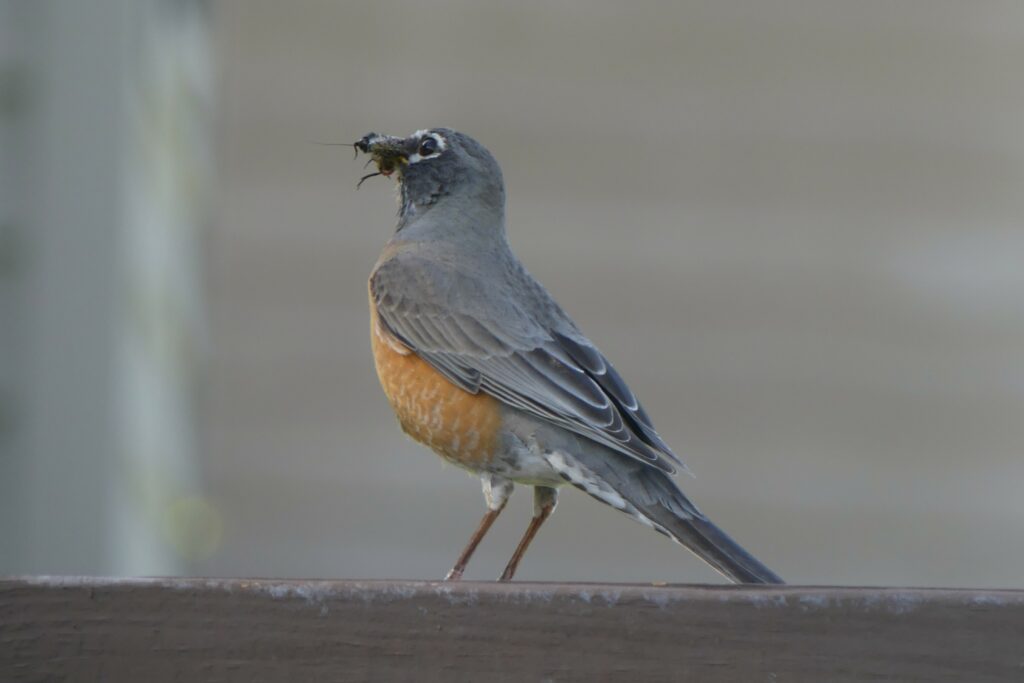
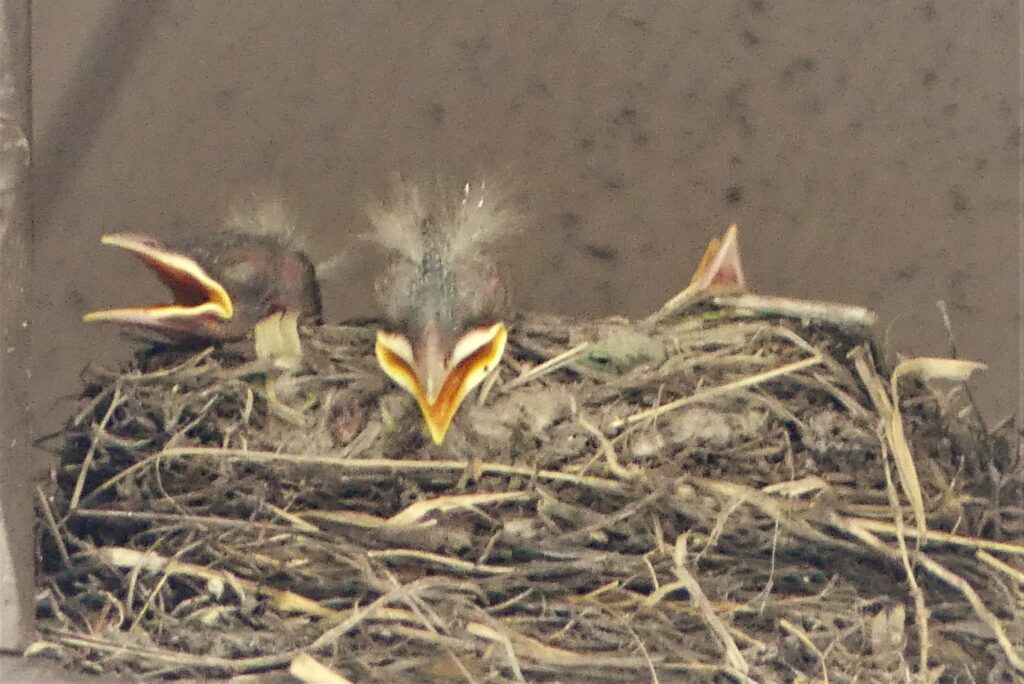
Above left, a female was en route to her nest in a nearby tree, indicating that eggs had hatched. At right, the nest of four newly – hatched were on support timbers over our porch, providing many opportunities to watch their development – and clean-up, too!
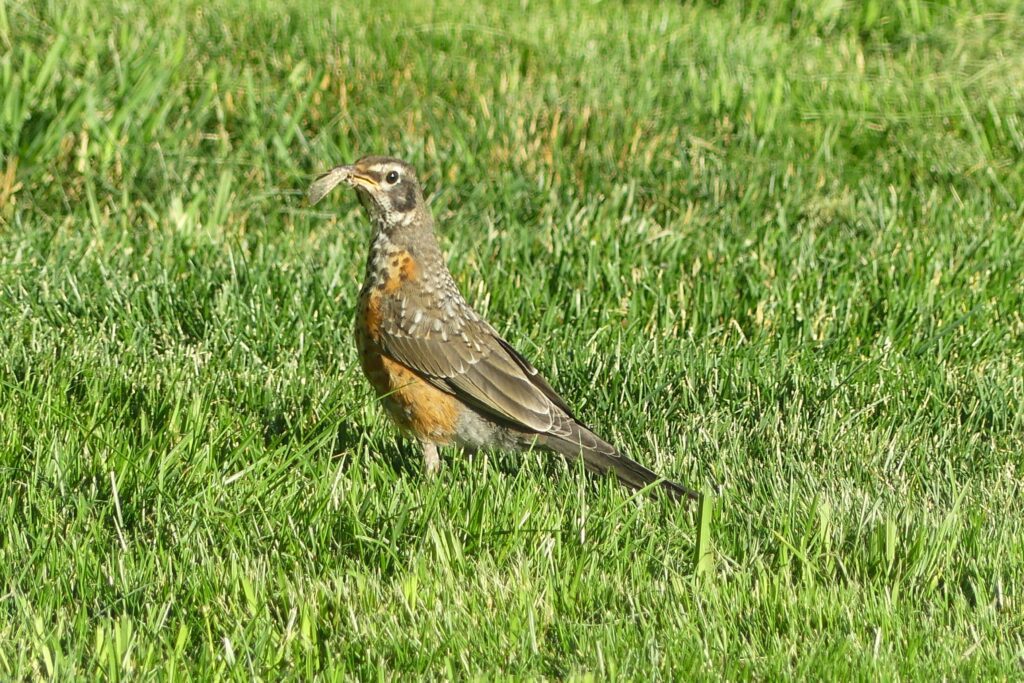
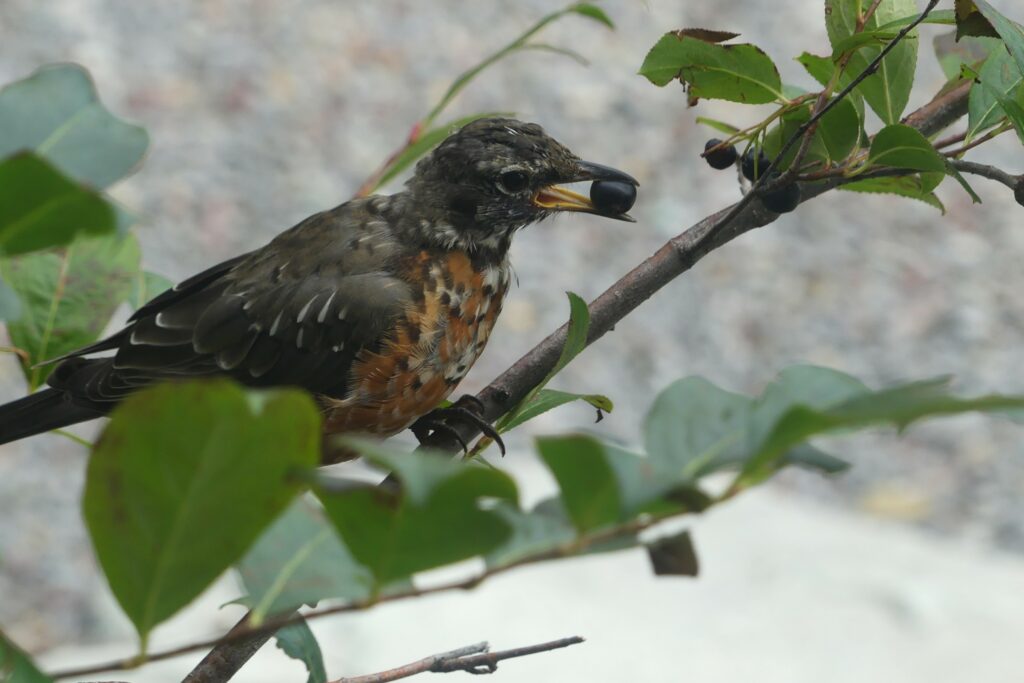
Speckled, spotted, and a little disheveled, these young Robins were in the process of getting feathers and molting into first-year plumage. They demonstrated their independence at finding their own food supplies, freeing up the parents to attend subsequent nestings.
BLUEBIRDS
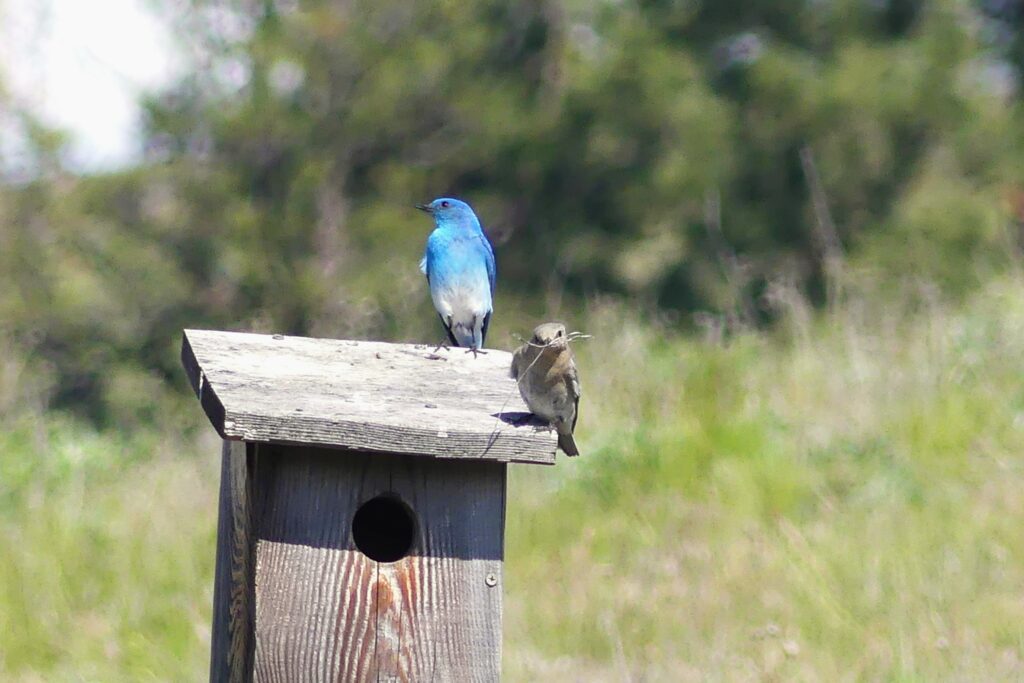
A pair of Mountain Bluebirds demonstrate their intention of nesting: the male guards their chosen birdhouse to protect it from others while the female gathers nesting materials and works on nest construction.
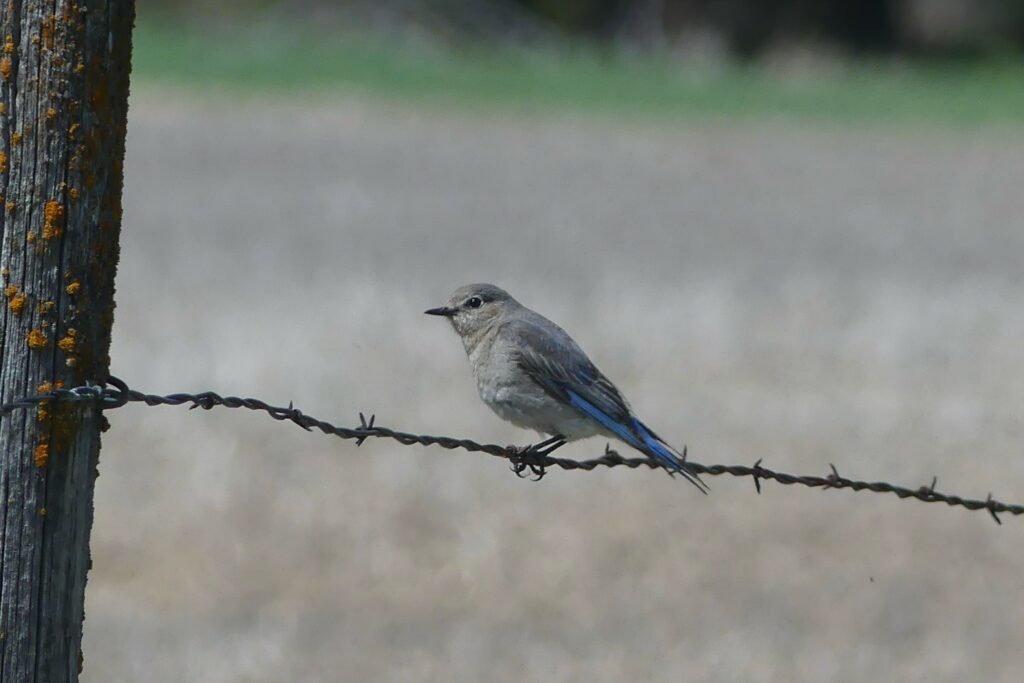
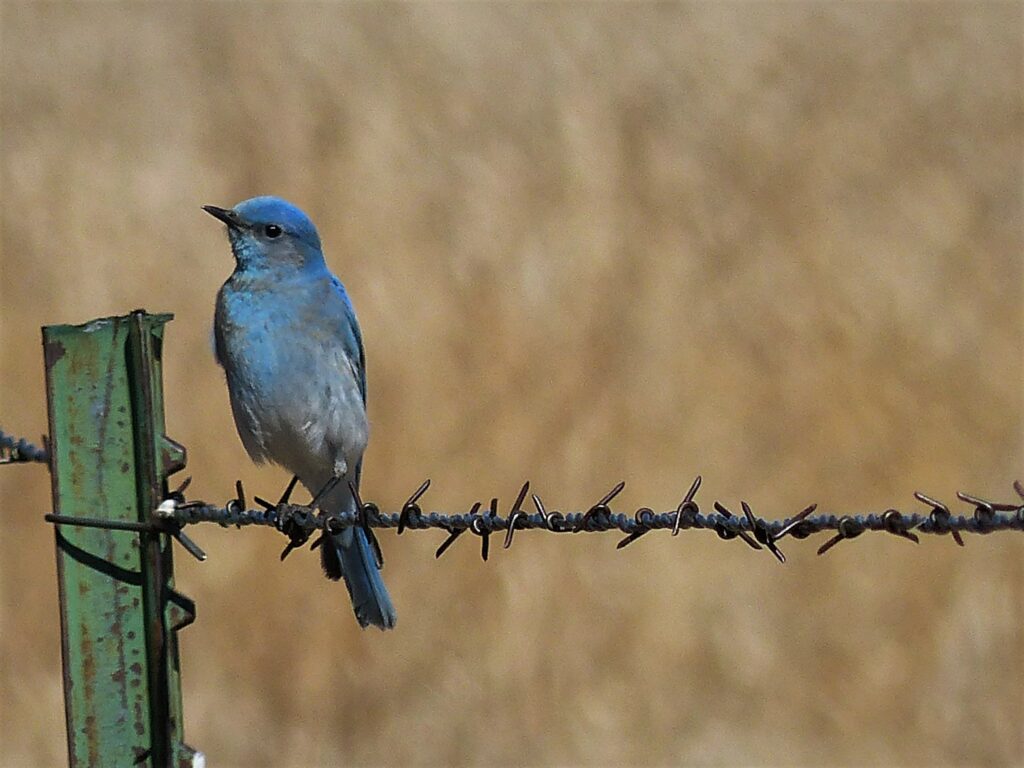
Female Mountain Bluebirds show their blue in wings and tail feathers; the males, as in many other birds, are the flashy ones! We’ve come to recognize which one is responsible for tending the eggs vs the designated parent to guard. The male Mountain Bluebird often feeds the female on the nest.
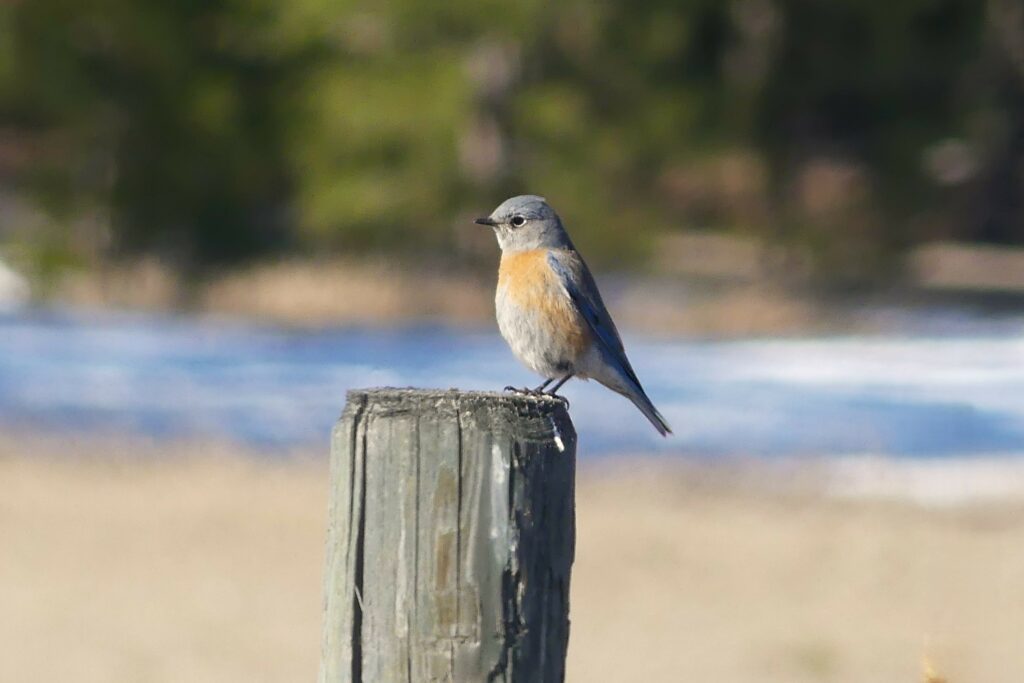
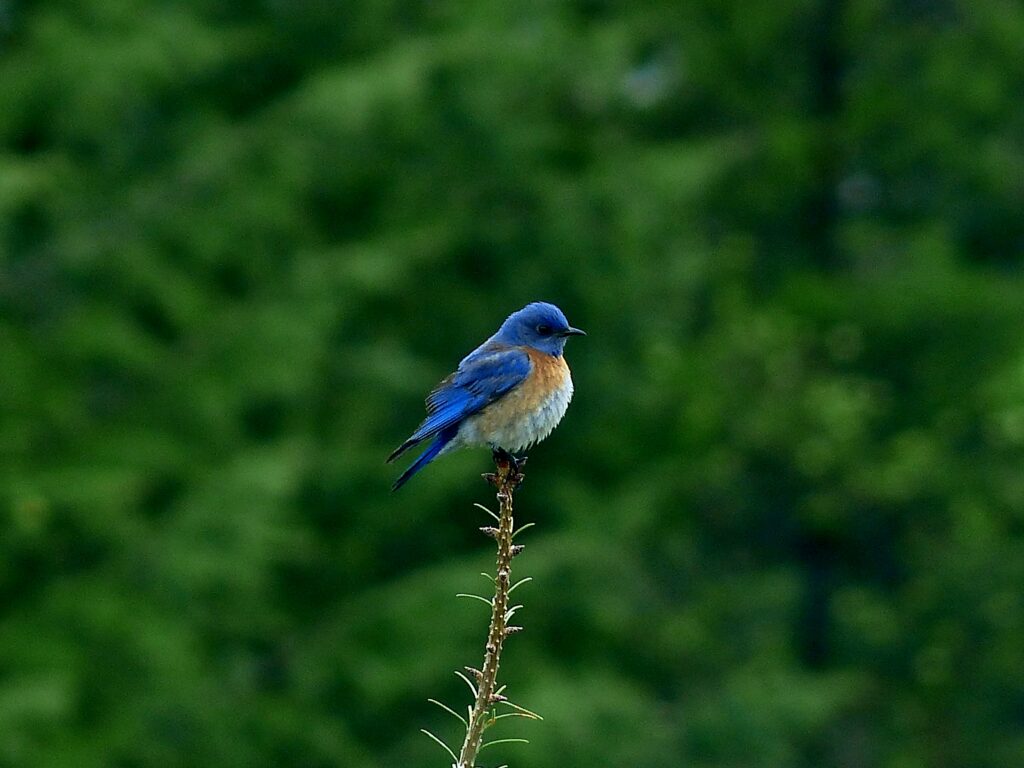
Western Bluebirds’ breeding range is throughout this area, but I only see them at the beginning and end of their nesting period. The female, at left above, is a very pale blue-gray head, wings, and tail and a paler orange and white breast. The male Western Bluebird leaves no doubt about its identity with the brightly colored blue back and head feathers and deeper orange upper breast.
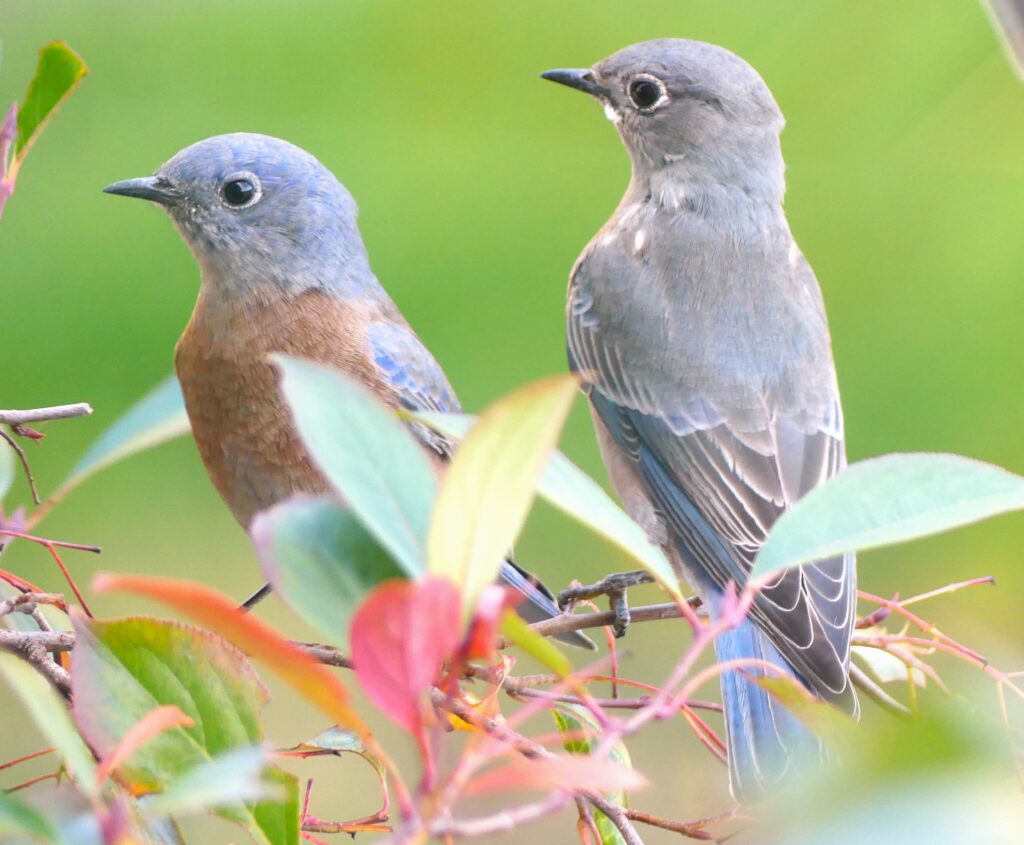
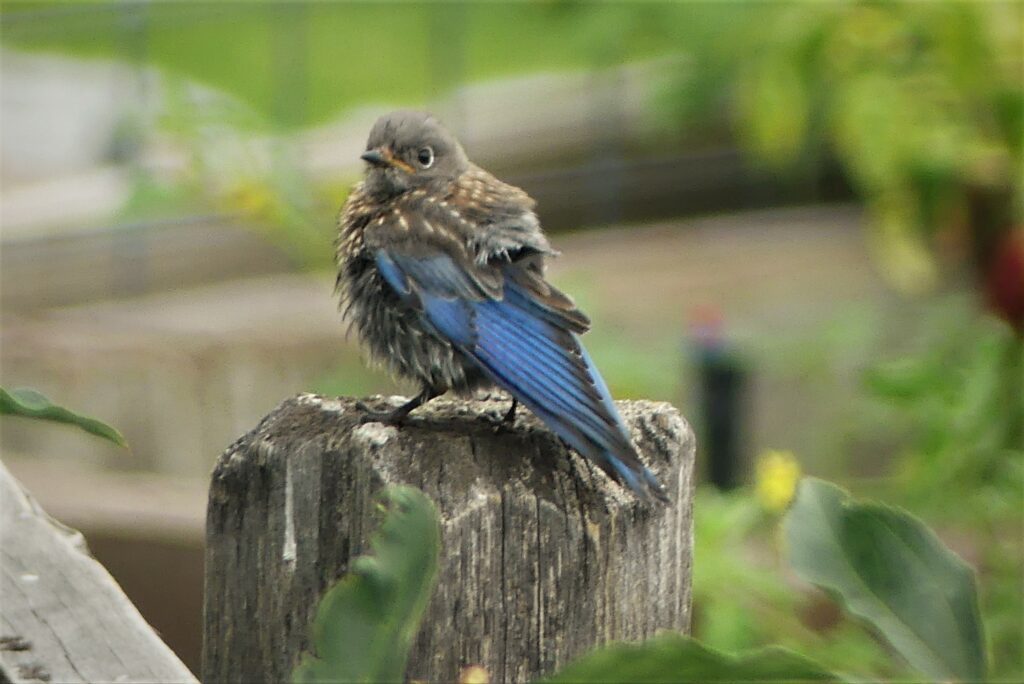
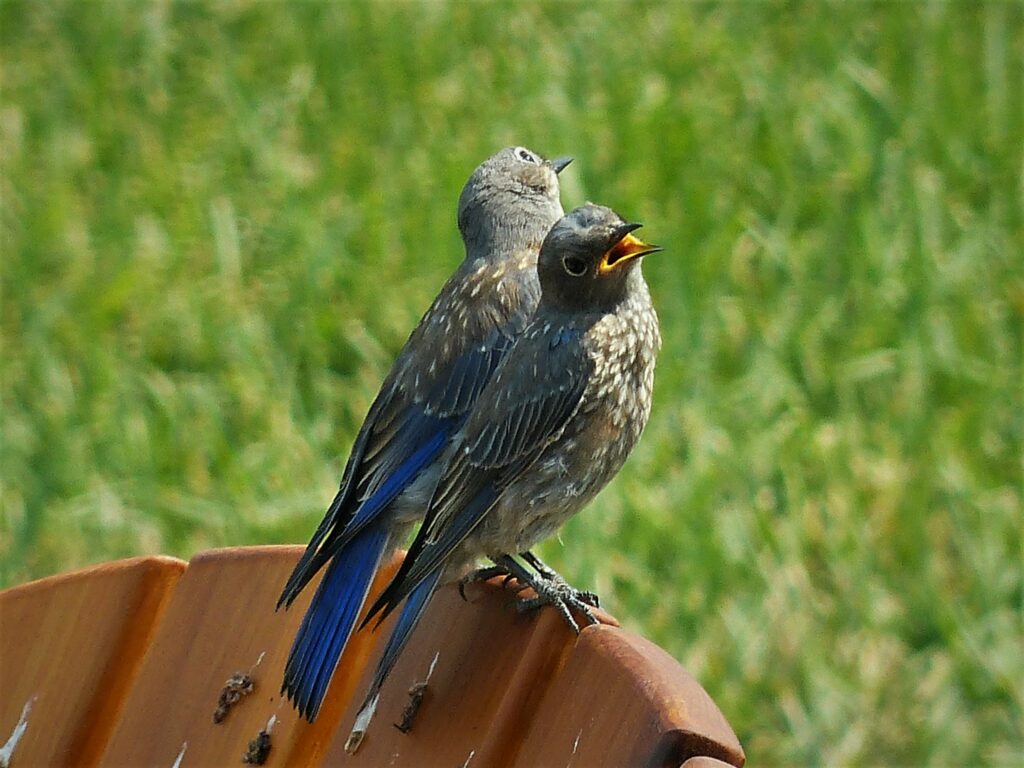
In August, I look for the migrating Western Bluebirds when they bring their young ones back to feed, grow, and improve their flying gear before moving on. Note the yellow gape on the immature bird at right. It still can open its mouth wide to receive a gift of food!
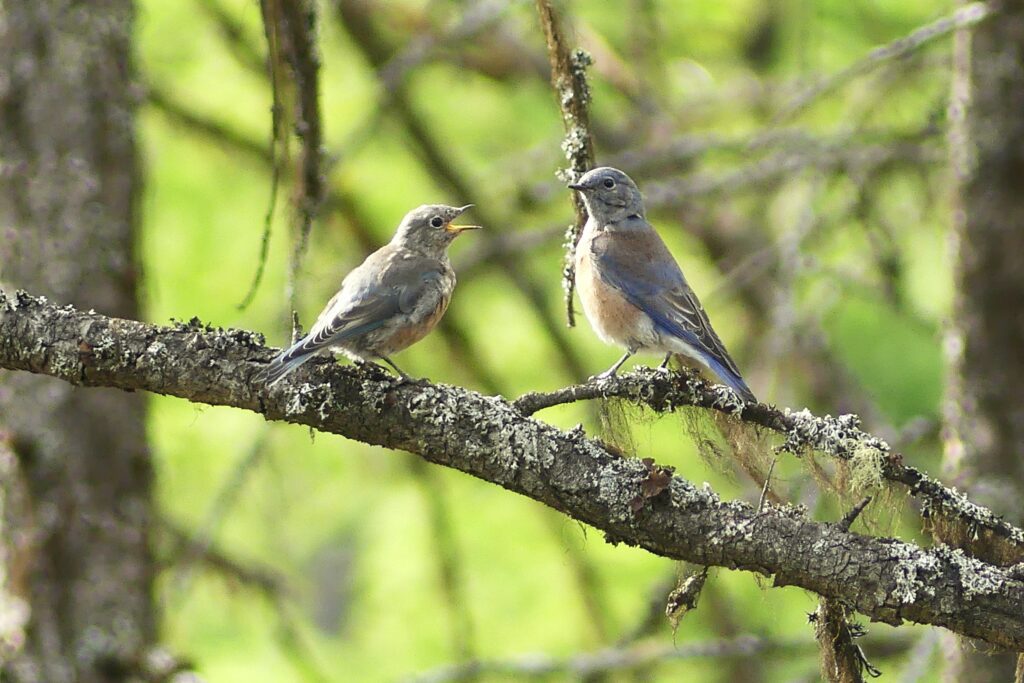
As I hiked on a woodland trail in September, a flock of birds dropped down in a partial clearing. A Yellow-rumped Warbler landed near me, but the calling of a young bird drew my attention to a branch nearby. It was an immature Western Bluebird begging for food from its unprepared mother!
Pictured at right, a pair of immature Western Bluebirds begged food from a parent as they perched on the back of a chair on our patio! I’m unsure whether these incidents were part of the process of weaning the youngsters and encouraging them to forage independently, but those youngsters certainly caught my attention!
TOWNSEND’S SOLITAIRE
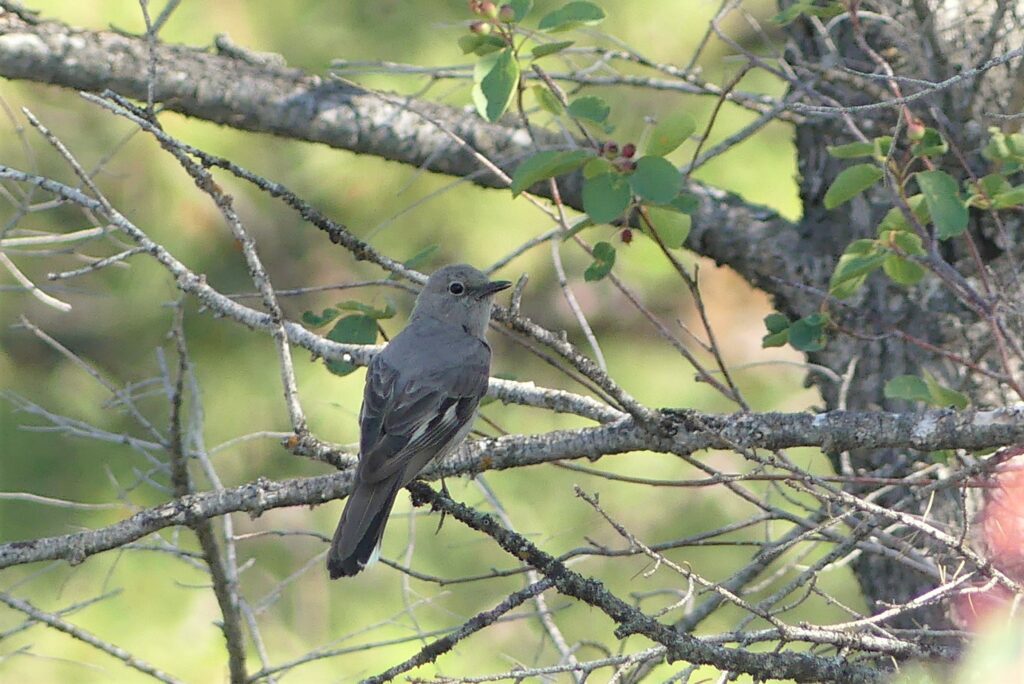
The Townsend’s Solitaire is a year-round resident of our area. In summer, they feed on fruit and berries; in fall and winter, I see them in areas with Juniper where, like Robins, they feed extensively on Juniper cones. Their gray coloring serves as good camouflage among the lichen-covered branches, but their lovely song is unmistakable.
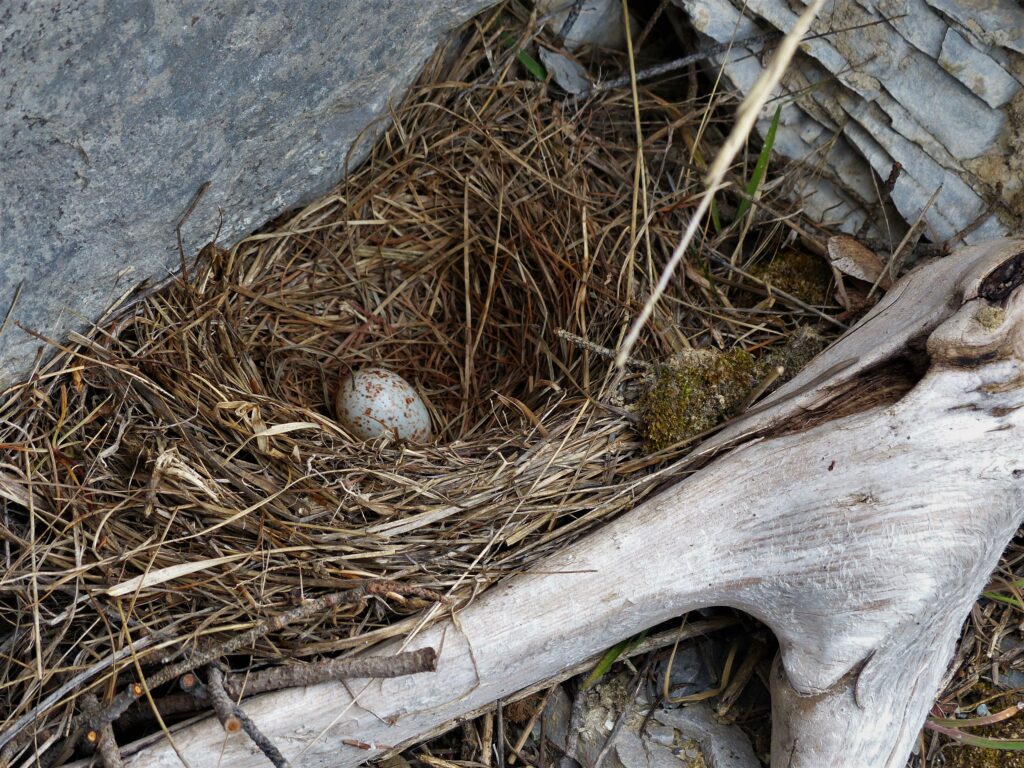
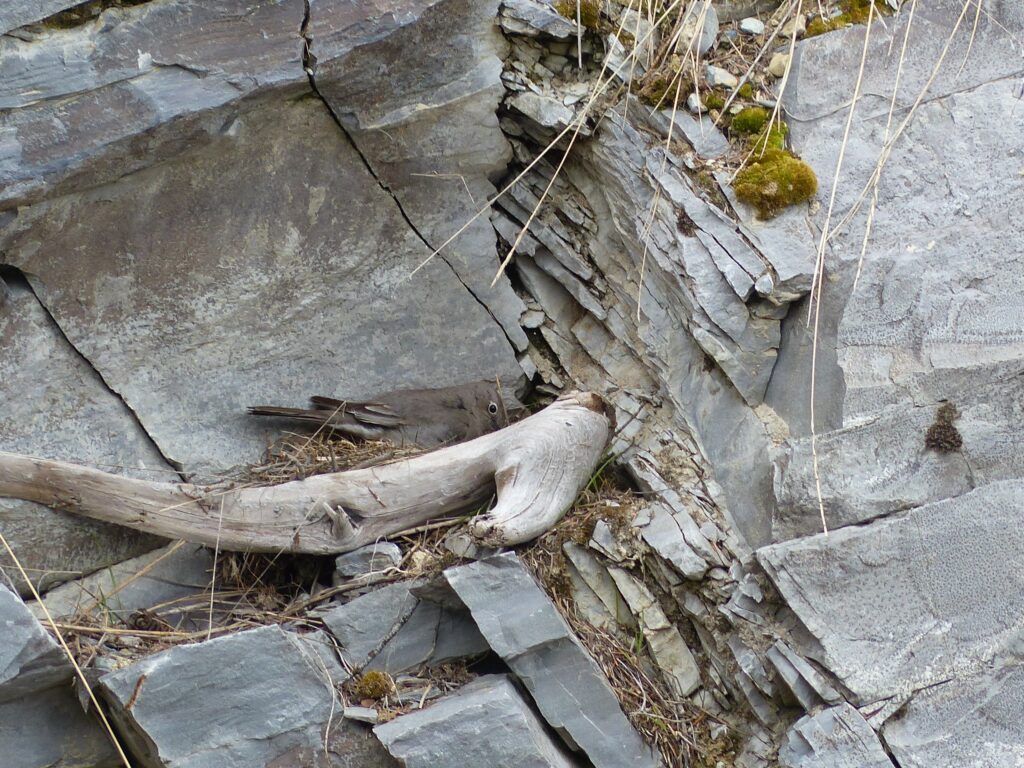
One spring, a pair of Townsend’s Solitaires entertained us with their lovely melodies many times a day. It wasn’t long before we noticed that they were spending a lot of time around a rocky outcrop – and then a nest took shape, and we saw one spotted egg in it. The female was hard to see as she crouched behind that piece of wood that provided a support to hold the nest from falling off the vertical rock wall. Unfortunately, the day after we saw that one egg, we noticed that the nest had been destroyed. The pair of Solitaires stayed and sang…and apparently made another nest nearby.
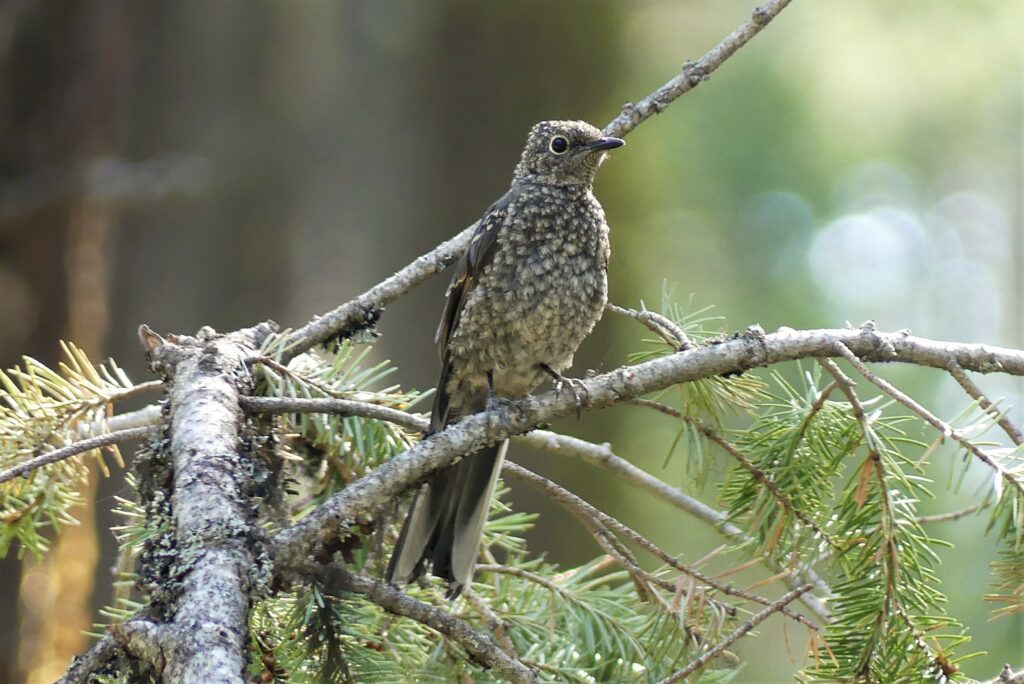
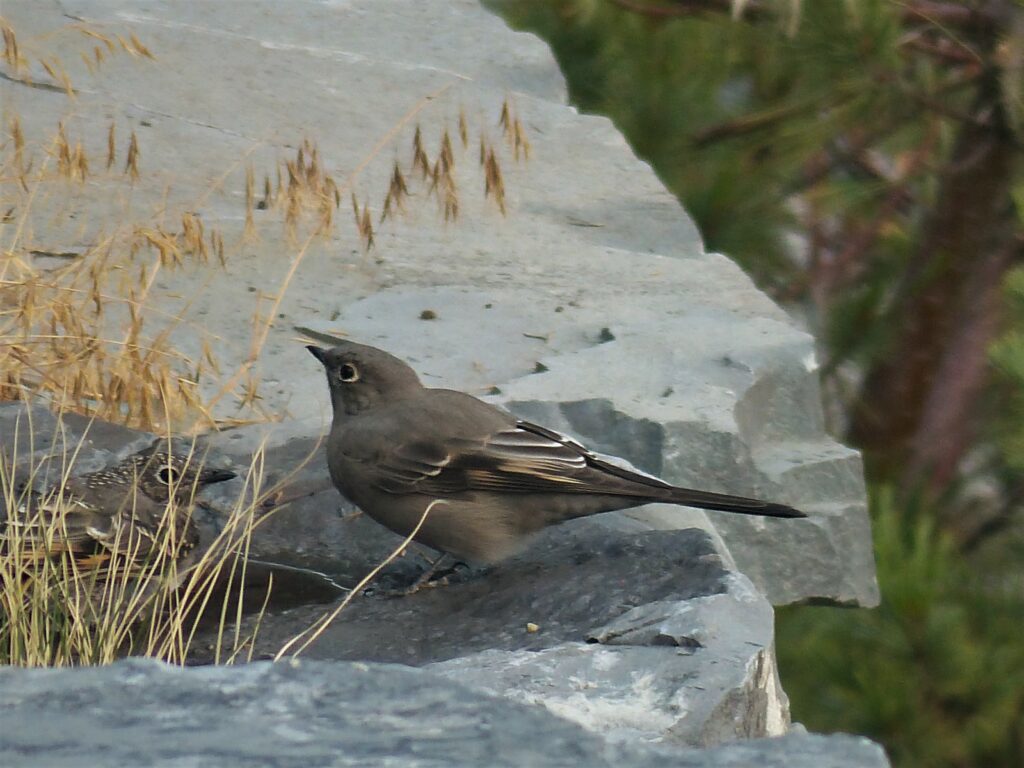
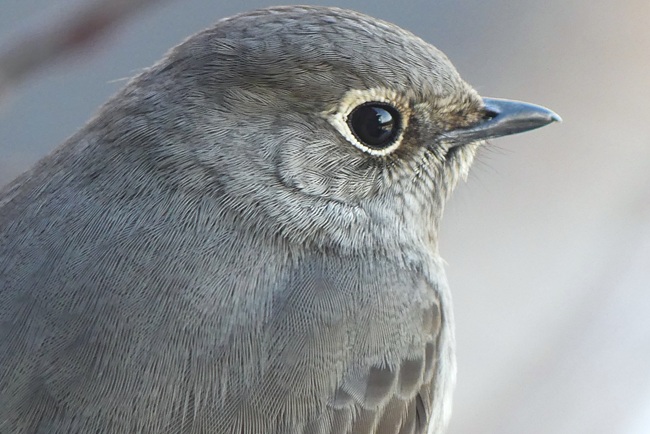
An immature Townsend’s Solitaire often perched in the Douglas Fir near our yard where it often came to water. At right, a parent and the juvenile are pictured at the water hole they preferred. The image of the immature bird displays two features that help identify this gray bird: the white feathers at the sides of the tail and the bright eye ring.
SWAINSON’S THRUSH
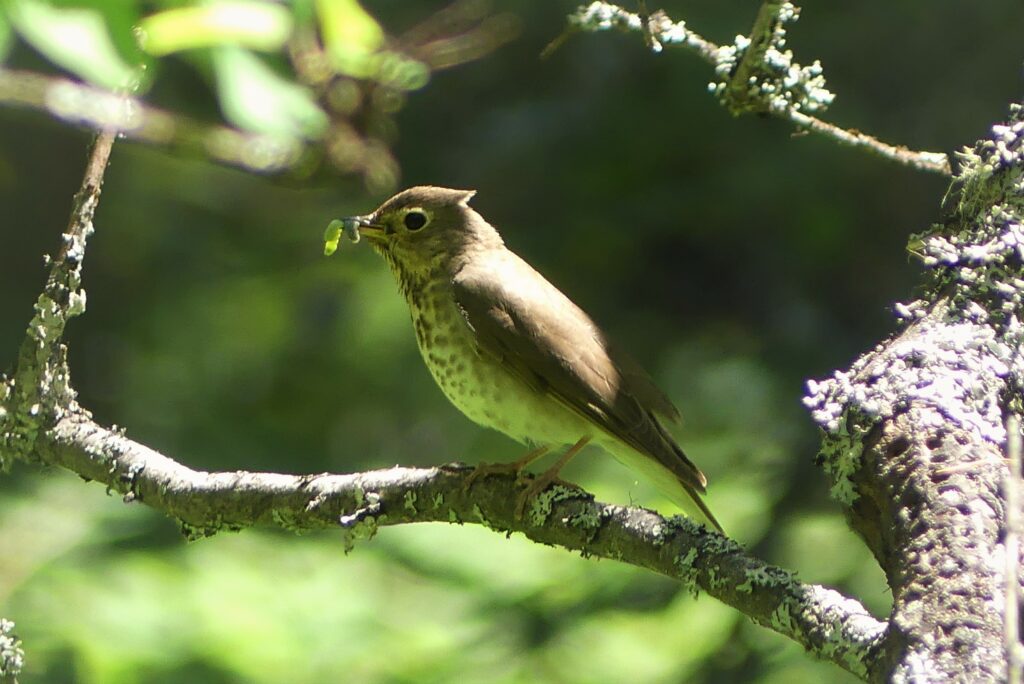
I start listening for Swainson’s Thrushes in the woods in June. Their clear, bell-like tones are so appealing to me. These little songsters hide from me remarkably well; it is in July when they are bringing home the insects to feed nestlings that I see them. These thrushes migrate to South America for the winter. I’m so grateful that they make the trip to the woodlands of West Valley to raise their families!
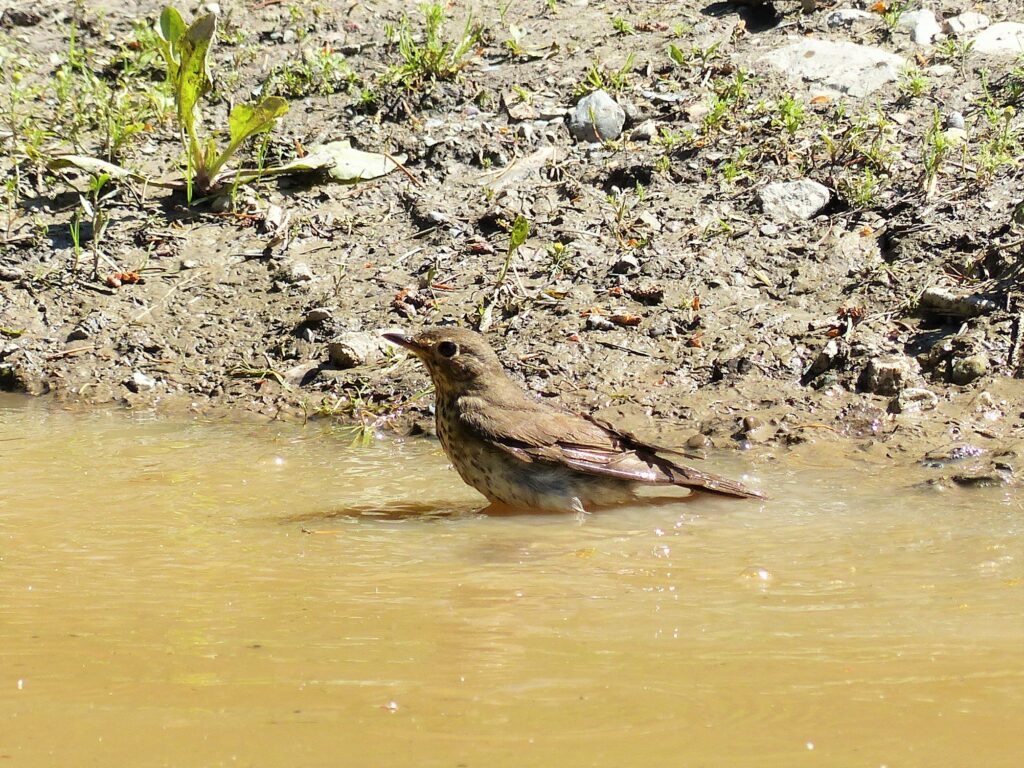
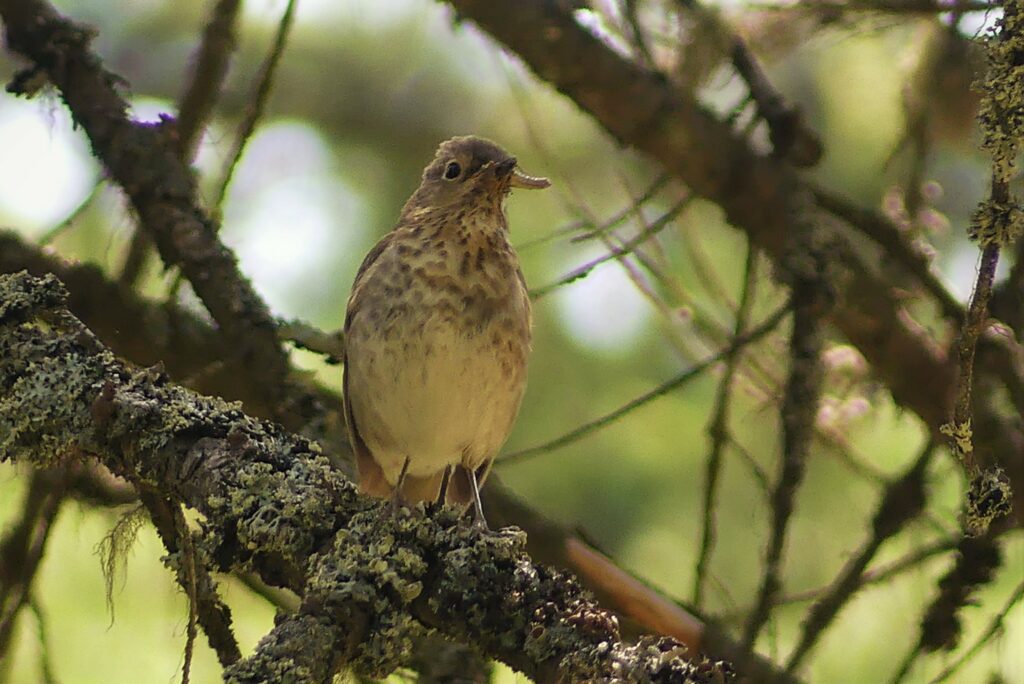
These hard-working parents deserve a break! Protect those woodland puddles!
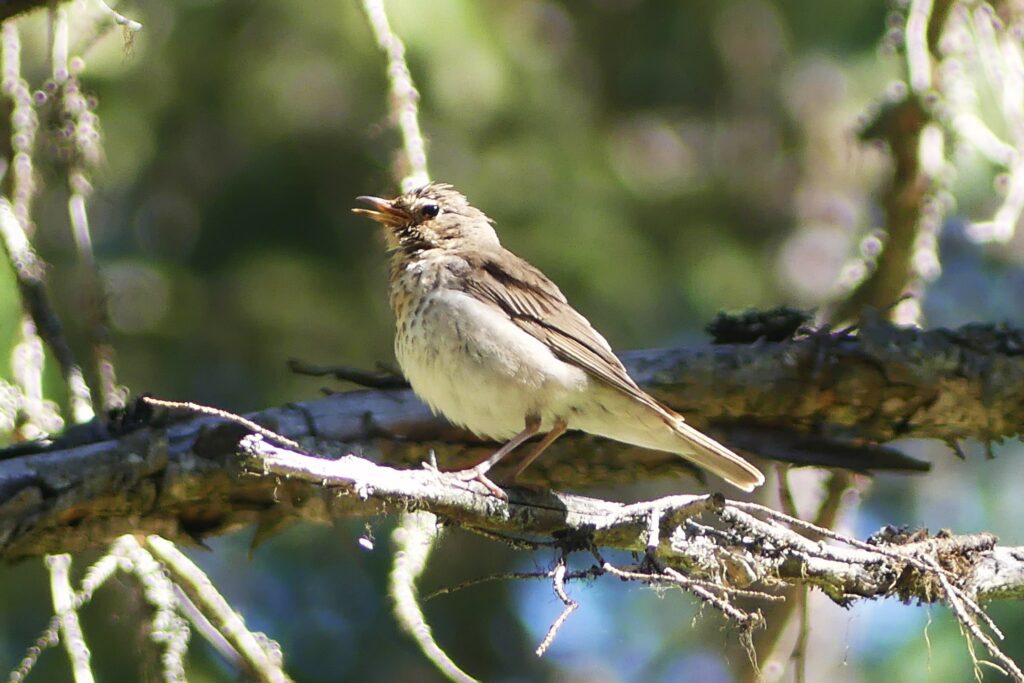
I happened to be in the dense woodland where this Swainson’s Thrush lived on two consecutive days and was able to locate it on both occasions thanks to its non-stop singing. Perhaps this bird’s singing lured me back! Fledglings soon take on the appearance of their adult counterpart; I had a strong feeling that this one’s calling was a begging call, but I have much to learn before I’m an expert on their language!
VARIED THRUSH
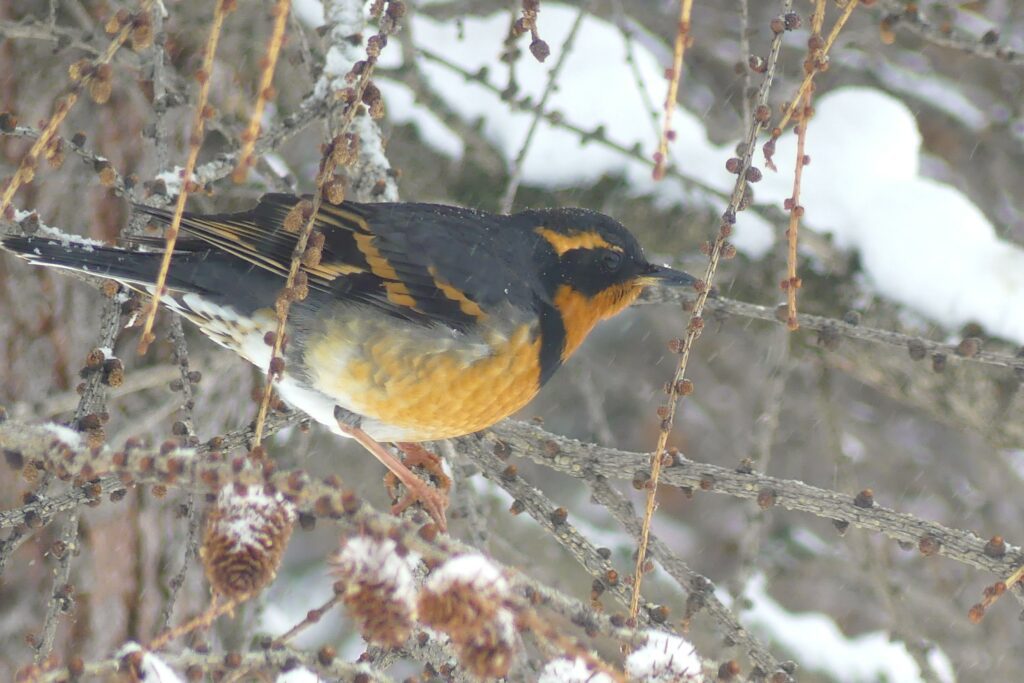
The Varied Thrush made its first visit to our yard on March 15. Although I had heard its unique call before, it was my first actual sighting. What a treat! The combination of orange tones with black and blue/gray on its Robin-sized body were delightful. It seemed to prefer the Larch tree – perhaps because of the suet feeder that hangs there?
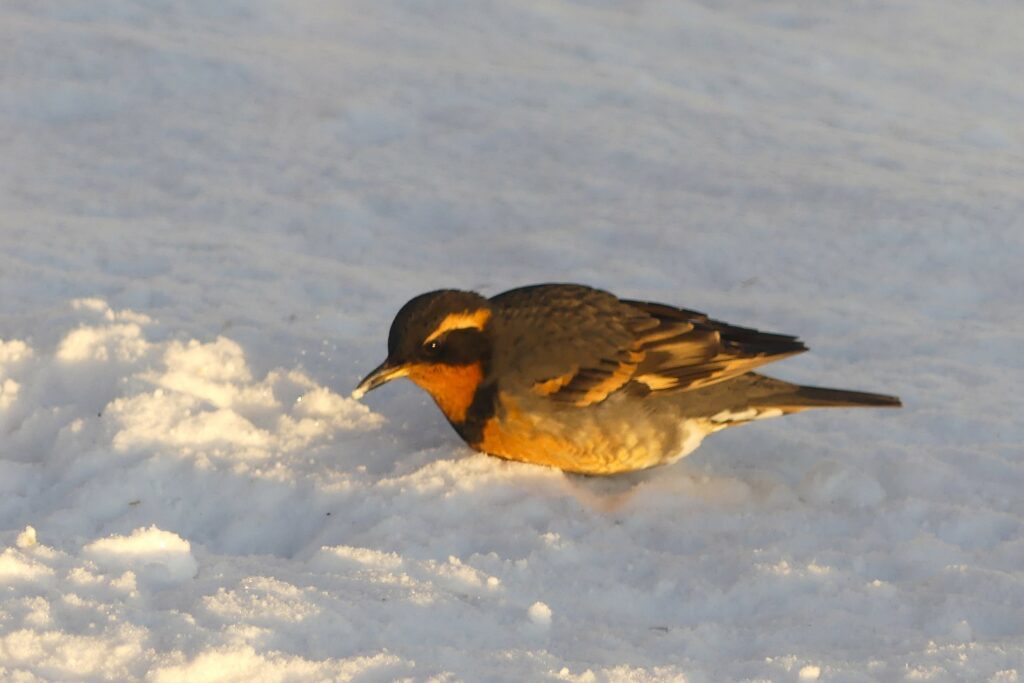
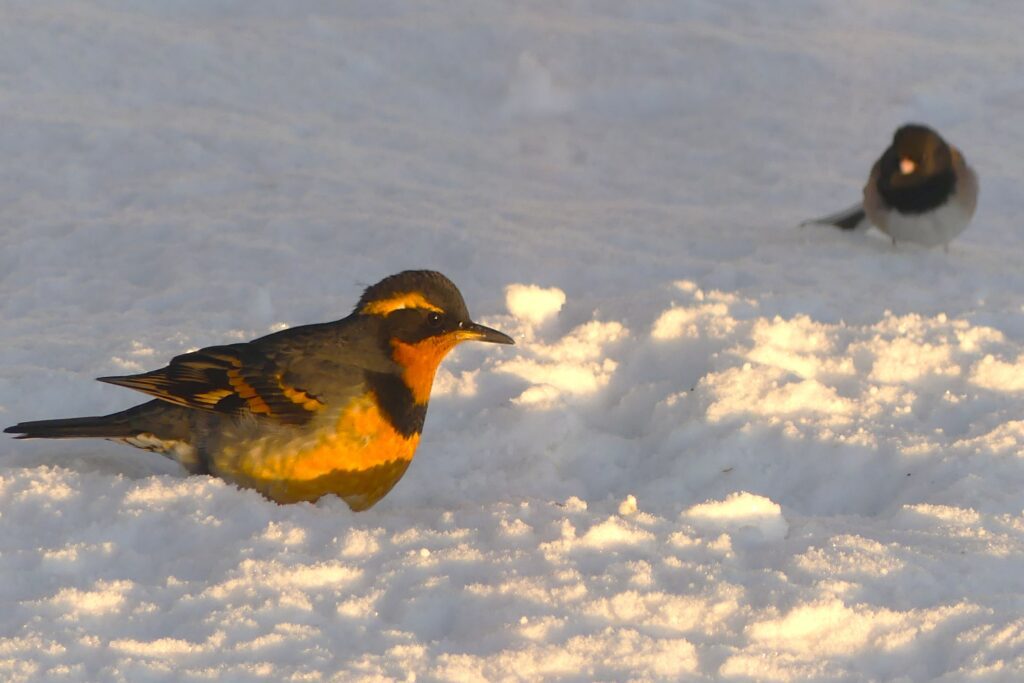
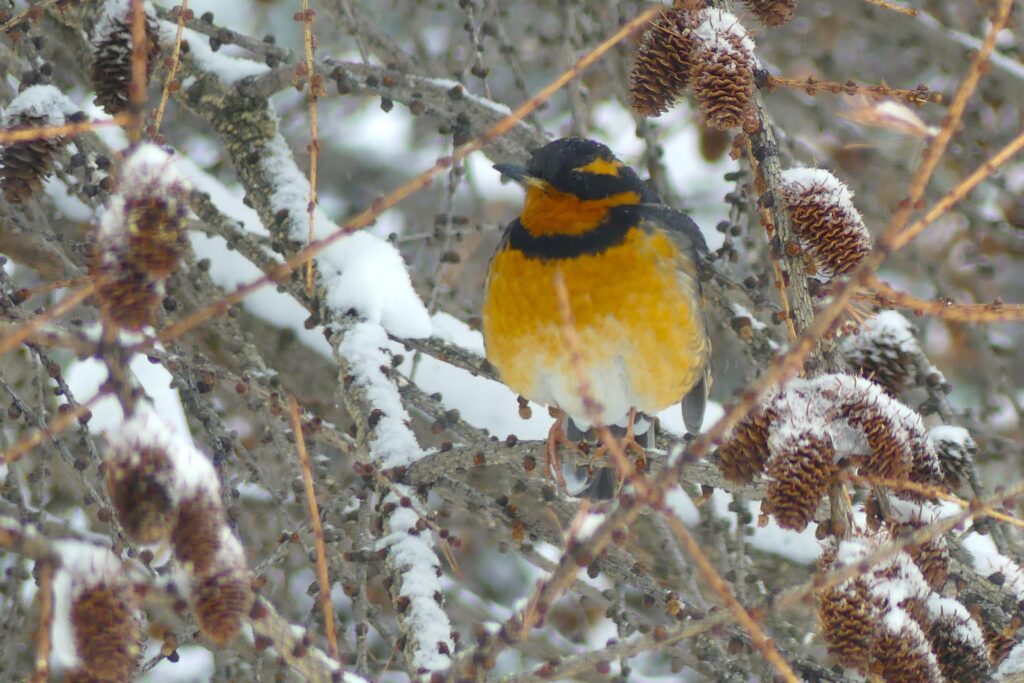
Celebrating the arrival of another member of the Thrush family in West Valley!

Stunning photos of birds in the thrush family at all stages of development. I particularly enjoyed the varied thrush which I rarely see.
It is a pleasure to share my observations with others. Thank you for your kind comments!