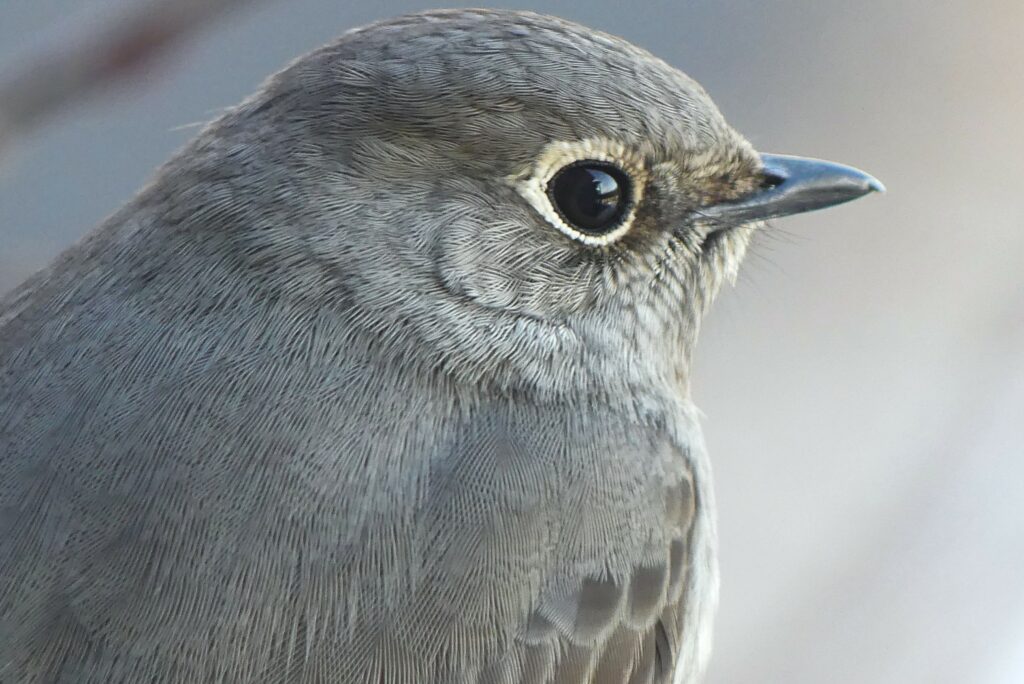
This Townsend’s Solitaire’s bright white eye rings are what helps many birders recognize the species in a flash. Many other birds have a similar feature that not only help people, but other birds to identify others of their kin. Read on to see a number of variations of this feature.
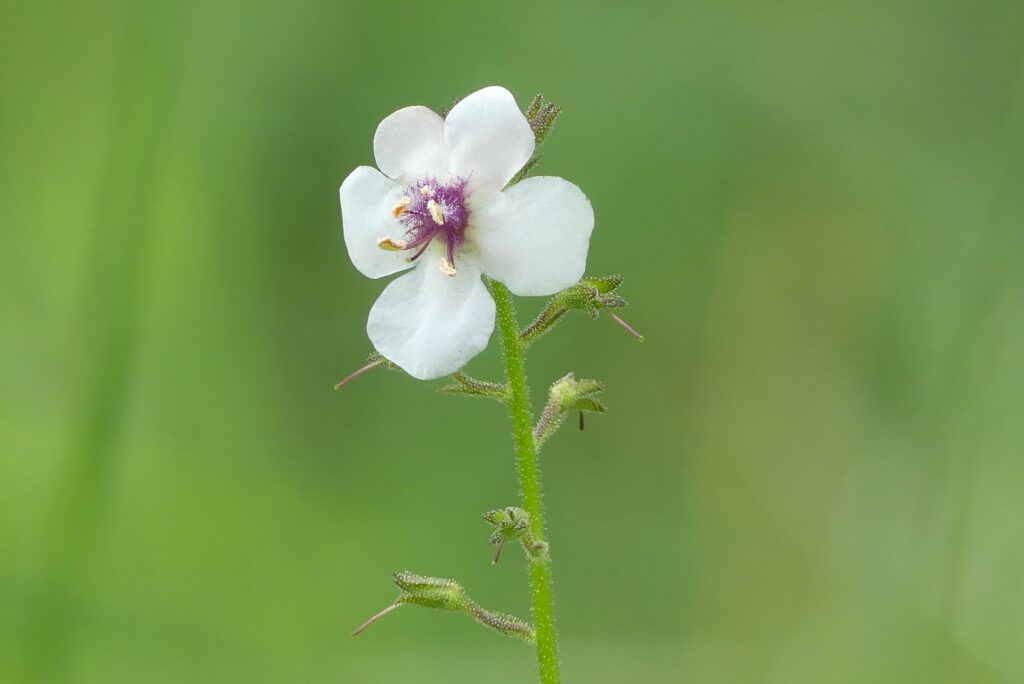
There are two species of Mullein in the West Valley; both are non-native plants with potential for spreading extensively. Read on to see images of both and to learn about their characteristics.
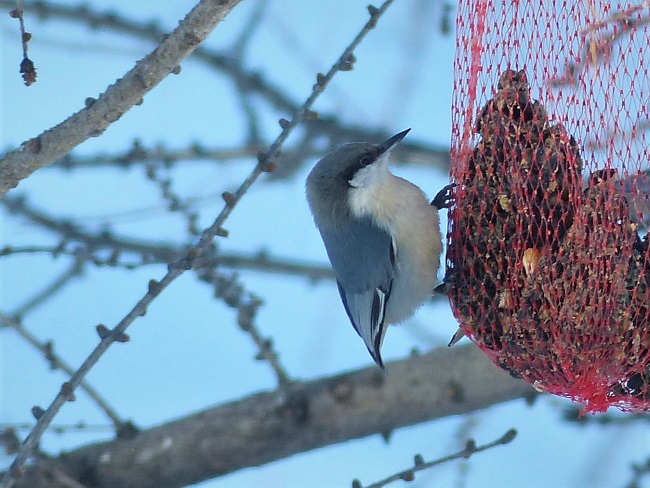
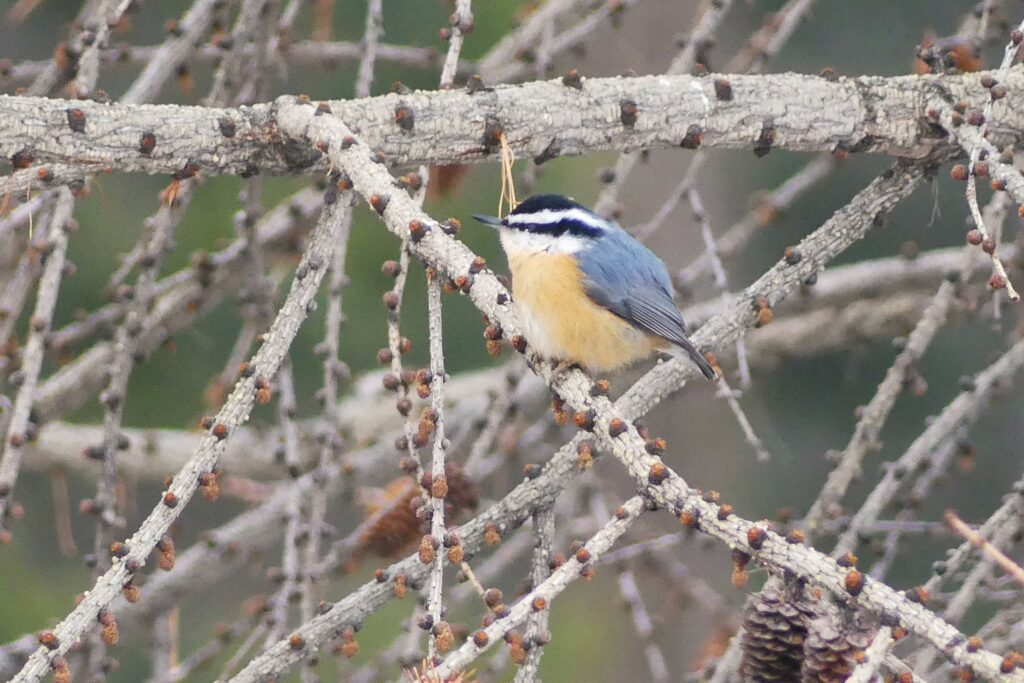
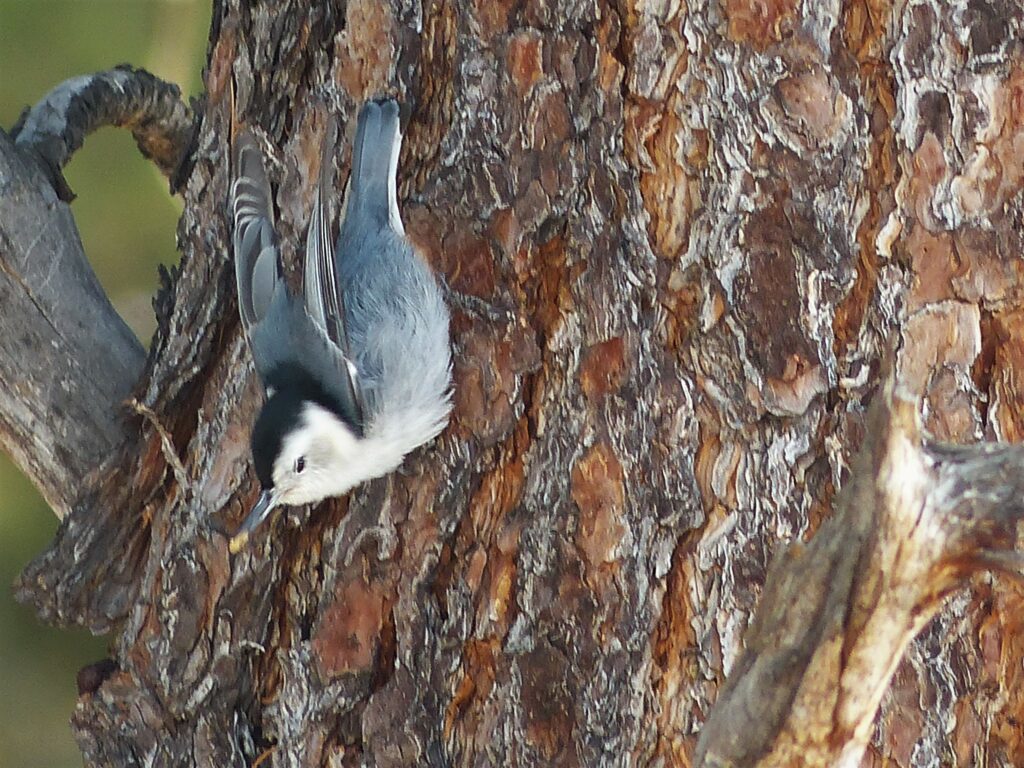
The Pygmy, Red-breasted, and White-breasted Nuthatches are very familiar here in the West Valley. Tiny, acrobatic, vocal birds that usually stay here year ’round, they are fun to watch. Read on to see what I have discovered about their unique gifts.
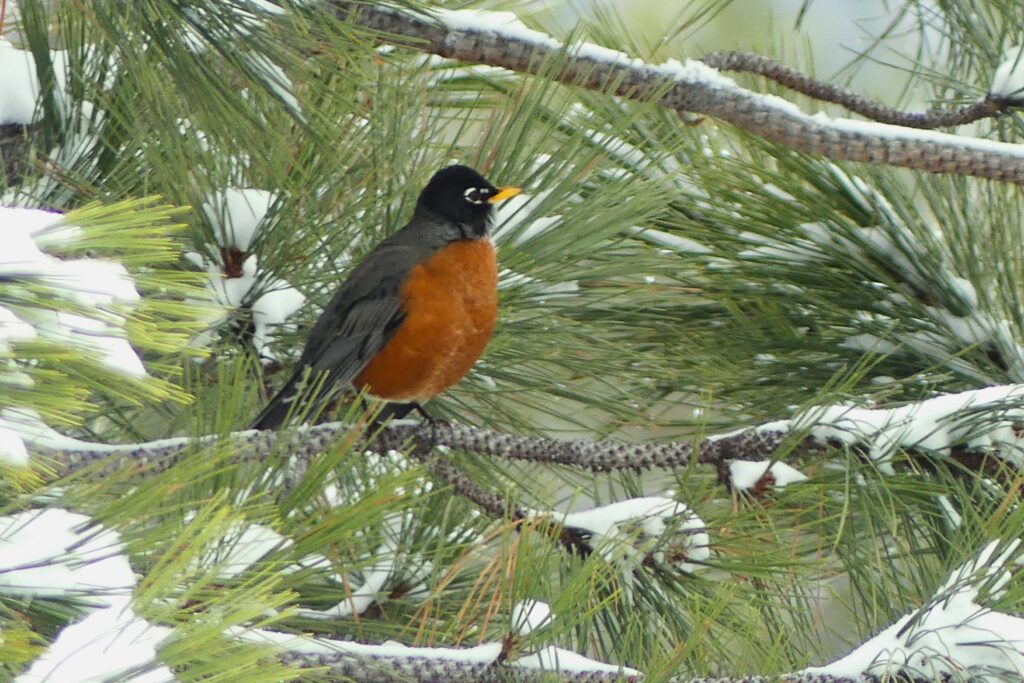
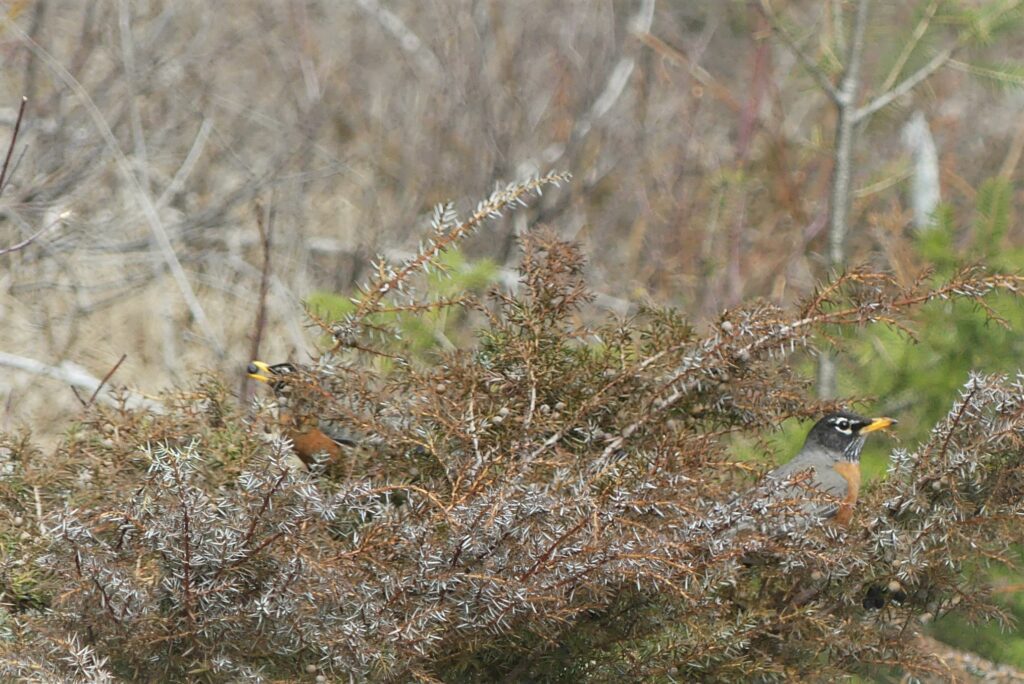
The American Robin may be the most familiar of the Thrush (Turdidae) family of birds. We used to think of their arrival as a sign that winter was over, but more recently, they have become a common sighting year ’round. In addition to pulling earthworms out of thawed earth and capturing a great variety of other insects, Robins feed on Juniper cones as well as frozen fruit and berries when the ground is frozen. Read on for more stories and pictures about members of the Thrush family that I’ve seen in the West Valley.
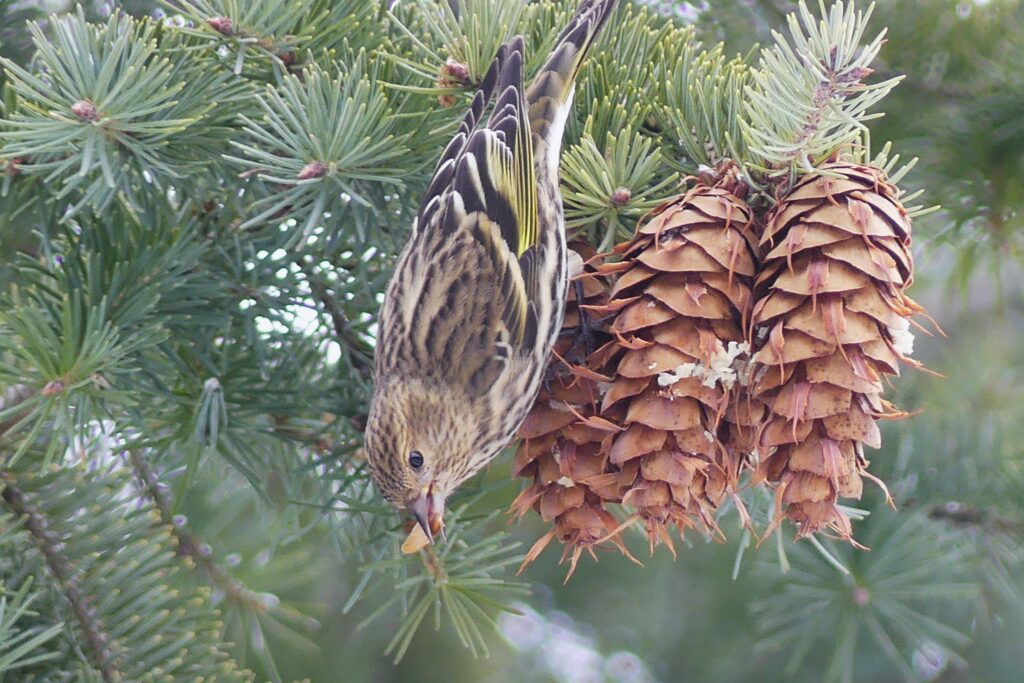
Pine Siskins are nomadic little finches that wander the northern hemisphere, taking advantage of plentiful food supplies. This has been a “cone year” in our area, and the Pine siskins have been abundant. Gregarious little birds, they travel in flocks of up to 1000, their high-pitched chatter announcing their presence. Some years we don’t see them at all; other times, the Christmas Bird Count reports their numbers in the thousands.
Editor’s Note: The smaller images on this page my be enlarged by clicking on them.
Part I focuses on some of the local birds that raise their offspring in cavities, that is, holes in trees, man-made house-like structures, and holes in earthen areas. Part II will cover some of the birds I have discovered raising their young in more exposed locations. I marvel at their ability to overcome the challenges that weather, predators, and life with dependents without physical barriers must present.
A Western Wood-Pewee fashioned a nest of grass, rootlets and bits of other natural material on a lichen-covered limb of a Douglas fir tree. There are many needle-laden branches overhead that provide shade and divert rain drops. When she returns to the nest, she always lands on a different branch and little by little approaches the nest site as if she doesn’t want to reveal the location to others. I had the unique opportunity to observe all of this in reverse. I was in the area to visit a plant I was studying. As I cast my gaze around the location so I could note landmarks to help me return, I noted “something looks different about this branch.” Indeed, the lump overhead looked like a little nest! At first, I wondered if the nest had overwintered. It was a few feet higher than I could reach, so I only could observe, not touch. As I continued to look up, movement caught my attention: it was the owner of the nest, intent on getting to the empty nest. I froze in place and before I could blink, the bird arrived. I paused just close enough to get a couple of pictures before abandoning the area. I returned several times that summer to monitor the plant; I’d look to see if the bird was on the nest before getting close, but finding the well-camouflaged nest was never easy.
Editor’s Note: The smaller images on this page may be enlarged by clicking on them.
Beautiful West Valley is the chosen home of many species of birds thanks to the varied agricultural uses, ponds and wetlands, and forested areas. Locating an appropriate homesite and constructing a new nest every year must be a daunting task for animals with a beak and two wings as principal tools! Observing birds making nests and raising their families every spring is a delightful time of discovery for me. In the following pages, I will share some of the avian nesting activities I have been fortunate to observe in our area.
There’s a bite of cold in that wind and snow on the mountains. Back roads slip from ice to mud in a single step. Winter visitors wing over snow-bent grasses as if to say “Farewell!” and Pintails fill the open water still enclosed by ice. FOY (First-of-the-Year) birds, flowers, songs meet with excitement. In sheltered places, the sun warms the ground and our faces. Let’s check it out!
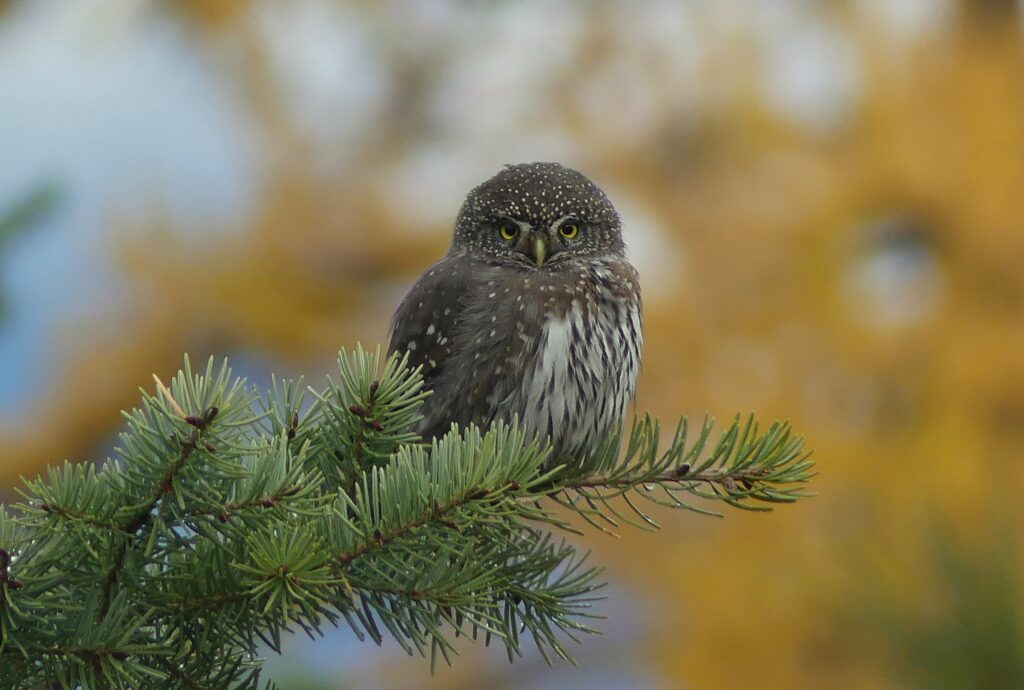
The Northern Pygmy-owl takes the prize for being the smallest owl in Montana. Tiny, but fierce, this little bird that stands 6-7 inches in height and weighs 2 to 3 ounces predates small to medium-sized birds (chickadee to blue jay sizes), small rodents and squirrels, insects, and has been known to successfully kill a domestic chicken with its sharp talons, strong down-curved beak, and amazing determination.
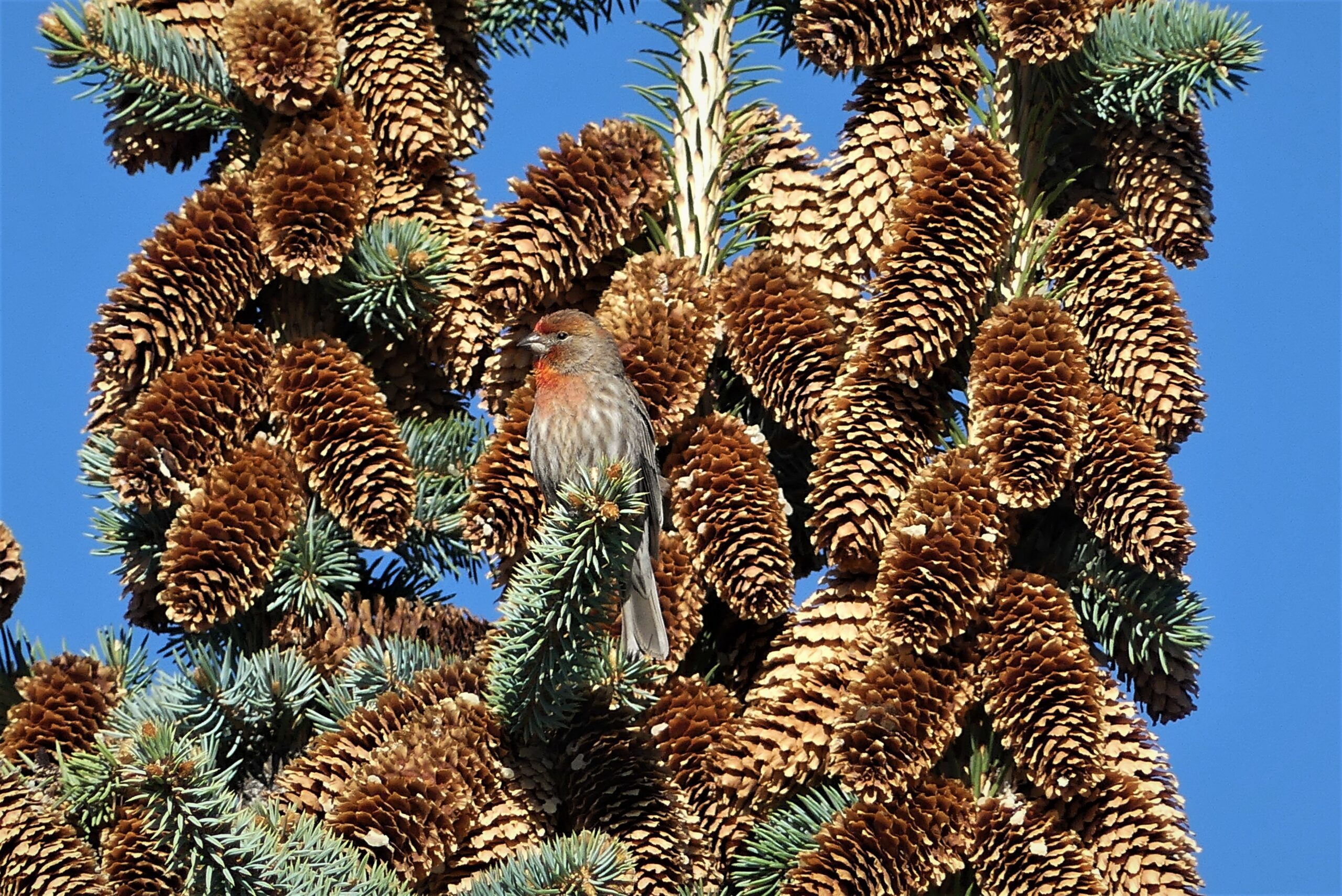
How does one describe House Finches? Striped bodies, head and chest of various shades varying from yellow to orange to pink to red. Flocking, chattering, perching at the top of of trees, stout-billed seed-eaters. Perched among the cones of a Blue Spruce in bright sun one morning, this perky House Finch looked like a Christmas decoration! Members of the Fringillidae family, there are 17 species, including many of our familiar visitors: crossbills, Evening and Pine Grosbeaks, redpolls, goldfinches, house finches, Cassin’s finches, and siskins. Many of these species are reported in decline and we can’t take them for granted.
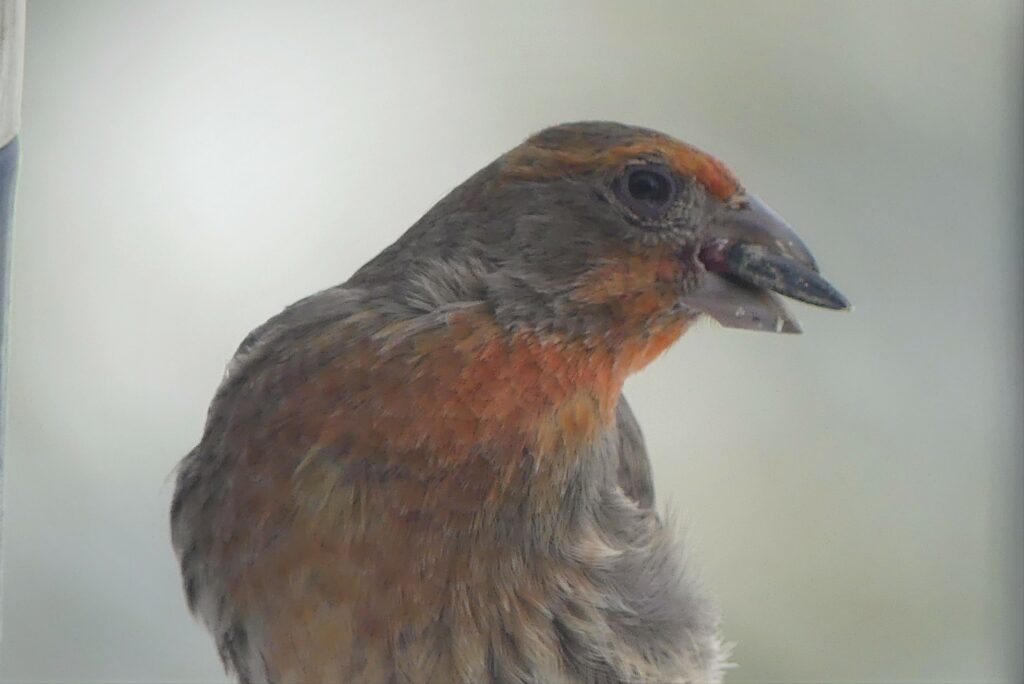
House Finch at the feeder with normal-appearing right eye
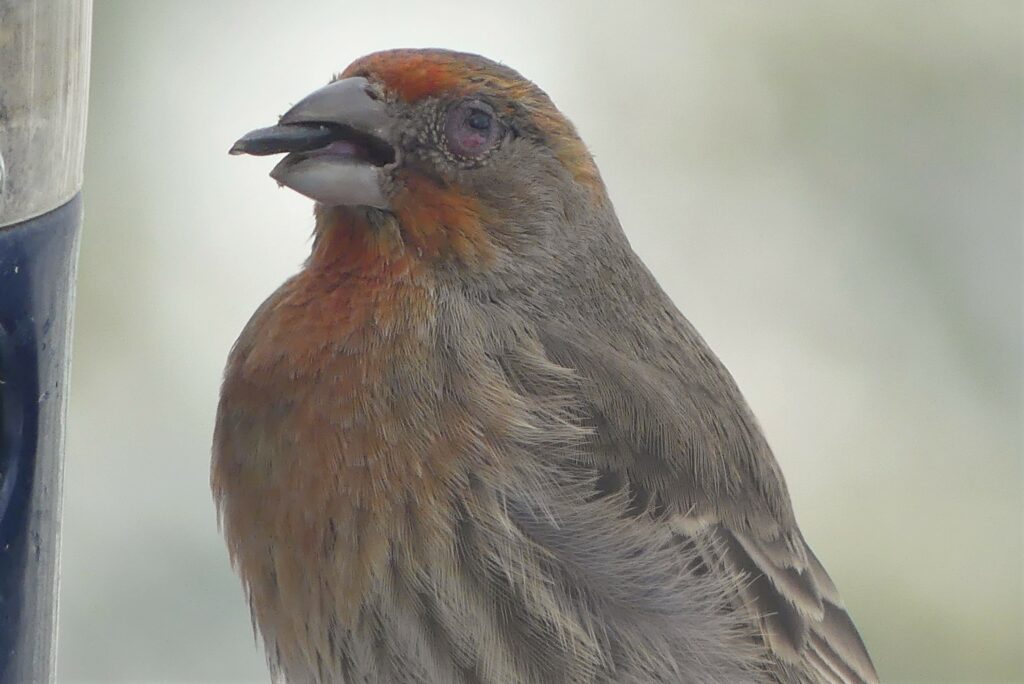
Same bird as above with head rotated to reveal abnormal left eye
Although I can’t diagnose the cause of the unusual-appearing eye, knowing that there are diseases among Finches that can be transmissible and deadly, this was message enough to send me out to take down the feeders, clean them and the area and not hang them out for a week.
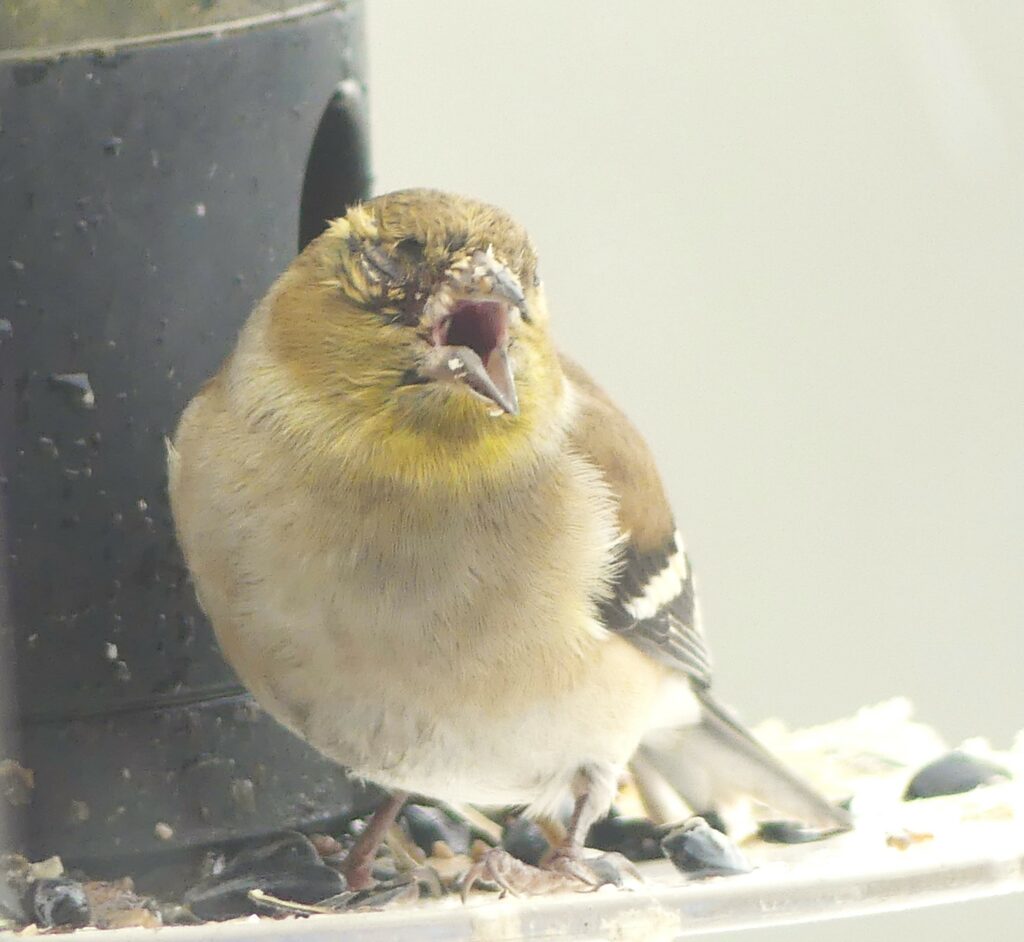
The following are images of birds that I have observed with eye problems. These appeared at my feeder in four different years and were the only ones observed in those years.
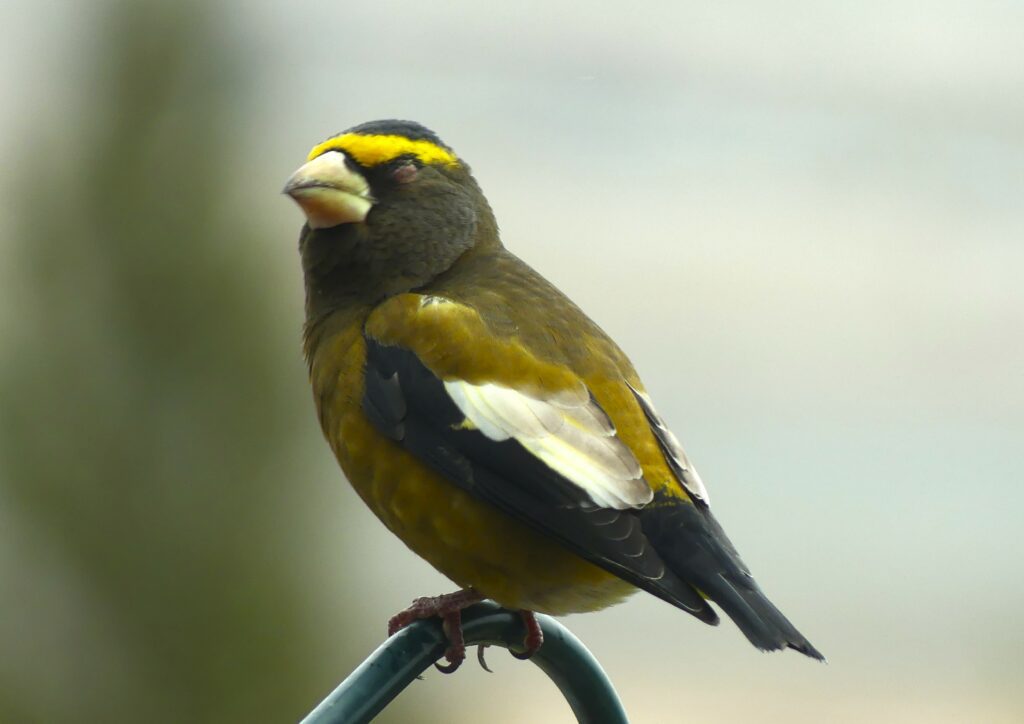
Evening Grosbeak with unusual-looking eyeAmerican Goldfinch with swollen eye with dischargeFemale House Finch with eye problem
I count cranes, specifically on six sections of grain and hay fields and ponds in the west valley. I go every day, late morning, 365 days a year unless I’m gone. Some people go to the gym, some for coffee with friends, some go to work. (More images of Dick’s photography are viewable on this companion article on our web site.)
Juniper is a woody plant that provides habitat and food for a number of bird species year ’round. For more information about local Juniper species and the birds that utilize them in all seasons…
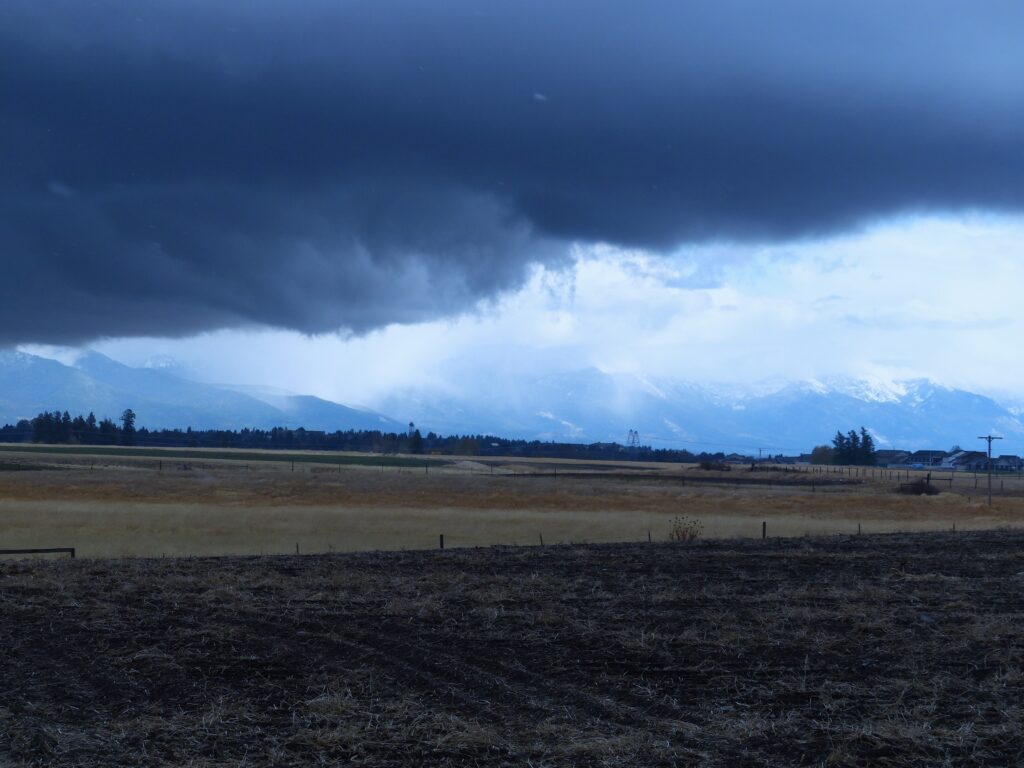
October 21, 2020 1:16 p.m. As I drove along West Valley Drive, the sun made a quick exit behind dark clouds, and I made a turn toward the ponds along Clark Road and West Springcreek Road to observe the dramatic change.
American three-toed WoodpeckerP.dorsalisBlack-backed Woodpecker P.arcticus
The above woodpeckers have been seen in the West Valley with increasing frequency in the last few years. To learn more about these unusual birds and why they are here, read on.
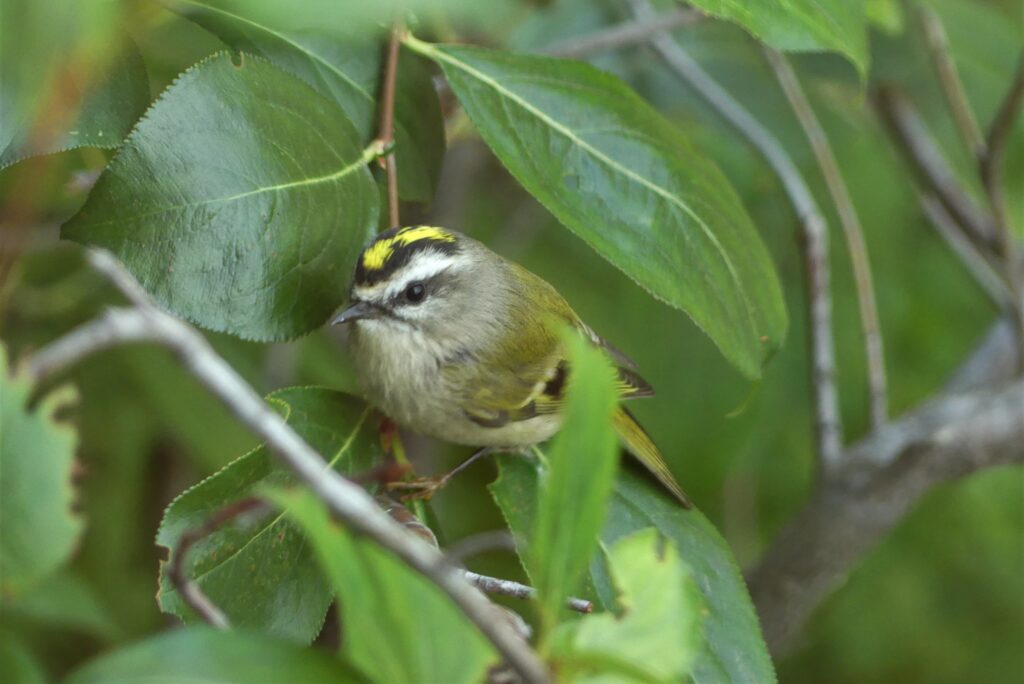
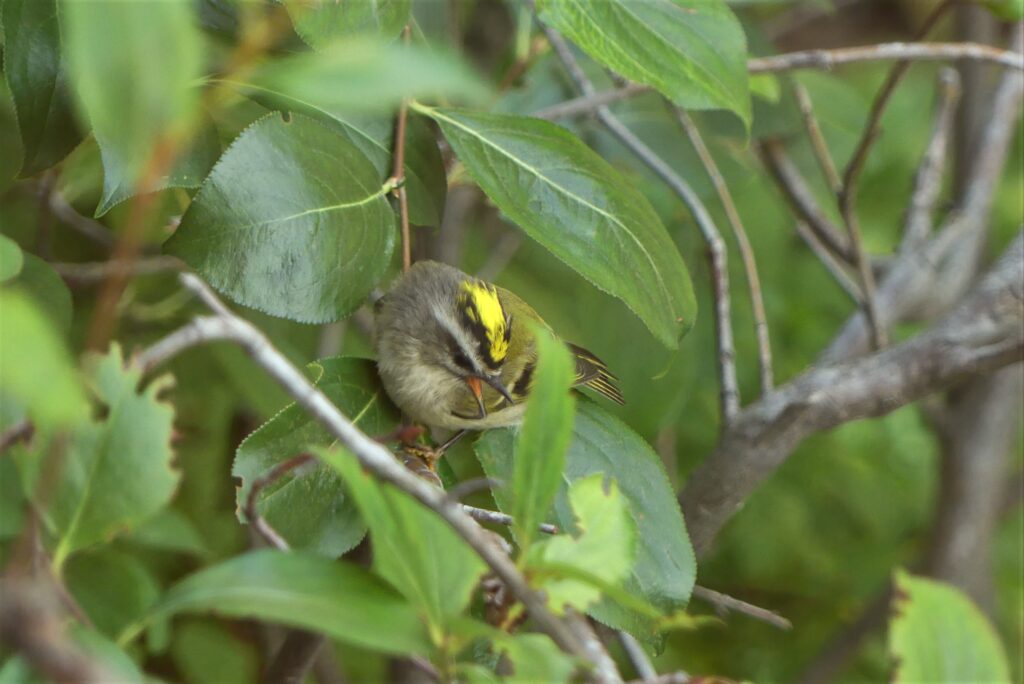
The Golden-crowned Kinglet is a permanent resident of conifer forests in our area. Regulus comes from Latin, meaning “little king”; satrapa is of Greek origin, meaning “ruler who wears a golden crown”. Males have a patch of orange feathers between the yellow, but they rarely display them. I’m assuming this one is a female, but it’s possible it’s a male in a peaceful mood!
At only a half-inch longer than our smallest bird, the Calliope Hummingbird, and weighing a mere .2 of an ounce, it’s no wonder we don’t see this little one very often. This high-energy little insectivore usually travels with others of its kind seeking food. They hover at the ends of twigs to gather microscopic mites, aphids, and aphid eggs; in summer their choice of insects is greater, and they occasionally find fruit to add to the protein sources. In winter, their most nourishing food is inchworms, the caterpillar of the geometrid moth, that they find frozen to twigs – mostly of conifers, but occasionally on maples, too.
The female Golden-crowned Kinglet constructs a hammock-like nest of moss, lichen, spider silk, rabbit hair, twigs, feathers, and other plant materials. Then she lays 8 to 11 bee-sized eggs in two layers, using her warm legs to incubate the lower layer! Usually, birds with a low success rate in raising young or migrating have big broods; Golden-crowned Kinglets’ survival challenge is overwintering in our cold climate on a low carbohydrate diet.