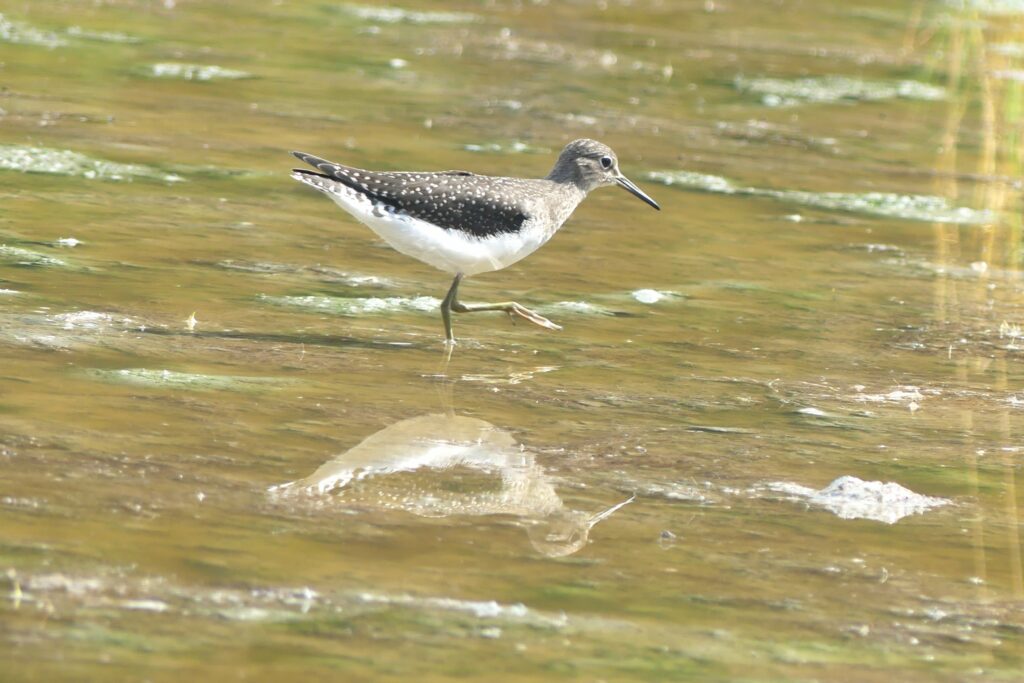
Solitary Sandpiper at Bowser Lake in West Valley on August 8, 2026
During the first three weeks in August, I was drawn to visit Bowser many times to observe the early-migrating Shorebirds as they arrived and departed and to learn how this small saline lake attracted them. Read on to enjoy the little-known activity.
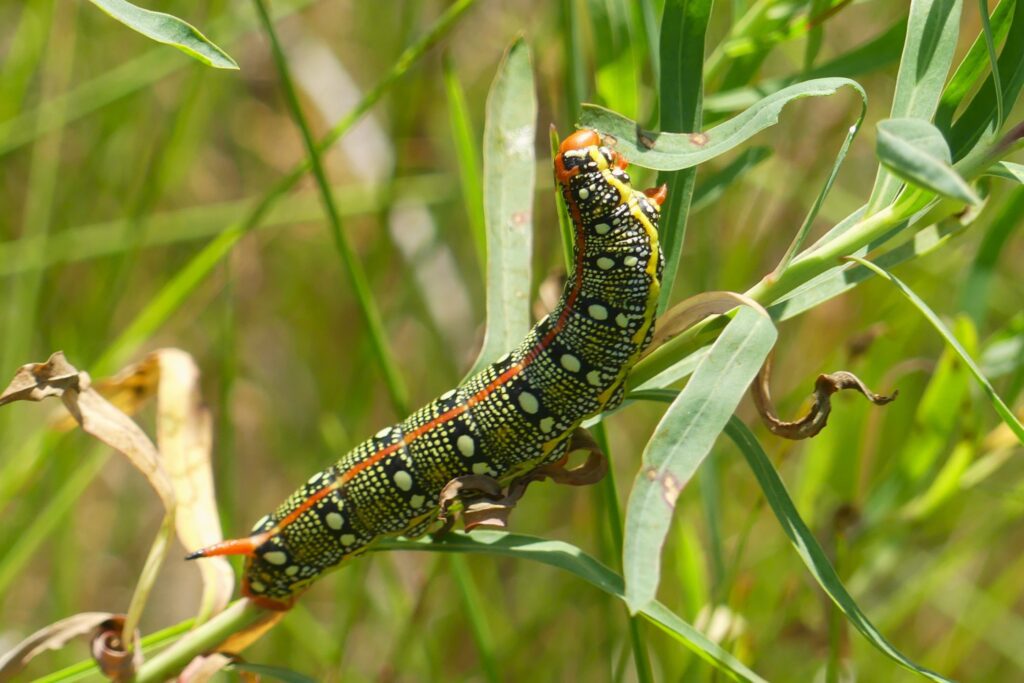
My first sight of Euphorbia esula, Leafy Spurge, in the West Valley was thanks to this caterpillar as I walked through an abandoned field. This 3 1/2 inch caterpillar’s appearance entranced me! Curiosity pulled me headlong into research and the information that follows.
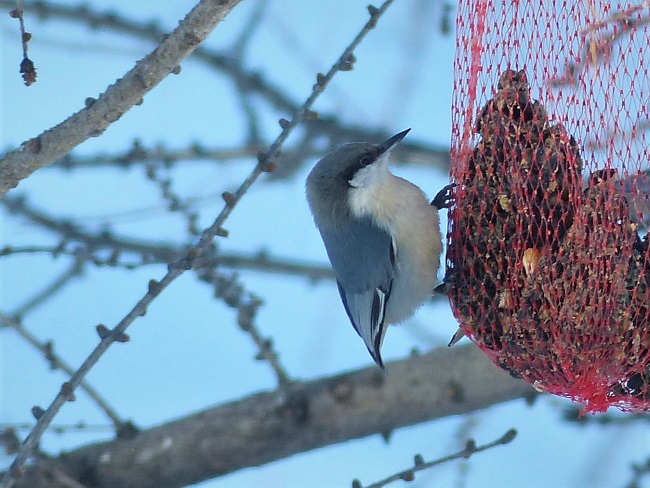
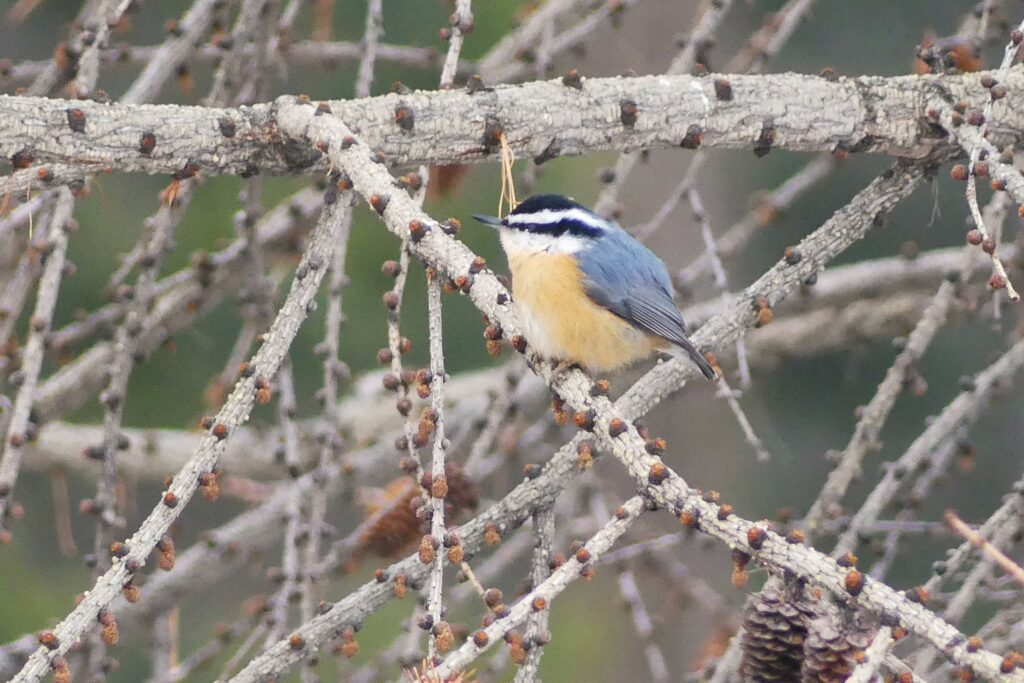
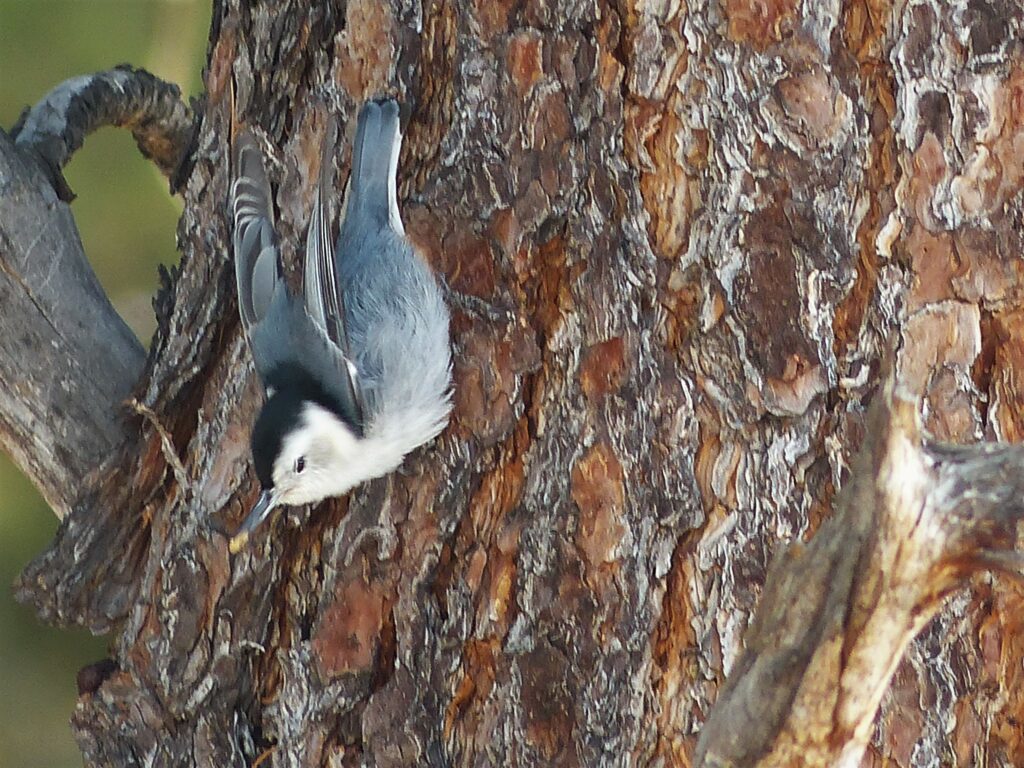
The Pygmy, Red-breasted, and White-breasted Nuthatches are very familiar here in the West Valley. Tiny, acrobatic, vocal birds that usually stay here year ’round, they are fun to watch. Read on to see what I have discovered about their unique gifts.
Spiders can be called creatures of one summer that hatch or emerge from diapause as the weather warms and reach maturity in late summer. These predatory insects employ various means to capture their prey.
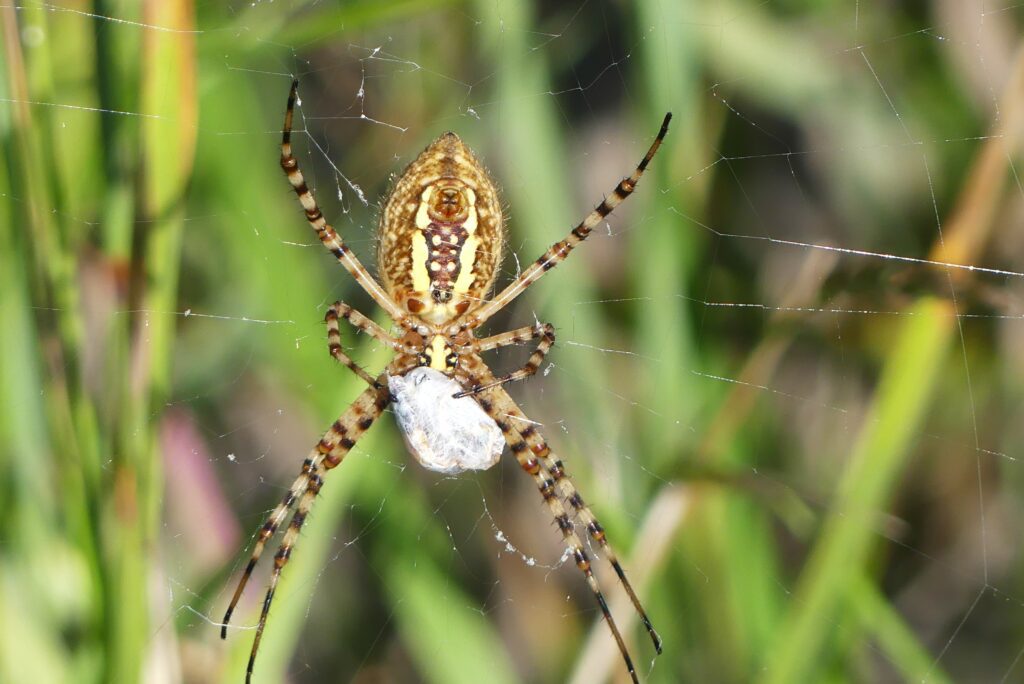
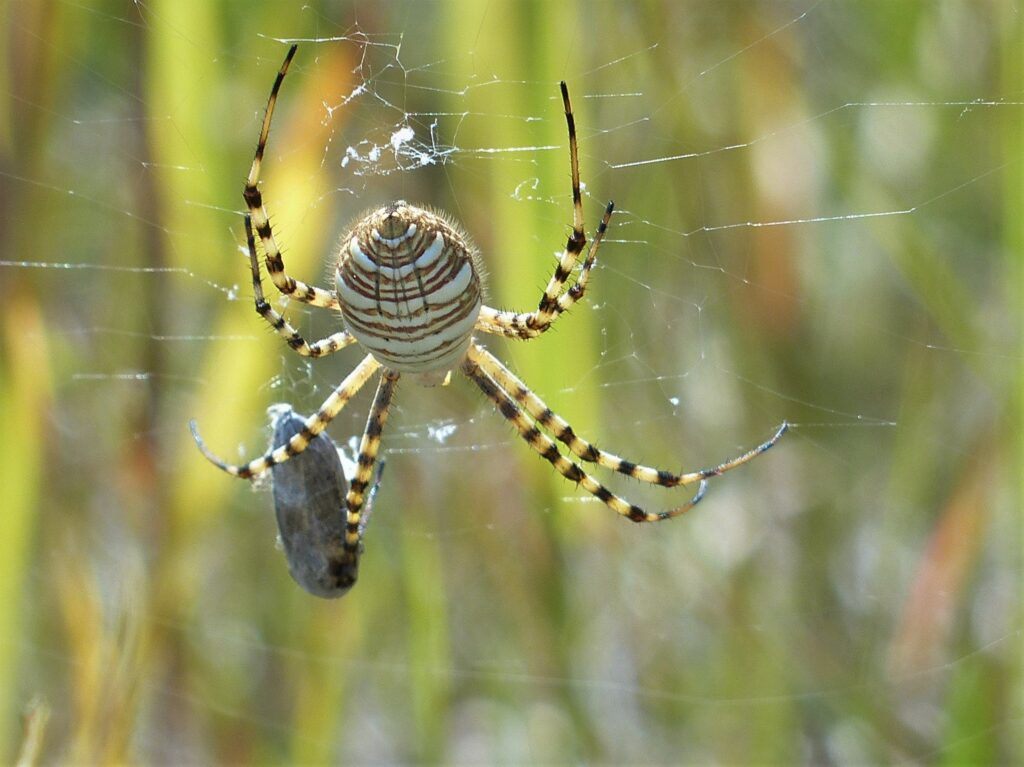
The large Banded garden Spider lays in wait at the edge of the web; when it senses an insect in their web, it attacks with a bite that stuns the prey and liquifies their inner parts. It encases the stunned insect cocoon-like before devouring the liquid nutrients.
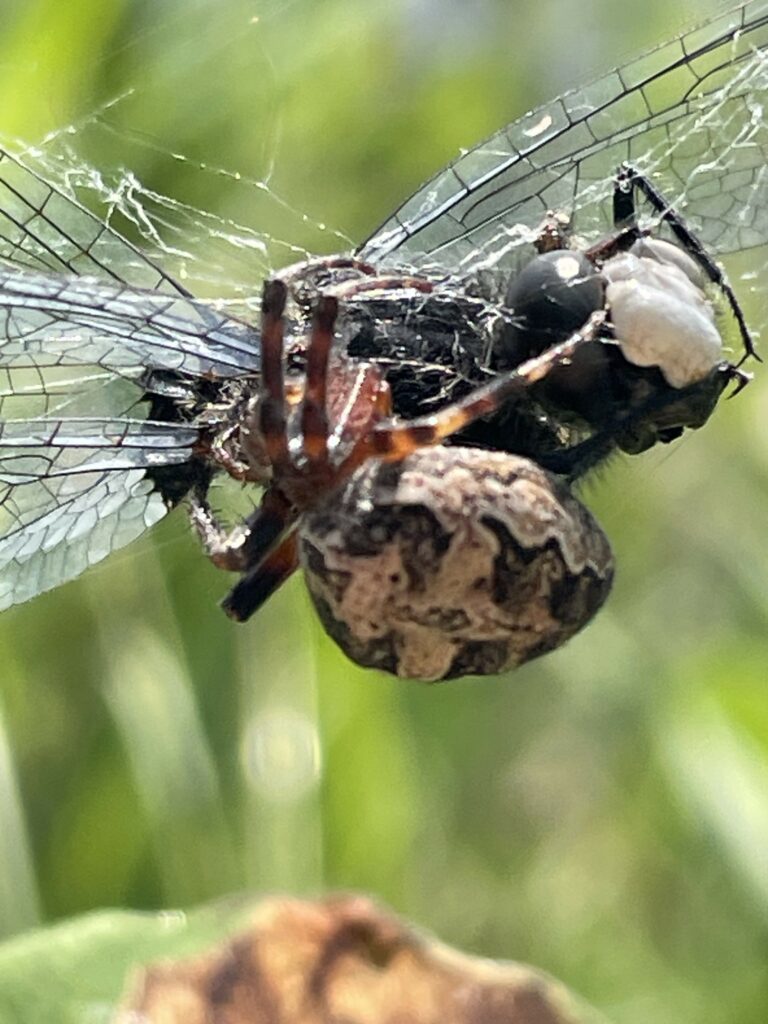
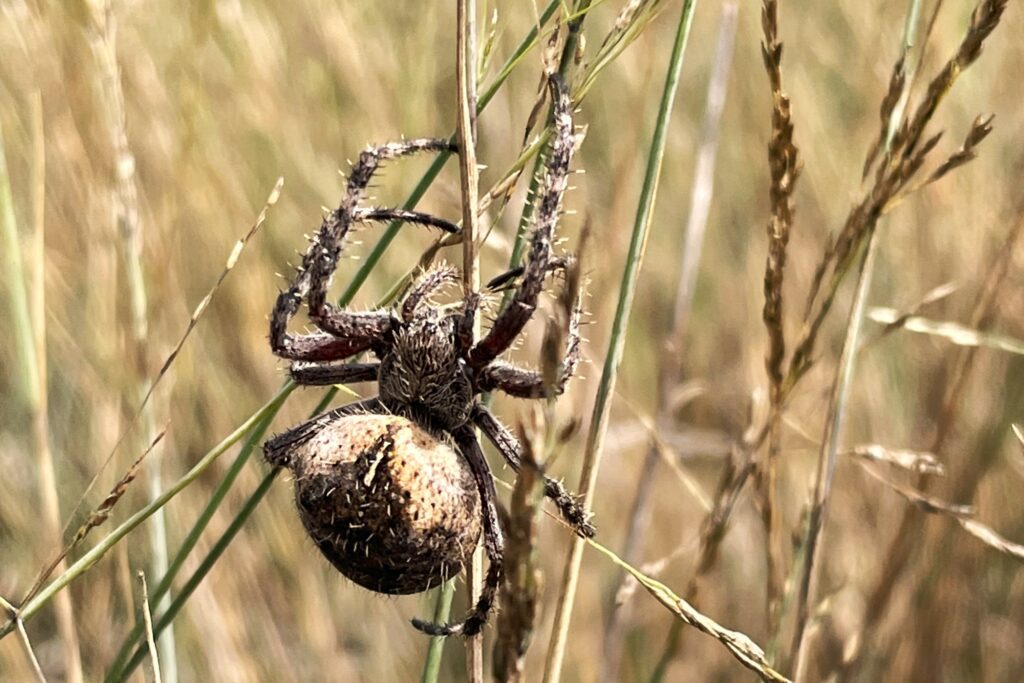
Bordered Orb weaver Spider with dragonflyOrb Weaver in grass
All of the above Orb weavers catch their prey in a trap they spin.
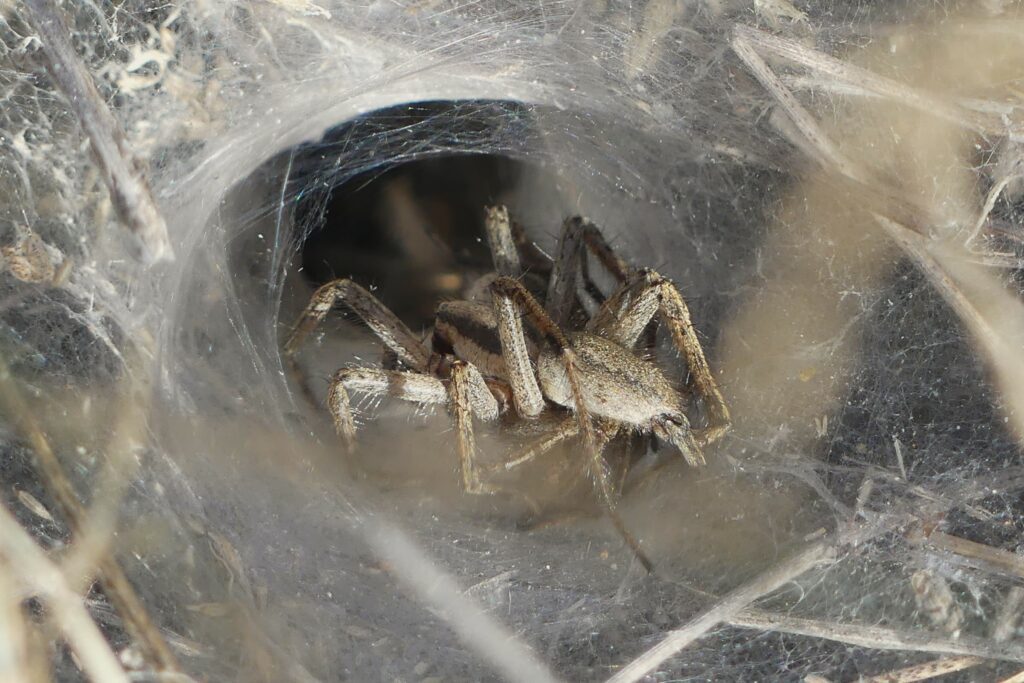
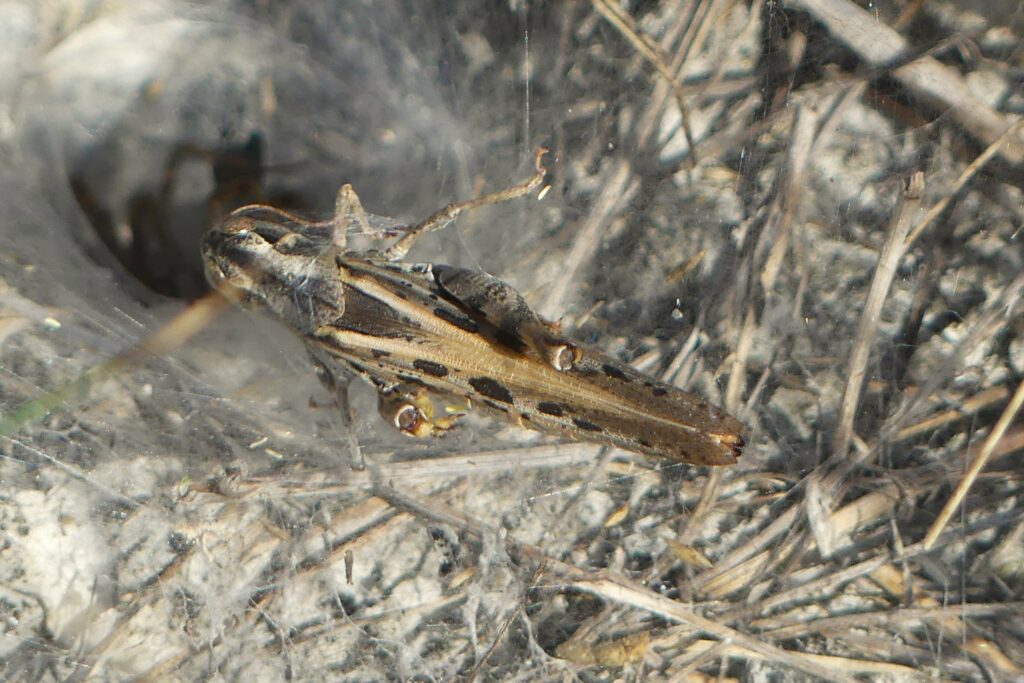
Funnel-web Spider Clear-wing Grasshopper in funnel web
The Funnel-web spider spins a sheet-like web shaped like a funnel on the ground. The spider usually lies in wait at the end of the tube; when an insect becomes entangled, it pulls the prey down into the ground where it devours it.
White-banded Crab Spider
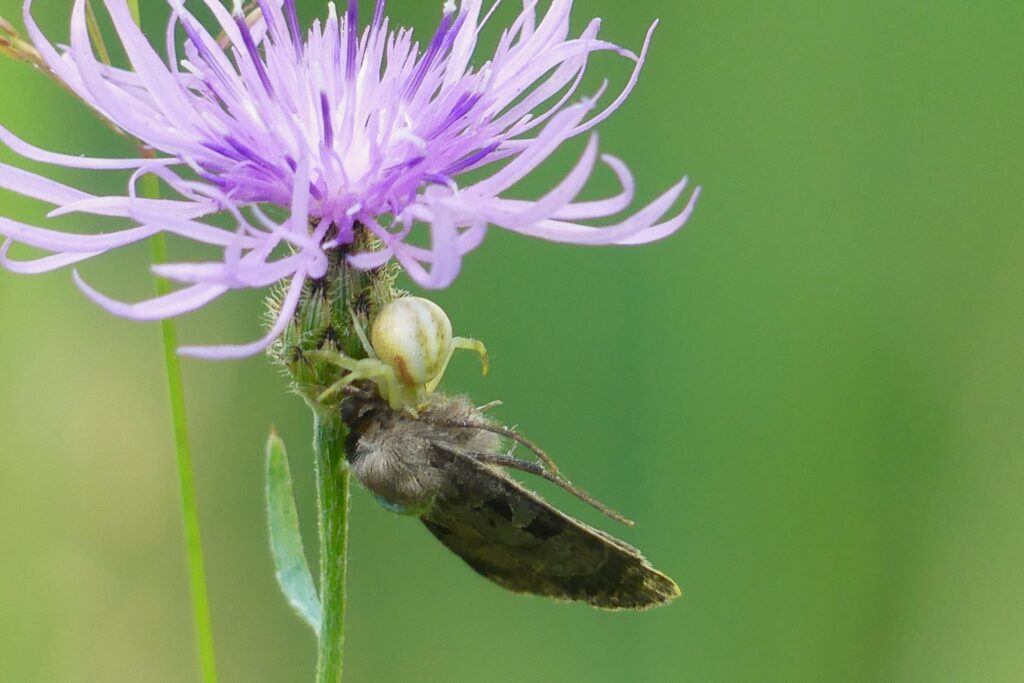
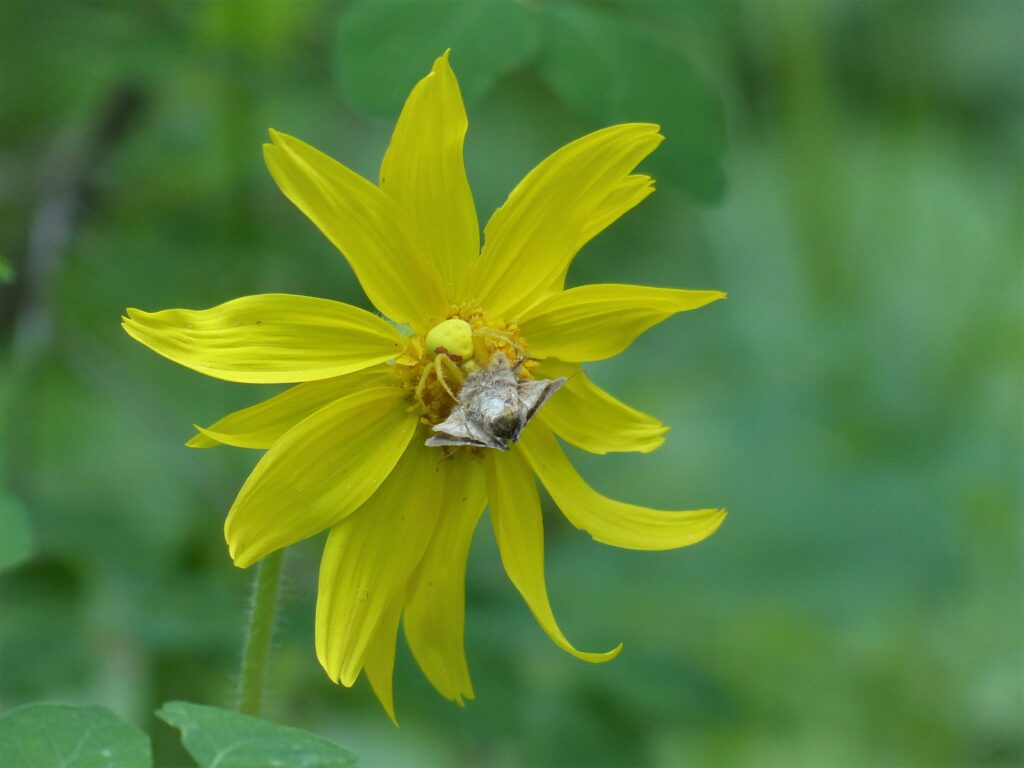
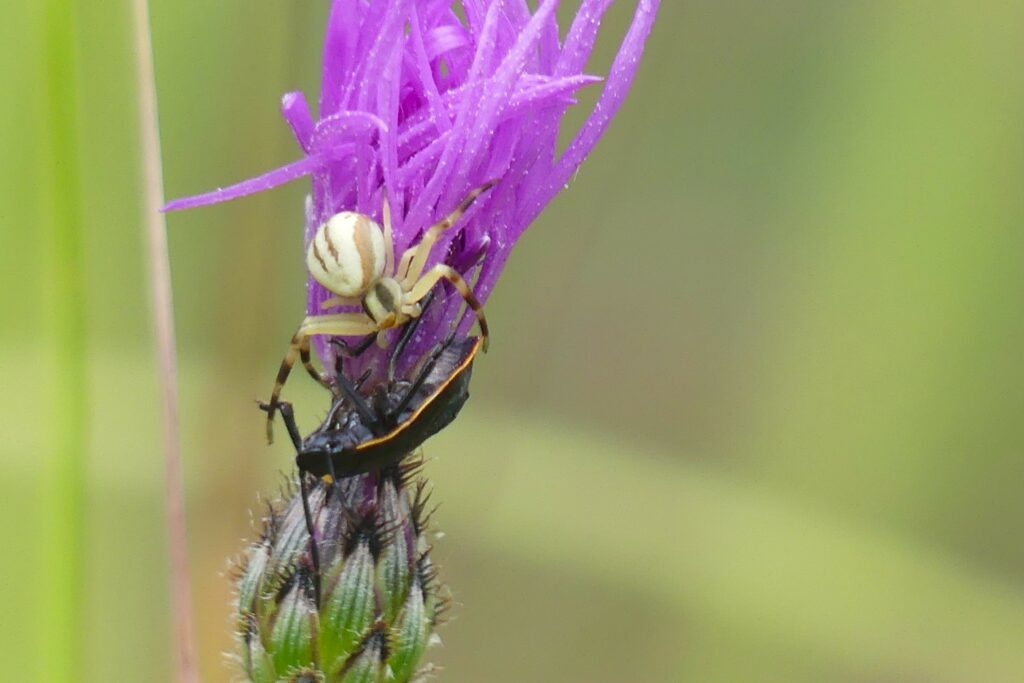
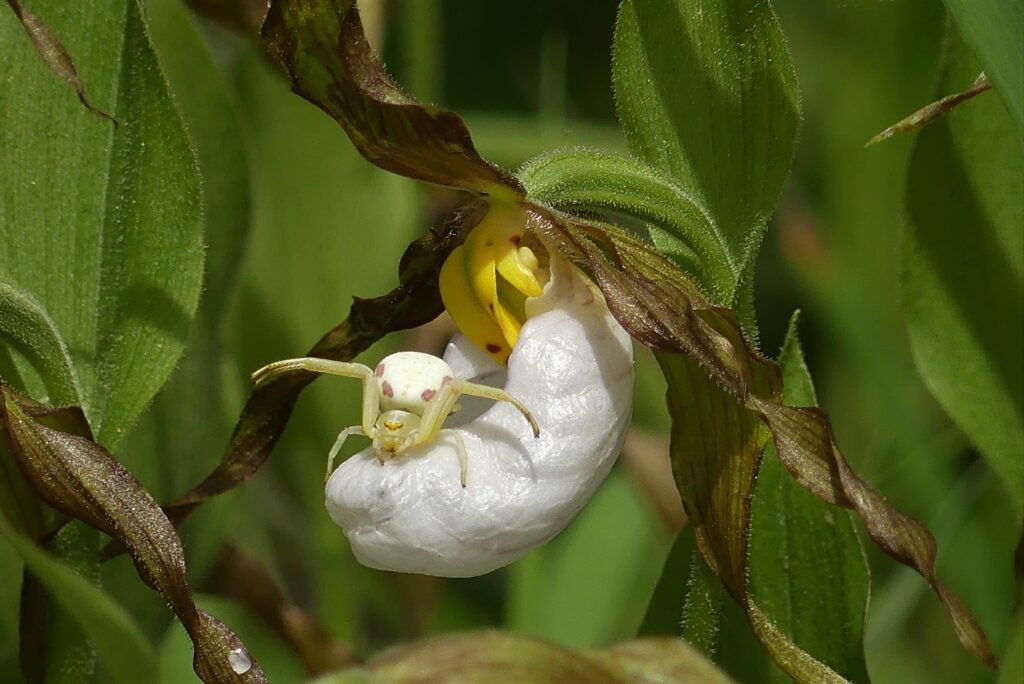
Crab spiders, sometimes called ambush bugs, lie on a flower in wait for an insect to visit the plant. When the visitor becomes engrossed in its work, the Crab spider dashes in and paralyzes the insect with venom in its bite.
Goldenrod Crab Spider with mothGoldenrod Crab Spider with Bordered plant bugMountain Lady’s Slipper with Goldenrod Crab Spider
Goldenrod Crab spiders are able to change color to match the flower it chooses. It takes a few hours after it arrives at the flower where it will spend time in wait. Most of the Goldenrod Crab spiders I have seen were colored like the one on the Spotted Knapweed, regardless the color of the flower.
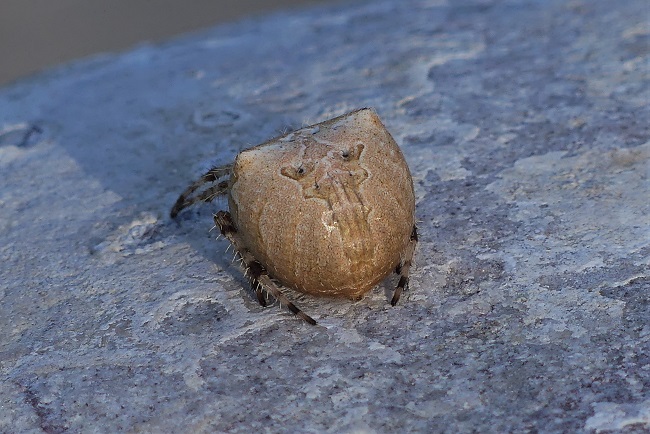
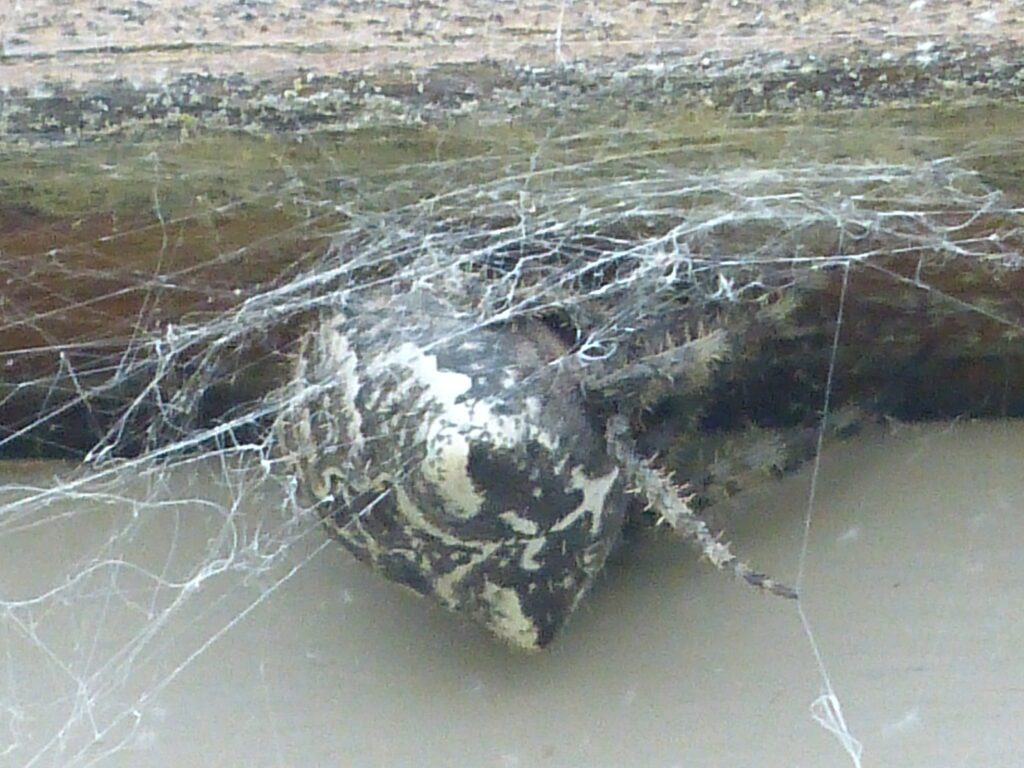
Cat-faced SpiderCat-faced Spider in web
The Cat-faced spider at right was gone the next time we checked this web site under a window sill. In its place was an egg sac. These spiders die after laying their eggs, just before a hard frost. The eggs will hatch in spring and live to predate on other insects around the house.
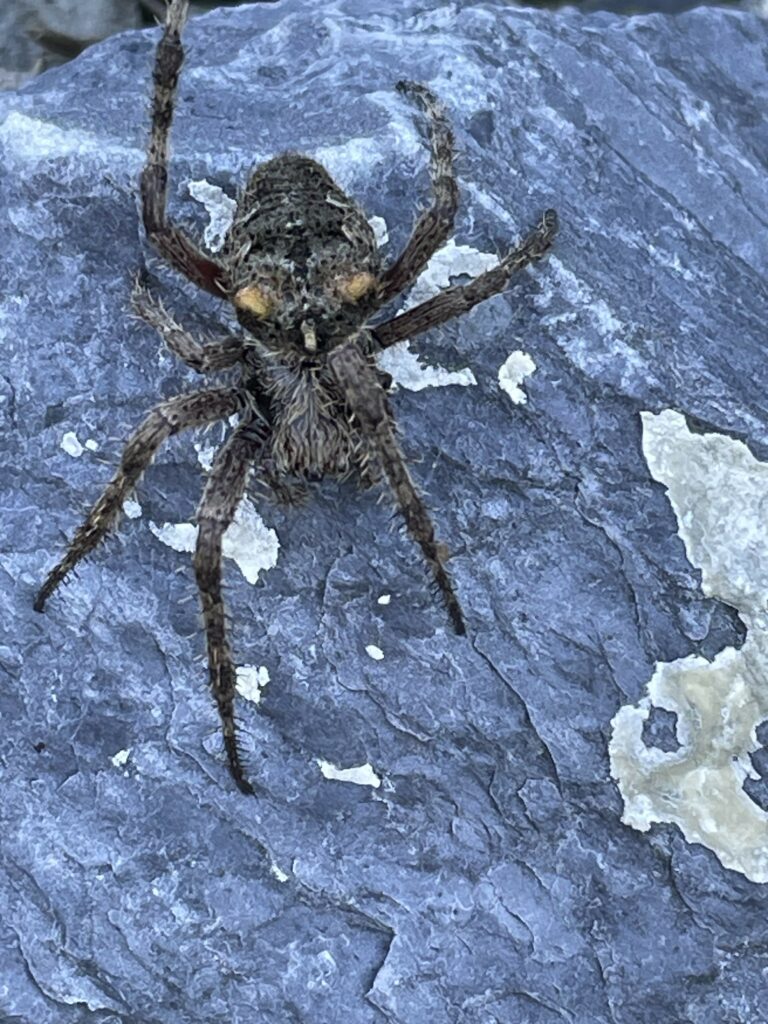
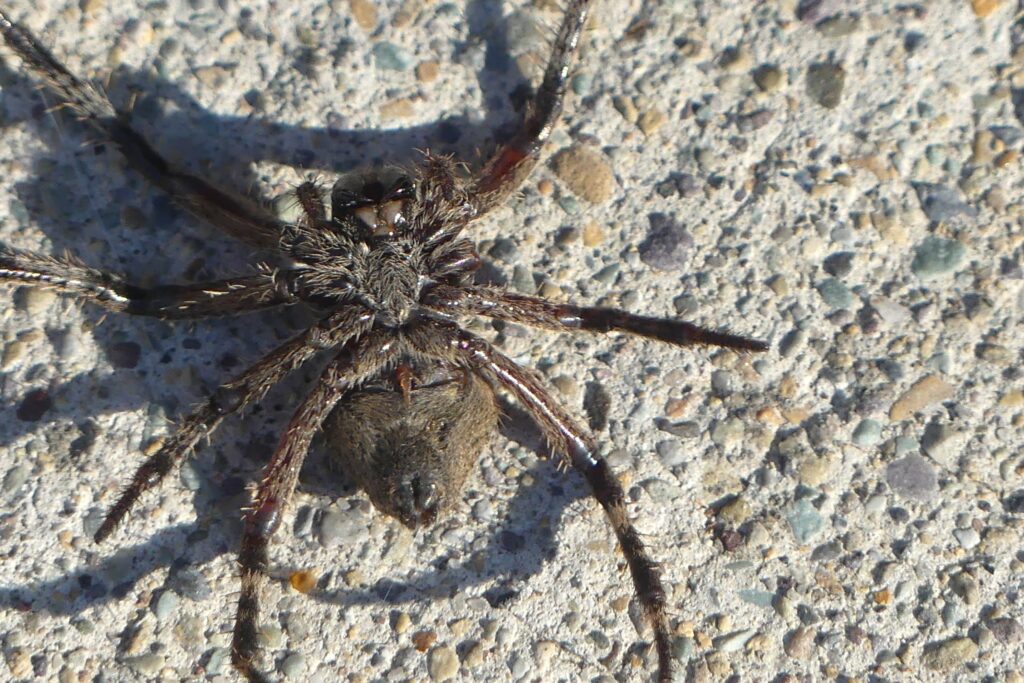
Fierce Orbweaver 9.2025Fierce orbweaverFierce Orbweaver dorsal side
This Fierce Orbweaver (identified with help of iNaturalist), was climbing up the door to my house. Not recognizing it, nor wanting to invite it inside, I very cautiously lured it away with a stiff plant stem. If I got too close, it reared back and waved its front legs as if boxing. While it moved across the driveway, it left a string of silk from the hole visible in the right photo; it seemed to use it as an anchor to help flip onto its back. The Fierce Orbweaver is listed as a native species in Montana.
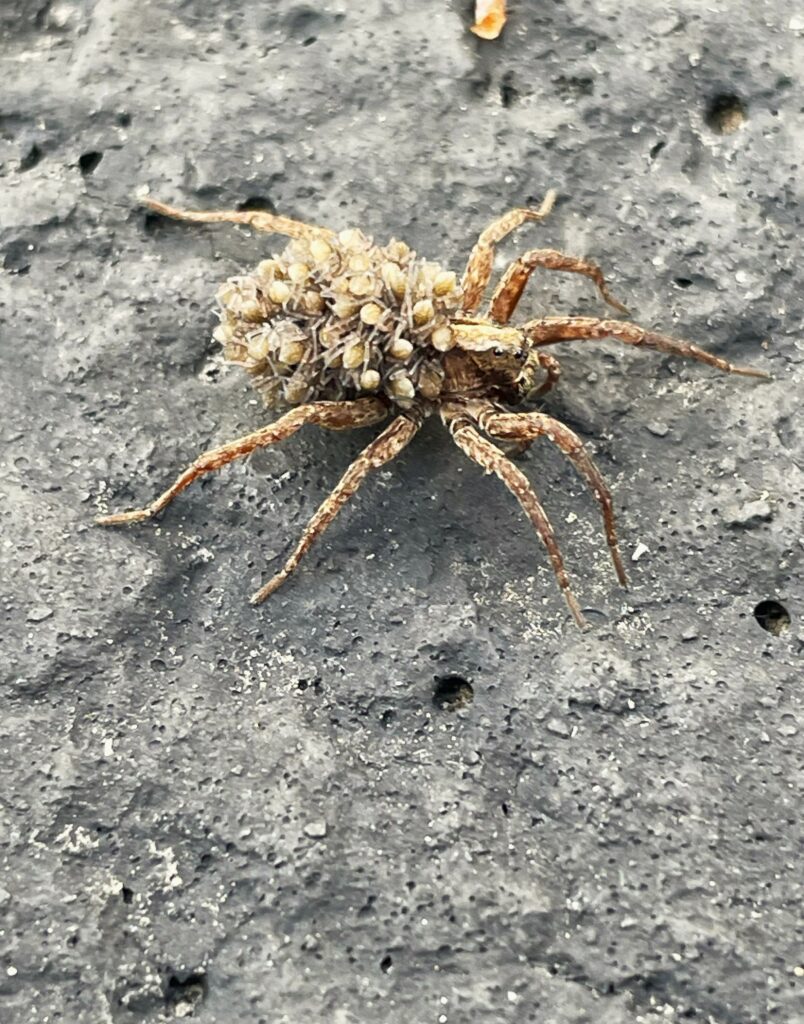
Wolf Spider with spiderlings on her back
Female Wolf Spiders carry their egg sac on their back; when they hatch, the babies ride there. They will fall off in leaf litter where they go into diapause until spring. This spider was crossing a sun-warmed driveway in early evening in September.
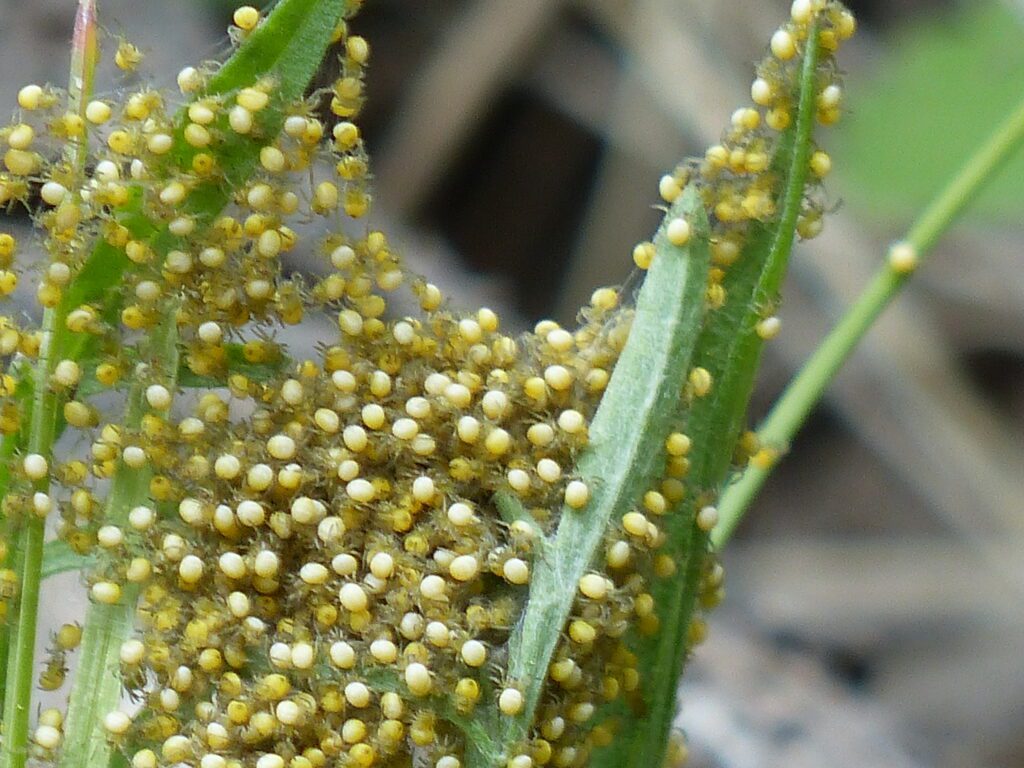
Nest of spiderlings on May 23. While I watched, the babies would crawl up a blade of grass and float off on a spinneret in the wind. I did not wait long; only a few had dispersed over the nearby wetland.
John James Audubon described the diminutive (4.25″) Violet-green Swallow as “the most beautiful of all the genus hitherto discovered.” Indeed, there are few birds in our neighborhood that can compete when the sun illuminates the iridescent emerald green cape, amethyst and sapphire wings and back set off by a clean bright white belly, neck, and face. Read on for an account of one pair raising their young from a nest under the eaves.
As I write this on a rainy day in March, my mind is drawn to thoughts of spring, perhaps because just yesterday I was walking partly in mud, partly on ice, torn between the need for rubber boots or ice cleats. In a similar vein, in summer as I observe flowers and the insects that are drawn to them, I wonder whether I should beware of the stinger or relax and admire the industrious work of the flying creatures. In this article, I’ll share some helpful tips I have learned from researching that question.
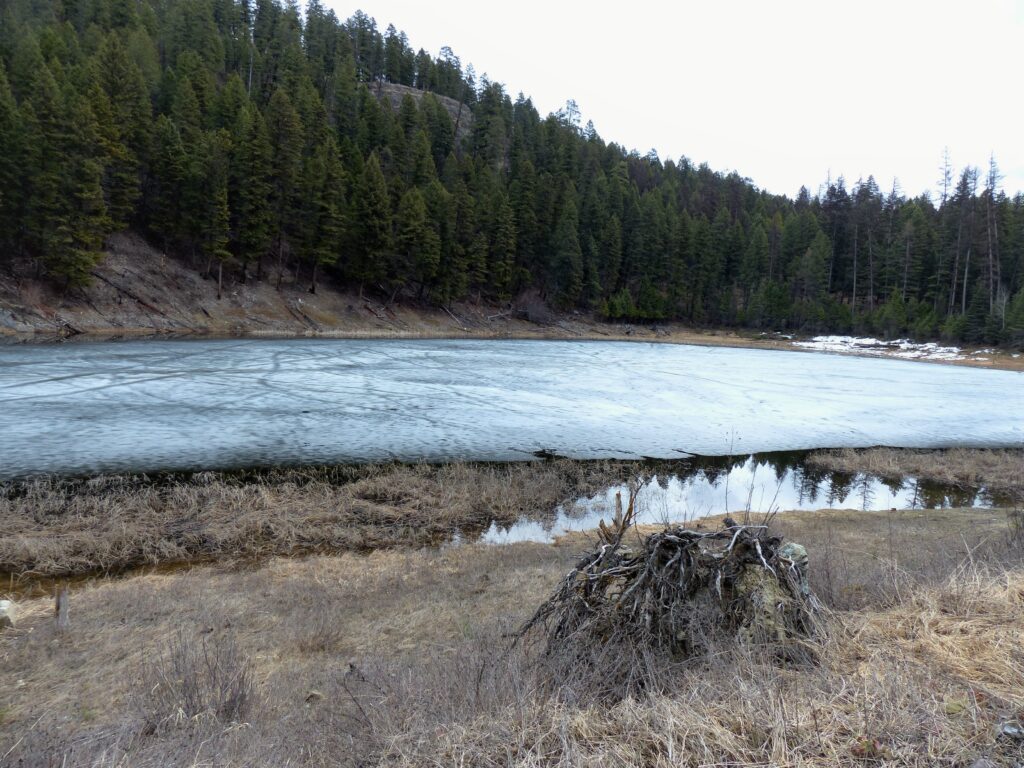
I’ve never given much thought to what goes on in a pond once it freezes, but this year I have made some discoveries that will have me looking at that environment with new interest.
As much as we enjoy the beauty and variety of northwestern Montana winters, we do sometimes find ourselves thinking about the colorful visual landscapes of summer. And few elements accentuate that beauty as elegantly as our local butterfly population does.
This page is Part 1 of a series of three pages: Seen Fluttering By 1 (Fritillaries, Tortoiseshells, Checkerspots, Commas and Swallowtails) Seen Fluttering By 2 (Skippers, Sulphurs, Julias, Admirals, Crescents and Blues) Seen Fluttering By 3 (Elfins, Hairstreaks, Miscellaneous)
This page is Part 2 of a series of three pages: Seen Fluttering By 1 (Fritillaries, Tortoiseshells, Checkerspots, Commas and Swallowtails) Seen Fluttering By 2 (Skippers, Sulphurs, Julias, Admirals, Crescents and Blues) Seen Fluttering By 3 (Elfins, Hairstreaks, Miscellaneous)
This page is Part 3 of a series of three pages: Seen Fluttering By 1 (Fritillaries, Tortoiseshells, Checkerspots, Commas and Swallowtails) Seen Fluttering By 2 (Skippers, Sulphurs, Julias, Admirals, Crescents and Blues) Seen Fluttering By 3 (Elfins, Hairstreaks, Miscellaneous)
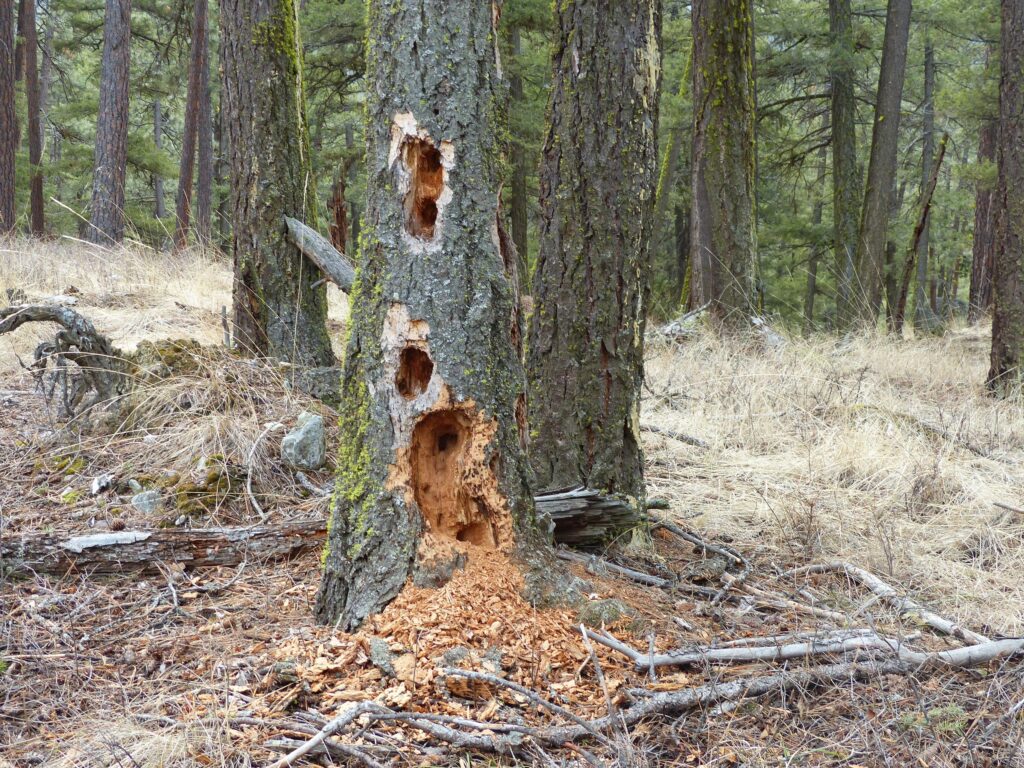
Nobody has to ask, “What does a woodpecker do?” Only the Pileated Woodpecker does such a fantastic job of chiseling out their food and creating nests for themselves. Several species live in our area year ’round; some are migratory, and we see them in warmer months. Read on for stories about woodpeckers that I’ve observed in our area.
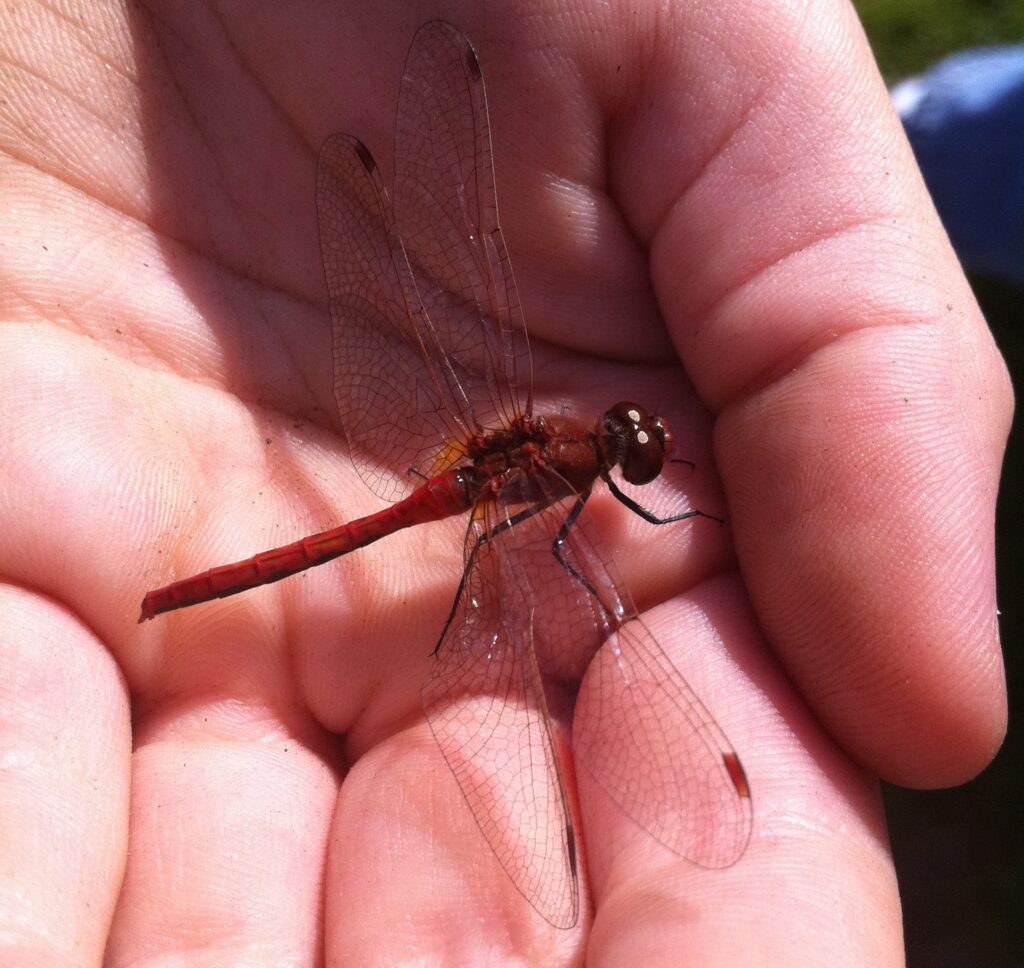
Dragonflies have interested me since my early childhood (and still ongoing) fascination with dinosaurs. So many of the illustrations in my myriad of dino books included swampy scenes with huge dragonflies swarming around, looking like fighter planes or helicopters. It wasn’t until many years later that I learned that the insects in those illustrations weren’t really dragonflies as we know them, but very distant ancestors.
Tris Hoffman’s wonderful article A Very Special Bee (published here earlier this spring) prompted me to finally get serious about being able to identify a few of the plethora of native bee species we see here in the West Valley area of the Flathead. It’s an ongoing process, but with Tris’ help, iNaturalist, and other local and online sources, I’ve been able to catalog the following species this summer. It’s the tip of the iceberg, so to speak, given that Montana has more than 20 species of native bumblebees (not to mention the native sweat bees, miner bees, leaf cutter bees, mason bees, and others) but it’s a start.
Robins are so familiar they stop being a curiosity. That is, until they do something like building their nest where we can look into it whenever we sit on the deck as they did in 2018. The following article includes photos and observations about Robins gathering food for their family in 2021.