By Skip Via
skip@westvalleynaturalists.org
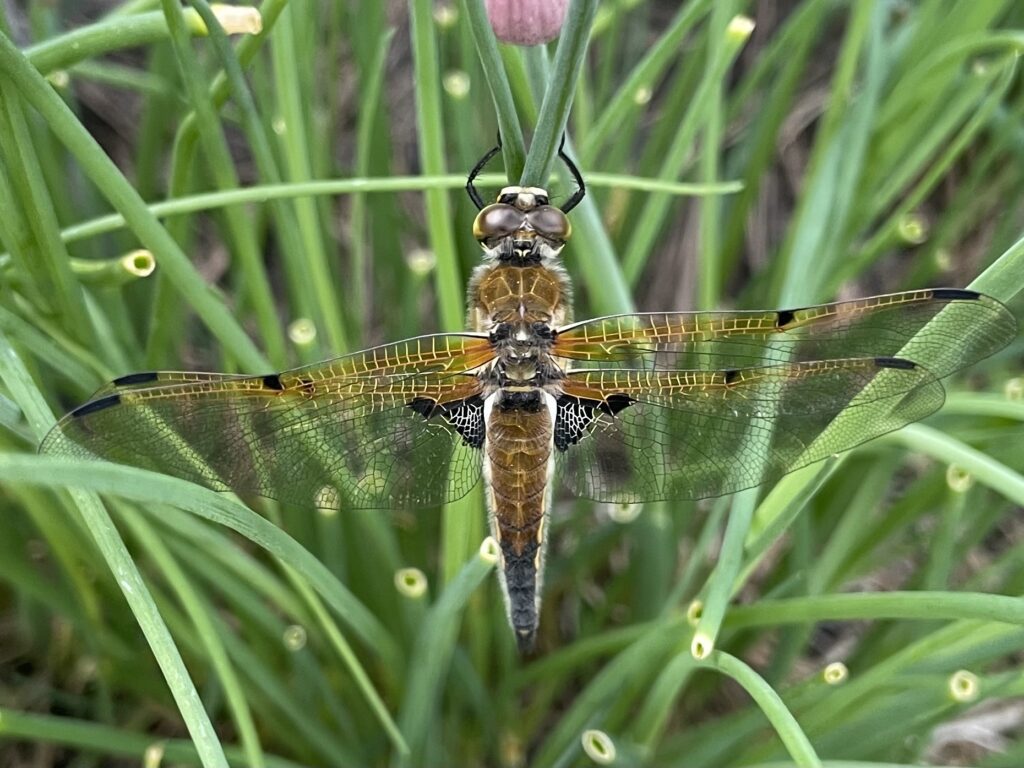
This four-spotted skimmer (female, I think) was observed on May 18 2021 perched on some chives in our garden. This dragonfly is not at all uncommon here, but it IS uncommonly beautiful.

The natural environment and history of Kalispell’s West Valley area

By Skip Via
skip@westvalleynaturalists.org
This four-spotted skimmer (female, I think) was observed on May 18 2021 perched on some chives in our garden. This dragonfly is not at all uncommon here, but it IS uncommonly beautiful.

By Skip Via
skip@westvalleynaturalists.org
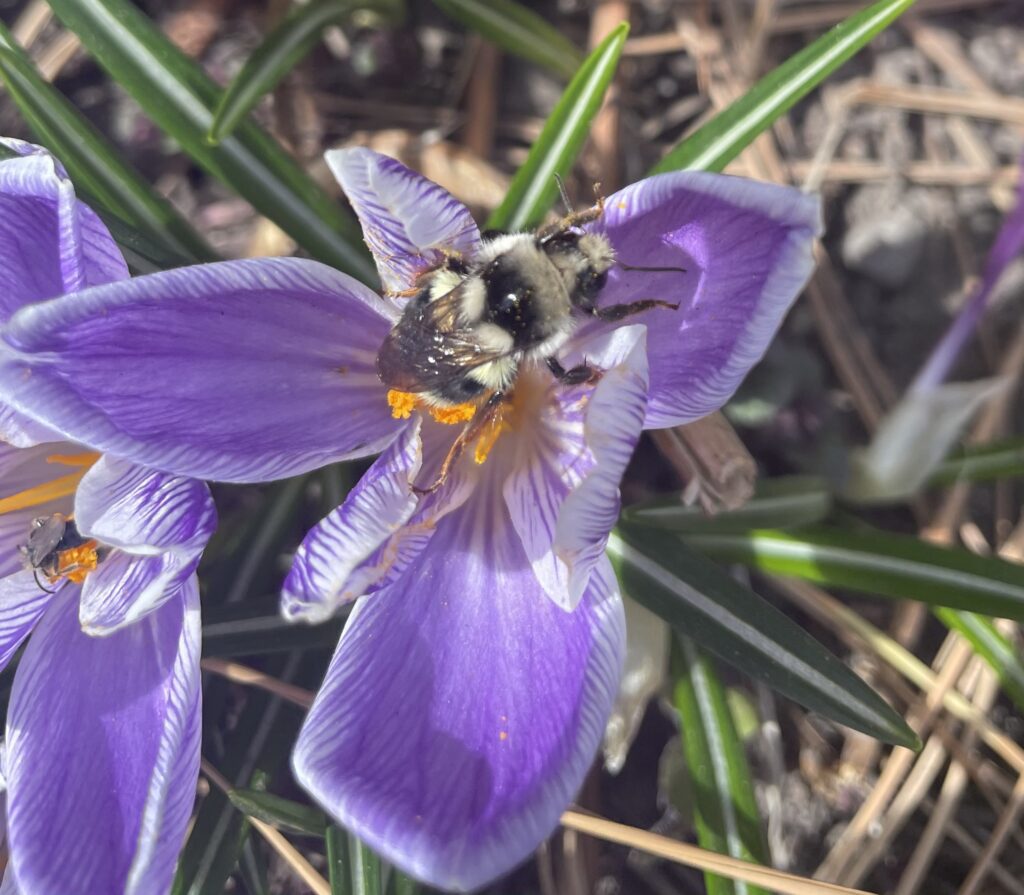
First bumblebee of the season, a two-form bumblebee, checking out the crocuses on April 15. Thanks to Tris Hoffman for help with identification.

by Tris Hoffman, Flathead National Forest Weed Coordinator
silversagebrush@hotmail.com
The Western Bumblebee is a species that was once common and widespread throughout the western U.S. and Canada. For a variety of reasons, both known and unknown, populations of this bee are in serious decline. It has mostly vanished west of the Cascades. Thankfully, West Valley is a place (perhaps a refuge?) where the bees may still be found.
Continue Reading →by Tris Hoffman, Flathead National Forest Weed Coordinator
silversagebrush@hotmail.com
Walt Disney got it wrong: The bald-faced hornet
When Disney adapted A.A. Milne’s Winnie the Pooh into a cute animation, he made mistake. If the “Bear of Very Little Brain” wanted honey, he should have looked for a large hollow tree. The illustrations in Milne’s original stories show Pooh climbing a large tree, but he is not going after the papery egg-shaped nest that the animated bear seems to obsess about. Disney’s globular gray nest would never provide Pooh with honey, because that is a typical nest of a bald-faced hornet.
Continue Reading →by Pat Jaquith
pat@westvalleynaturalists.org
Those confusing bugs! We have bugs that stink but are not stink bugs (Western Conifer Seed Bug), and we also have even more stinky bugs that are stink bugs. Some are agricultural pests; others may prey on other insects. Here are four native Stink Bugs that I have observed when I had the camera nearby.
Continue Reading →by Pat Jaquith
pat@westvalleynaturalists.org

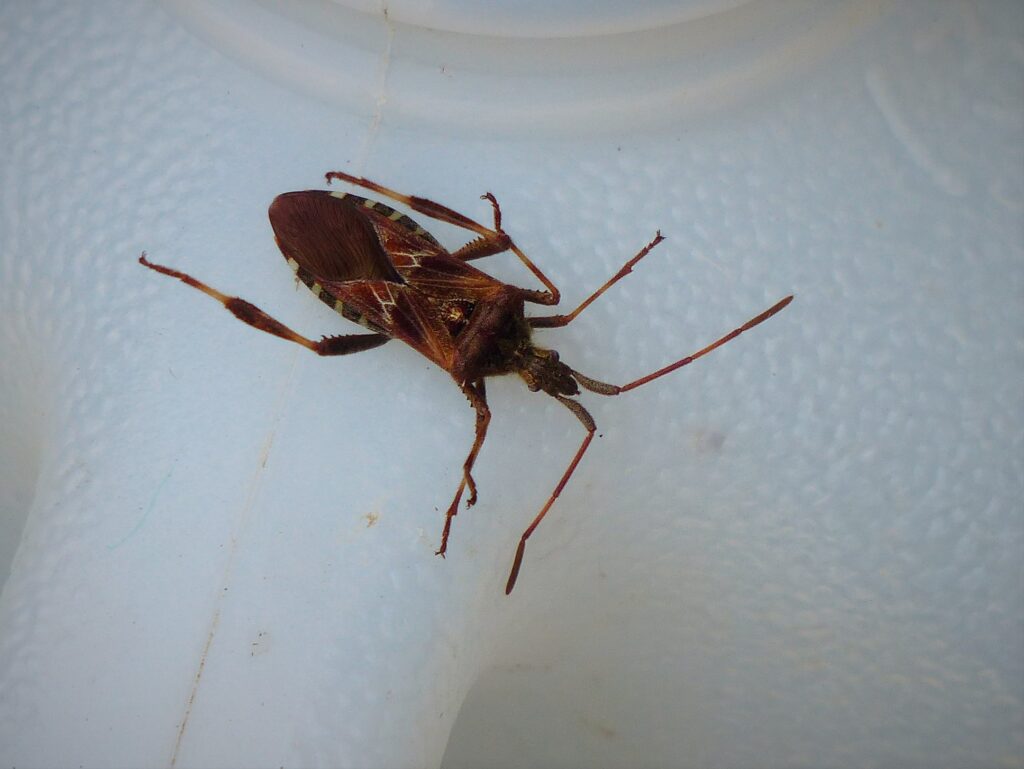
We know it’s fall when Western Conifer Seed Bugs show up on the warm side of the house or even inside the house; what do we do about them?
Continue Reading →by Pat Jaquith
pat@westvalleynaturalists.org
Which comes first: the caterpillar or the butterfly (or moth)? It’s such an interesting puzzle to think about when you find a caterpillar – what flying beauty will it turn into? Here are a few that live in our area that tentatively I have matched up.
Continue Reading →
by Pat Jaquith
pat@westvalleynaturalists.org

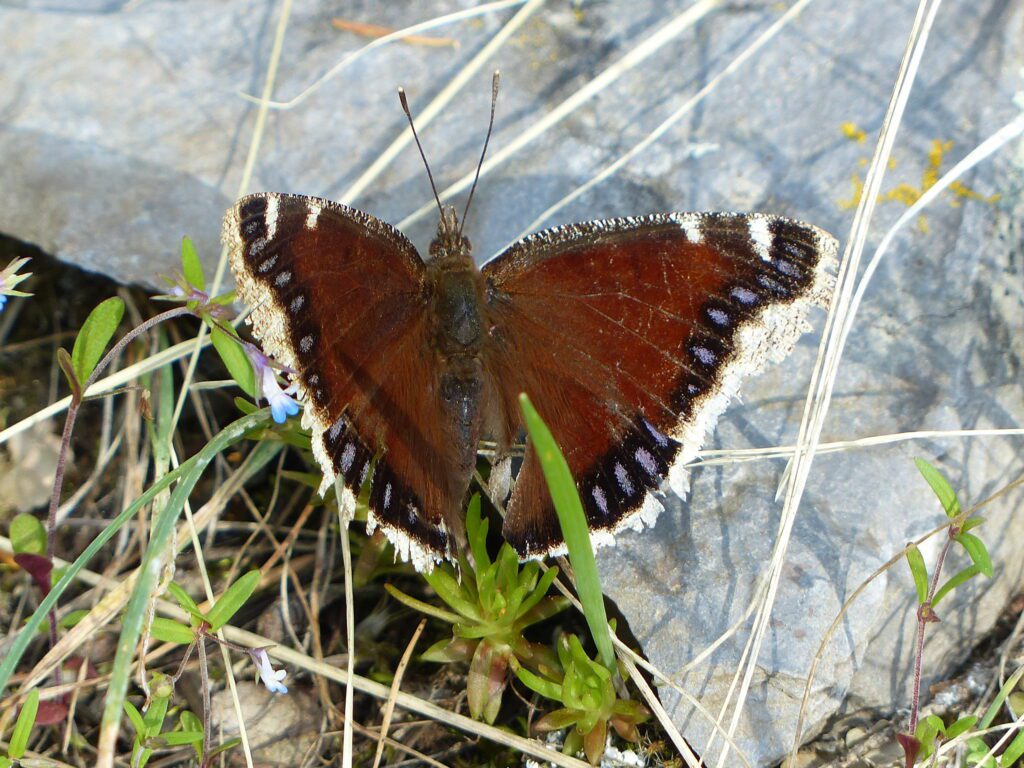
The sight of a Mourning Cloak butterfly is a sure sign of spring to me! In late fall, they crawl behind loose bark on a tree where they increase the level of glycerol in their blood, convert excess water in their bodies into a gelatin-like substance that doesn’t freeze, and spend the winter. As spring warmth arrives, they reverse those properties and start flying sooner than many others! Many butterflies endure the winter as eggs, caterpillars, or in a chrysalis. A few, like Monarchs, migrate to warmer climates.
Continue Reading →by Skip Via
skip@westvalleynaturalists.org
What’s the difference between a bug and an insect?
All bugs are insects, but not all insects are bugs. Insects typically have a body segmented into three parts (head, thorax, and abdomen), a hard exoskeleton, six legs, and two antennae. Bees are insects. So are dragonflies, ants, butterflies, beetles, moths, and crickets among many others.
Continue Reading →