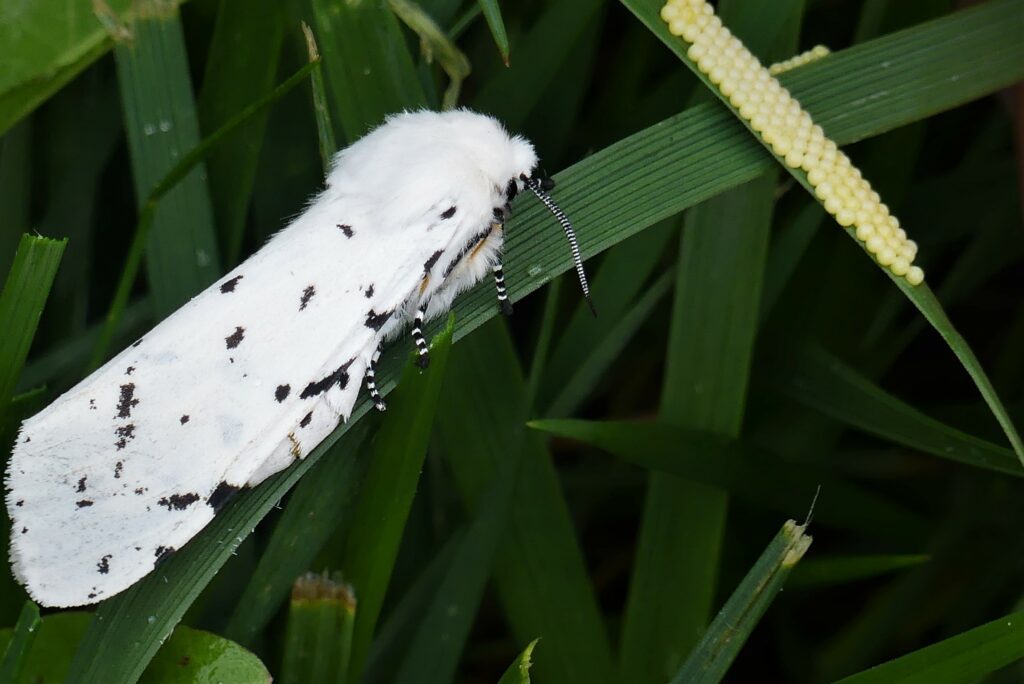
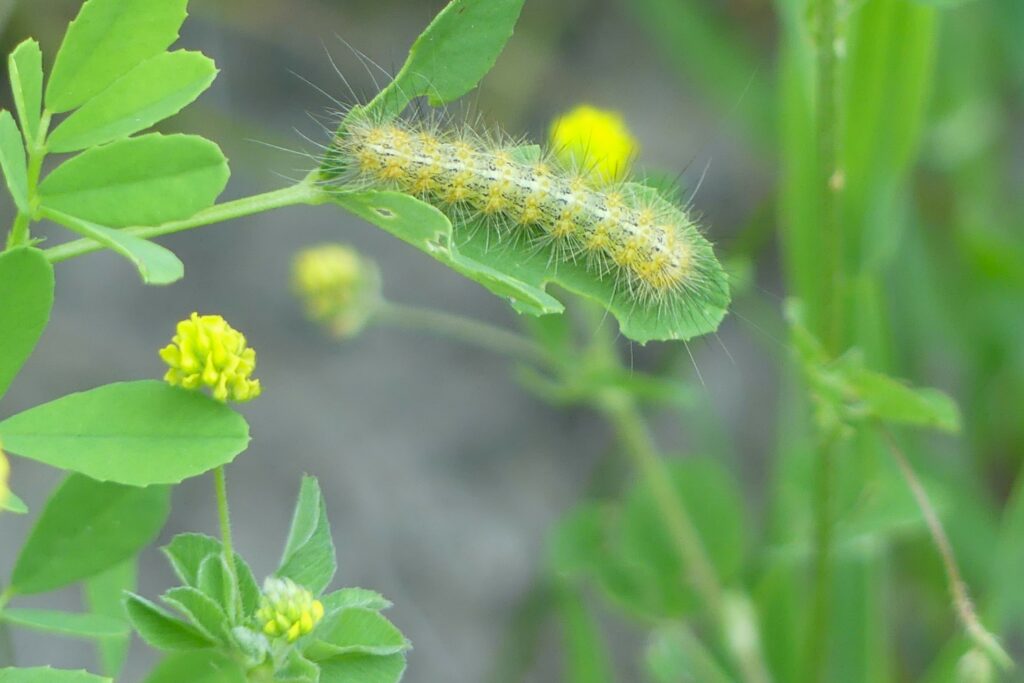
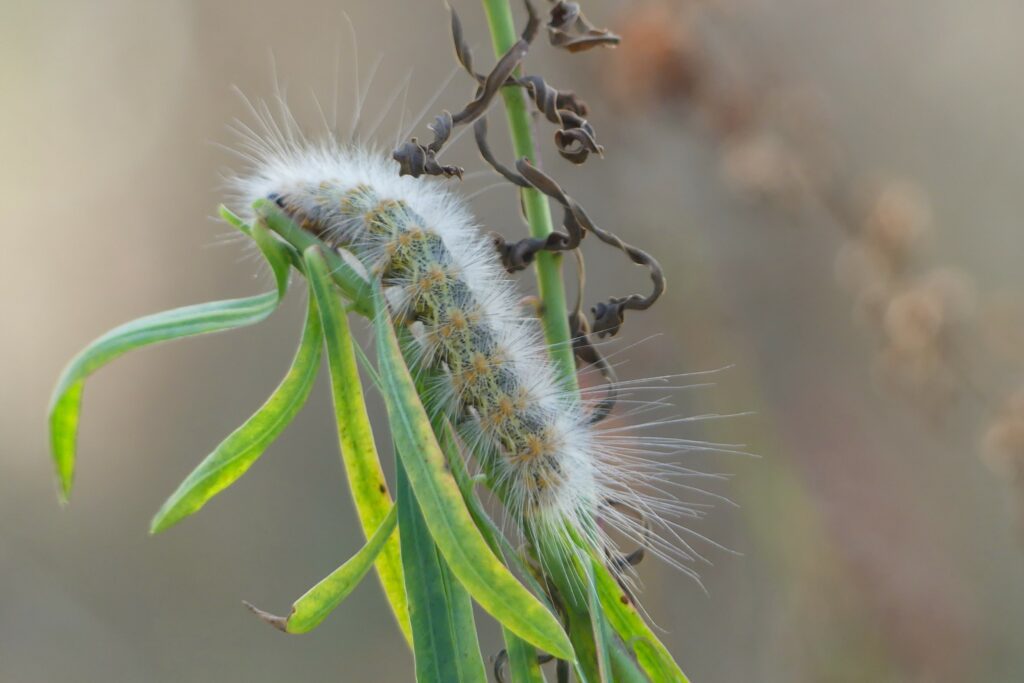
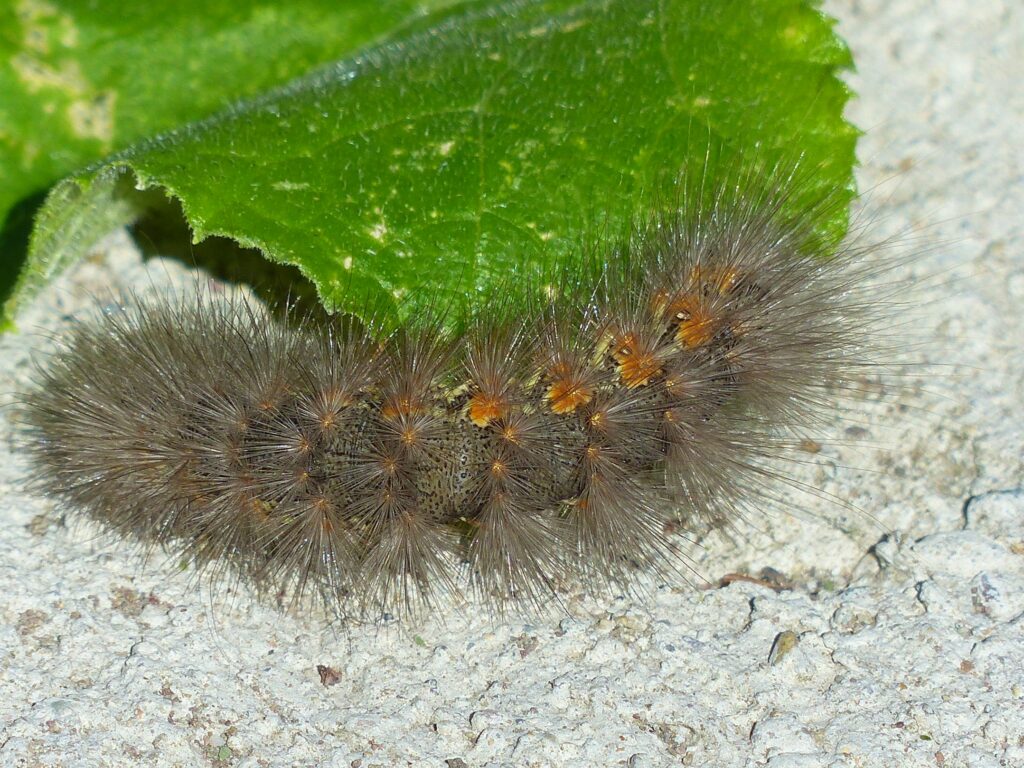
Saltmarsh Moth with eggs and three views of Saltmarsh Moth caterpillars
Connecting a caterpillar you find with its parent butterfly or moth is an interesting puzzle. Read on to see some of the connections I have made in the West Valley.
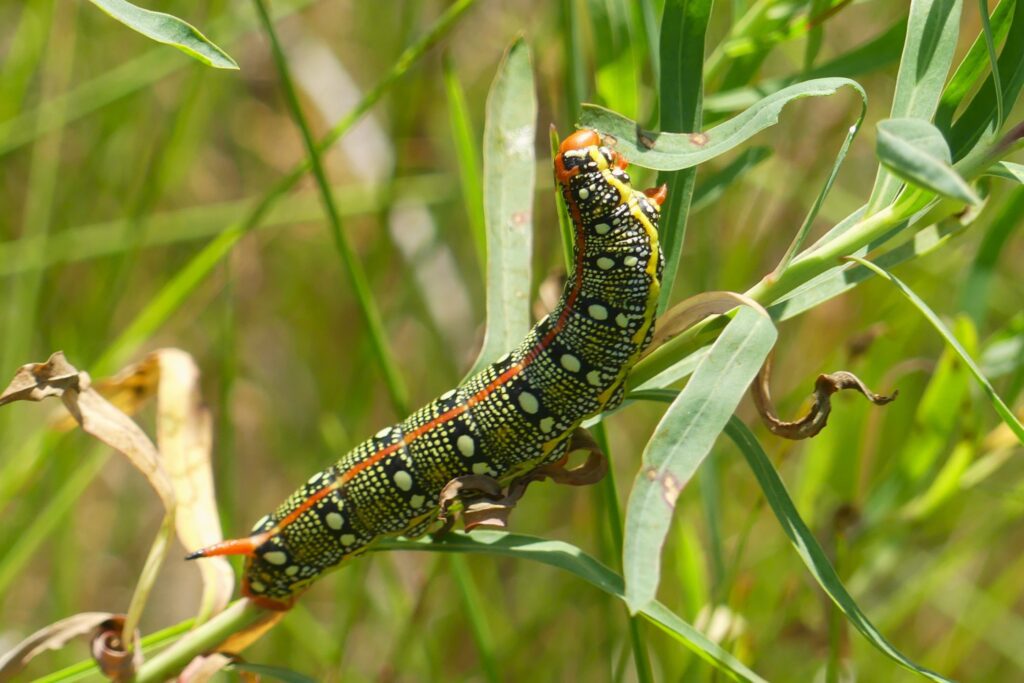
My first sight of Euphorbia esula, Leafy Spurge, in the West Valley was thanks to this caterpillar as I walked through an abandoned field. This 3 1/2 inch caterpillar’s appearance entranced me! Curiosity pulled me headlong into research and the information that follows.
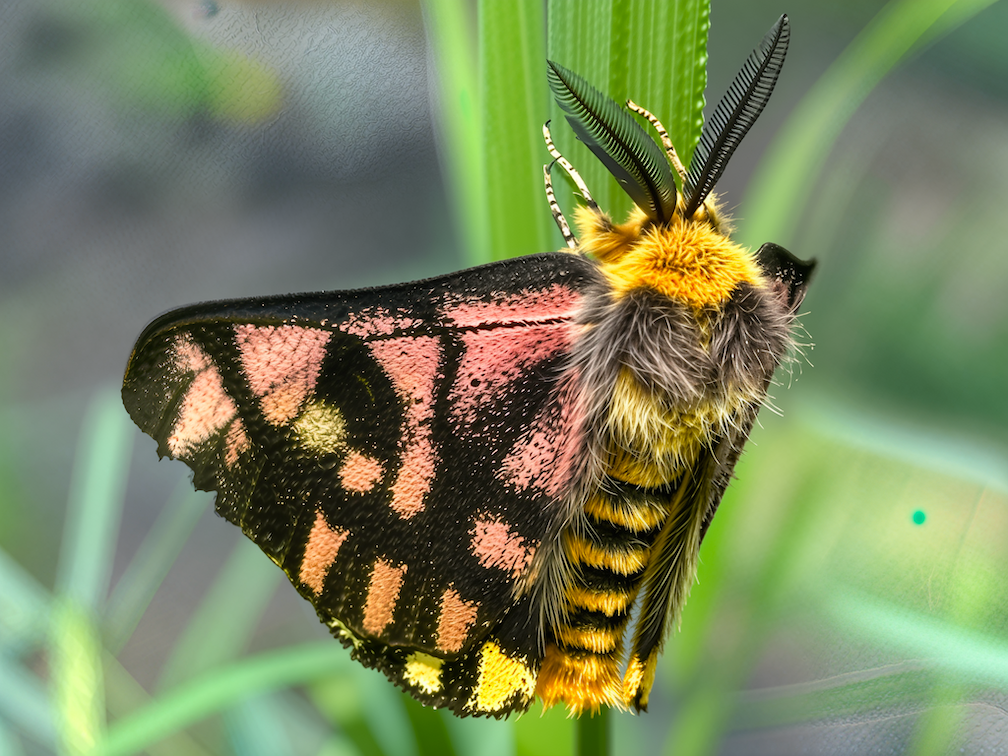
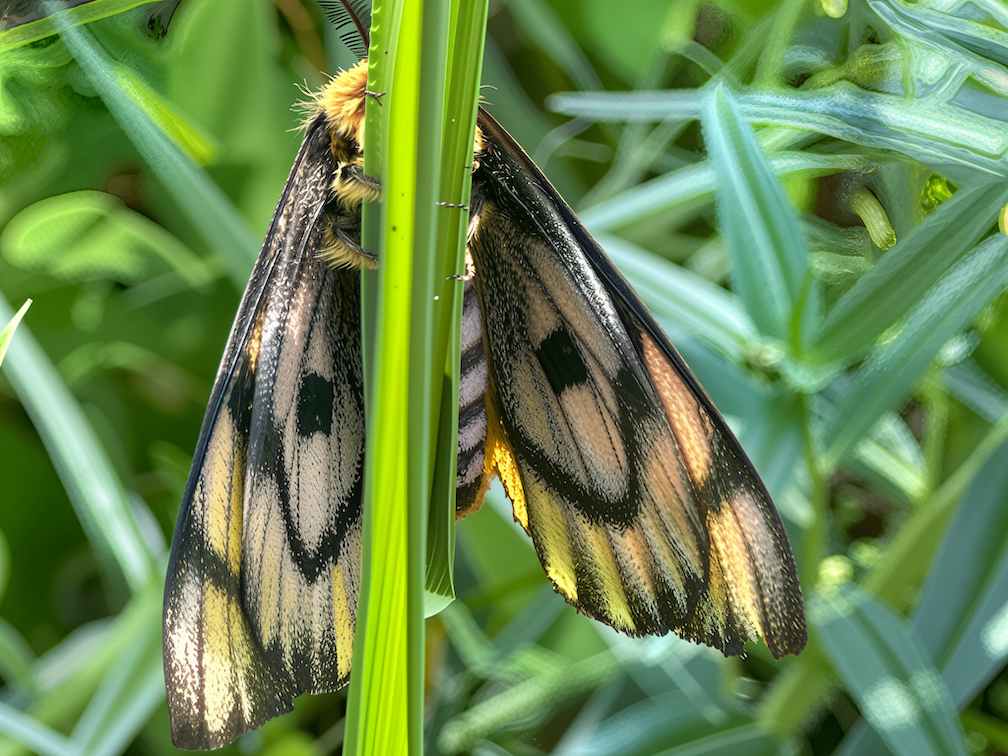
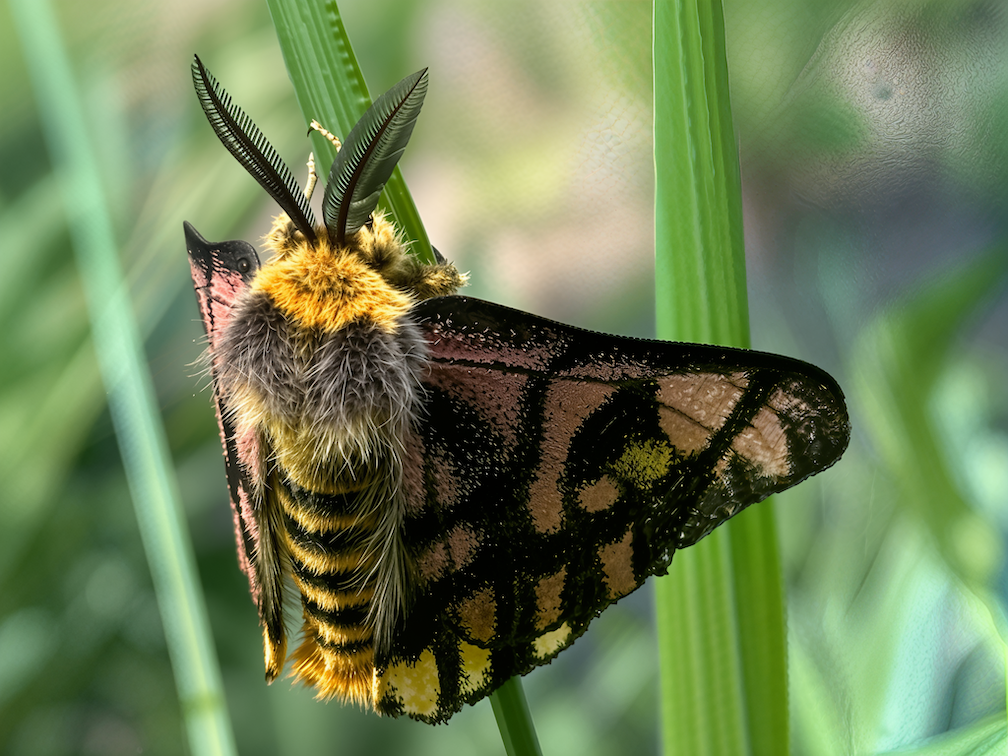
It’s always fun to run across a species that you have never encountered before, and that was the case for me today when I observed this Western Sheep Moth while I walking the trails in Happy Valley.
Western Sheep Moths are native to the western US. Their main range is southern California and the Sierra Nevada mountains, and while they are not common here in the valley, there are several reports on iNaturalist of encounters with them in our area.
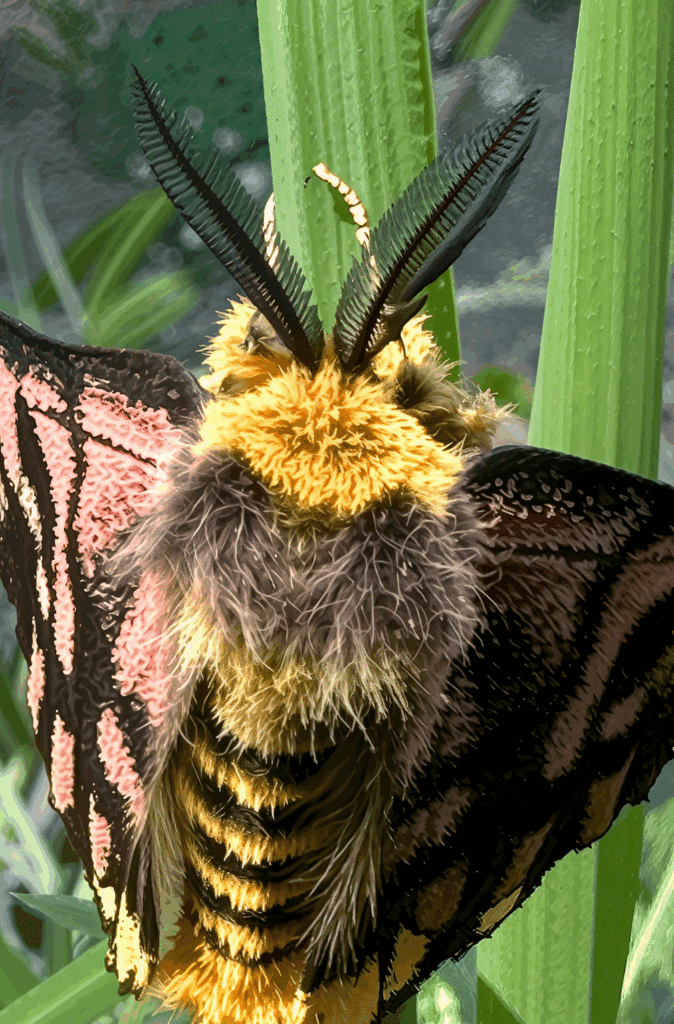
Unlike many moth species, Western Sheep Moths are daytime flyers, and rather large as local moths go–a bit smaller than a Luna Moth with an average wingspan of roughly three inches. Their identifying characteristics include pink, orange and yellow wing spots, black and yellow striped abdomen, prominent feathery antennae, and a tuft of bright yellow fur across the top of the thorax.
Antennae and thorax detail.
Western Sheep Moths lay their eggs in the summer months on roses (Rosaceae), both wild and cultivated. Their caterpillars (larvae) feed on them. They are also known to feed on buckthorns, an invasive species here in Montana. While they are not important pollinators, they are known to inadvertantly serve this function.
Wester Sheep Moth underwing.
Why are they called Sheep Moths? It turns out that they can be pests for sheep farmers, as adultsthelarvae (see Parker’s clarifying comment, below) will feed on the wool of domesticated sheep, degrading the quality and quantity of the wool. Sheep moths can cause a 15% drop in the quantity of wool produced by a flock.They are also known to invade homes and feast on wool and other clothing. They are prey for many birds species, and they are known to eat some insects.
Have you encountered a sheep moth in your wanderings? Do you see them as pests? Part of the ecosystem? Let me know in the comments.
English Inquiry Project by Sawyer S., West Valley School
What is a pollinator and what positive effects do they have on us humans?
What is a pollinator? This is something one may ask themself but not truly know. A pollinator is anything that carries pollen from the stamen to the stigma. This transfer must happen for the plant to produce. From squash to wheat, this is necessary for production. When someone says pollinator, one generally thinks of bees but this is not always the case. Pollinators include wind, water, bees, wasps, moths, butterflies, birds, and even small mammals including bats.
White-lined sphinx moths (Hyles lineata) are one of over a thousand varieties of sphinx moths, most of which occur in tropical zones. This one is common throughout most of Central America and North America to southern Canada. Hyles lineata is a type of hawk moth, but they are often called hummingbird moths because they resemble hummingbirds in appearance, size, and actions. They are generally common here in the valley, although their population numbers and locations vary from year to year.
Which comes first: the caterpillar or the butterfly (or moth)? It’s such an interesting puzzle to think about when you find a caterpillar – what flying beauty will it turn into? Here are a few that live in our area that tentatively I have matched up.