There’s a bite of cold in that wind and snow on the mountains. Back roads slip from ice to mud in a single step. Winter visitors wing over snow-bent grasses as if to say “Farewell!” and Pintails fill the open water still enclosed by ice. FOY (First-of-the-Year) birds, flowers, songs meet with excitement. In sheltered places, the sun warms the ground and our faces. Let’s check it out!
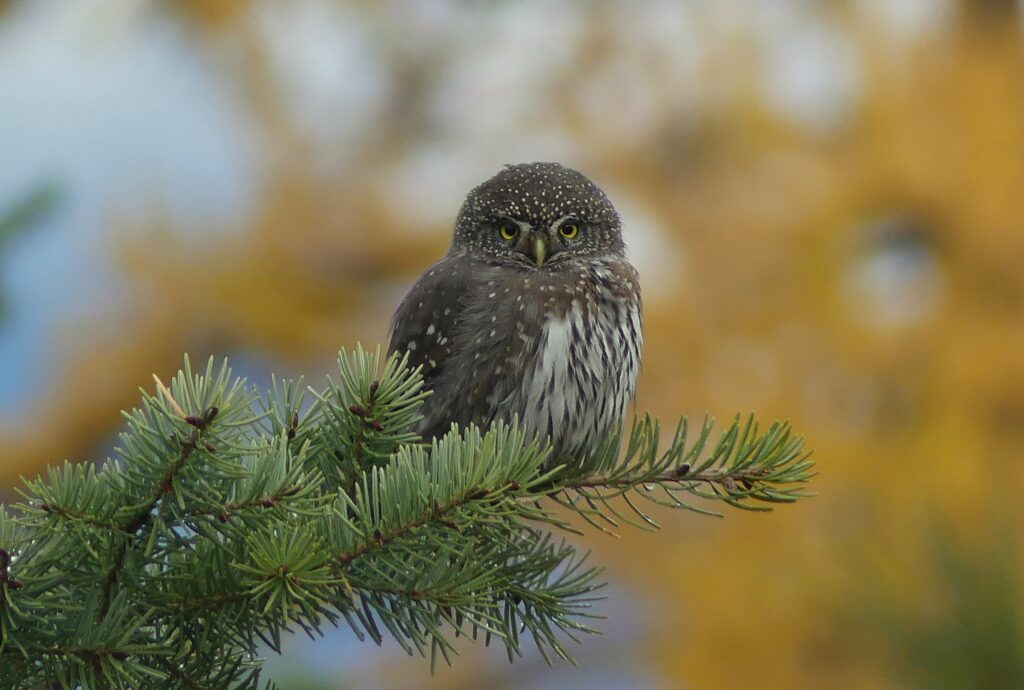
The Northern Pygmy-owl takes the prize for being the smallest owl in Montana. Tiny, but fierce, this little bird that stands 6-7 inches in height and weighs 2 to 3 ounces predates small to medium-sized birds (chickadee to blue jay sizes), small rodents and squirrels, insects, and has been known to successfully kill a domestic chicken with its sharp talons, strong down-curved beak, and amazing determination.
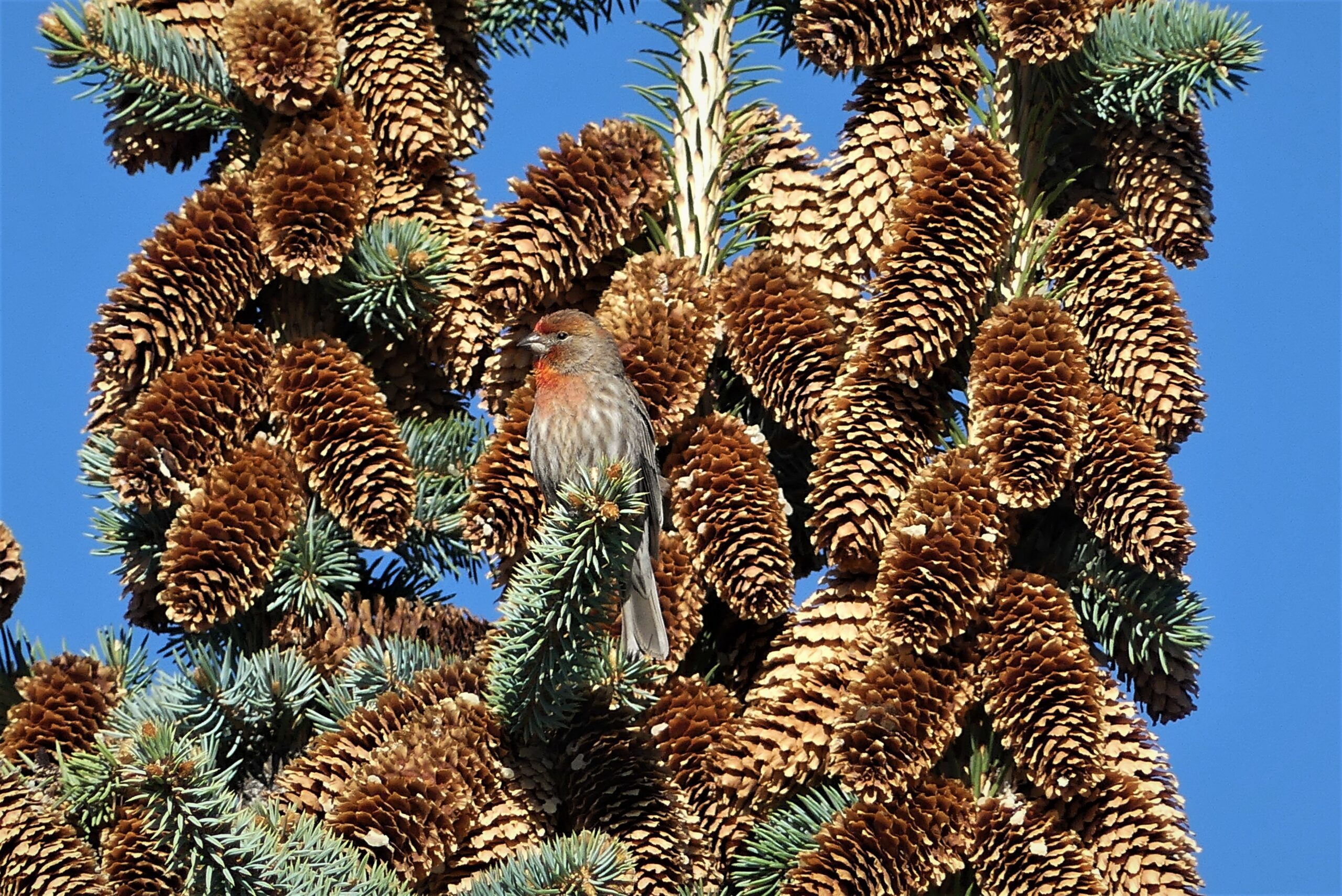
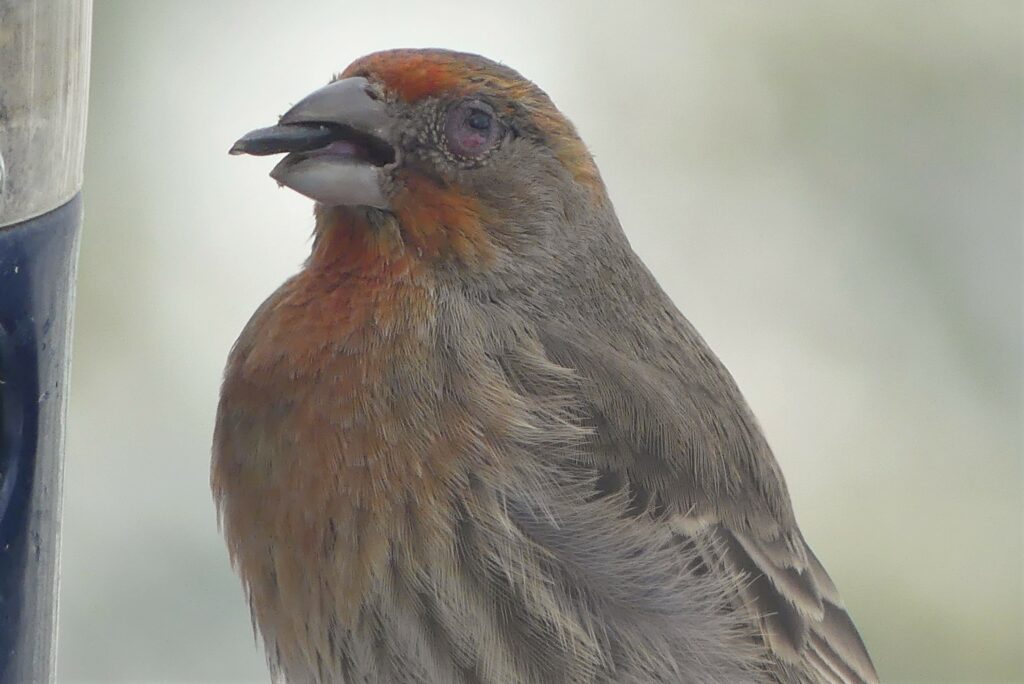
How does one describe House Finches? Striped bodies, head and chest of various shades varying from yellow to orange to pink to red. Flocking, chattering, perching at the top of of trees, stout-billed seed-eaters. Perched among the cones of a Blue Spruce in bright sun one morning, this perky House Finch looked like a Christmas decoration! Members of the Fringillidae family, there are 17 species, including many of our familiar visitors: crossbills, Evening and Pine Grosbeaks, redpolls, goldfinches, house finches, Cassin’s finches, and siskins. Many of these species are reported in decline and we can’t take them for granted.
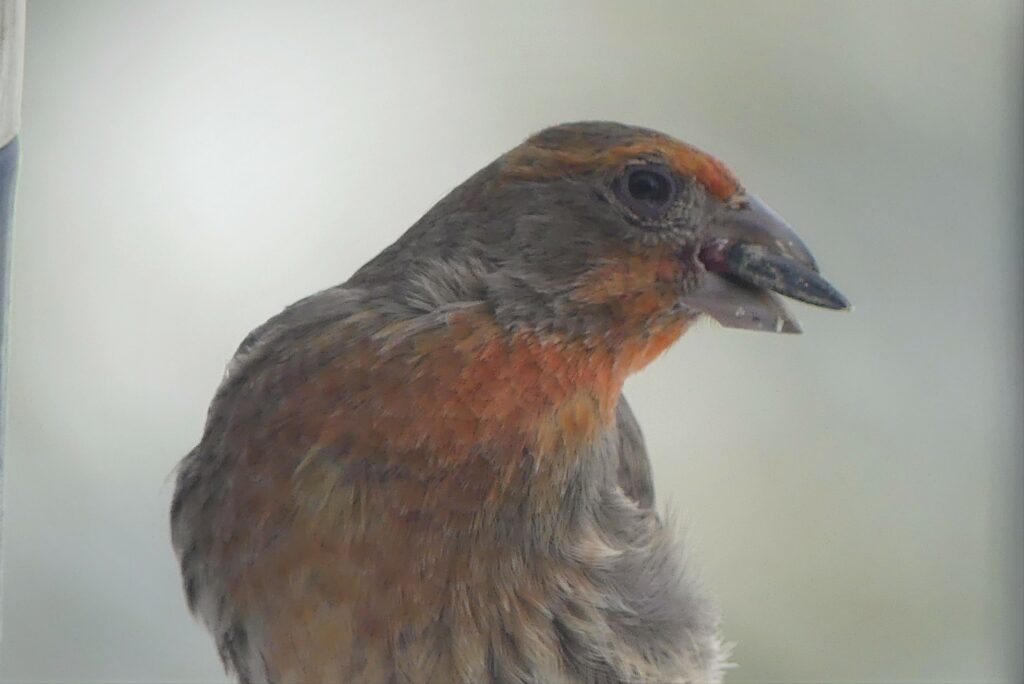
House Finch at the feeder with normal-appearing right eye
Same bird as above with head rotated to reveal abnormal left eye
Although I can’t diagnose the cause of the unusual-appearing eye, knowing that there are diseases among Finches that can be transmissible and deadly, this was message enough to send me out to take down the feeders, clean them and the area and not hang them out for a week.
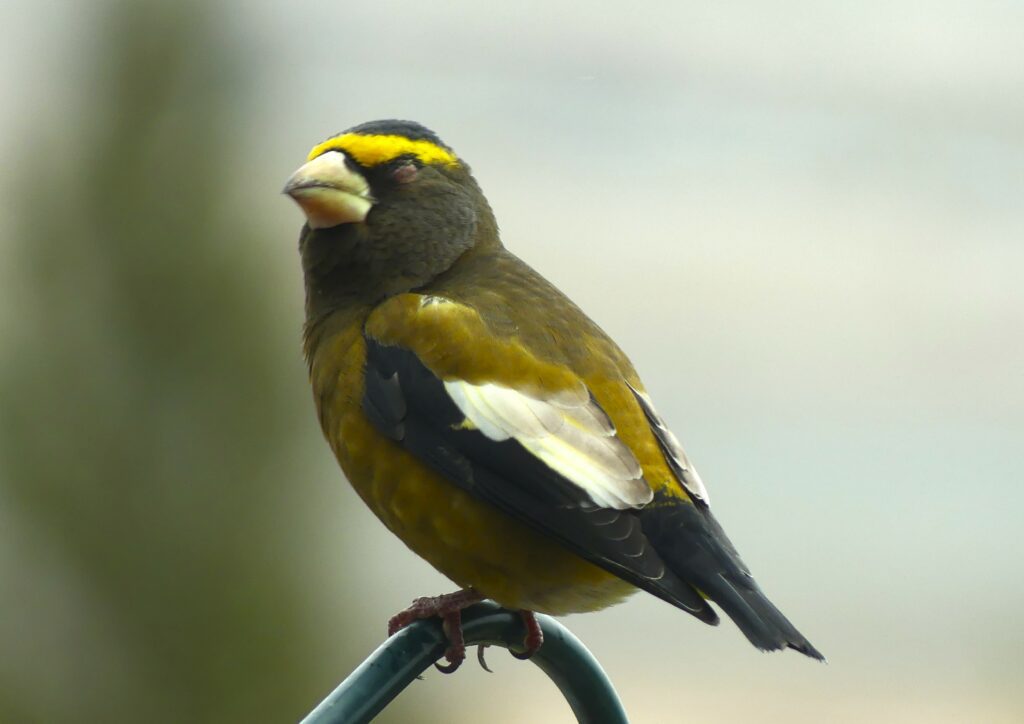
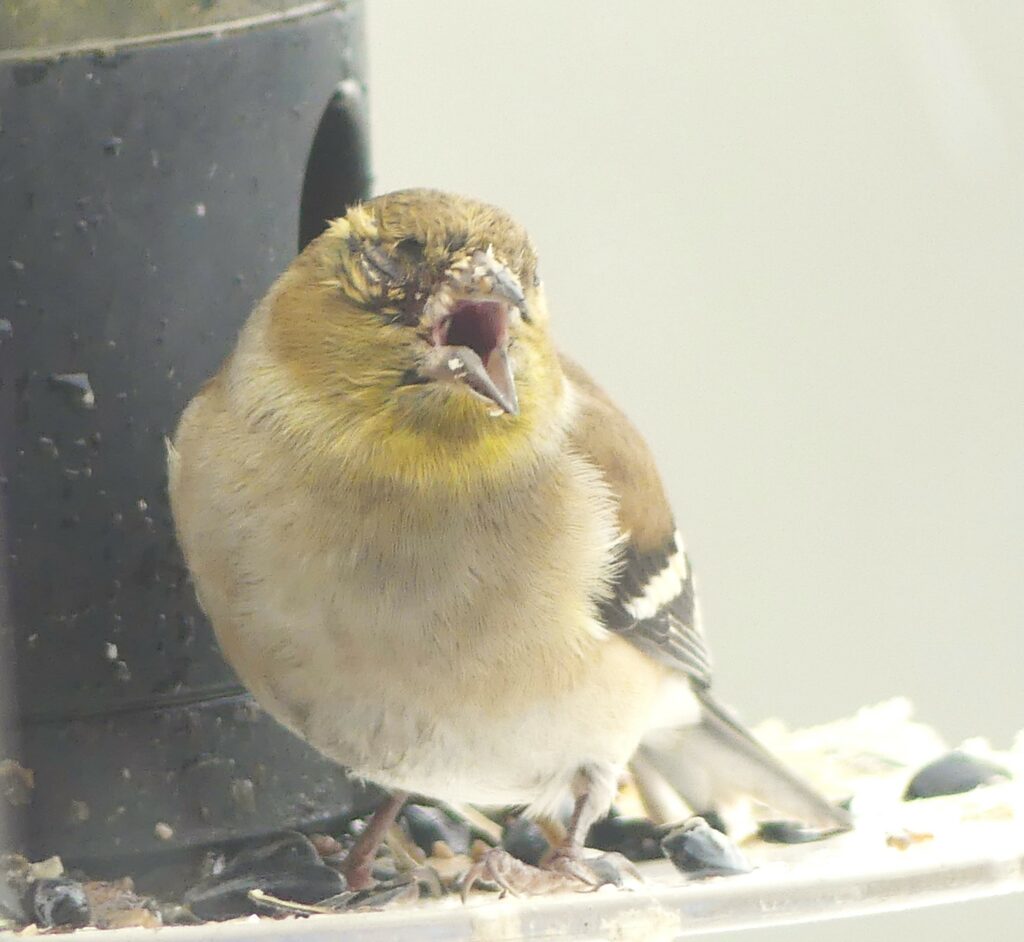
The following are images of birds that I have observed with eye problems. These appeared at my feeder in four different years and were the only ones observed in those years.
Evening Grosbeak with unusual-looking eyeAmerican Goldfinch with swollen eye with dischargeFemale House Finch with eye problem
I count cranes, specifically on six sections of grain and hay fields and ponds in the west valley. I go every day, late morning, 365 days a year unless I’m gone. Some people go to the gym, some for coffee with friends, some go to work. (More images of Dick’s photography are viewable on this companion article on our web site.)
Editor’s Note: This gallery of Dick’s extraordinary photography is a companion piece to Dick’s critically important post Bird Flu in West Valley. We are grateful to Dick for allowing us to publish these images on our site. You can find many more at walkerphotography.smugmug.com.
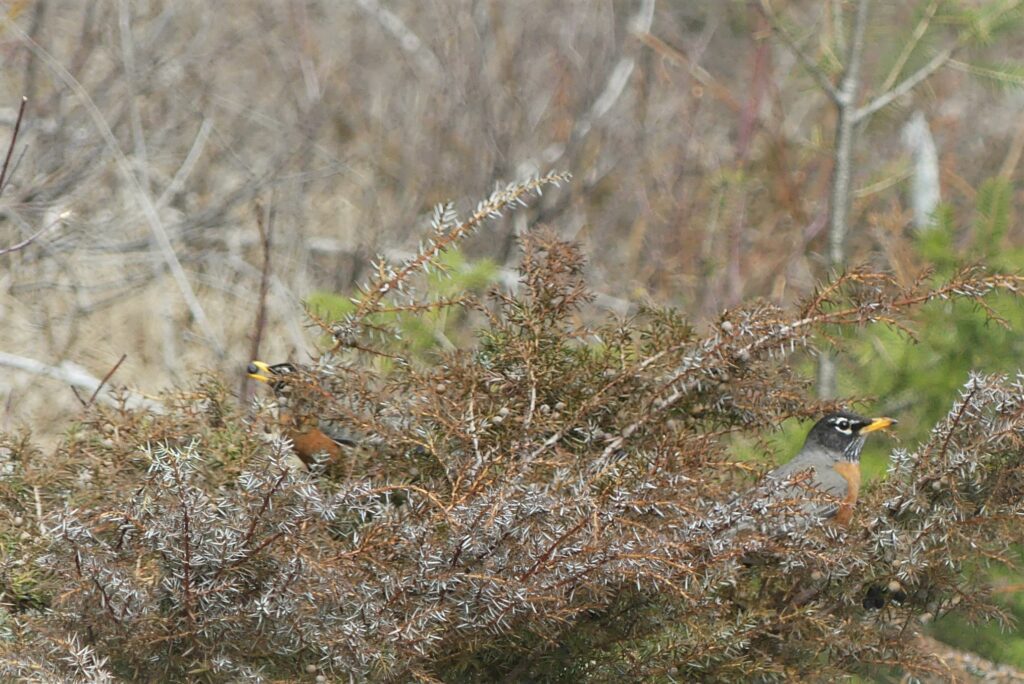
Juniper is a woody plant that provides habitat and food for a number of bird species year ’round. For more information about local Juniper species and the birds that utilize them in all seasons…
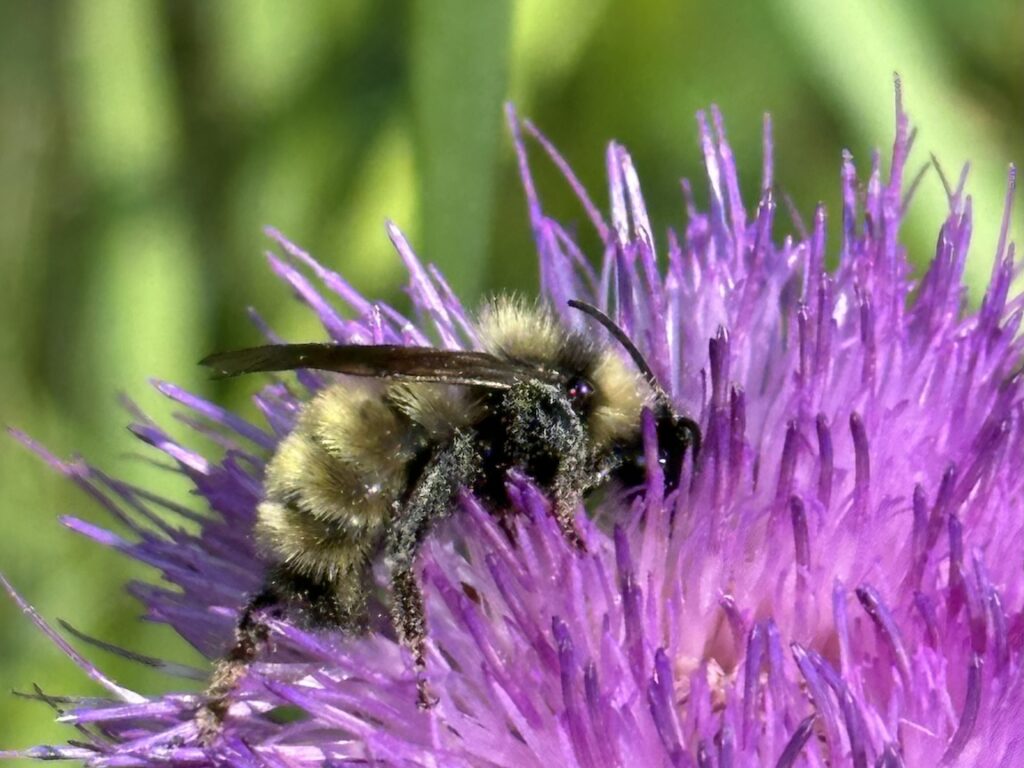
A few weeks ago on a walk through the Bear Paw Battlefield south of Malta, I photographed a bumble bee that I couldn’t identify. The community at iNaturalist agreed that it is an Indiscriminate Cuckoo Bumble Bee. Curiosity peaked once again, I went on a search for more information.
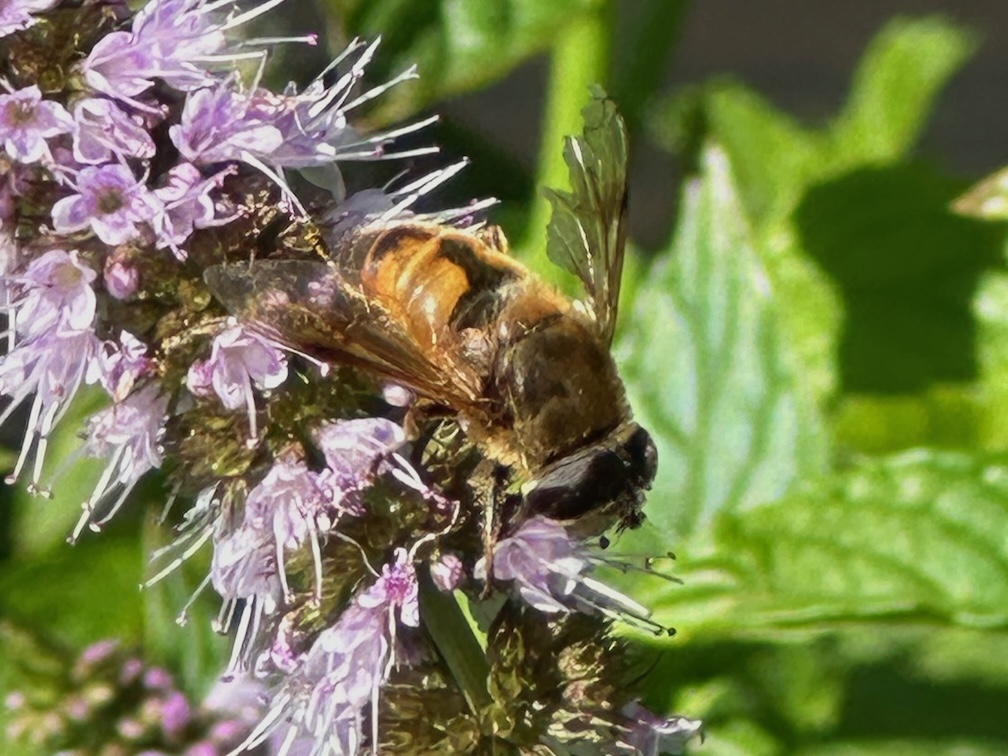
A few days ago I noticed dozens of what I thought were bees on some flowering peppermint plants near my deck. On closer inspection, it turns out that they weren’t bees at all, but rather drone-flies. Curiosity peaked, I did a bit of research.
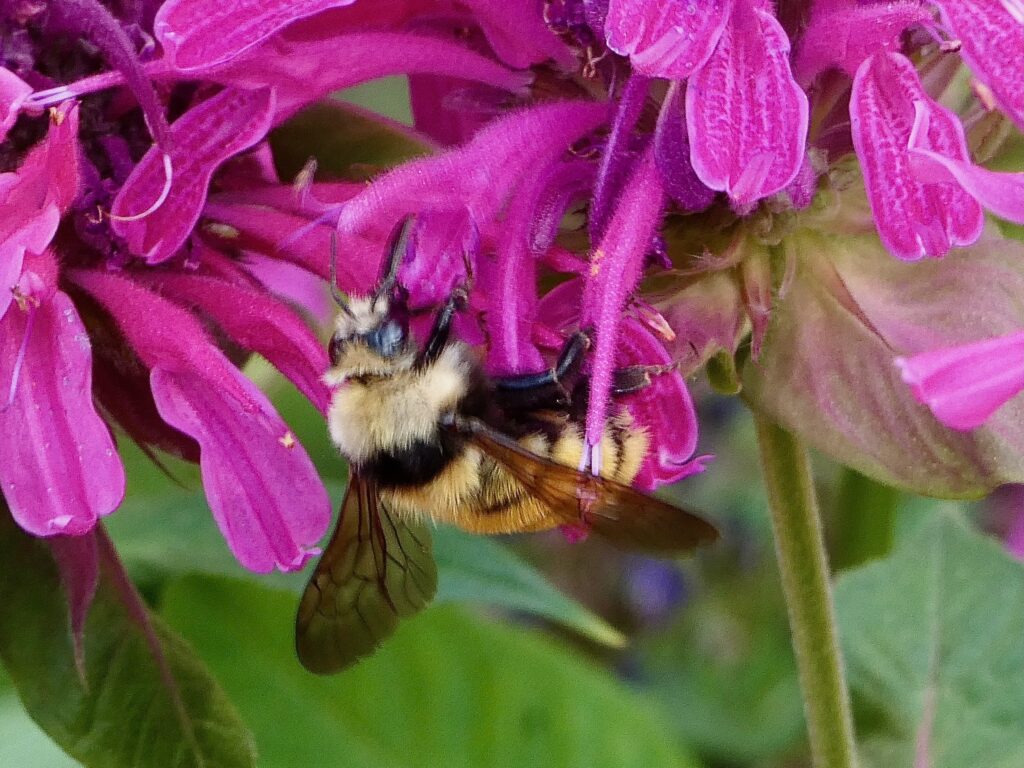
As an aspiring bee person, I try to keep close tabs on the different species of bees that I come across in the valley and environs. When a new-to-me species comes along, I try to find out as much about it as I can. In that regard, for the past week or so I’ve observed a large, distinctively marked species hanging around various flowers in my yard in fairly strong numbers–several can usually be found feeding on the bee balm near our deck, as seen in these photos.
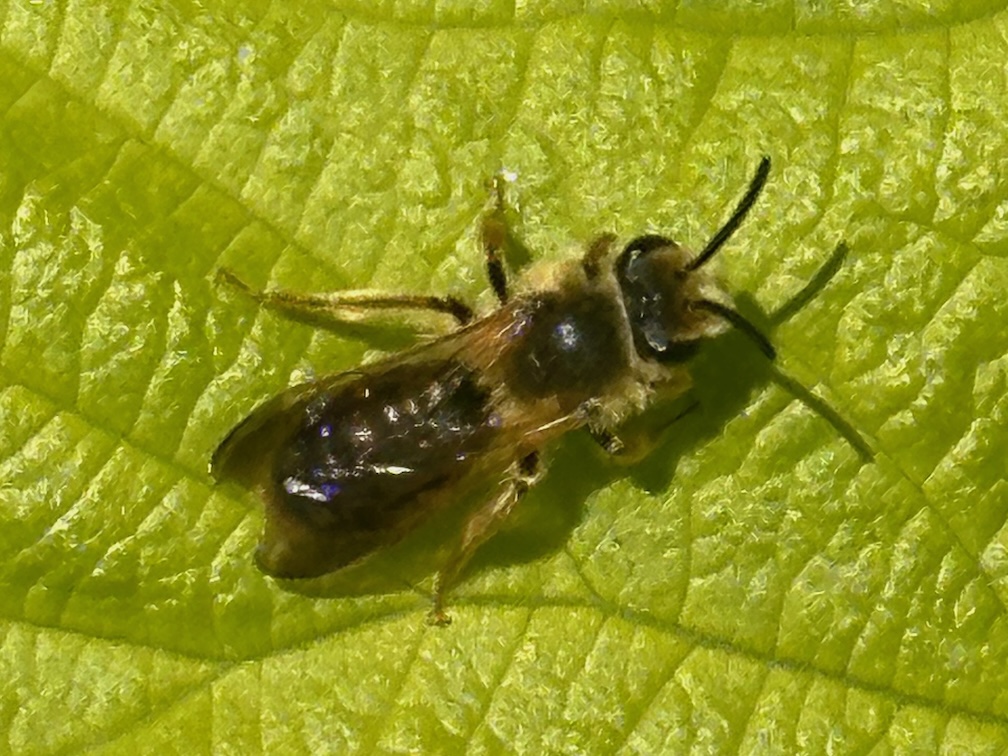
On our back deck just outside our kitchen window, we have a hops plant growing (profusely!) against and over a retaining wall. In the past few days, I’ve noticed that in the late morning hours (9:00 – 11:00 am) the plants leaves are swarmed by dozens of small bees. Curiosity peaked, I decided to see what was going on.
In the video below, you’ll see something I have never seen (or heard of) before–an elk feeding underwater, in a moving stream, no less. In my 35 years in Alaska, I observed many moose feeding this way, but almost always in ponds or lakes, never in a moving stream.
This video was taken in mid-June at the CSKT Bison Range, so I hesitated to includes it here as it’s not exactly local to our area. But I’m quite curious whether or not anyone else has observed this feeding behavior in elk. If you have, please leave a comment. And if you have any photos…
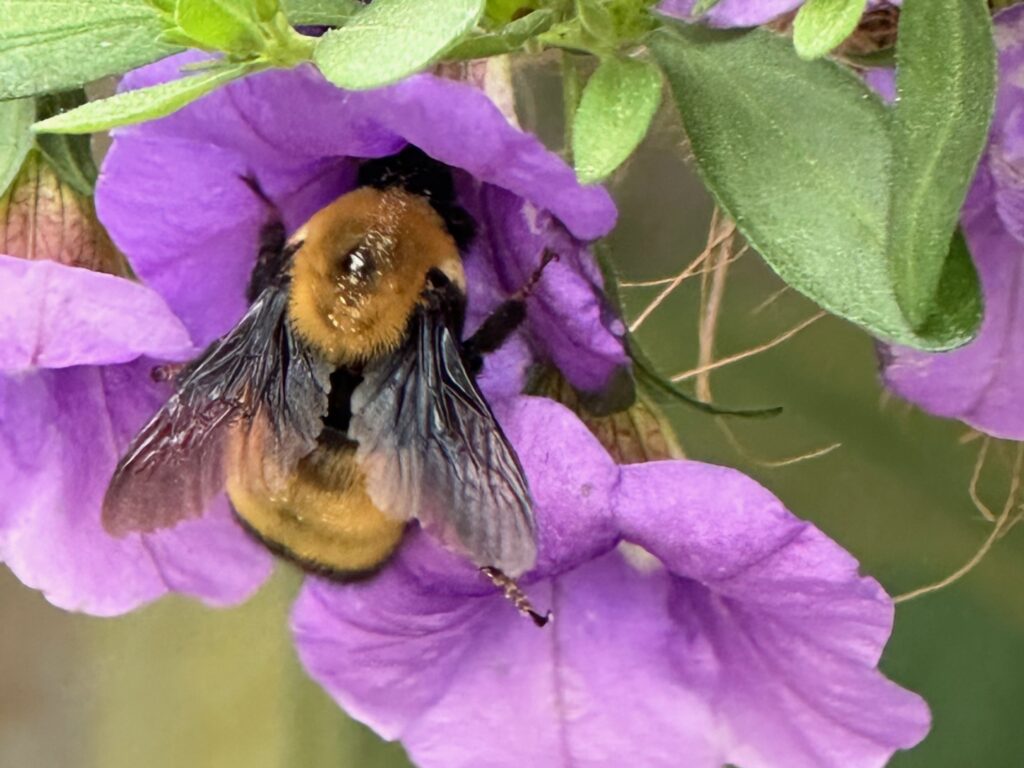
I love bees, so it’s always a treat to encounter a native species that is new to me. That was the case a couple of days ago with the Nevada Bumble Bee, when I first encountered several feeding on some creamy pea vine (vetch family) in Happy Valley and the next day on my back deck with her head deeply embedded in some petunias in some hanging flower baskets. They’re hard to miss–they’re very large (queens are nearly an inch long), have lots of dense yellow/orange fur on their thorax and abdomen, and their buzz is considerably louder than any other species I have encountered. Males and females are very similar except that the females and queens have black heads, whereas the males have yellow heads. That’s why I think the bee pictured below is a female, possibly a queen given her size.
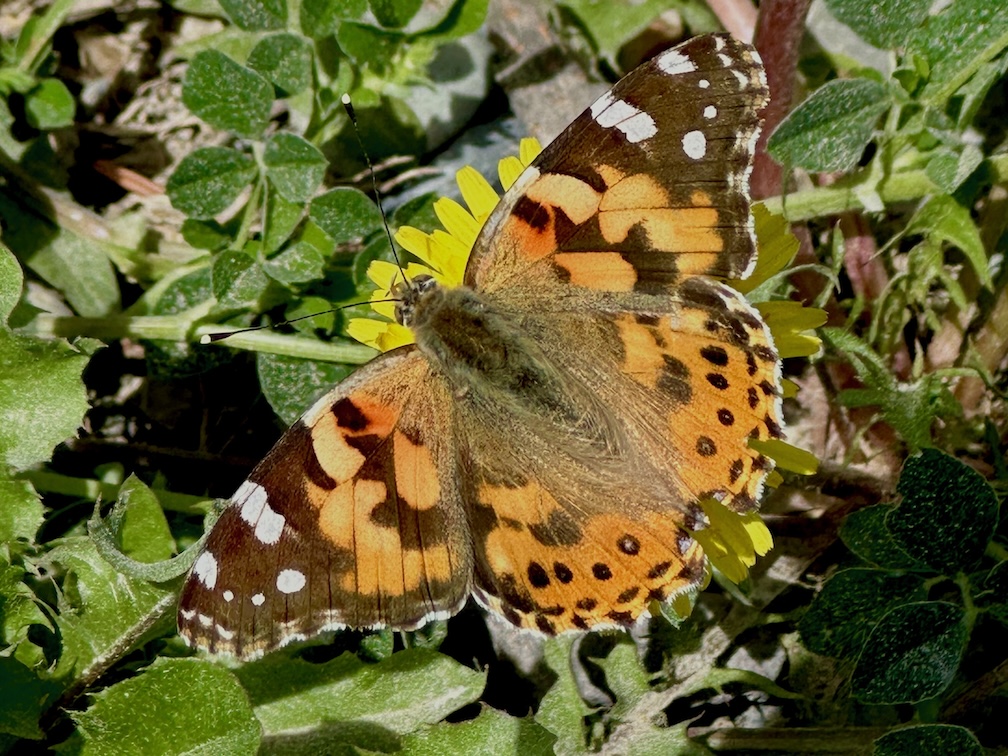
Butterflies are often difficult to photograph, so I was pleased to finally get a good opportunity to photograph a Painted Lady butterfly. Looking back over my collection of butterfly photos, I realized that this was the first I had ever photographed, and likely one of the first I have ever positively identified, perhaps due to their general resemblance to several other local species such as crescents, tortoiseshells, and checkerspots when they are not standing still, which is most of the time.
Painted Lady Butterfly
That prompted a little research into the species, which yielded some interesting information.
English Inquiry Project by Sawyer S., West Valley School
What is a pollinator and what positive effects do they have on us humans?
What is a pollinator? This is something one may ask themself but not truly know. A pollinator is anything that carries pollen from the stamen to the stigma. This transfer must happen for the plant to produce. From squash to wheat, this is necessary for production. When someone says pollinator, one generally thinks of bees but this is not always the case. Pollinators include wind, water, bees, wasps, moths, butterflies, birds, and even small mammals including bats.
American three-toed Woodpecker (male) Black-backed Woodpecker (male)
The above woodpeckers have been seen in the West Valley with increasing frequency in the last few years. To learn more about these unusual birds and why they are here, read on.