by Pat Jaquith
pat@westvalleynaturalists.org
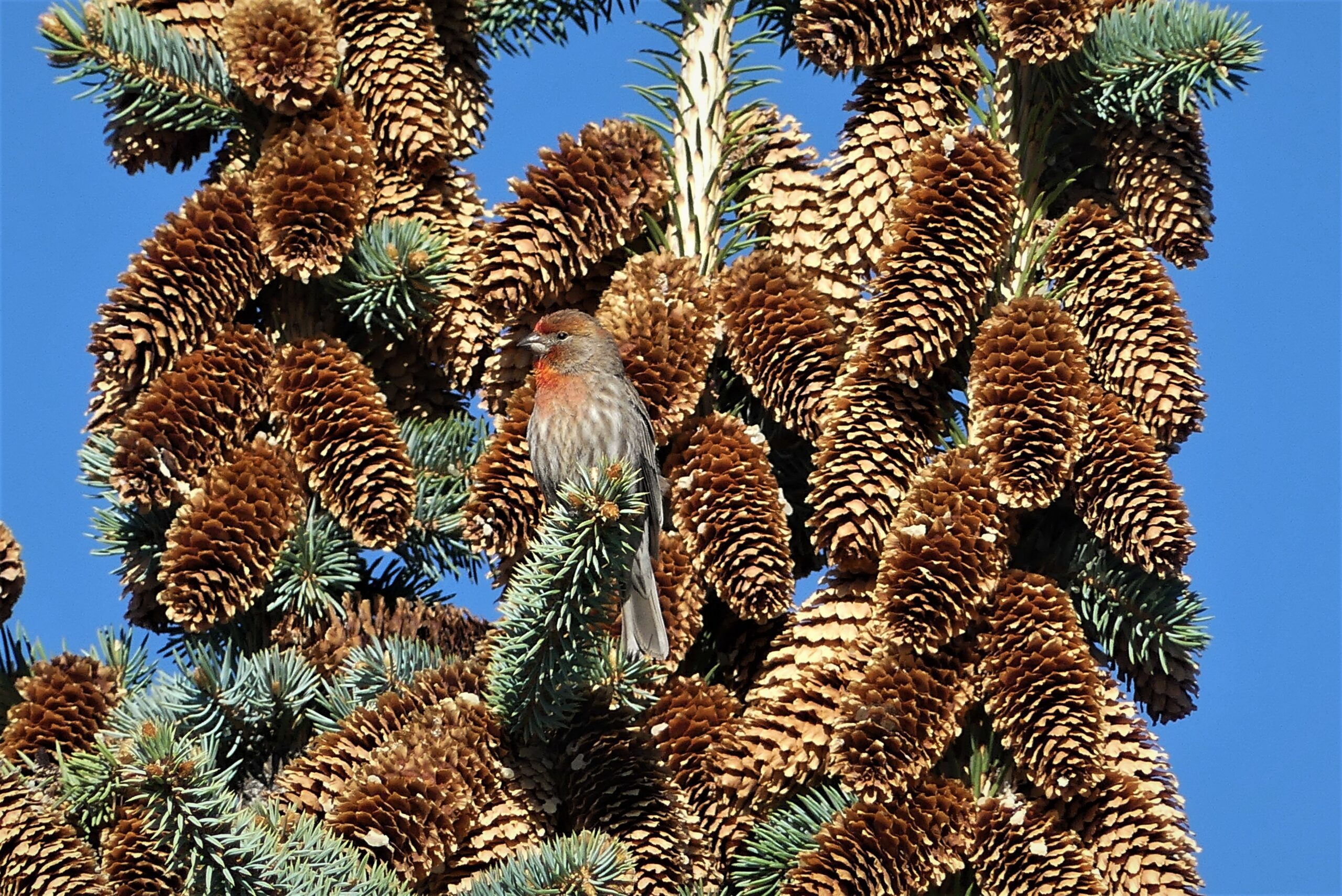
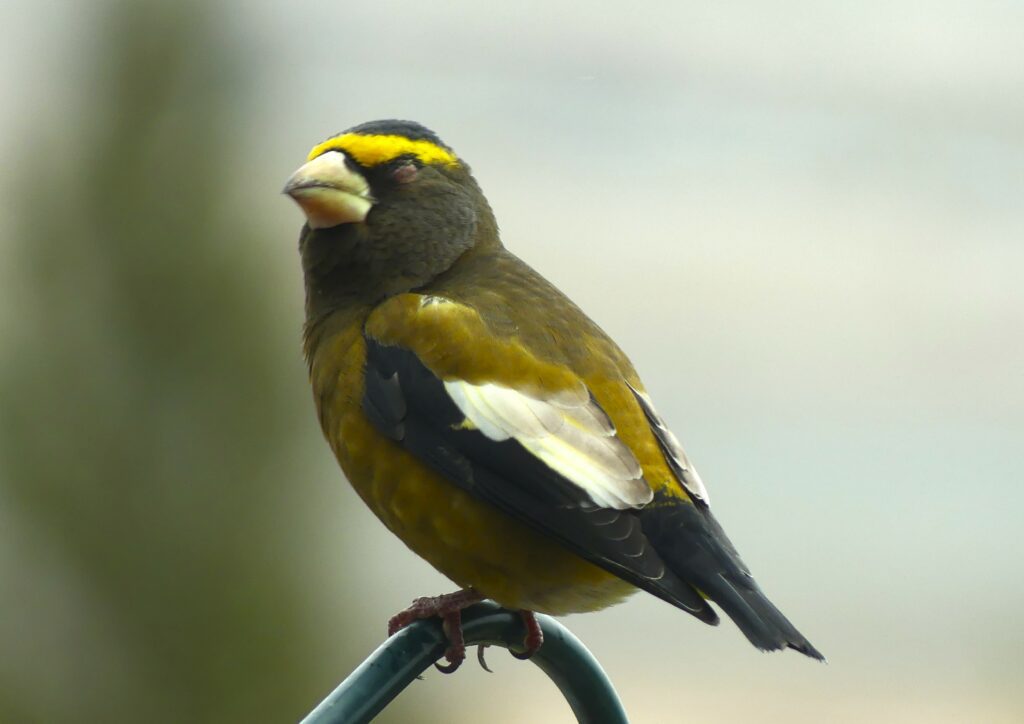
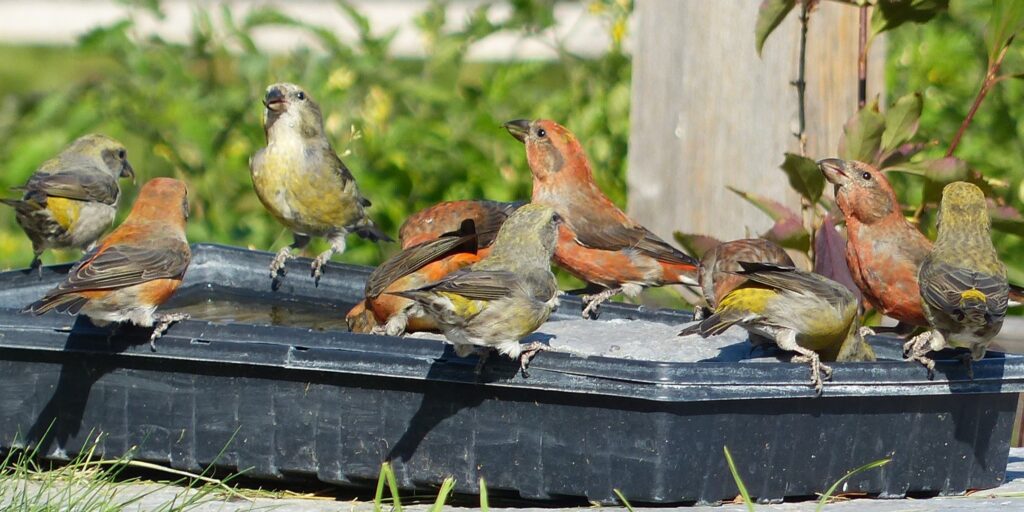
How does one describe House Finches? Striped bodies, head and chest of various shades varying from yellow to orange to pink to red. Flocking, chattering, perching at the top of of trees, stout-billed seed-eaters. Perched among the cones of a Blue Spruce in bright sun one morning, this perky House Finch looked like a Christmas decoration! Members of the Fringillidae family, there are 17 species, including many of our familiar visitors: crossbills, Evening and Pine Grosbeaks, redpolls, goldfinches, house finches, Cassin’s finches, and siskins. Many of these species are reported in decline and we can’t take them for granted.
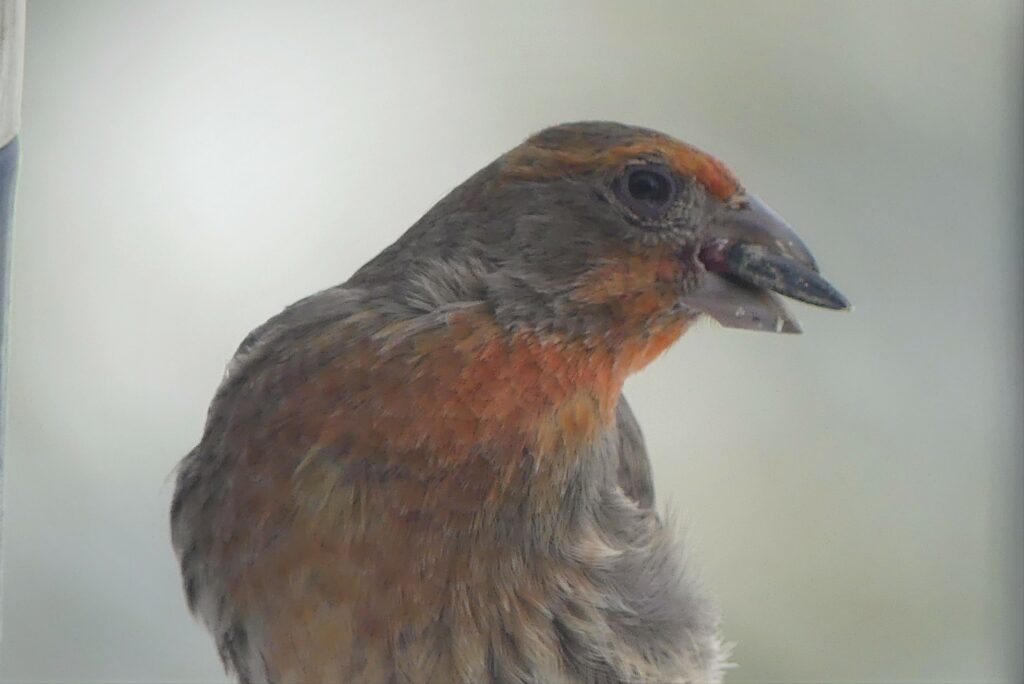
House Finch at the feeder with normal-appearing right eye
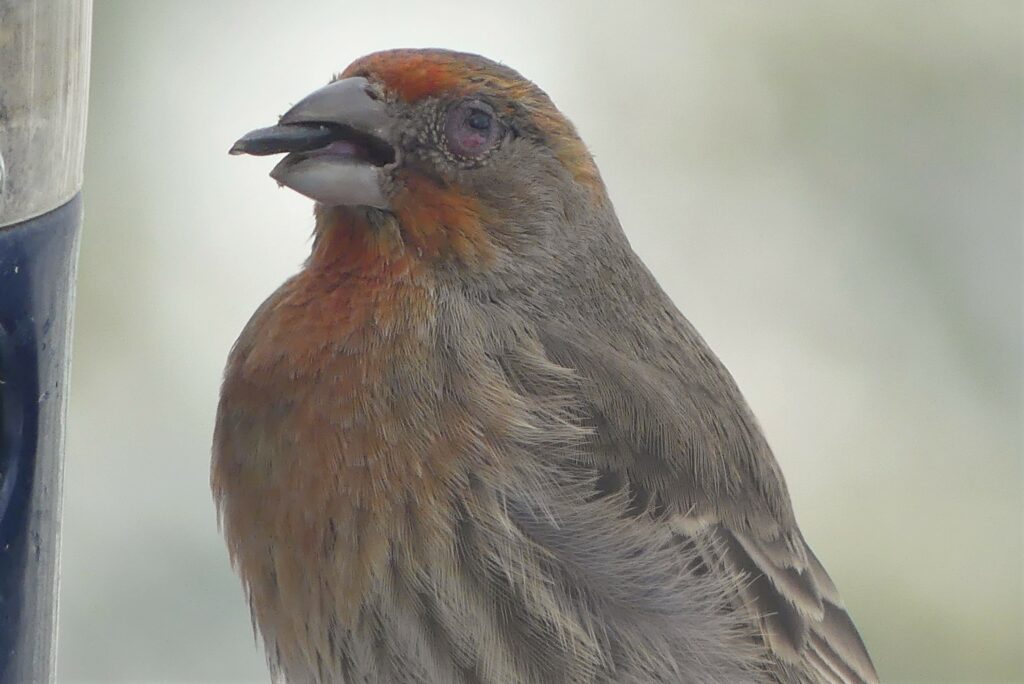
Same bird as above with head rotated to reveal abnormal left eye
Although I can’t diagnose the cause of the unusual-appearing eye, knowing that there are diseases among Finches that can be transmissible and deadly, this was message enough to send me out to take down the feeders, clean them and the area and not hang them out for a week.
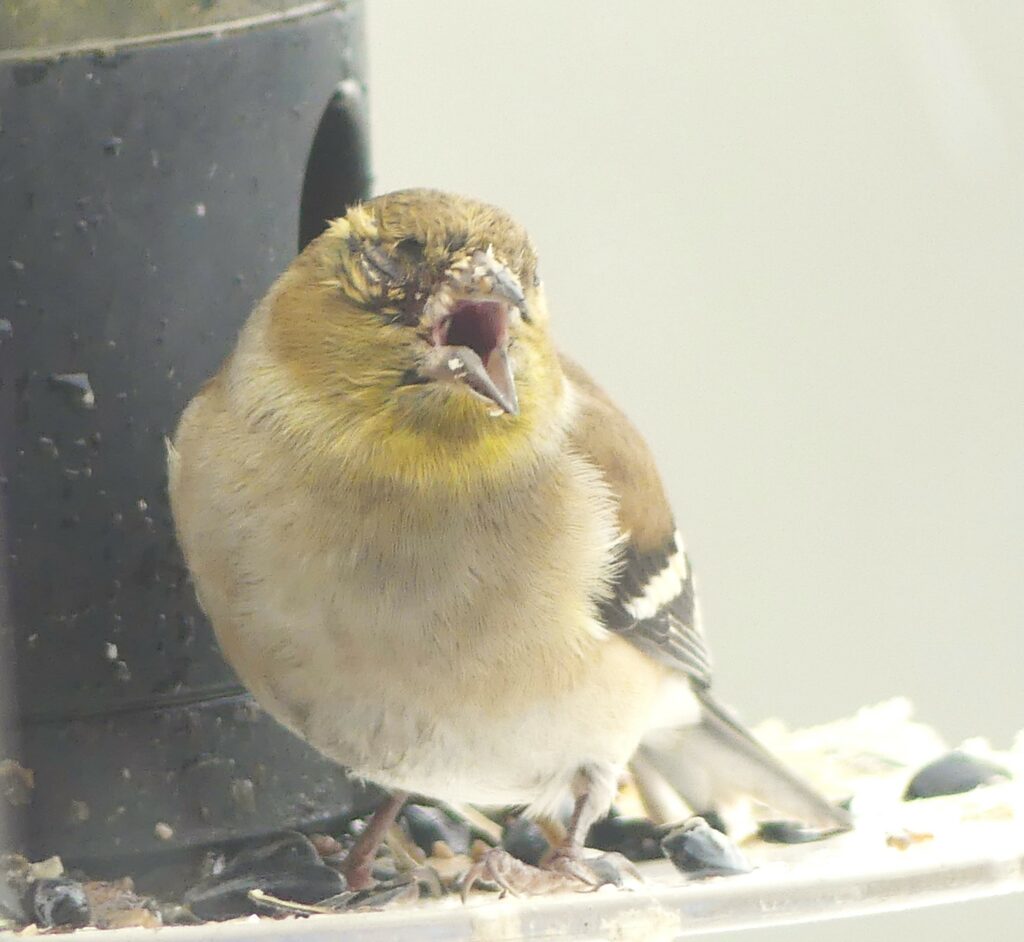
https://feederwatch.org/blog/eye-disease-american-goldfinches/ A link sponsored by TheCornellLab, this is one of many sources of information about possible causes and steps we can take to help protect the birds we care about.
The following are images of birds that I have observed with eye problems. These appeared at my feeder in four different years and were the only ones observed in those years.