Urbane Digger Bees

by Skip Via
skip@westvalleynaturalists.org

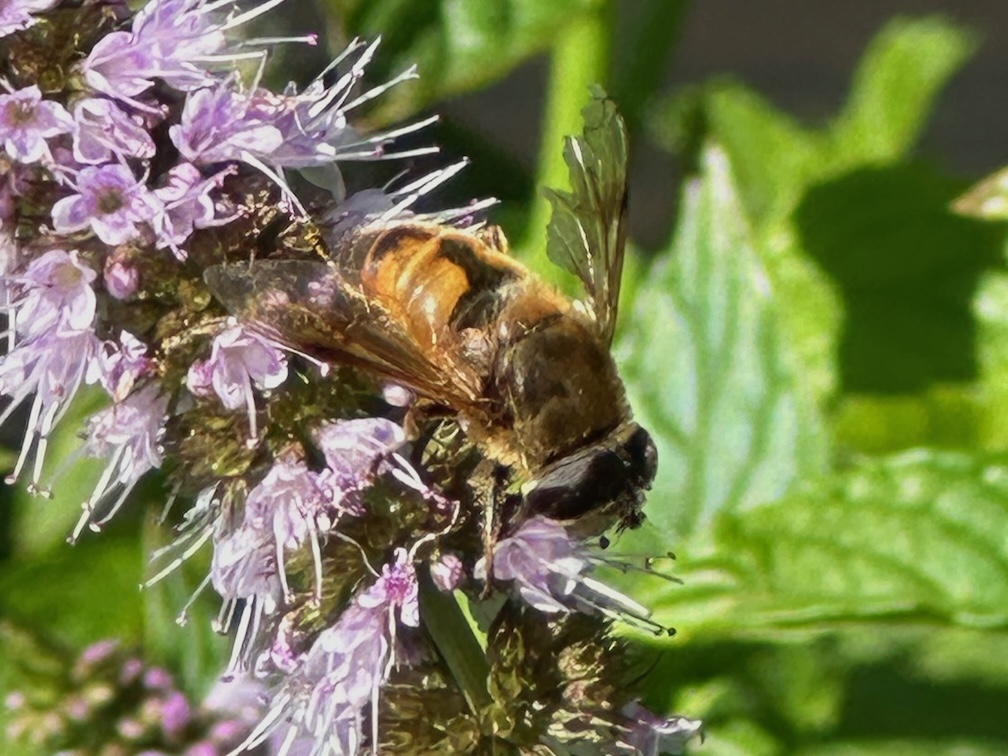
We have several beds of bee balm (bergamot), both native varieties and cultivars, planted around our property to attract bees and hummingbirds, which it does in huge numbers. It’s not uncommon find more than a dozen species of bees foraging for nectar on a single bed.

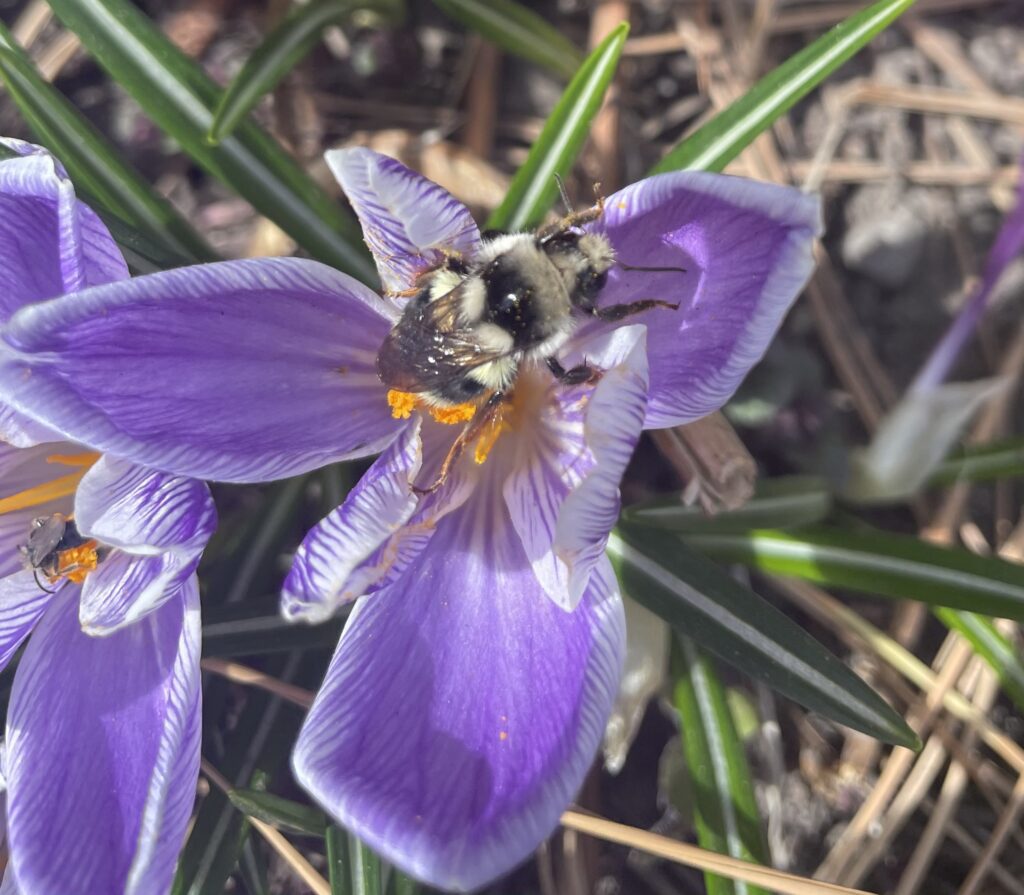
Lately, I’ve noticed a virtual invasion of a bee species that is new to me–a small, gray striped bee that looks like a cross between a honey bee and a bumblebee. True to form, it’s neither. It turns out that this is an urbane digger bee (Anthrophora urbana).

Continue Reading →

West Valley April Ephemerals

by Pat Jaquith
pat@westvalleynaturalists.org

Like a bird incubating eggs, Bunchgrass growing on sunny hilltops protects and warms the ground for many ephemerals like Ranunculus glaberrimus.

Lithophragma parviflora (Little Woodland Star) and Antennaria dimorpha (Cushion Pussytoes) often appear very early in sheltered areas warmed by west-facing stony outcrops. Tachinid flies are early-appearing pollinators of these flowers.

Dodecatheon conjugens (Shooting Star) and Lomatium triternatum (Nine-leaf Desert Parsley grow in an old pasture where grass will be two feet tall in another month.

Balsamorhiza sagittata (Arrowleaf Balsamroot) Ranunculus glaberrimus (Early Buttercup) and Erythronium grandiflorum (Glacier Lily) are so precocious that sometimes they get covered with snow while in full flower and recover as if they had welcomed the extra gift of water.

Oops! One of those surprises you can get while looking at the ground in search of early flowers! Recently emerged from hibernation, this garter snake was coiled around the stems of a young Serviceberry shrub in a sunny patch of soon-to-open Early Buttercups!

Cladonia pleurota (Red fruit Pixie cup lichen) Claytonia lanceolata (Spring Beauty)

Carex concinnoides (Northwestern Sedge) and a wonderful discovery of the first appearance of a Calypso bulbosa(Fairy slipper orchid) plant, a little plant that will blossom in May!

The Mystery of the Neighborly Bees

by Skip Via
skip@westvalleynaturalists.org

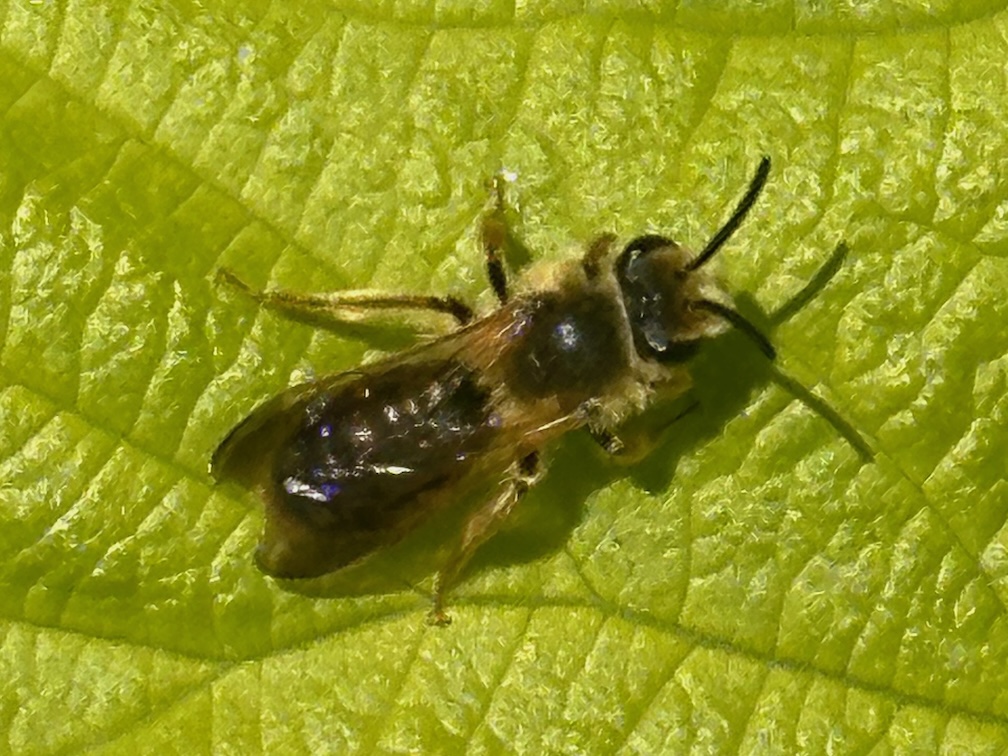
On our back deck just outside our kitchen window, we have a hops plant growing (profusely!) against and over a retaining wall. In the past few days, I’ve noticed that in the late morning hours (9:00 – 11:00 am) the plants leaves are swarmed by dozens of small bees. Curiosity peaked, I decided to see what was going on.

Continue Reading →

Nevada Bumble Bees

by Skip Via
skip@westvalleynaturalists.org

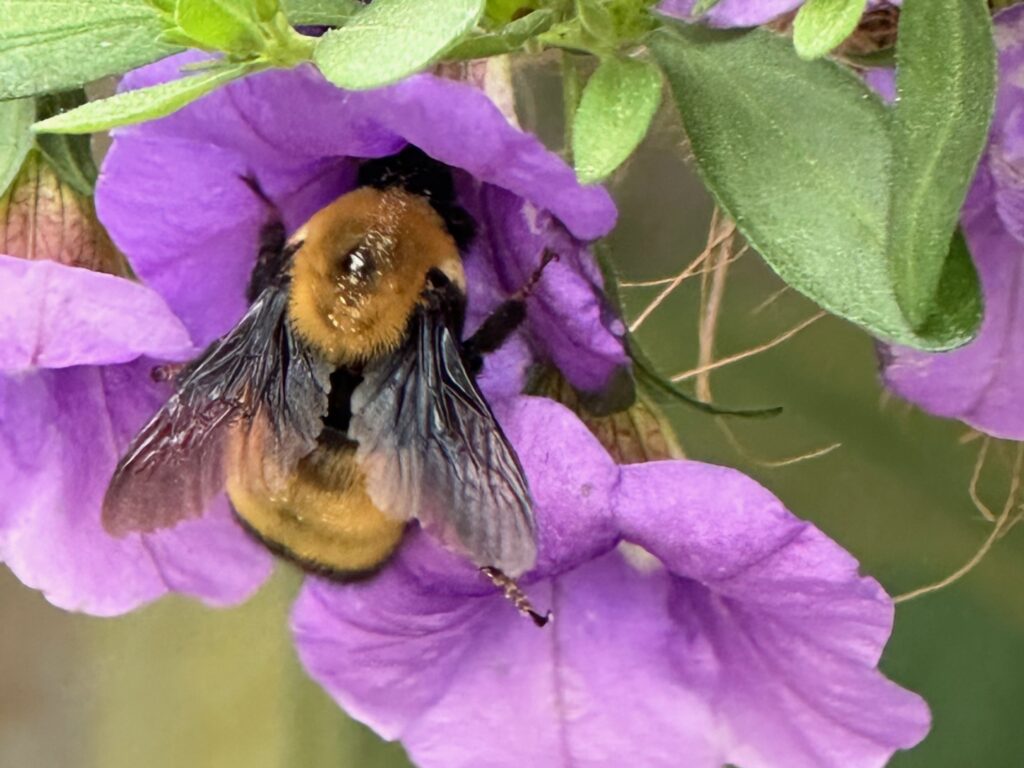
I love bees, so it’s always a treat to encounter a native species that is new to me. That was the case a couple of days ago with the Nevada Bumble Bee, when I first encountered several feeding on some creamy pea vine (vetch family) in Happy Valley and the next day on my back deck with her head deeply embedded in some petunias in some hanging flower baskets. They’re hard to miss–they’re very large (queens are nearly an inch long), have lots of dense yellow/orange fur on their thorax and abdomen, and their buzz is considerably louder than any other species I have encountered. Males and females are very similar except that the females and queens have black heads, whereas the males have yellow heads. That’s why I think the bee pictured below is a female, possibly a queen given her size.

Nevada Bumble Bee female, possibly queen.
Continue Reading →

Painted Ladies

by Skip Via
skip@westvalleynaturalists.org

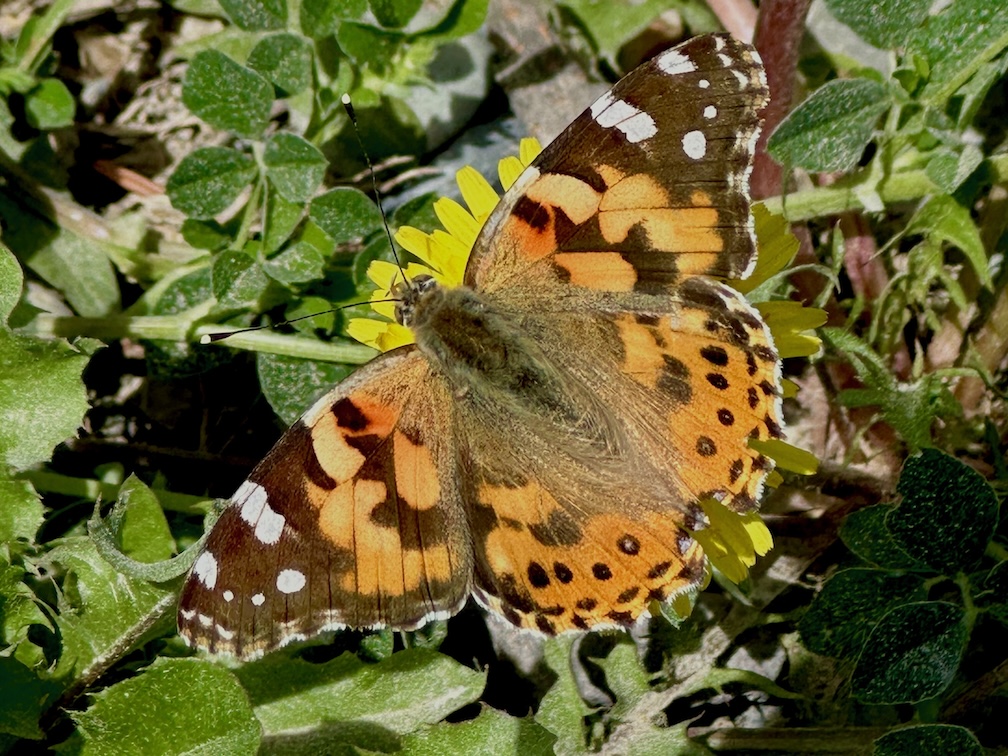
Butterflies are often difficult to photograph, so I was pleased to finally get a good opportunity to photograph a Painted Lady butterfly. Looking back over my collection of butterfly photos, I realized that this was the first I had ever photographed, and likely one of the first I have ever positively identified, perhaps due to their general resemblance to several other local species such as crescents, tortoiseshells, and checkerspots when they are not standing still, which is most of the time.

Painted Lady Butterfly

That prompted a little research into the species, which yielded some interesting information.

Continue Reading →

What Are Pollinators?

English Inquiry Project by Sawyer S., West Valley School

What is a pollinator and what positive effects do they have on us humans?

What is a pollinator? This is something one may ask themself but not truly know. A pollinator is anything that carries pollen from the stamen to the stigma. This transfer must happen for the plant to produce. From squash to wheat, this is necessary for production. When someone says pollinator, one generally thinks of bees but this is not always the case. Pollinators include wind, water, bees, wasps, moths, butterflies, birds, and even small mammals including bats.

Continue Reading →
A Season of Bees

by Skip Via
skip@westvalleynaturalists.org

Tris Hoffman’s wonderful article A Very Special Bee (published here earlier this spring) prompted me to finally get serious about being able to identify a few of the plethora of native bee species we see here in the West Valley area of the Flathead. It’s an ongoing process, but with Tris’ help, iNaturalist, and other local and online sources, I’ve been able to catalog the following species this summer. It’s the tip of the iceberg, so to speak, given that Montana has more than 20 species of native bumblebees (not to mention the native sweat bees, miner bees, leaf cutter bees, mason bees, and others) but it’s a start.

Continue Reading →

White-lined Sphinx Moth

by Skip Via
skip@westvalleynaturalists.org

White-lined sphinx moths (Hyles lineata) are one of over a thousand varieties of sphinx moths, most of which occur in tropical zones. This one is common throughout most of Central America and North America to southern Canada. Hyles lineata is a type of hawk moth, but they are often called hummingbird moths because they resemble hummingbirds in appearance, size, and actions. They are generally common here in the valley, although their population numbers and locations vary from year to year.

Continue Reading →

A Western Bumblebee

By Skip Via
skip@westvalleynaturalists.org

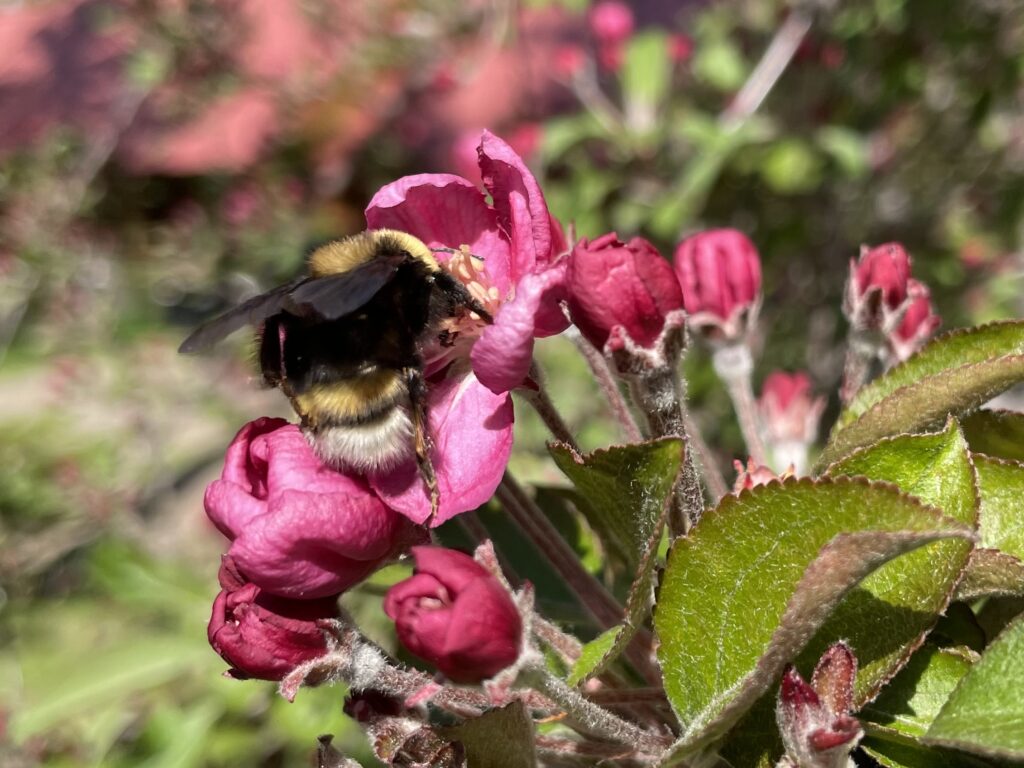
Ever since reading Tris Hoffman’s excellent post on the Western bumblebee (read it here: A Very Special Bee), I’ve been on the lookout for a specimen that I could photograph. Today, I found one jamming it’s head into the emerging blossoms of a crabapple tree in our yard. Here are the photos—read Tris’s post for information about it’s scarcity (the West Valley area is still a good place to see them) and ways to increase their numbers.

Continue Reading →

A Very Special Bumblebee

by Tris Hoffman, Flathead National Forest Weed Coordinator
silversagebrush@hotmail.com

The Western Bumblebee is a species that was once common and widespread throughout the western U.S. and Canada.  For a variety of reasons, both known and unknown, populations of this bee are in serious decline.  It has mostly vanished west of the Cascades.  Thankfully, West Valley is a place (perhaps a refuge?) where the bees may still be found.  

Continue Reading →

Early Spring

by Pat Jaquith
pat@westvalleynaturalists.org

Mud season 3.16.17

Winter is melting into summer. Every day is a surprise: will the snow retreat today? or will we experience a fall-back into freezing temperatures and even get some snow? When will we see some green in the in the cold, black soil of fields that were sown last fall? When will we see the first-of-the-year (FOY) Sandhill Crane? Who can guess correctly the day of ice-out on the potholes? How many geese, ducks, swans fit in the one open pool? Are those trees really starting to blossom? Will I be able to leave that heavy coat home? Read further for some of my FOY’s!

Continue Reading →

The Three Musketeers of Wasps

by Tris Hoffman, Flathead National Forest Weed Coordinator
silversagebrush@hotmail.com

Walt Disney got it wrong:  The bald-faced hornet

When Disney adapted A.A. Milne’s Winnie the Pooh into a cute animation, he made mistake.  If the “Bear of Very Little Brain” wanted honey, he should have looked for a large hollow tree. The illustrations in Milne’s original stories show Pooh climbing a large tree, but he is not going after the papery egg-shaped nest that the animated bear seems to obsess about.  Disney’s globular gray nest would never provide Pooh with honey, because that is a typical nest of a bald-faced hornet.

Continue Reading →