by Pat Jaquith
pat@westvalleynaturalists.org
What on Earth is that??? Read on to see if you got it! And see some more things that I put on the brakes for!
Okay! Have you got your answers ready?
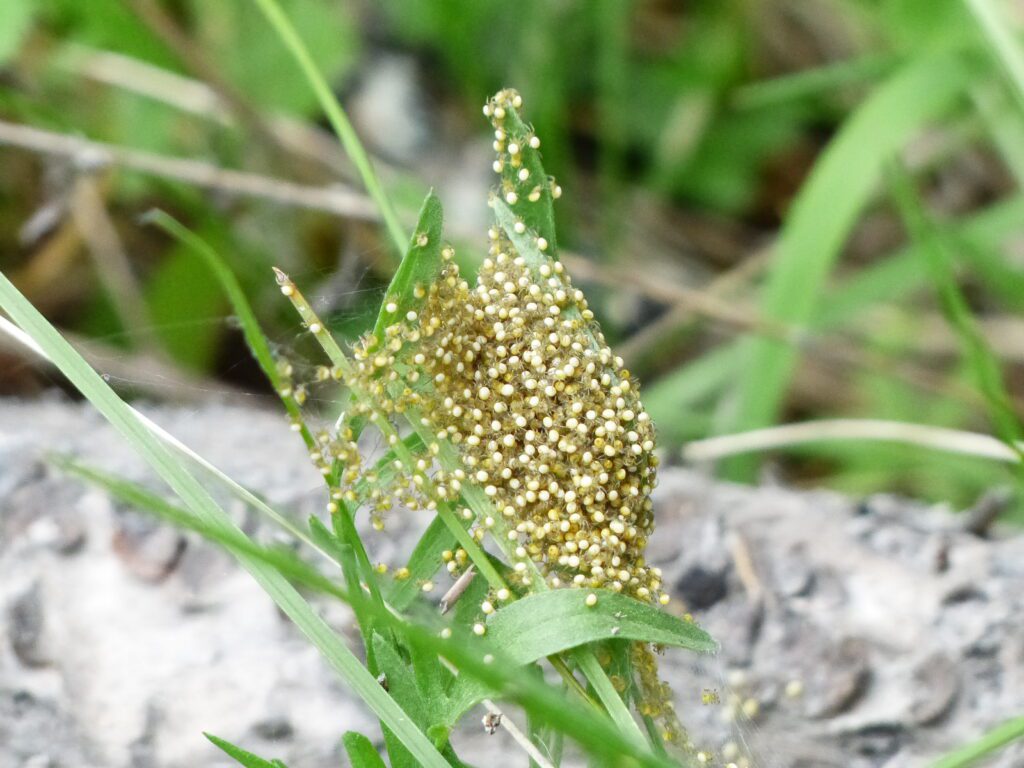
#1. Here are my observations: One sunny morning near the time I encountered these spiderlings, I was on a knoll overlooking Cliff Lake when the low rays of sun lighted up thousands of spots of light that made me think of balloons floating in the air above the water.
Banded Garden spiders (Argiope trifasciata) lay up to 1,000 eggs in a sac which they attach to a blade of grass or something nearby in a protected site where they overwinter. In spring, they hatch out and disperse. Some stay nearby; others climb up on a branch or something nearby, spin a thread of silk, and float off on the wind to a new site.
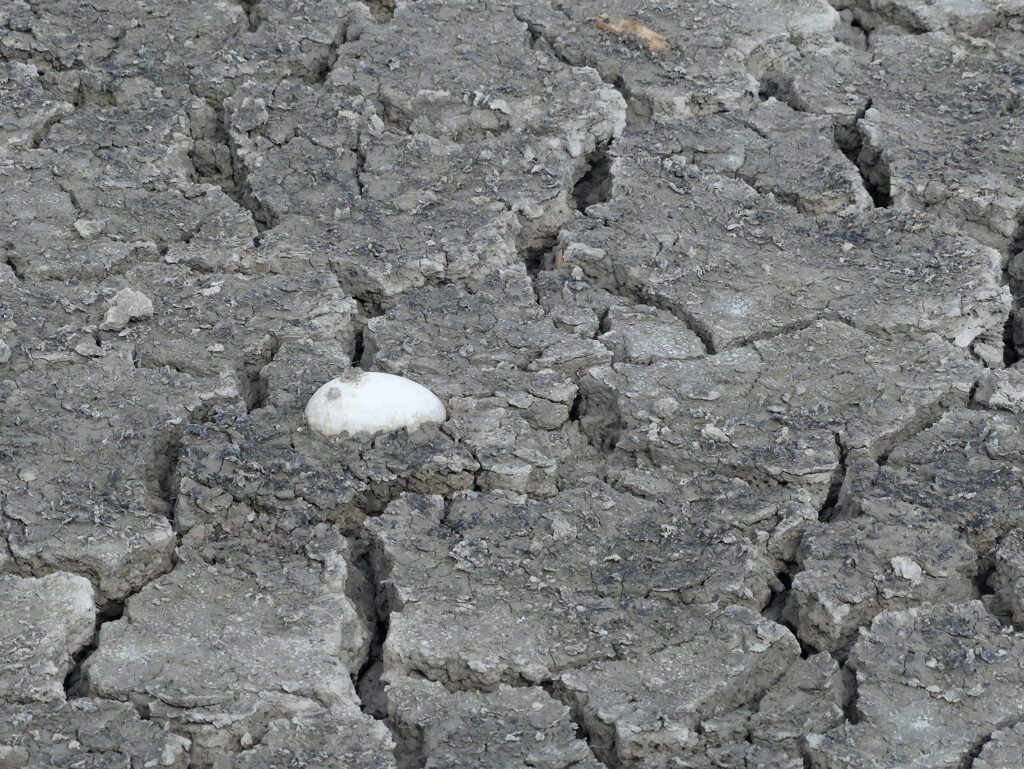
#2. I found a goose egg partially buried in the dry lakebed of Bowser Lake in August. I was puzzled. How did it get there? Why hadn’t it been damaged? How long it would remain there? I placed a sizeable rock near it to mark the spot. I was in the vicinity a few more times and it was undisturbed; once I was able to pick it up from its perfect goose-egg pocket in the dry bentonite soil. On October 10, I wanted to show it to my companion – and all we found was the empty hole and a few large white splats in the area!
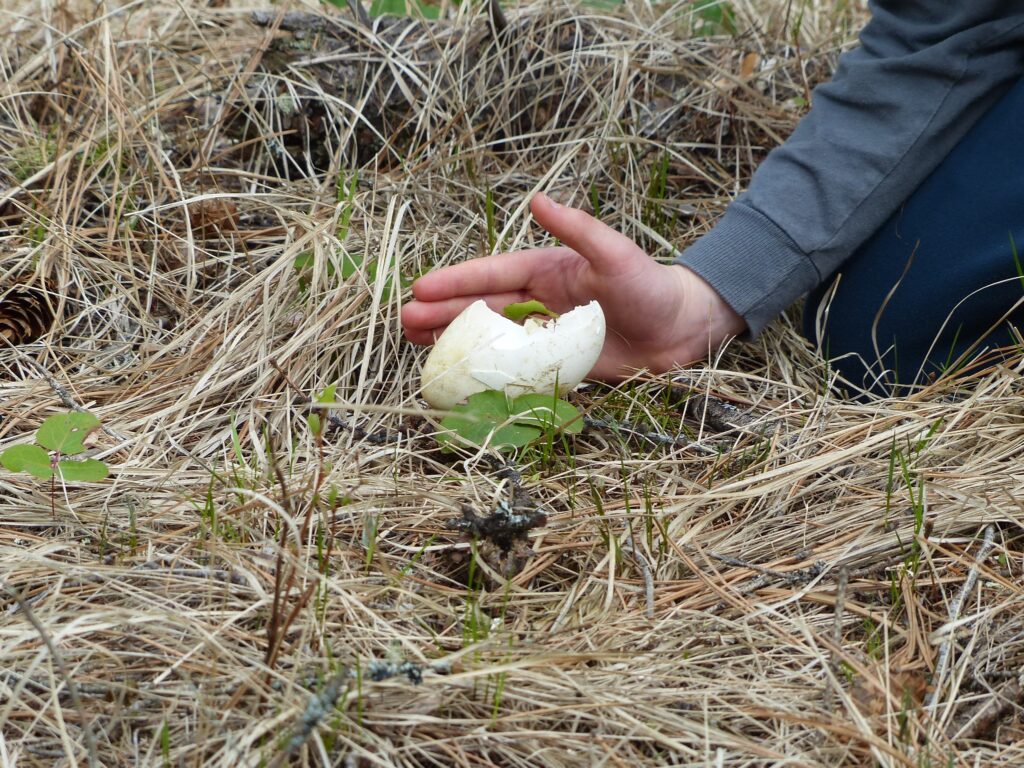
#3. One April Day, as we walked in the woods above Cliff Lake, we spotted a white object on a rocky outcrop. What was freshly-broken eggshell doing up there? How did it get there?
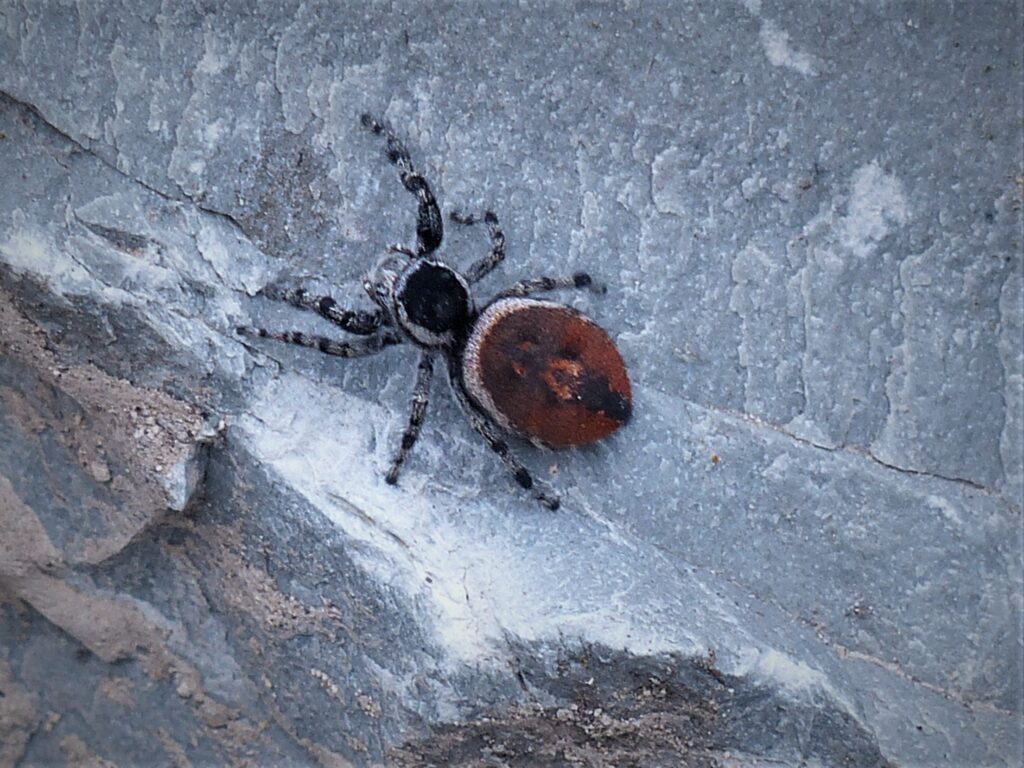
#4. In mid-September, as I cleaned out wasp traps, I noted a spider web inside of one. I took another good look, and saw a spider still in the web! What a scary-looking thing; I’d never seen a red spider before, so before I opened the trap, I decided to research its identity. I learned that it is a Red-backed Jumping Spider and not too hazardous. Nonetheless, I opened the top of the wasp trap very cautiously and kept camera-vision distant until it crawled out!
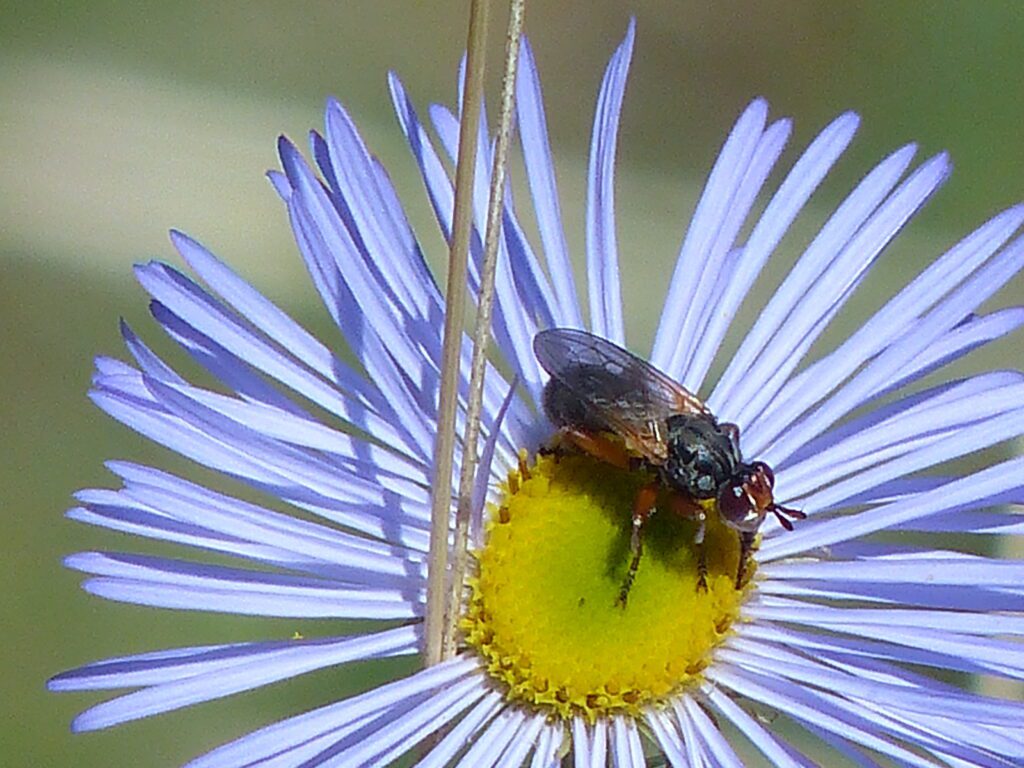
#5. In early July, I was working on learning to identify asters in my neighborhood. This one with a 1/4″ red insect on it caught my eye! It is a fly (note the big eyes and short antennae) of the Myopa family. The fly feeds on aster nectar and lays its eggs where bees lay their eggs: the fly larvae consume the bee larvae, thus parasitizing them.
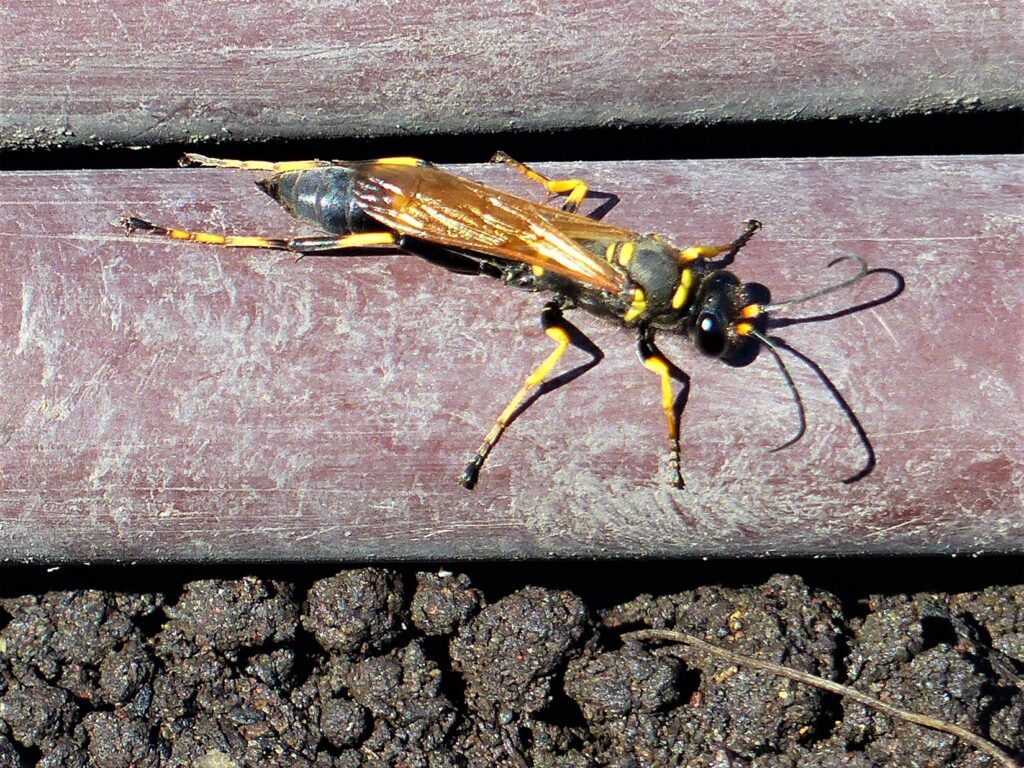

#6. I was working in the garden when this 1.25 inch, colorful wasp flew in. I know of black mud-dauber wasps, but it took no time to realize this was not the one I know! I became fascinated by its project: making mud balls in the moisture from the drip irrigation hose! The long connector between thorax and abdomen reminded me of the long trailer hitch that connects two side-dump trailers. Black and Yellow Mud-daubers (solitary parasitoid wasps) create a tube of mud in a sheltered place, sting/paralyze up to a dozen spiders and carry them into the mud tube, lay an egg on each spider, close up the tube with more mud, and leave. When the eggs hatch, they consume the paralyzed spiders (parasitizes them) as they grow and finally exit the tube.
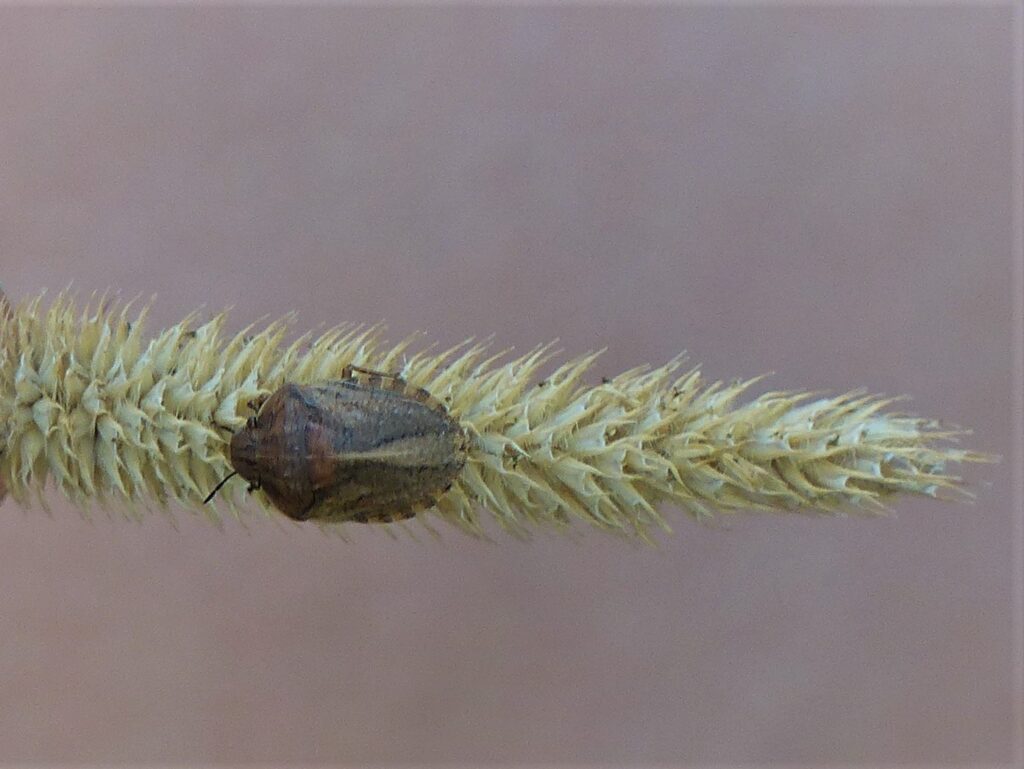
#7. Scutella Beetle We were looking at the way wheat heads grow when this beetle walked up the stem. Having heard warnings about Brown Marmorated Stink Bugs, I was both concerned and worried. I little information is not very helpful when you’re as ignorant of local agriculture as I am! However, I finally learned that this shield-backed beetle only resembles a stink bug. It feeds on plants, but it is not identified as harmful.
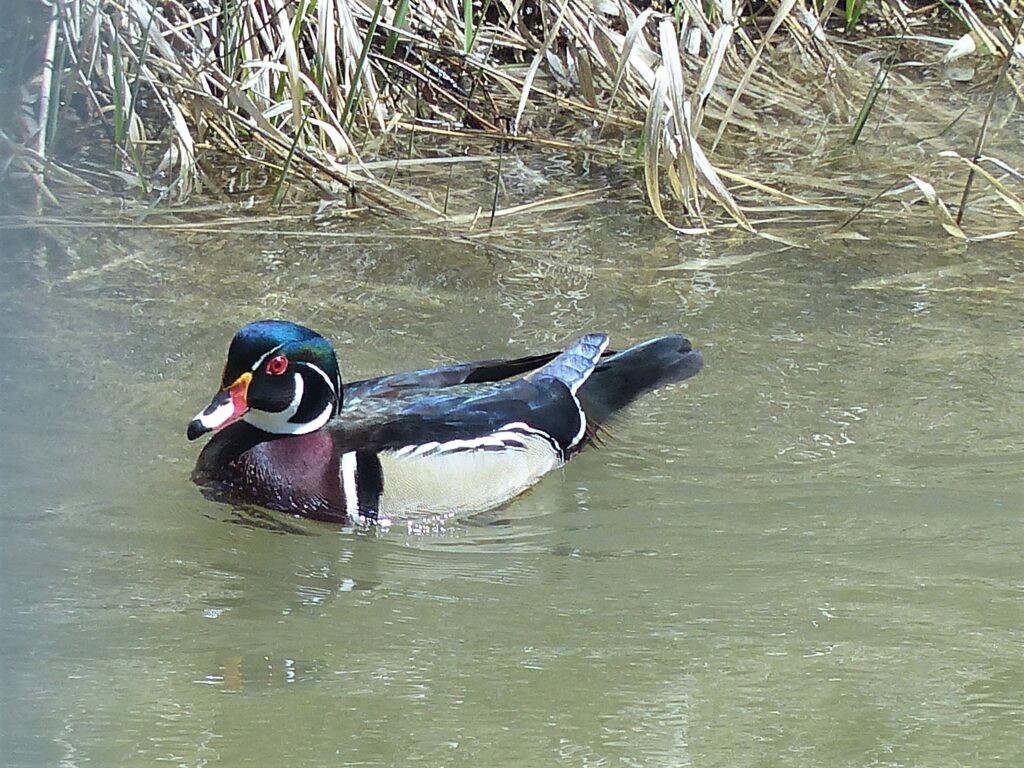
#8. This male Wood Duck is drop-dead handsome! I’ve seen Wood ducks before, so I knew what I was seeing, but I could hardly get enough of his good looks! He was cruising down a local stream with a female; they were visiting the stream banks looking for food. I don’t think I took a breath the whole time they were within view! Only after they swam out of sight did I change position. I do wonder what tree with a hole made by a Pileated woodpecker became her nest.
Perhaps this is a warning about my walking style! Don’t follow too closely because you never know when I’ll stop abruptly to look at something more closely!
