by Skip Via
skip@westvalleynaturalists.org
Here’s one for the “you learn something new every day” file: a quick look at the European wool carder bee.
Continue Reading →The natural environment and history of Kalispell’s West Valley area
by Skip Via
skip@westvalleynaturalists.org
Here’s one for the “you learn something new every day” file: a quick look at the European wool carder bee.
Continue Reading →by Jeanine Buettner
nammy@montanasky.com
W.P. McMannamy Sr. moved from Missouri to Helena in the late 1880’s where he ran a sawmill for several years. Then in 1890 he moved the machinery to Kalispell and started a planer mill, located on 7th Ave. West and 11th street.
Continue Reading →by Skip Via
skip@westvalleynaturalists.org
White-lined sphinx moths (Hyles lineata) are one of over a thousand varieties of sphinx moths, most of which occur in tropical zones. This one is common throughout most of Central America and North America to southern Canada. Hyles lineata is a type of hawk moth, but they are often called hummingbird moths because they resemble hummingbirds in appearance, size, and actions. They are generally common here in the valley, although their population numbers and locations vary from year to year.
Continue Reading →by Jeanine Buettner
nammy@montanasky.com
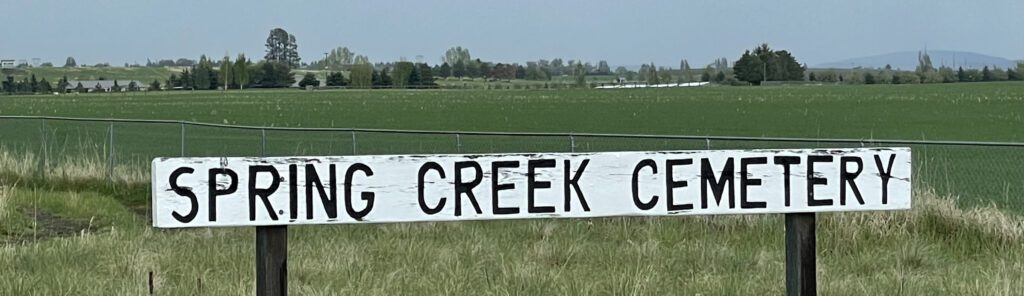
The Spring Creek Cemetery first opened in 1895 on the site of the Spring Creek Methodist Church. The church and cemetery were established by Mr. John Milton Eastland. Mr. Eastland was not an educated man, but old-timers here in the valley remember him as a good gospel singer and a talented speaker.
Continue Reading →By Skip Via
skip@westvalleynaturalists.org
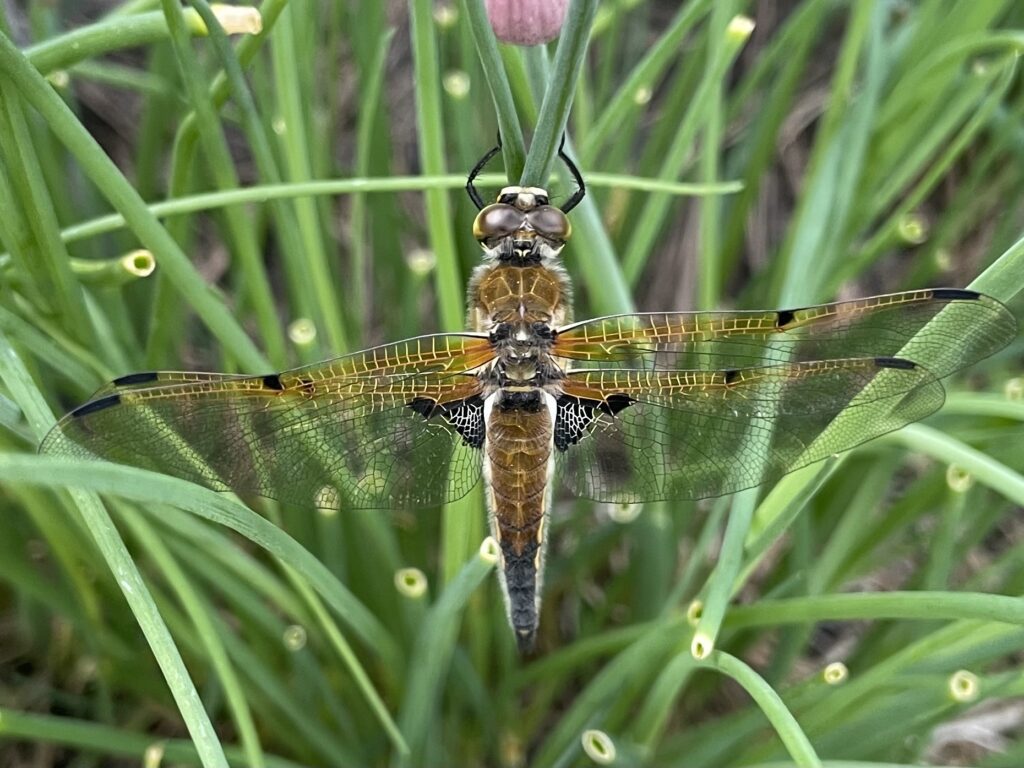
This four-spotted skimmer (female, I think) was observed on May 18 2021 perched on some chives in our garden. This dragonfly is not at all uncommon here, but it IS uncommonly beautiful.
By Skip Via
skip@westvalleynaturalists.org
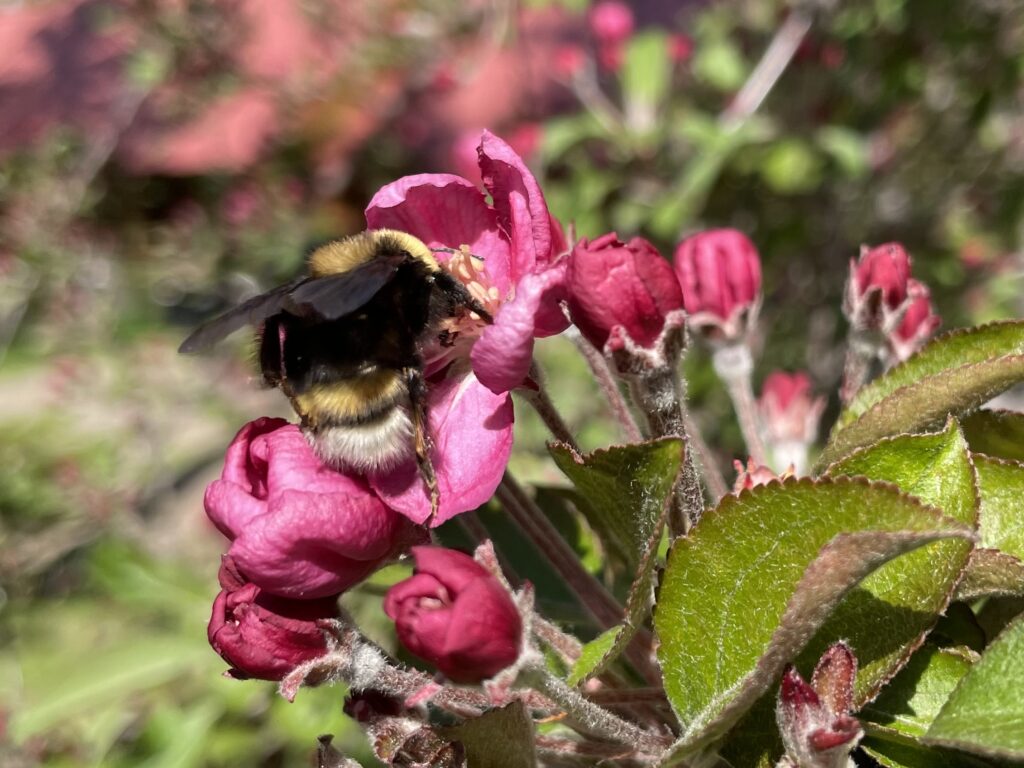
Ever since reading Tris Hoffman’s excellent post on the Western bumblebee (read it here: A Very Special Bee), I’ve been on the lookout for a specimen that I could photograph. Today, I found one jamming it’s head into the emerging blossoms of a crabapple tree in our yard. Here are the photos—read Tris’s post for information about it’s scarcity (the West Valley area is still a good place to see them) and ways to increase their numbers.
by Skip Via
skip@westvalleynaturalists.org
This is part three of a photo essay series of barns in the West Valley area of Flathead Valley. Additional parts may be viewed here:
Barns Are Noble (Part One)
Barns, Part Two
Barns, Part Four
Barns, Part Five
Click on any image to enlarge it.
Continue Reading →by Skip Via
skip@westvalleynaturalists.org
An immature bald eagle gets chased by a pair of red tail hawks when he gets too close to their nest.

by Skip Via
skip@westvalleynaturalists.org
A pair of young rival toms try everything they can to attract the attention of a hen. Any hen. One seems interested, for a while.
Continue Reading →By Skip Via
skip@westvalleynaturalists.org
This is part two of a photo essay series of West Valley barns. You may view the other parts here:
Barns Are Noble (Part One)
Barns, Part Three
Barns, Part Four
Barns, Part Five
Click on any image to enlarge it.

By Skip Via
skip@westvalleynaturalists.org
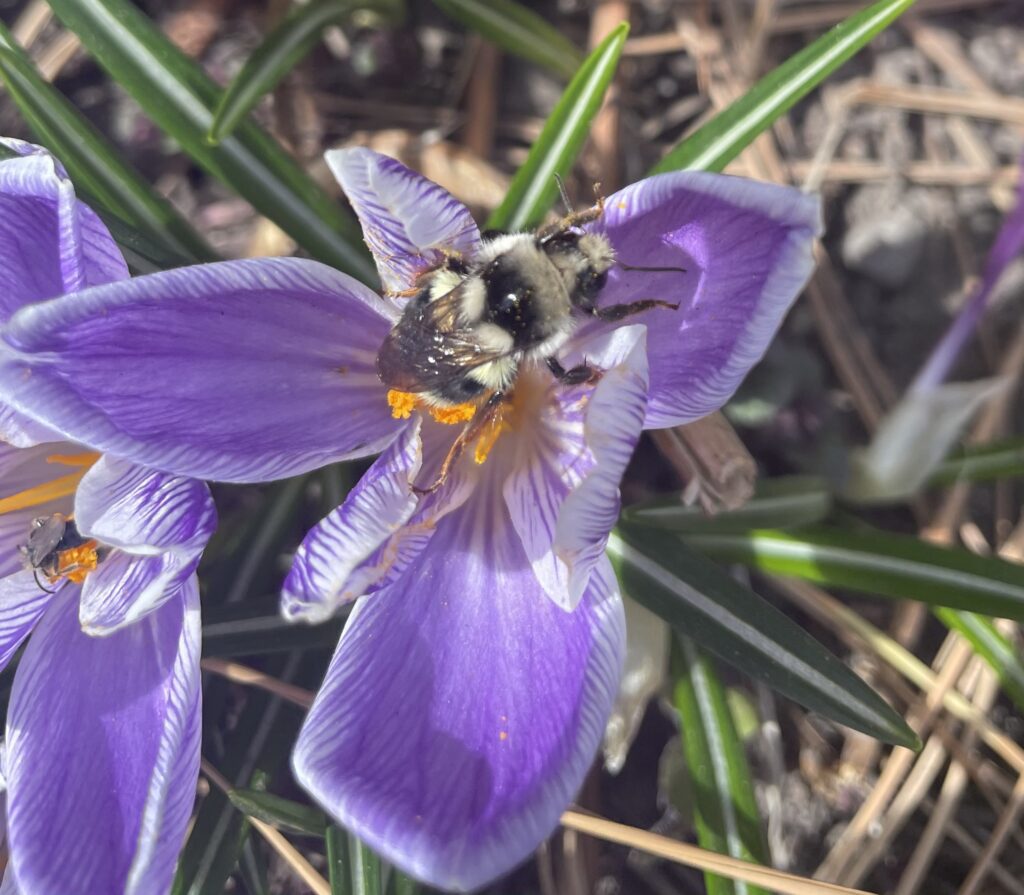
First bumblebee of the season, a two-form bumblebee, checking out the crocuses on April 15. Thanks to Tris Hoffman for help with identification.
by Tris Hoffman, Flathead National Forest Weed Coordinator
silversagebrush@hotmail.com
The Western Bumblebee is a species that was once common and widespread throughout the western U.S. and Canada. For a variety of reasons, both known and unknown, populations of this bee are in serious decline. It has mostly vanished west of the Cascades. Thankfully, West Valley is a place (perhaps a refuge?) where the bees may still be found.
Continue Reading →by Tris Hoffman, Flathead National Forest Weed Coordinator
silversagebrush@hotmail.com
Walt Disney got it wrong: The bald-faced hornet
When Disney adapted A.A. Milne’s Winnie the Pooh into a cute animation, he made mistake. If the “Bear of Very Little Brain” wanted honey, he should have looked for a large hollow tree. The illustrations in Milne’s original stories show Pooh climbing a large tree, but he is not going after the papery egg-shaped nest that the animated bear seems to obsess about. Disney’s globular gray nest would never provide Pooh with honey, because that is a typical nest of a bald-faced hornet.
Continue Reading →By Skip Via
skip@westvalleynaturalists.org
If you came here looking for the latest Harry Potter book, you probably should go to Barnes & Noble.
But if you came here because you, like me, can’t pass a barn without thinking about the stories behind it and the practical structural aesthetics of the building, then welcome. I have a thing for barns—old, new, and falling down.
This is just an uncommented photo essay—some images taken around the valley (and slightly beyond, in a couple of cases)—and not a history. But I hope that any readers that know anything about any of these barns will leave a comment and tell us a story.
This is part one of a photo essay series of West Valley barns. You may view the other parts here:
Barns, Part Two
Barns, Part Three
Barns, Part Four
Barns, Part Five
By Skip Via
skip@westvalleynaturalists.org
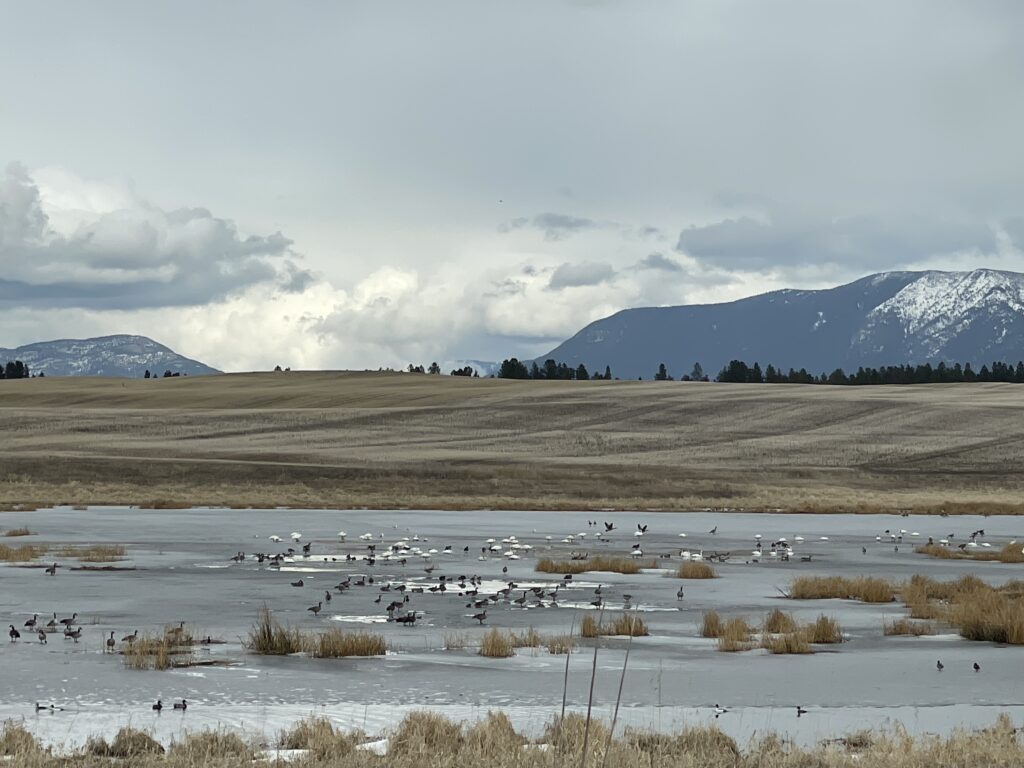
First day of spring 2021, Pond 3, the Potholes (see Locations). Better have four wheel drive…
