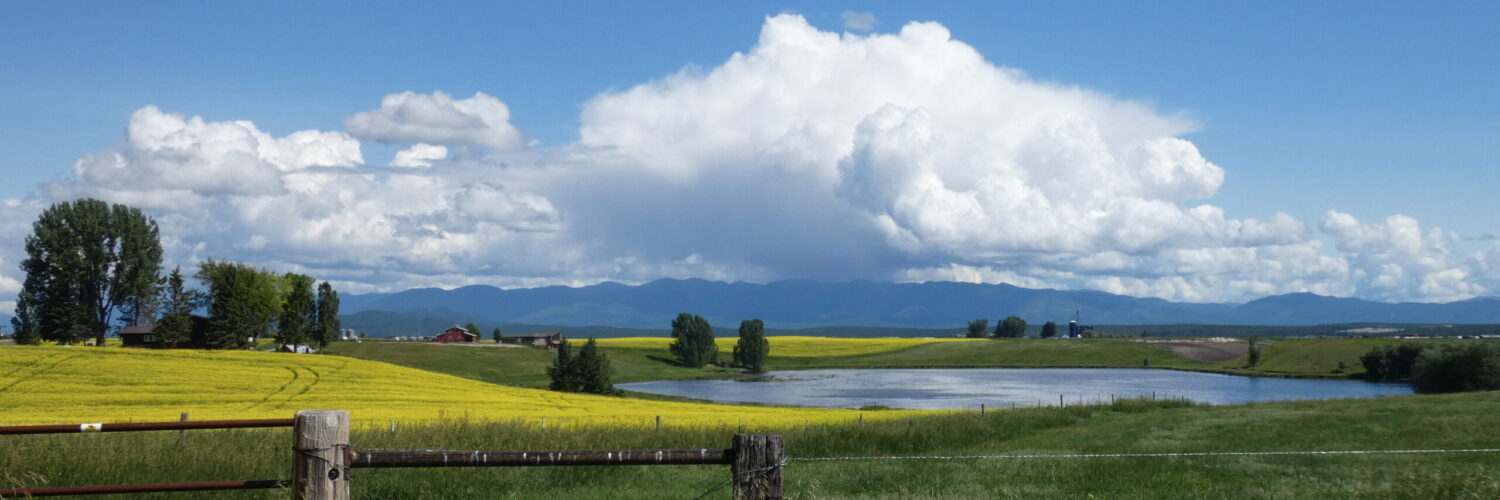
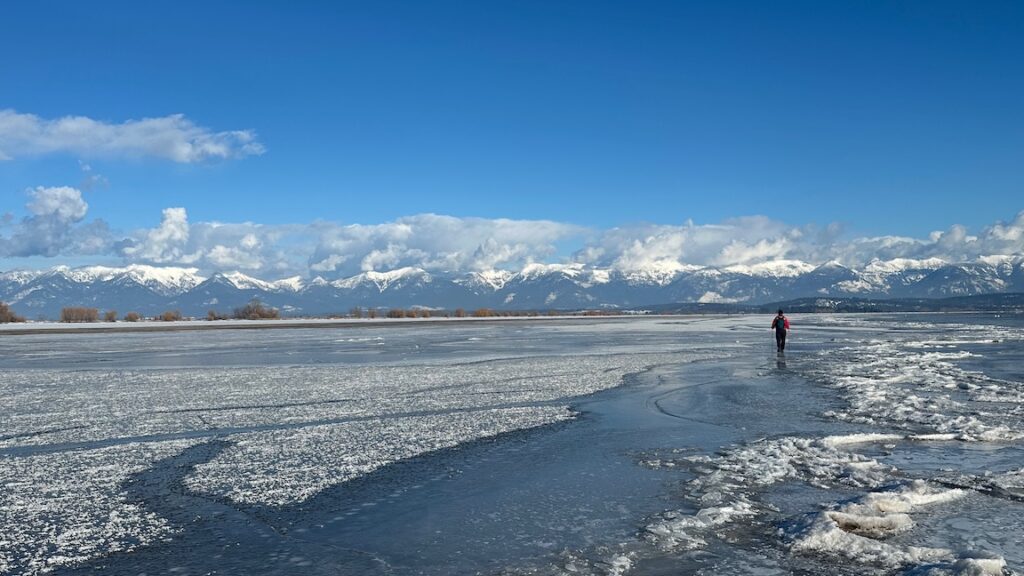
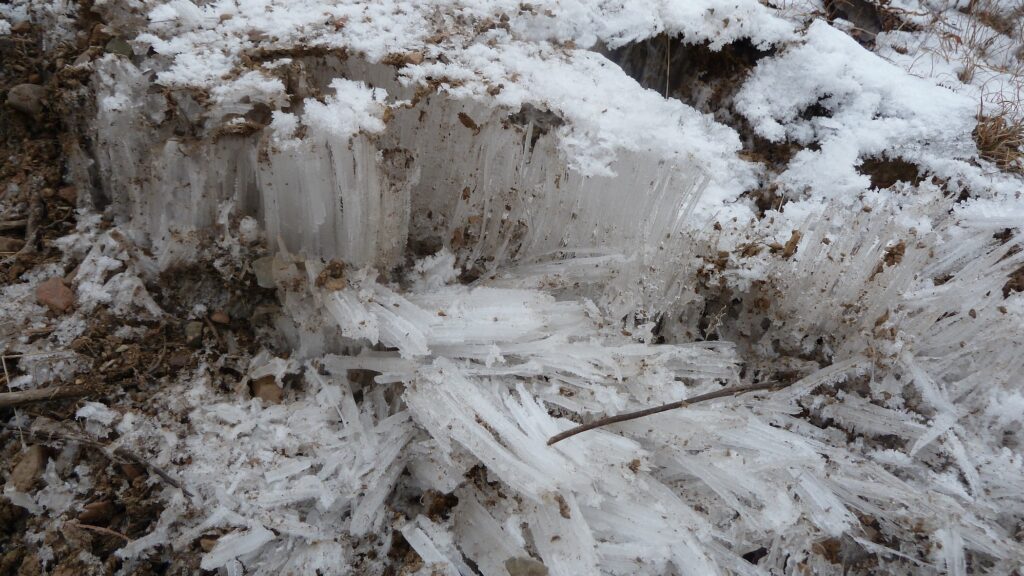
A brief photoessay of some beautifully varied ice, snow and frost manifestations from the north shore of Flathead Lake. As you approach the edge of the open water, marvel at the effects of wave action, multiple thawing and refreezing, snow, wind, and temperature changes on the ice. Also look carefully to find some stunning examples of tiny air bubbles trapped in clear ice as they try to make their way to the surface. Something new in every step.
If you go, wear spikes and bring poles. Also, remember that this area is closed on March 1 to protect critical breeding habitat for a wide variety of birds.
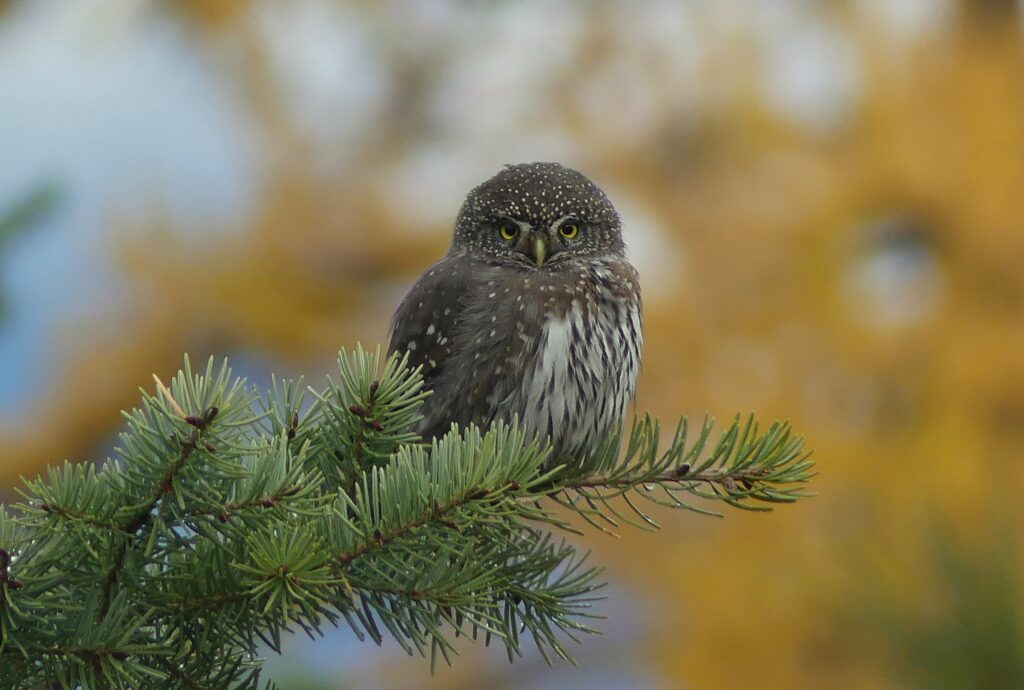
The Northern Pygmy-owl takes the prize for being the smallest owl in Montana. Tiny, but fierce, this little bird that stands 6-7 inches in height and weighs 2 to 3 ounces predates small to medium-sized birds (chickadee to blue jay sizes), small rodents and squirrels, insects, and has been known to successfully kill a domestic chicken with its sharp talons, strong down-curved beak, and amazing determination.
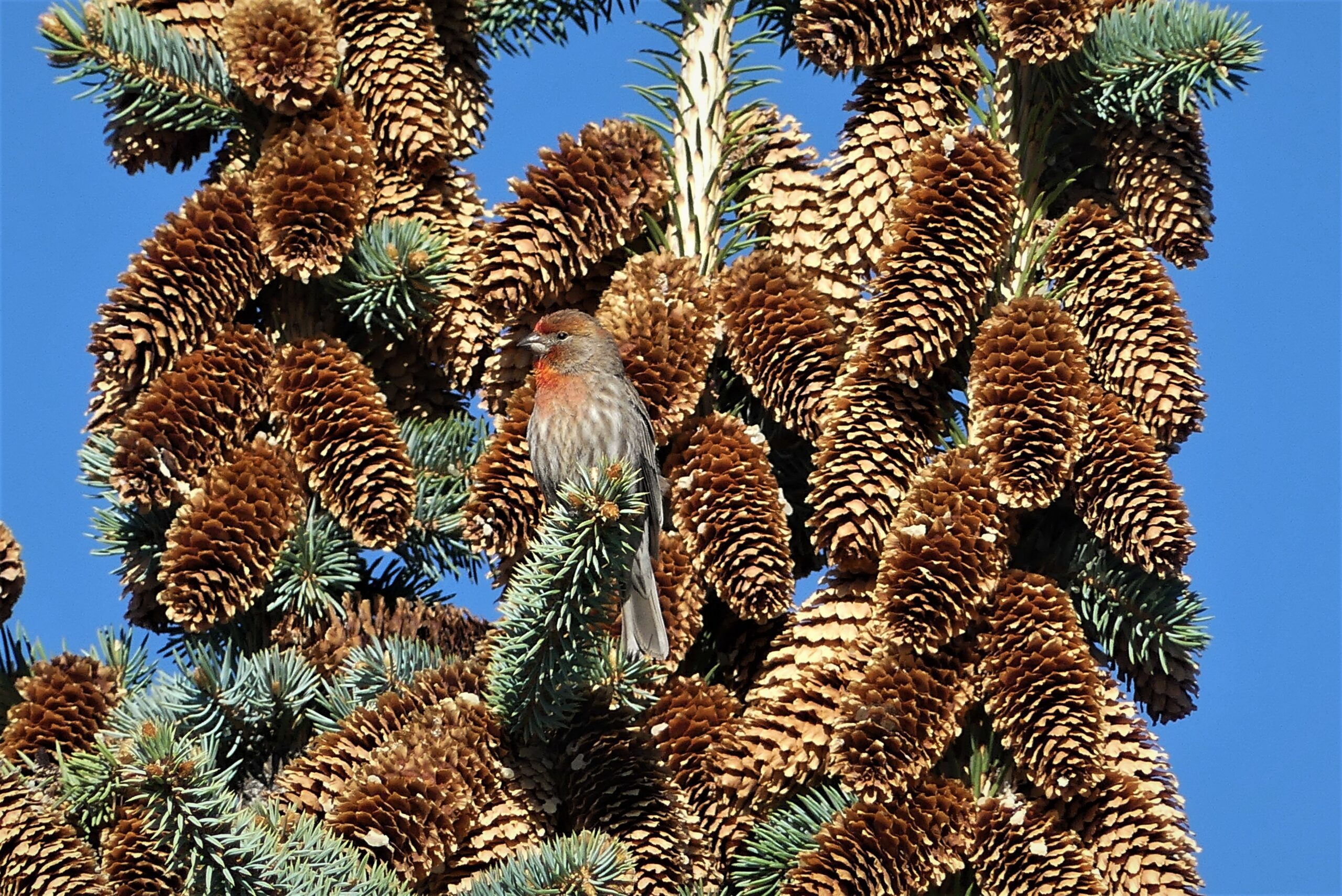
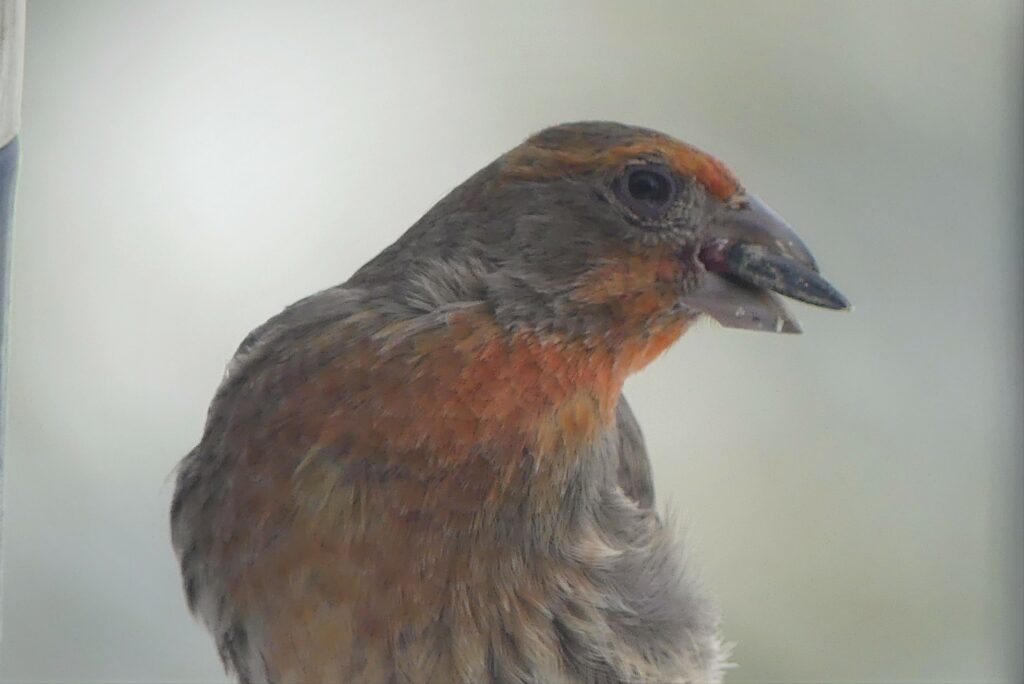
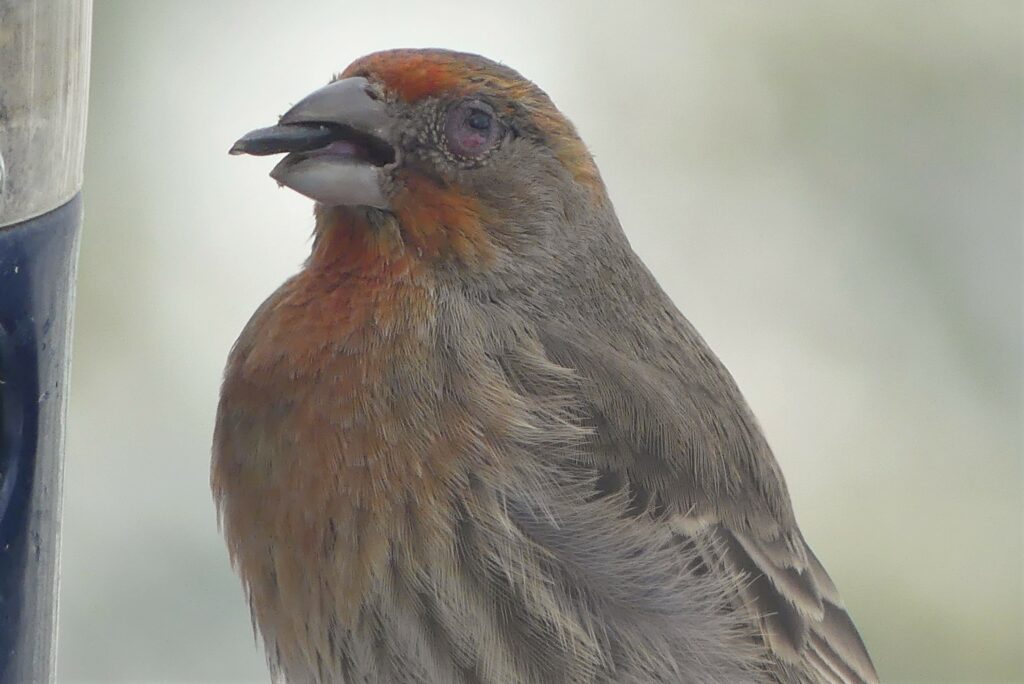
How does one describe House Finches? Striped bodies, head and chest of various shades varying from yellow to orange to pink to red. Flocking, chattering, perching at the top of of trees, stout-billed seed-eaters. Perched among the cones of a Blue Spruce in bright sun one morning, this perky House Finch looked like a Christmas decoration! Members of the Fringillidae family, there are 17 species, including many of our familiar visitors: crossbills, Evening and Pine Grosbeaks, redpolls, goldfinches, house finches, Cassin’s finches, and siskins. Many of these species are reported in decline and we can’t take them for granted.
House Finch at the feeder with normal-appearing right eye
Same bird as above with head rotated to reveal abnormal left eye
Although I can’t diagnose the cause of the unusual-appearing eye, knowing that there are diseases among Finches that can be transmissible and deadly, this was message enough to send me out to take down the feeders, clean them and the area and not hang them out for a week.
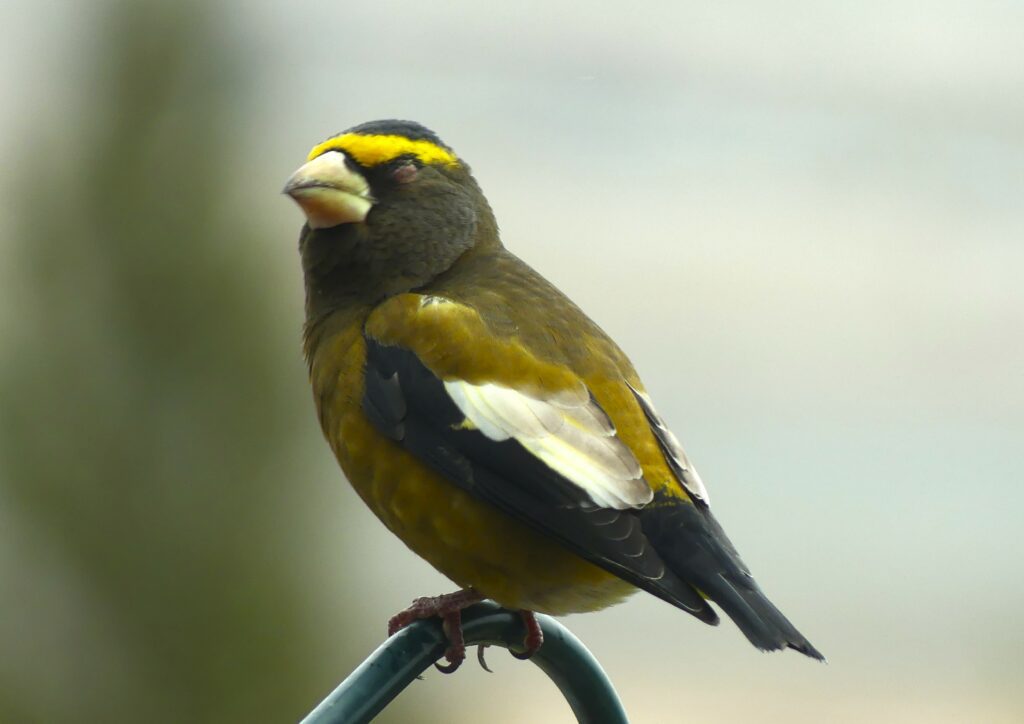
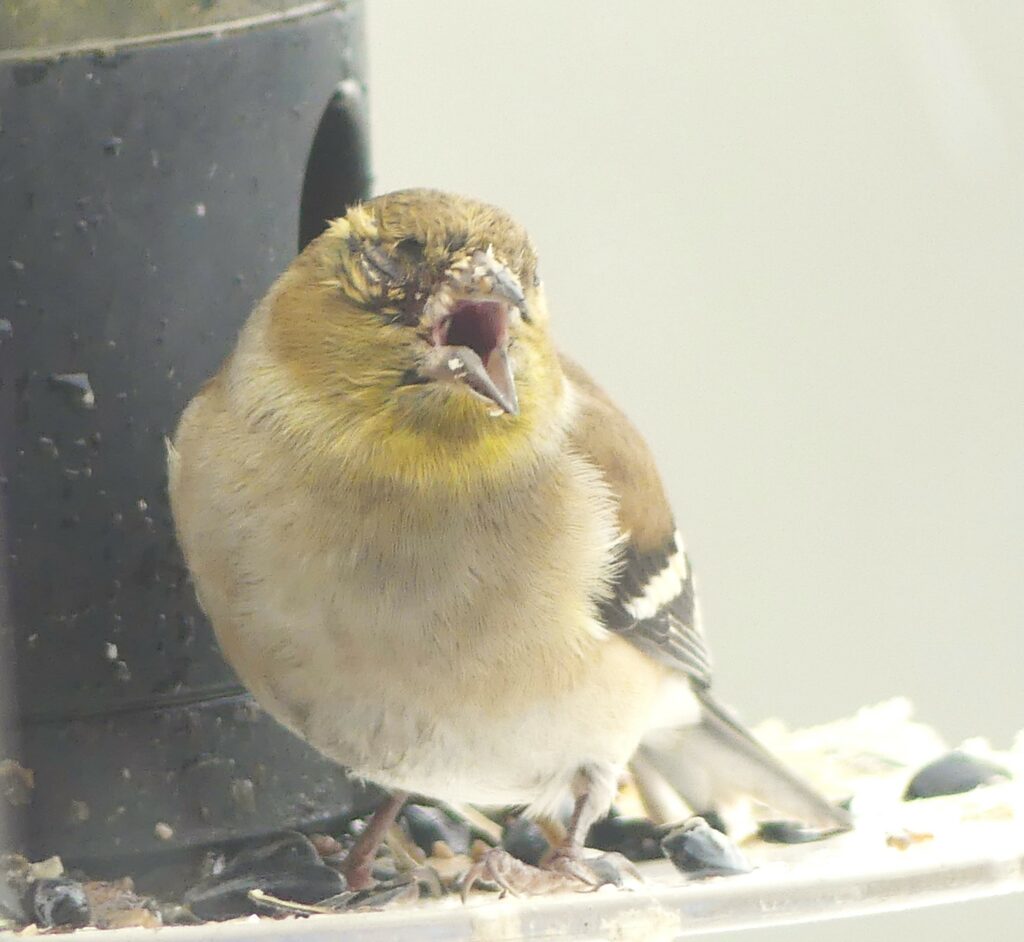
The following are images of birds that I have observed with eye problems. These appeared at my feeder in four different years and were the only ones observed in those years.
Evening Grosbeak with unusual-looking eyeAmerican Goldfinch with swollen eye with dischargeFemale House Finch with eye problem
Over the past few years, we’ve presented several articles here on our web site dealing with different forms of ice–or more properly, frozen water or water vapor. Here are some:
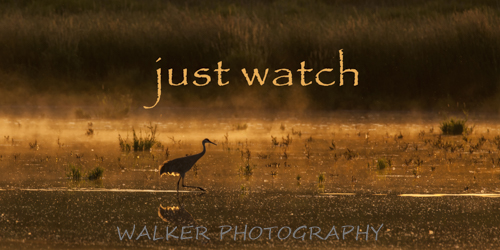
I count cranes, specifically on six sections of grain and hay fields and ponds in the west valley. I go every day, late morning, 365 days a year unless I’m gone. Some people go to the gym, some for coffee with friends, some go to work. (More images of Dick’s photography are viewable on this companion article on our web site.)
Editor’s Note: This gallery of Dick’s extraordinary photography is a companion piece to Dick’s critically important post Bird Flu in West Valley. We are grateful to Dick for allowing us to publish these images on our site. You can find many more at walkerphotography.smugmug.com.
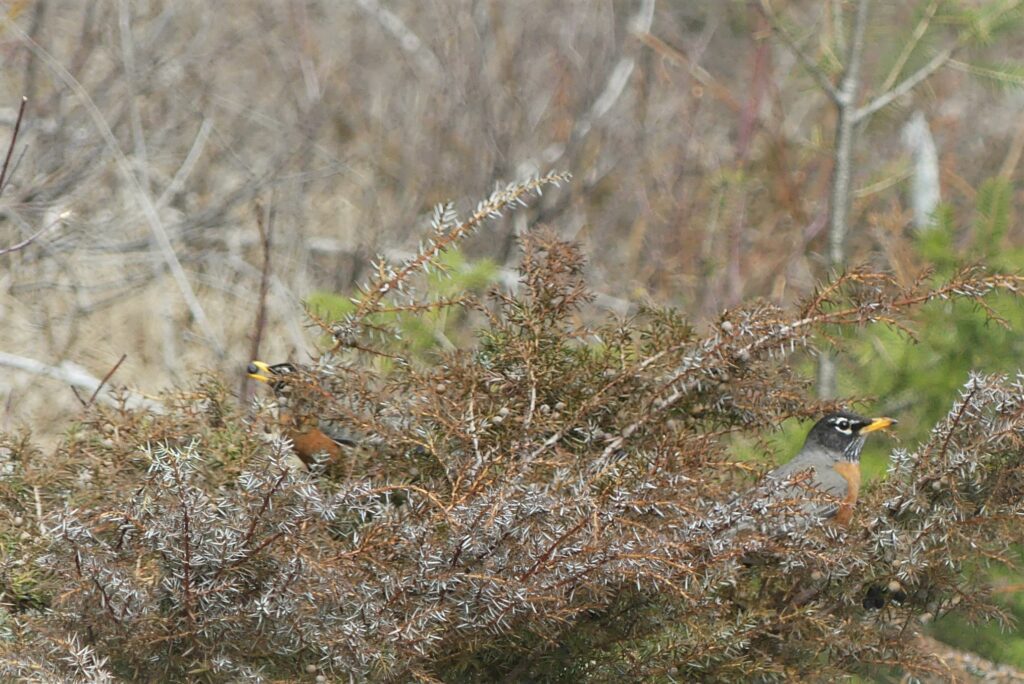
Juniper is a woody plant that provides habitat and food for a number of bird species year ’round. For more information about local Juniper species and the birds that utilize them in all seasons…
Editor’s Note: This is a followup story to The Ashley Creek Ditch, originally published here in February 2023. That article tells the story of the establishment of the irrigation ditch and its importance to valley farmers and families in the early 1900s.
The original Ashley Creek Ditch is no longer in existence as a contiguous waterway. Most of the ditch has been plowed under, paved, built on, or otherwise reclaimed from its original purpose. But there are a couple of remnants of the waterway still around. Pat Jaquith (with permission of the current property owners) was able to locate some sections and take a few photos. We are not disclosing the exact location of the ditch as parts of it are on private property.
This is a recreation of a presentation given to the Flathead Audubon Society in April 2024 during the Warbler Weekend at Tally Lake. I had several goals for the presentation. One was to lay out in a very basic way the geological history of our valley–how we got here and why things are the way they are. Another was to look at some basic hydrology issues in our valley–streams, lakes, and other resources–in the context of the constant geological and developmental changes that we are experiencing, both natural and human caused. Finally, I wanted to put all of these issues into a context that might help us think about what the future holds for us in terms of our access to water, wildlife, and recreation in the valley.
This presentation intentionally raises more questions than it provides answers. I would welcome comments, suggestions, criticisms, and other points of discussion.
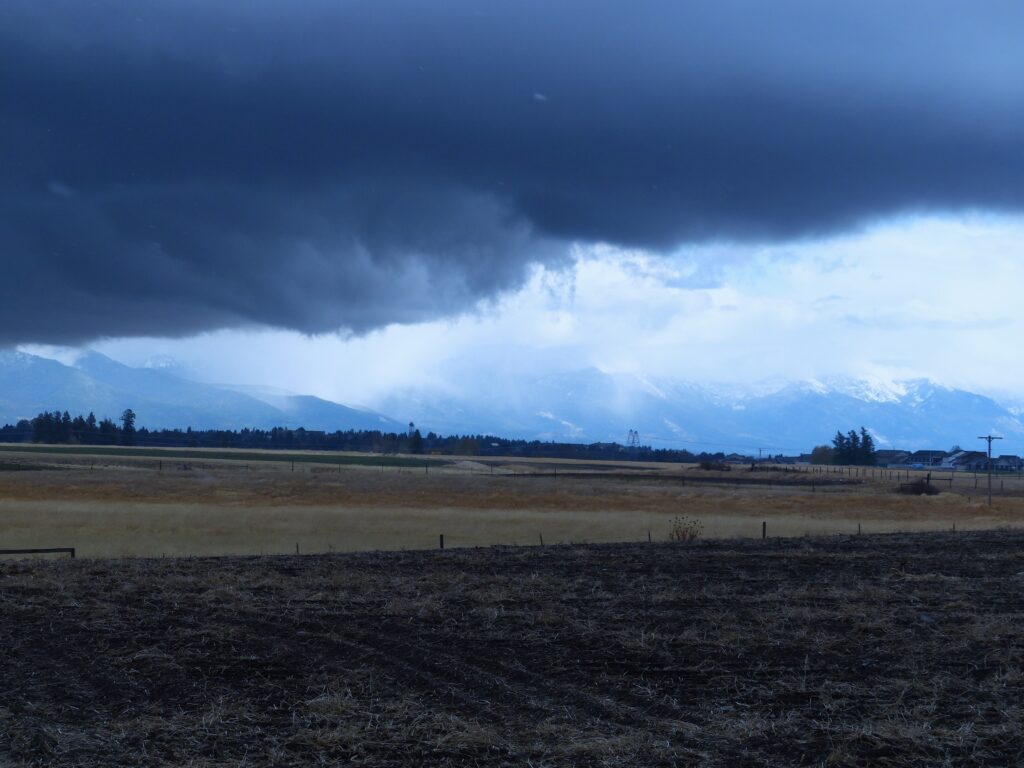
October 21, 2020 1:16 p.m. As I drove along West Valley Drive, the sun made a quick exit behind dark clouds, and I made a turn toward the ponds along Clark Road and West Springcreek Road to observe the dramatic change.
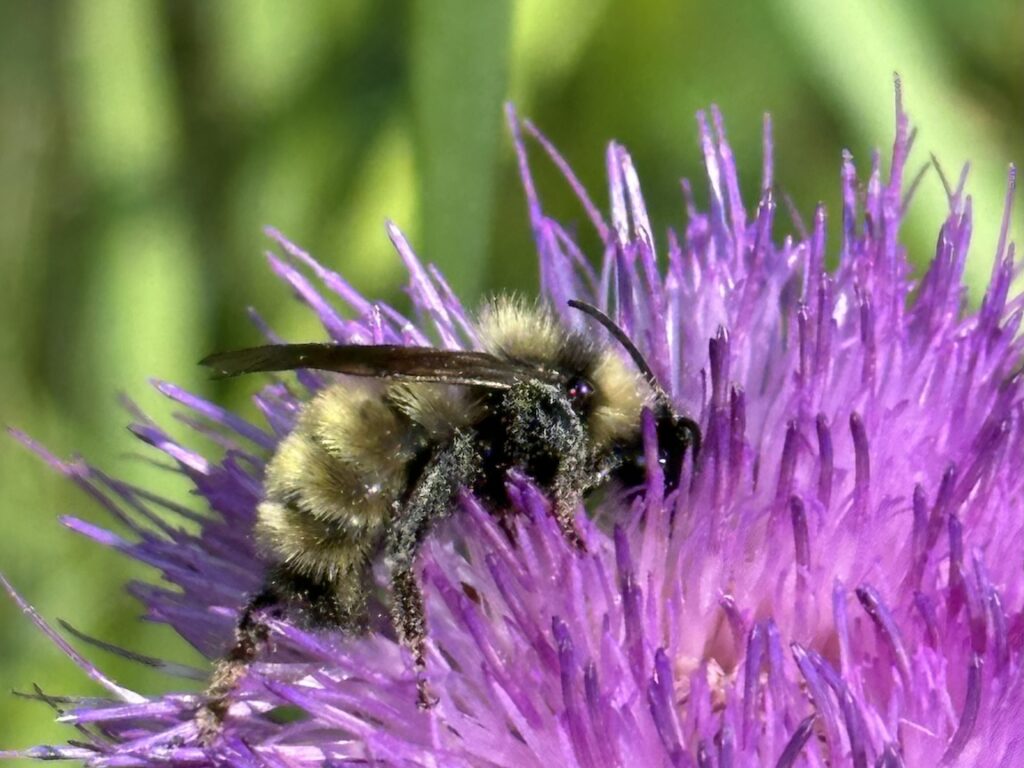
A few weeks ago on a walk through the Bear Paw Battlefield south of Malta, I photographed a bumble bee that I couldn’t identify. The community at iNaturalist agreed that it is an Indiscriminate Cuckoo Bumble Bee. Curiosity peaked once again, I went on a search for more information.
Hemp field on the corner of Coclet and West Valley Drive.
If you have driven down West Valley Drive this summer, you have probably noticed a new agricultural crop growing in a couple of the fields near Coclet. It’s hemp, and I wanted to know more about it.
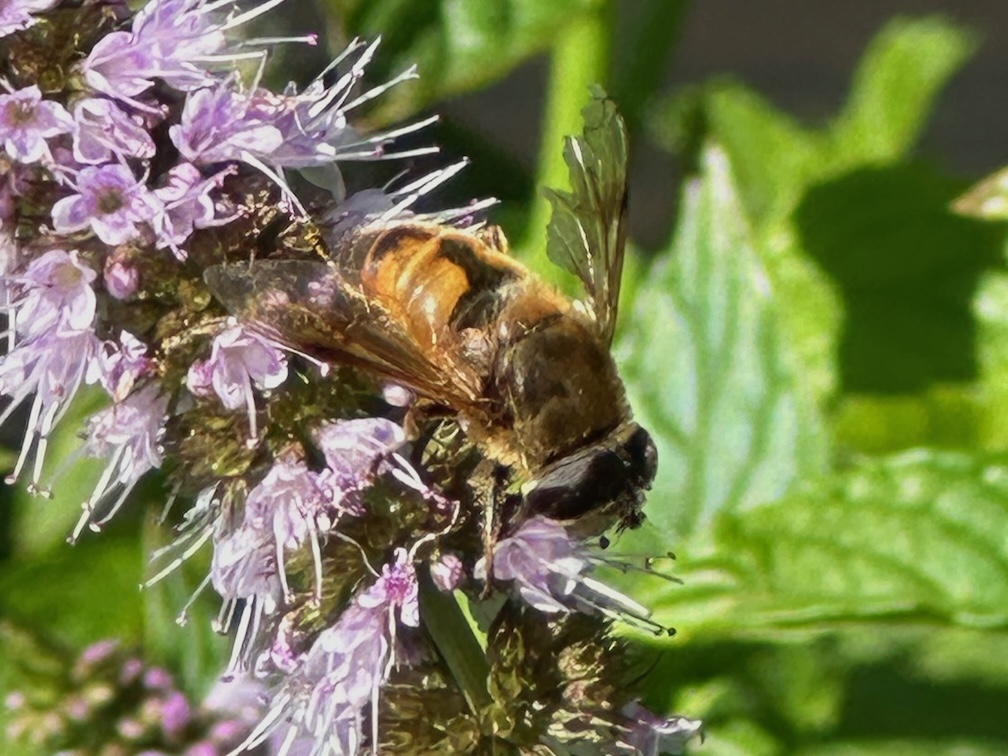
A few days ago I noticed dozens of what I thought were bees on some flowering peppermint plants near my deck. On closer inspection, it turns out that they weren’t bees at all, but rather drone-flies. Curiosity peaked, I did a bit of research.
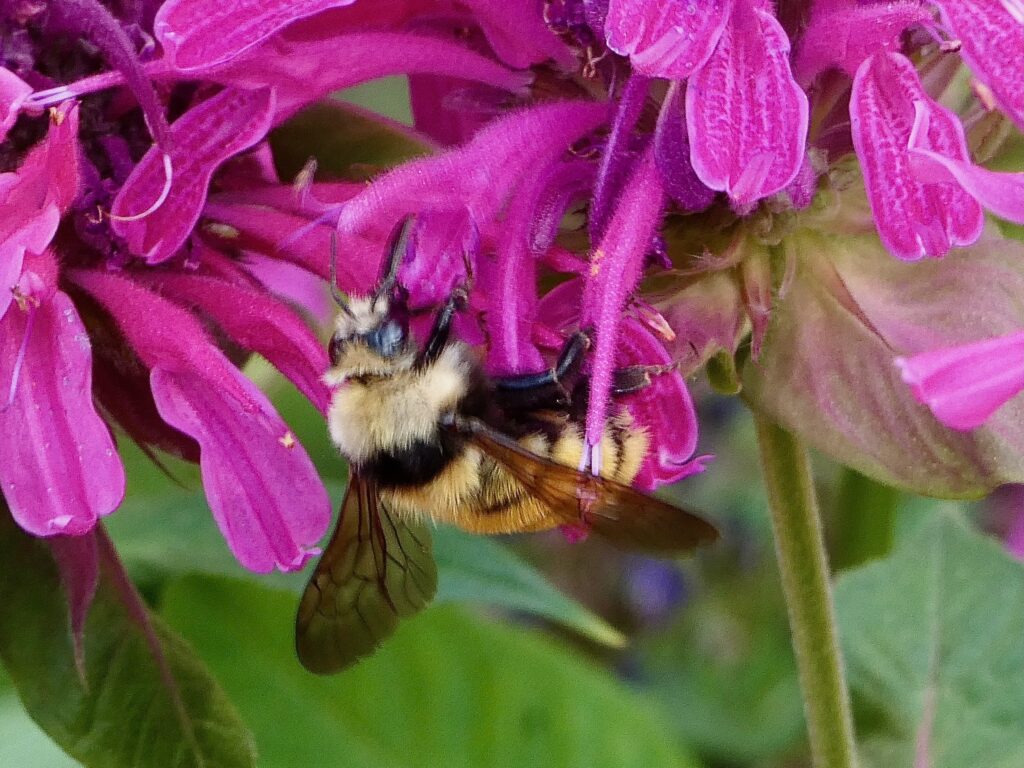
As an aspiring bee person, I try to keep close tabs on the different species of bees that I come across in the valley and environs. When a new-to-me species comes along, I try to find out as much about it as I can. In that regard, for the past week or so I’ve observed a large, distinctively marked species hanging around various flowers in my yard in fairly strong numbers–several can usually be found feeding on the bee balm near our deck, as seen in these photos.
Editor’s Note: Three days after this post was written, Montana FWP announced an “unprecedented” fishery closure (“hoot owl restrictions”) on the North Fork of the Flathead River due to record high water temperatures and rapidly decreasing stream flow in the absence of any meaningful precipitation this summer.
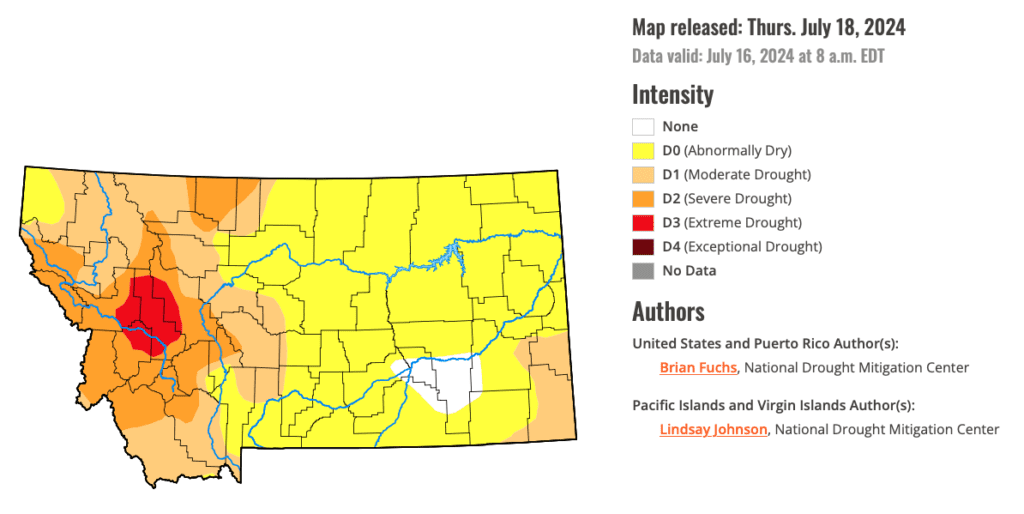
A year ago, when most of the valley was in the throes of an extreme drought, I posted an article titled Hydrology Snapshot, July 2023 in which I started the process of keeping track of some issues related to water usage, precipitation, and water management in the Flathead Valley.
It’s now mid-July 2024. We’re still experiencing drought conditions, but the severity has been downgraded to moderate/severe. Droughts are rated on a 5 point scale: D0 (Abnormally dry), D1 (Moderate), D2 (Severe), D3 (Extreme), and D4 (Exceptional). 99.62% of the Flathead is considered to be in Moderate (D1) conditions as of this writing.