Corvid Intelligence

by Skip Via
skip@westvalleynaturalists.org

(Update: It’s now Dec 23 2020 and they’re still daily visitors to the seed, suet, and peanut butter feeders.)

The corvidae family of birds includes ravens, crows, magpies, jays, nutcrackers, and several other species known to be highly intelligent and capable of learning. This article suggests that ravens have the capacity for abstract thought, and this one demonstrates evidence of the same kinds of intelligence in crows. And anyone who has had the experience of having food stolen from their hands by a gray jay who has waited patiently for the perfect time to strike knows how intelligent those birds are.

Continue Reading →
Nomadic Winter Birds

by Pat Jaquith
pat@westvalleynaturalists.org

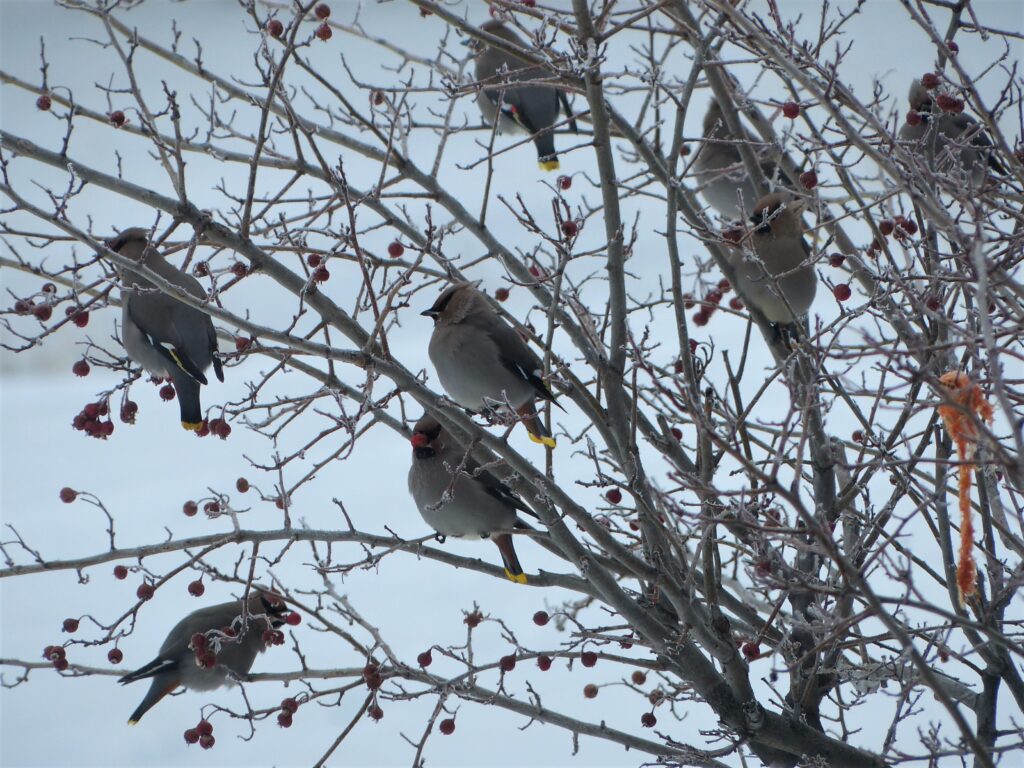
Bohemian Waxwings in freezing fog 1.17.2018

Many birds migrate from a winter home to take advantage of an abundance of insects, longer periods of daylight for scavenging, and increased success in raising a brood in the north. As winter arrives and insects become scarce their survival depends on their returning to a warm climate where insects are available.
Birds that depend on non-insect food sources and move from place to place in response to the availability of food sources, independent of season, are referred to as nomads. They often travel in flocks of the same species, searching out food, and moving on.

Continue Reading →

Invasion of the Nutcrackers

By Skip Via
skip@westvalleynaturalists.org

Clark’s Nutcrackers are year-round residents of the high country of the Rocky Mountains, often seen above treeline. But for some reason—either because their alpine food sources are scarce or because they found an abundance of pine seeds here in the valley, a flock of more than a dozen decided to briefly invade my yard this morning.

Continue Reading →

Uninvited Feeder Visitors

by Pat Jaquith
pat@westvalleynaturalists.org

With the onset of colder weather and more time inside, many of us start to feel sorry for the birds out there in the cold and fill up the feeders. Inviting avian visitors certainly has its rewards. Observing bird activity lifts our spirits; having birds close enough to get repeated good looks improves our ability to identify them; we feel like we’ve provided a bit of refuge them. There’s a thrill in seeing a new bird at your feeder! But with all such gestures comes responsibilities, unexpected outcomes and sometimes consequences.

Continue Reading →

Fall Bird Migration

by Laura Katzman, Land Protection Specialist, Flathead Land Trust
lkatzman@flatheadlandtrust.org

Fall bird migration is in full swing in the West Valley. Last week 800 snow geese, 1,000 Canada geese, 150 sandhill cranes and hundreds of ducks were seen at the West Valley Wildlife Viewing area. With the cold weather over the weekend the West Valley Wetland ponds have become mostly ice-covered, but yesterday hundreds of snow geese and a couple hundred sandhill cranes were seen feeding in the nearby fields so birds still can be seen in the area.

Continue Reading →

Wings over the Valley

by Pat Jaquith
pat@westvalleynaturalists.org

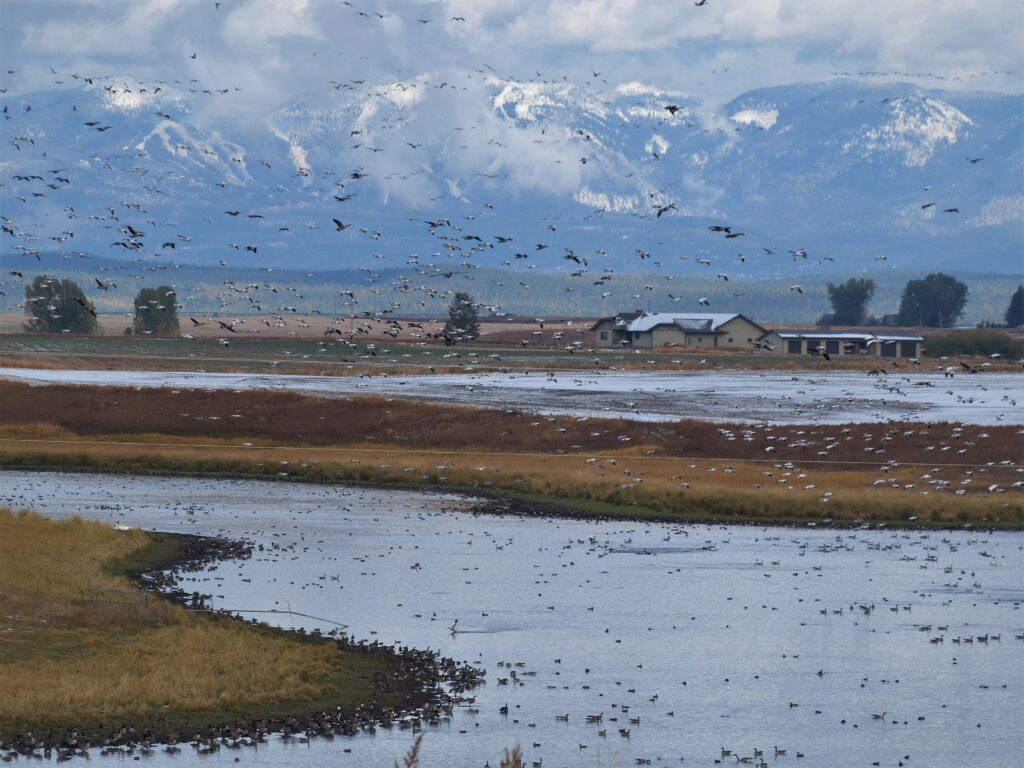
Geese, Cranes, Ducks and Gulls flock to the West Valley Wildlife Viewing Area 10.20.20

Throughout the fall, as birds start moving from nesting sites toward warmer climates and more plentiful food sources, they teach us how they value our valley as many species gather in the harvested fields and in and around the several potholes for rest, food, and perhaps reunions before moving on.

Continue Reading →

Turkeys en regalia

by Skip Via
skip@westvalleynatauralists.org

In the fall, the valley’s wild turkey population forms flocks that will stay together all winter. Interestingly, these flocks do not usually interact with each other, respecting each others’ territory. They do, however, interact with each other within the flock, largely to establish dominance and breeding preferences for the next spring.

Continue Reading →

Swan Song

by Skip Via
skip@westvalleynaturalists.org

The fall migration season in the valley is a busy time for waterfowl observers. Sandhill cranes, Canada geese, snow geese, and various others ducks and waterfowl arrive in great numbers, stopping in valley ponds and fields to fuel up for their journey south. Arriving in somewhat smaller numbers are the tundra swans, and it’s always a treat to encounter them en masse. But unlike geese and cranes, they’re not typically as vociferous. Yesterday was an exception.

Continue Reading →

The Shoveler Mating Game

by Skip Via
skip@westvalleynaturalists.org

Northern shovelers are common inhabitants of our local wetlands and marshes during the spring and summer, where they mate and nest. They’re gorgeous birds, the males being easily recognizable by their bright green head, yellow eyes, chestnut and white bodies, black back, and most prominently their long, broad bills. It’s these oversized bills that give them their name, and they are prominent on both males and females.

Continue Reading →

Red Crossbills Year ’round

by Pat Jaquith
pat@westvalleynaturalists.org

Three Red Crossbills up on the roof 10.29.18

Red Crossbills (Loxia curvirostra) are a colorful lot that spend most of their time in the tops of conifer trees where they use their specialized bills to pry open the scales of the cones to retrieve seeds. If you’re fortunate enough to get to know these acrobatic little birds, they will show you many other aspects of their lives.

Continue Reading →

Eastern Bluejays

By Skip Via
skip@westvalleynaturalists.org

Back east (I grew up in NC), bluejays were a common and not always appreciated sight around the bird feeders. They tend to be noisy and aggressive toward other birds. Yet they are distinctly beautiful birds and the story of their expansion into Montana is fascinating, and that’s why we’re starting to see them here in the valley.

Continue Reading →

Pine Siskin

by Linda de Kort
linda@westvalleynaturalists.org

One of the small birds we enjoy observing throughout the year has an unusually “cute” scientific name: Spinus pinus; its common name is Pine siskin. Pine siskins are especially interesting because their populations change so dramatically from winter to winter.  Sometimes we see them, sometimes we don’t.

Continue Reading →