by Pat Jaquith
pat@westvalleynaturalists.org
Click on pictures to enlarge
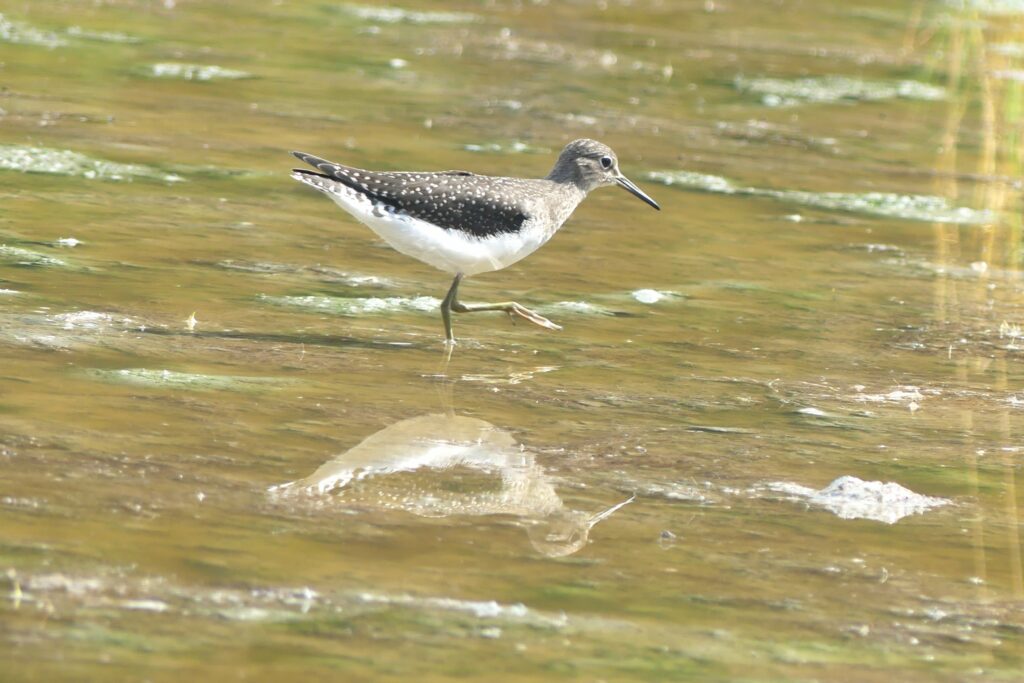
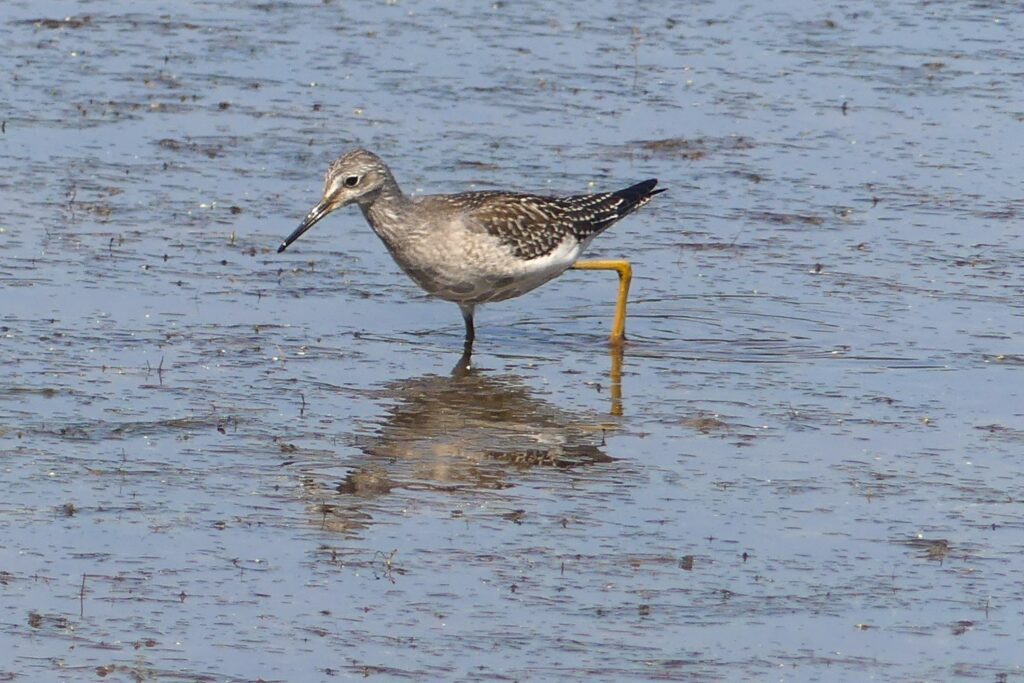
Solitary Sandpiper at Bowser Lake in West Valley on August 8, 2026
During the first three weeks in August, I was drawn to visit Bowser many times to observe the early-migrating Shorebirds as they arrived and departed and to learn how this small saline lake attracted them. Read on to enjoy the little-known activity.
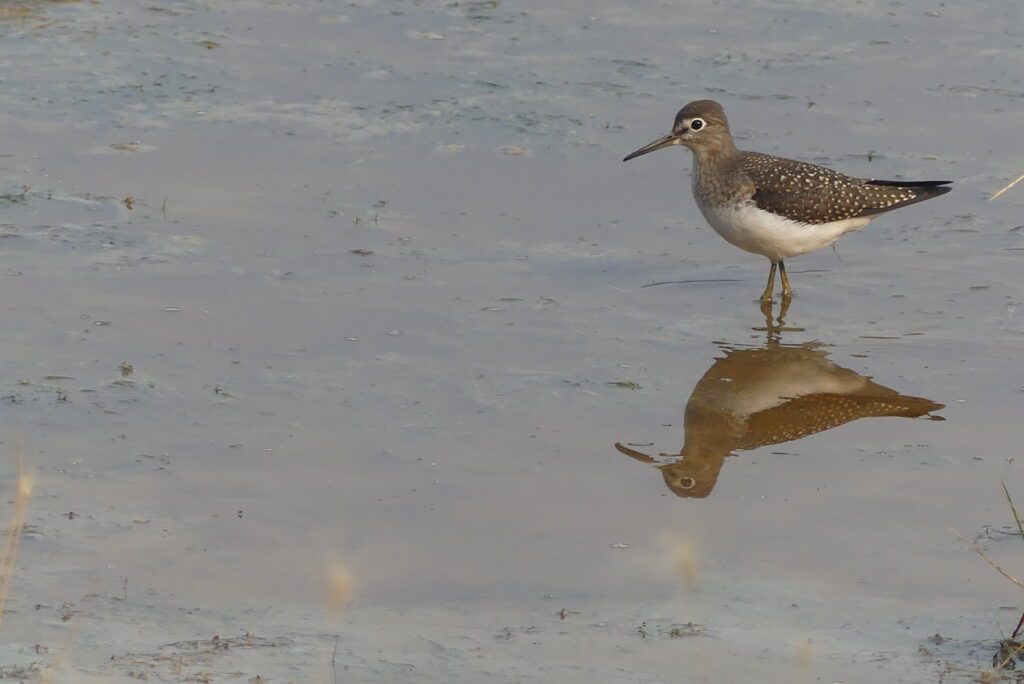
Solitary Sandpipers nest in northern Canada, often re-using abandoned nests of Robins and Cedar Waxwings. They begin their migration in June or July, often traveling alone. As they meander on their way to Central and South American shores for winter, they seek out small, shallow bodies of water or quiet streams. In the picture at right, the bird facing forward with white accenting the eyes like spectacles is a juvenile.
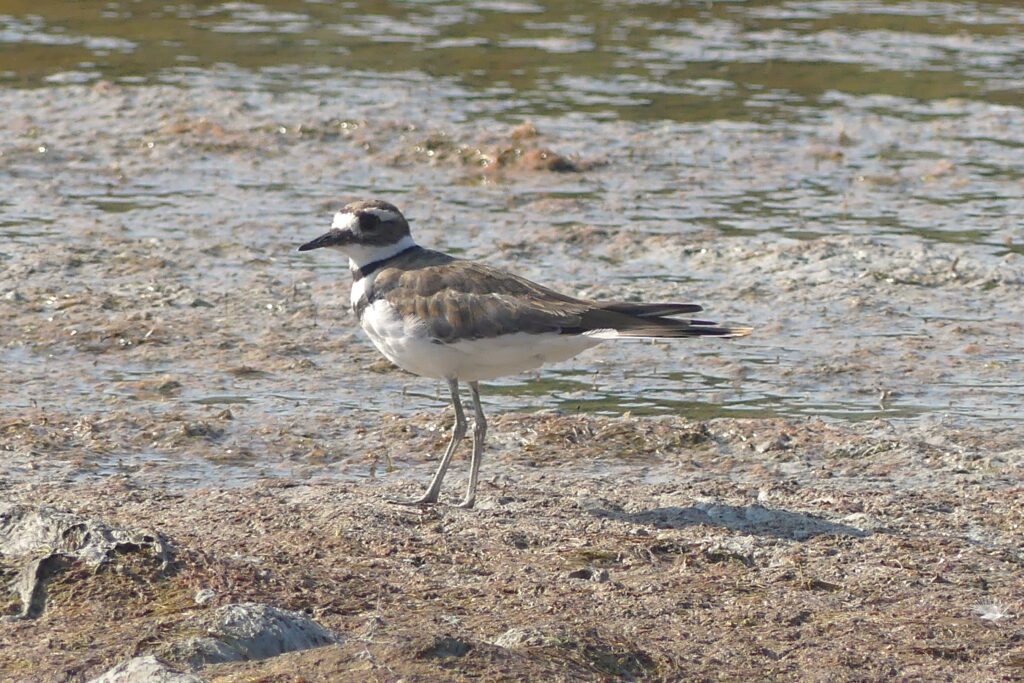
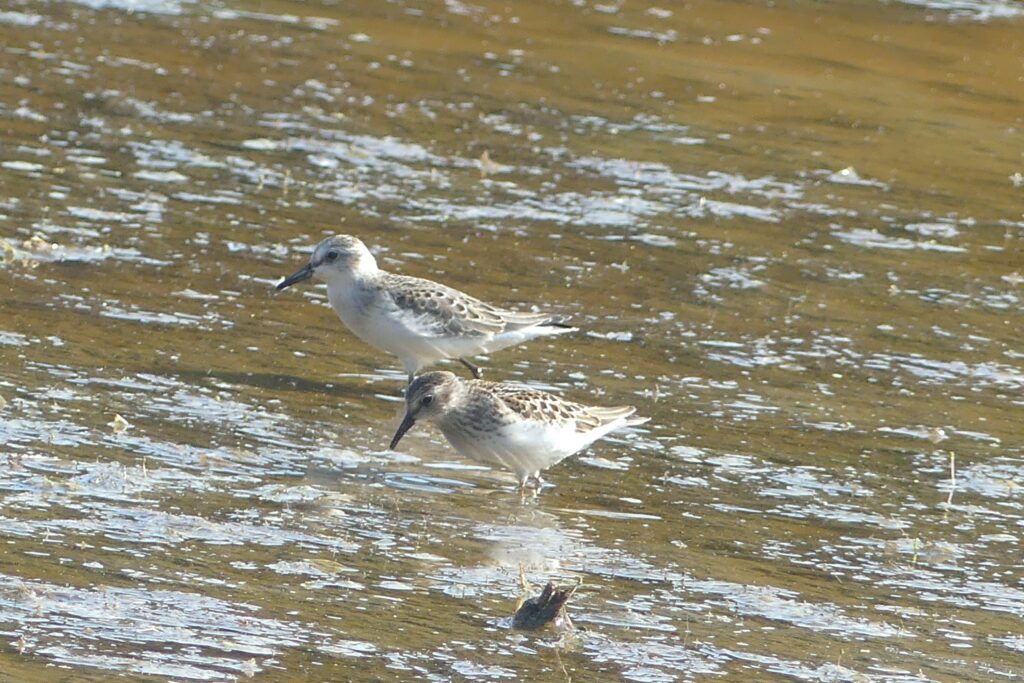
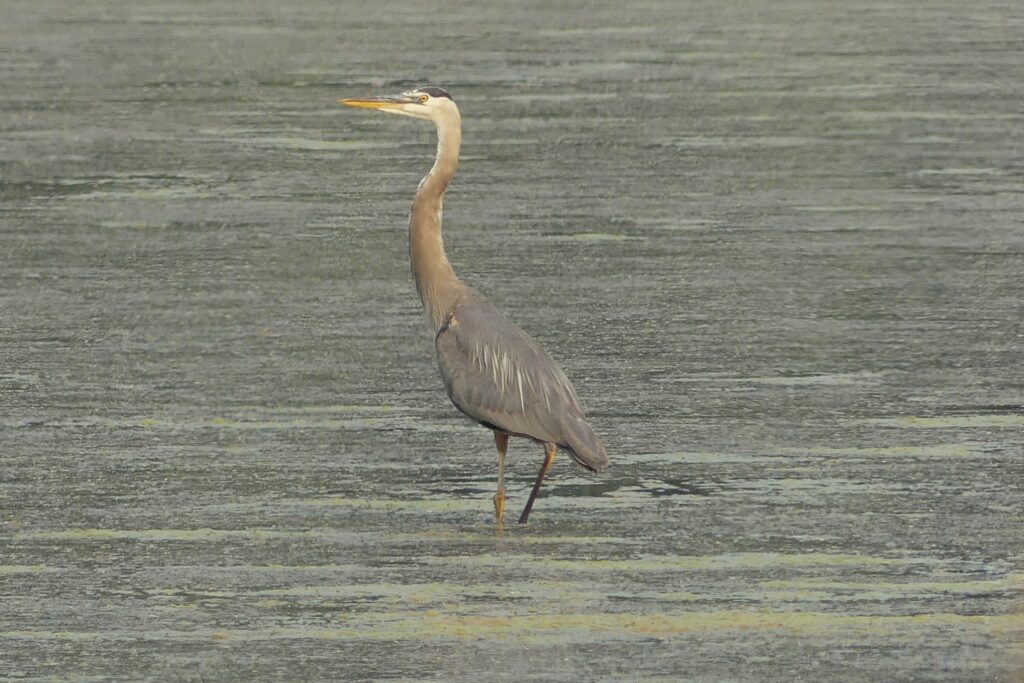
Kildeer had nested on the shore of Bowser; they peacefully shared the space with Solitary Sandpipers as they arrived. At right, are a pair of Semi-palmated Sandpipers that I saw at Bowser just once in August. And a Great Blue Heron? It’s the only one I’ve ever seen at Bowser!
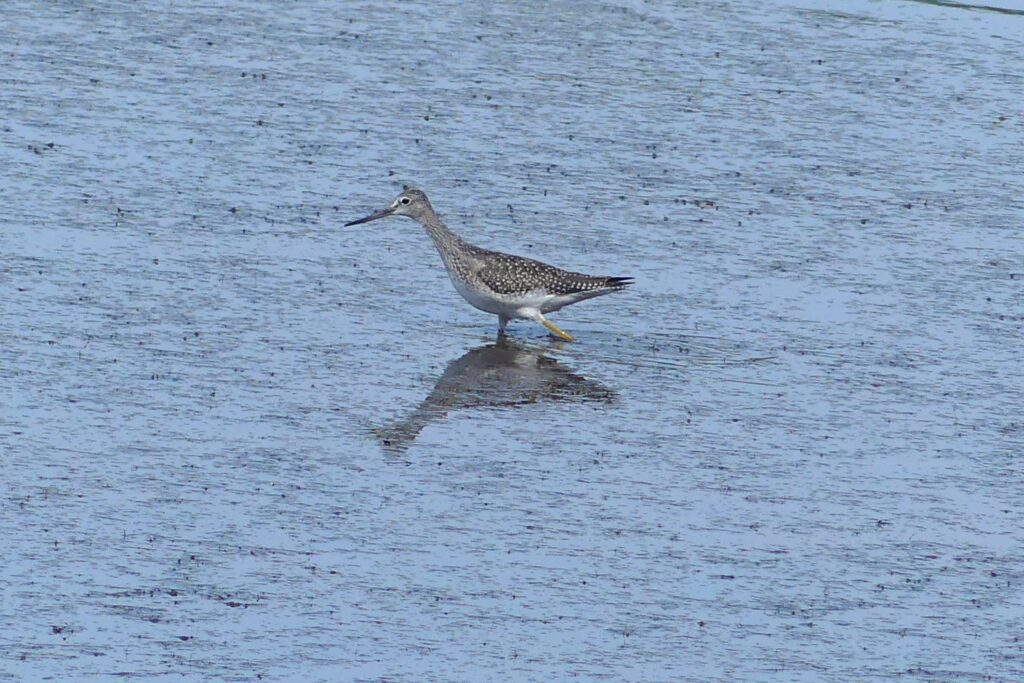
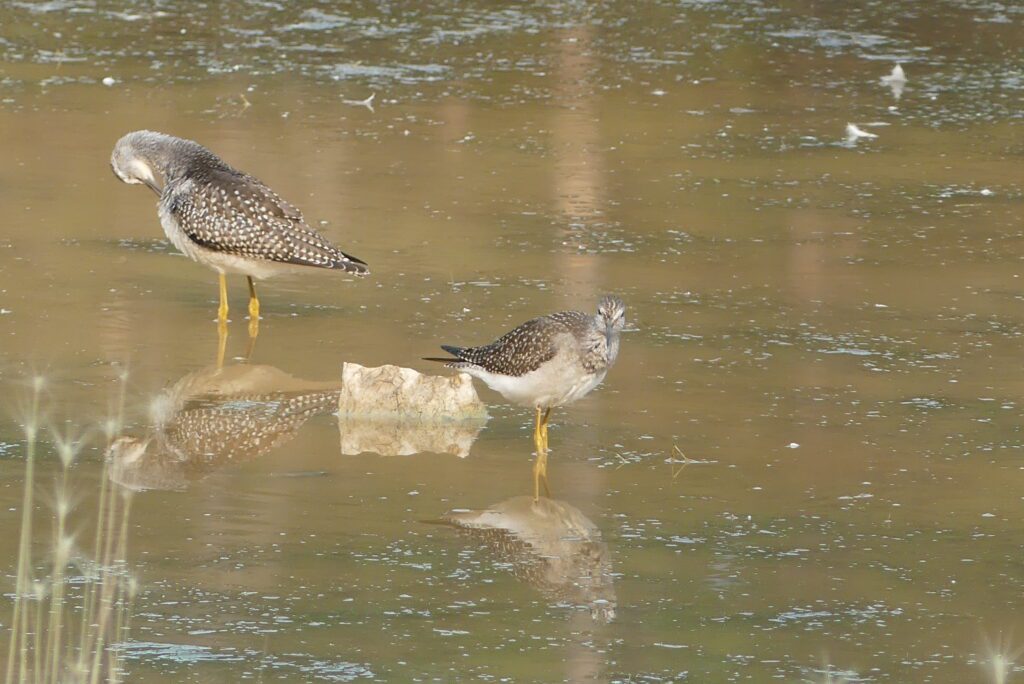
A flock of more than 40 Greater and Lesser Yellowlegs had joined the Solitary Sandpipers in mid-month.
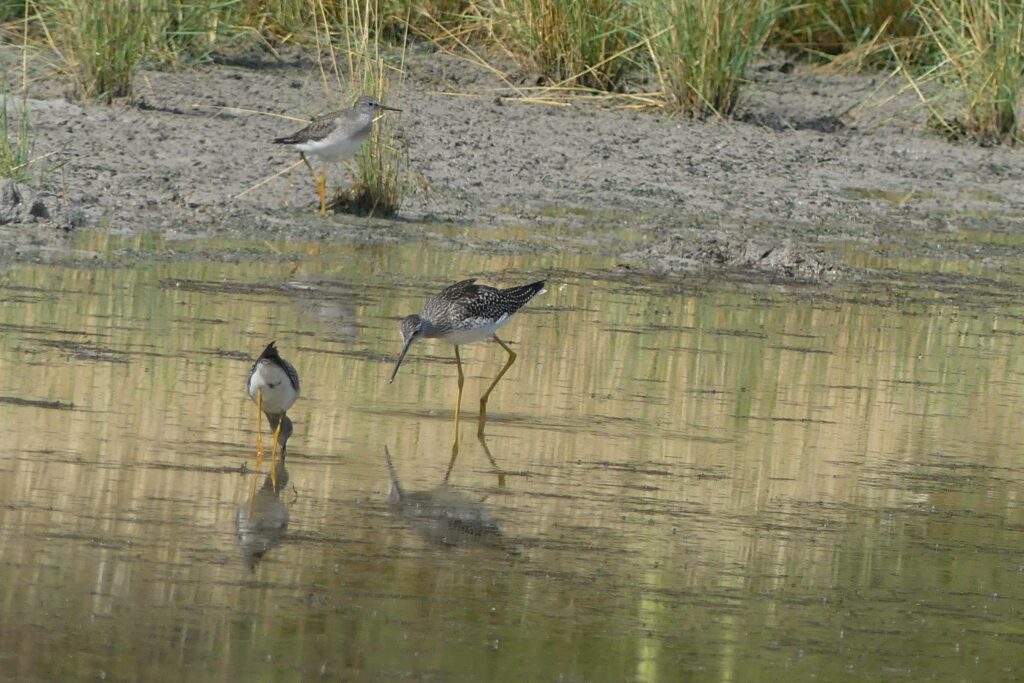
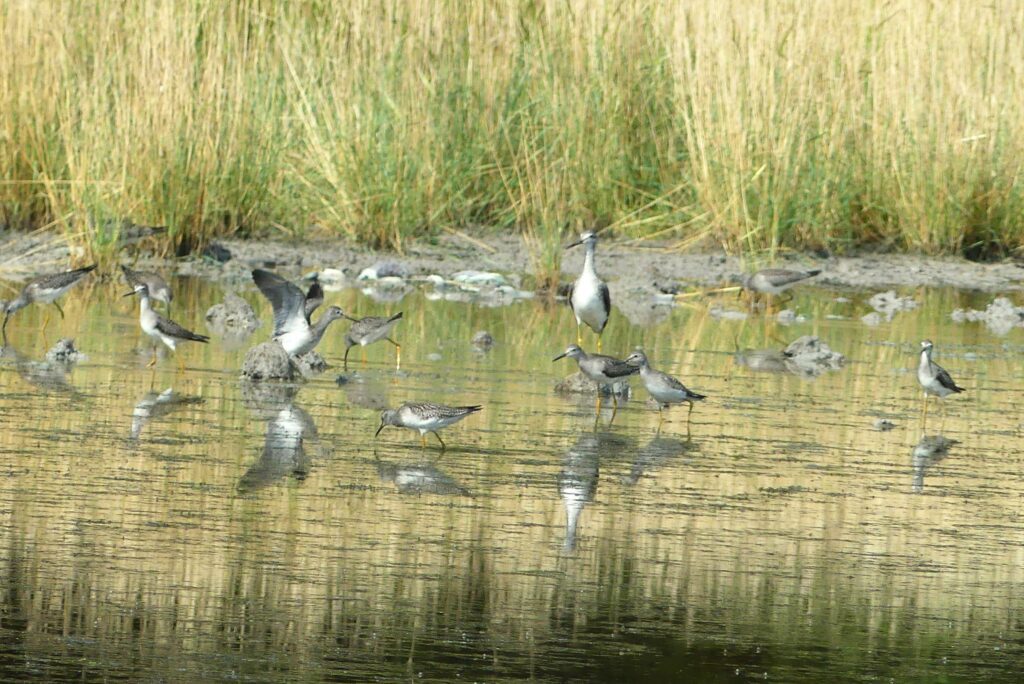
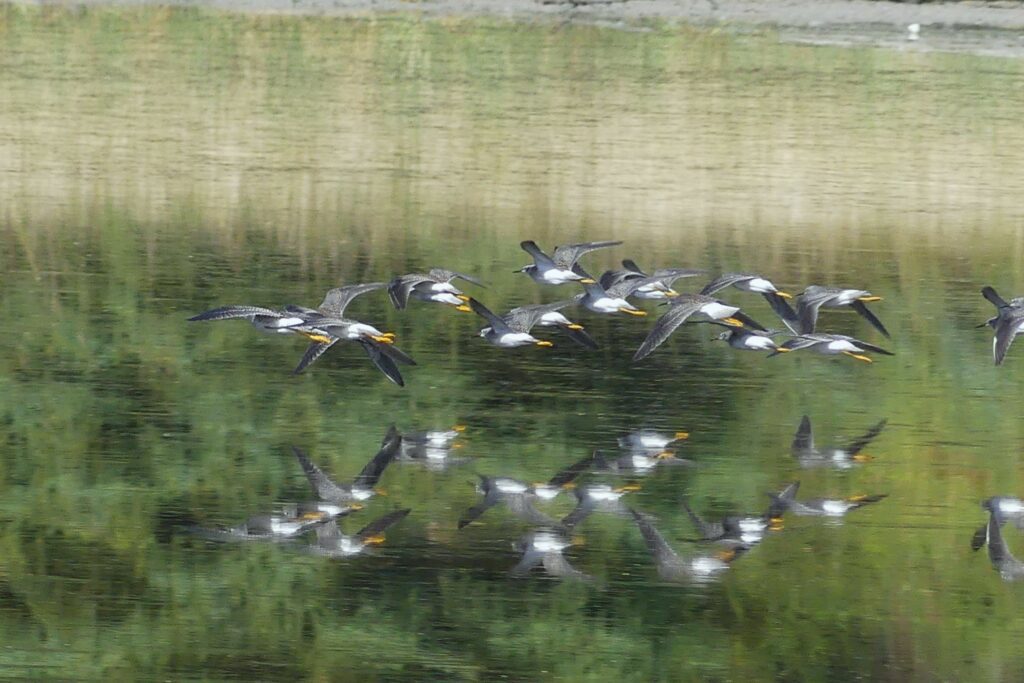
Two days later, on August 17, the Yellowlegs were there in even greater numbers, feeding avidly on some unseen insects near the shore, lifting off at an unheard signal and flying around to land a few feet from the place they had left. The activity level had certainly changed dramatically! The water level, as estimated by the birds’ wading across at the deepest places, is not more than 4 inches.
What kept them there? What were they finding to eat in that little lake that dries up to a solid layer of sidewalk-hard clay where elk, deer, and occasionally a bicycle crosses without leaving a track?
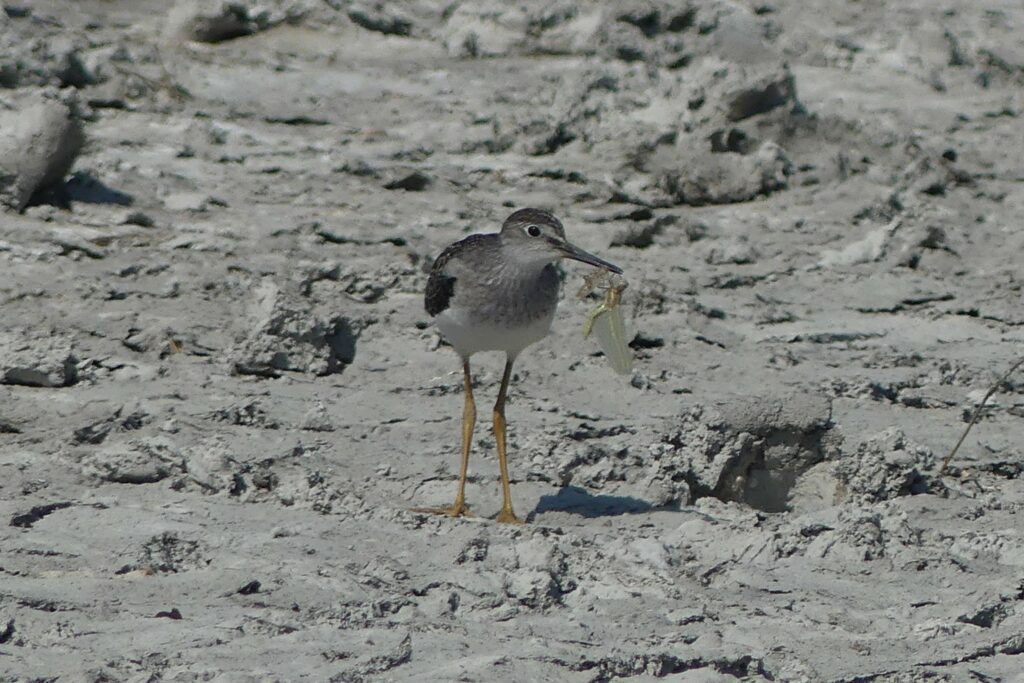
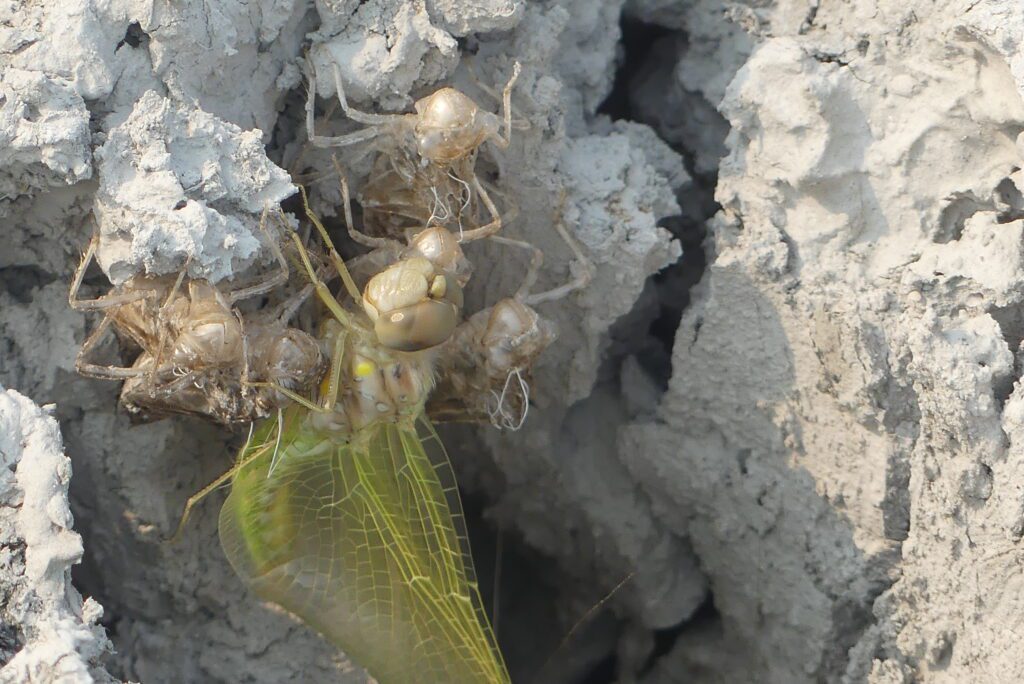
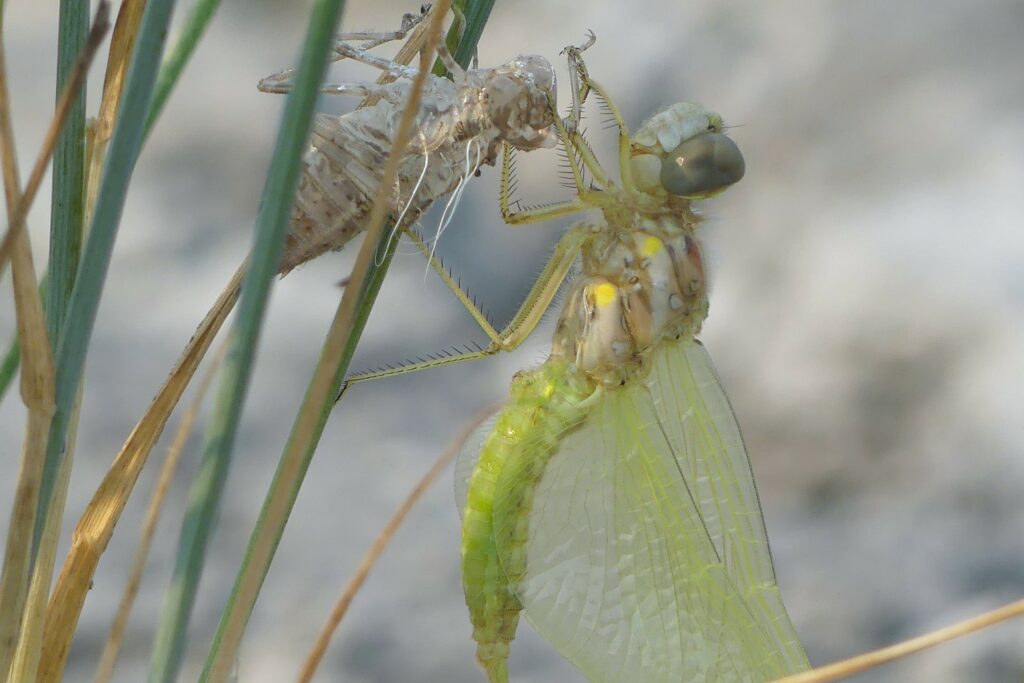
The first clue was seeing a nearby Solitary Sandpiper casually pick up a newly-hatched dragonfly from the dry clay. The following day I hunted more carefully and found thousands – maybe more – of shell cases of nymphs and dragonfies emerging from their nymph casing in crevices in the drying clay on the perimeter of the pond. Dozens of other birds had arrived to feed on the emerging insects. Cedar Waxwings, Swainson’s Thrushes, and Western Tanagers all used the surrounding trees as lookouts from which to fly down and grab the helpless hatch. A turkey even strolled through the tall grass at the edge of the lake, picking up a meal of fresh dragonflies! These hatching dragonflies were Variegated Meadowhawks!
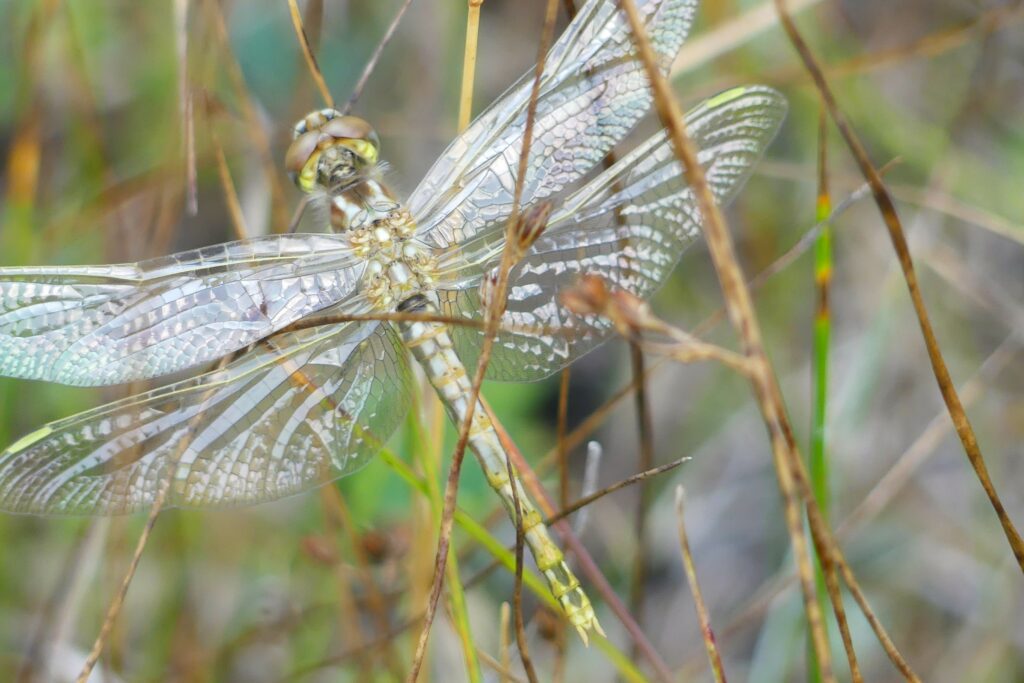
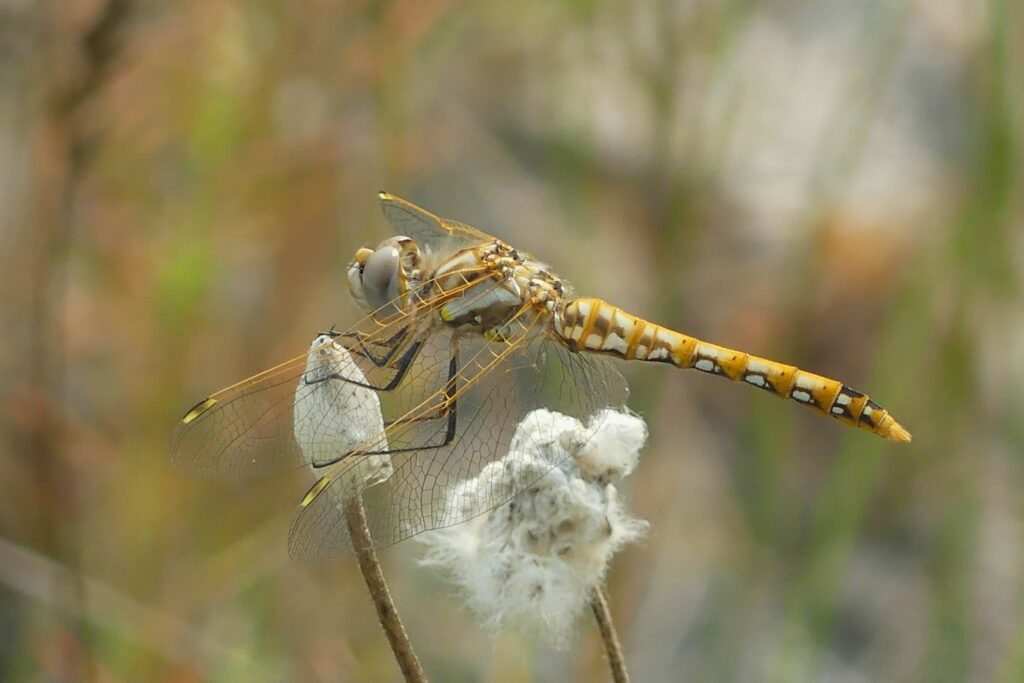
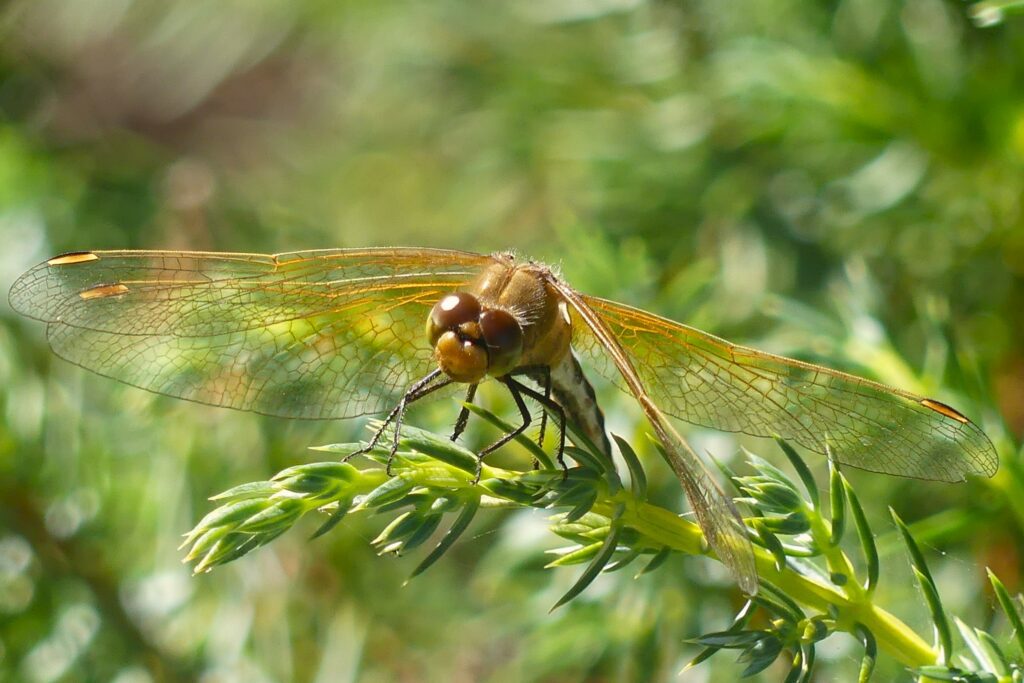
Dragonfly A is still drying and newly free from its casing. The transparent wings reflect light like mirrors, making it an easy target for predating birds. B is a few days old, flying away, showing much of its color. C, found at the end of August, has golden wings, formerly gray eyes have become a rich brown. Variegated Meadowhawks are one of the few dragonflies that migrate. They won’t return, but like migrating butterflies, their next generation(s) will.
About 10 days after the flurry of avian excitement over the hatch of Variegated Meadowhawks had settled down, all of the Cedar Waxwings, Tanagers and the turkey were not to be found. However, the flock of Yellowlegs and the Solitary Sandpipers were busy with other insects.
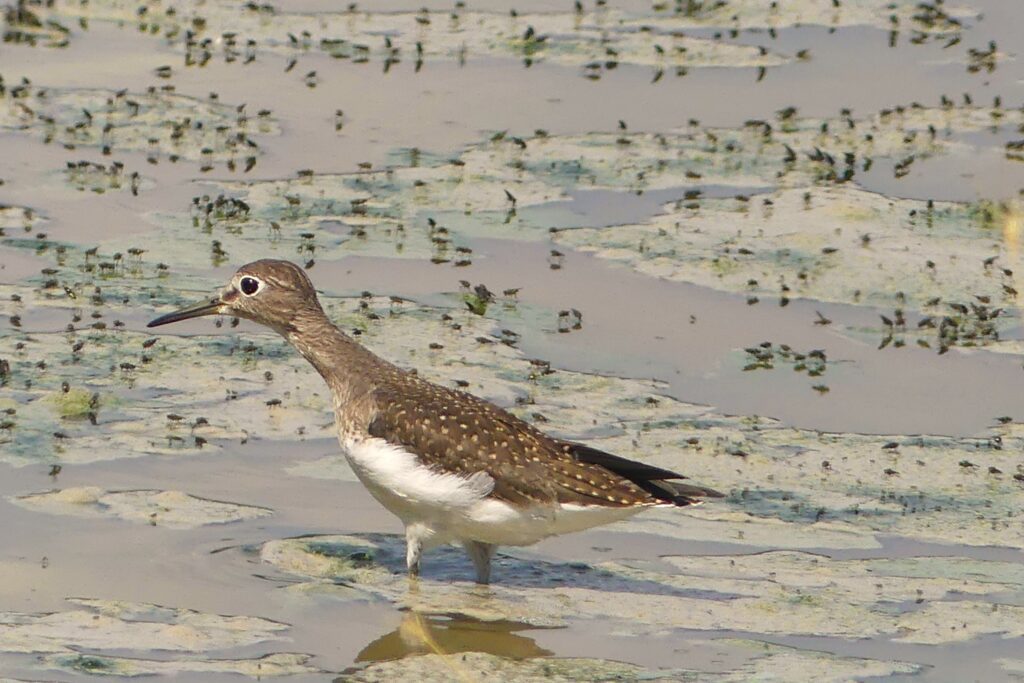
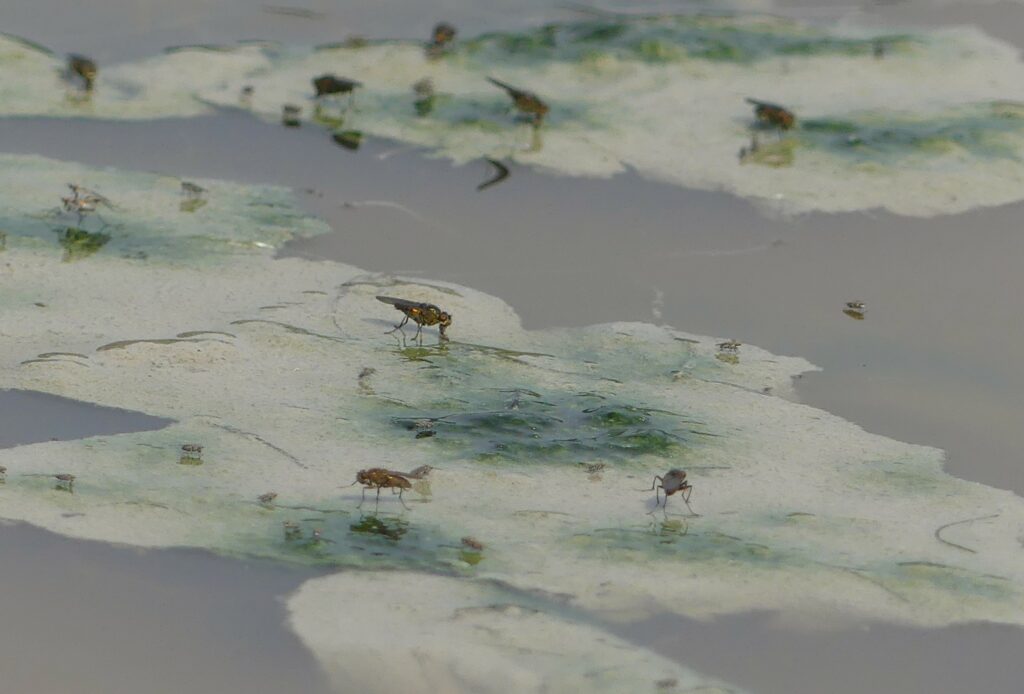
Upon closer inspection, I could see the multitude of Widow Skimmer nymphs that had them entertained. These insects will become another species of dragonfly someday. Dragonflies lay eggs in water or on vegetation that grows nearby; they go through many stages of growth, sometimes taking years, before they become adults with wings.
I returned to Bowser on August 31 hoping to see what new shorebird activity, but the only shorebirds were a few Kildeer. The pond still had water, but it was very quiet. The migrating Sandpipers, Yellowlegs had their rest and encountered two hatches of dragonflies that provided the rejuvenating nourishment they needed.
