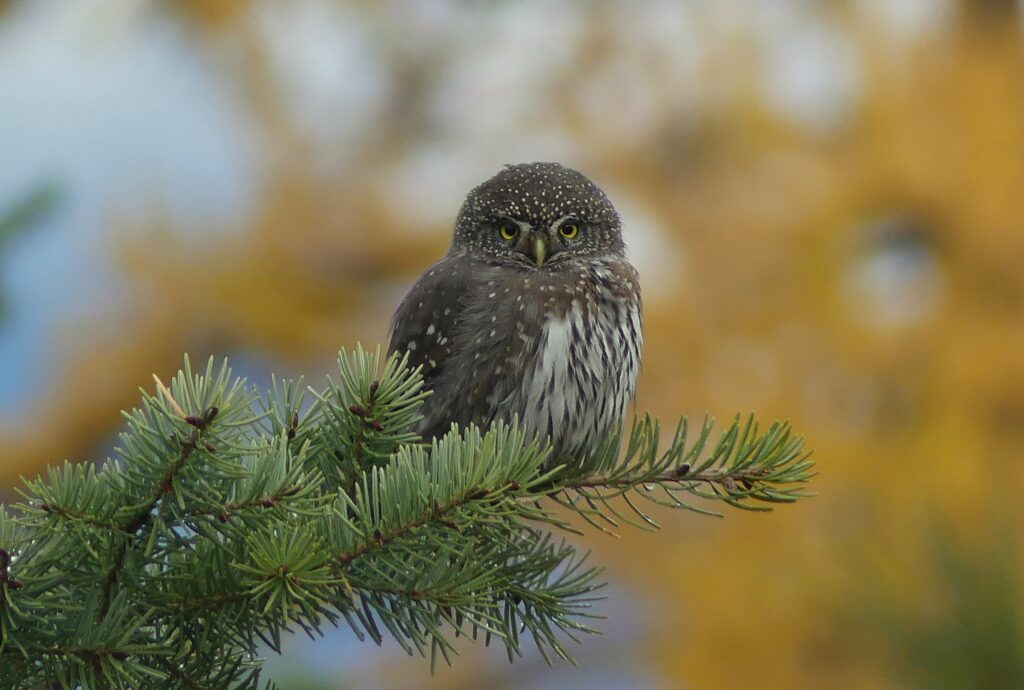
The Northern Pygmy-owl takes the prize for being the smallest owl in Montana. Tiny, but fierce, this little bird that stands 6-7 inches in height and weighs 2 to 3 ounces predates small to medium-sized birds (chickadee to blue jay sizes), small rodents and squirrels, insects, and has been known to successfully kill a domestic chicken with its sharp talons, strong down-curved beak, and amazing determination.
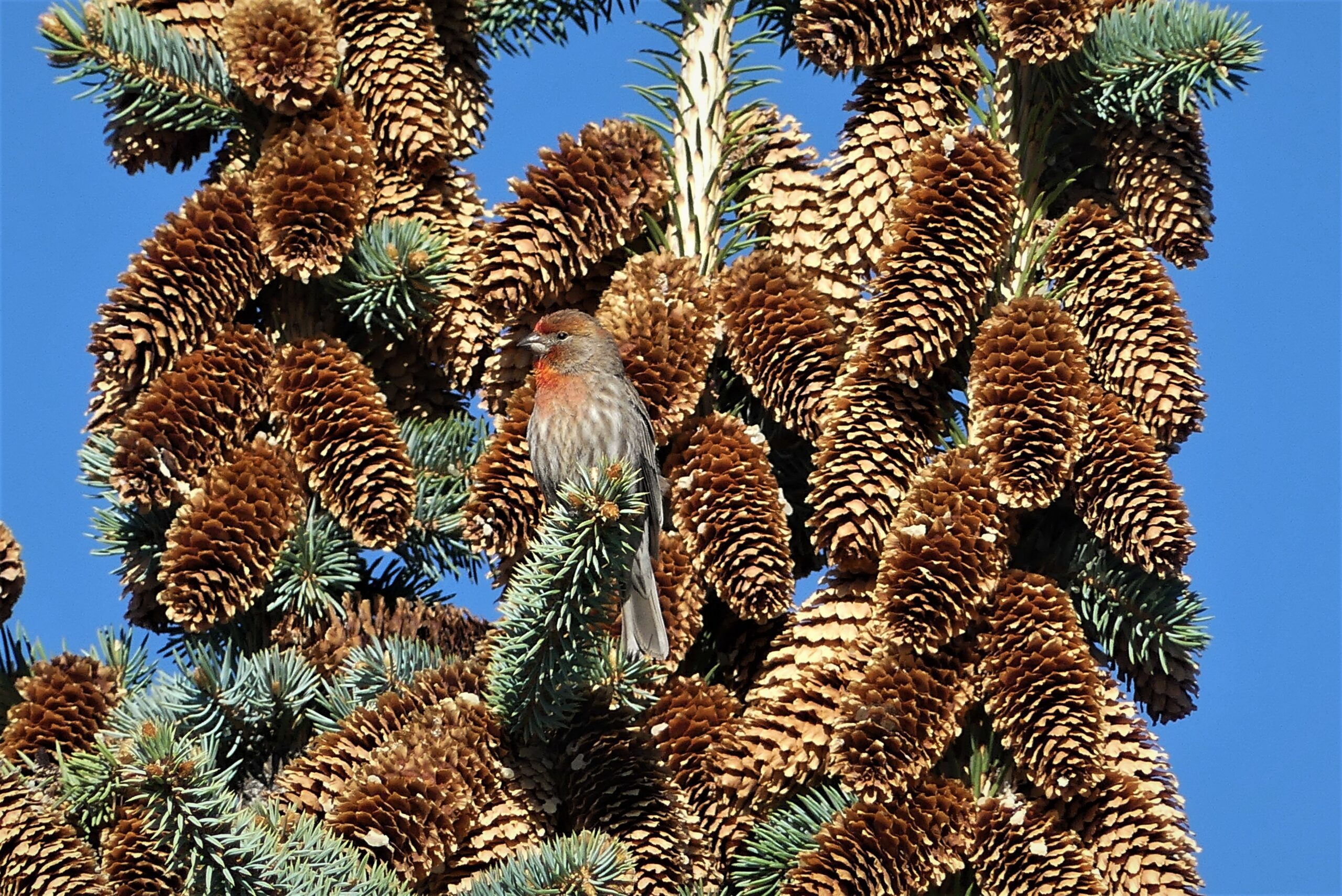
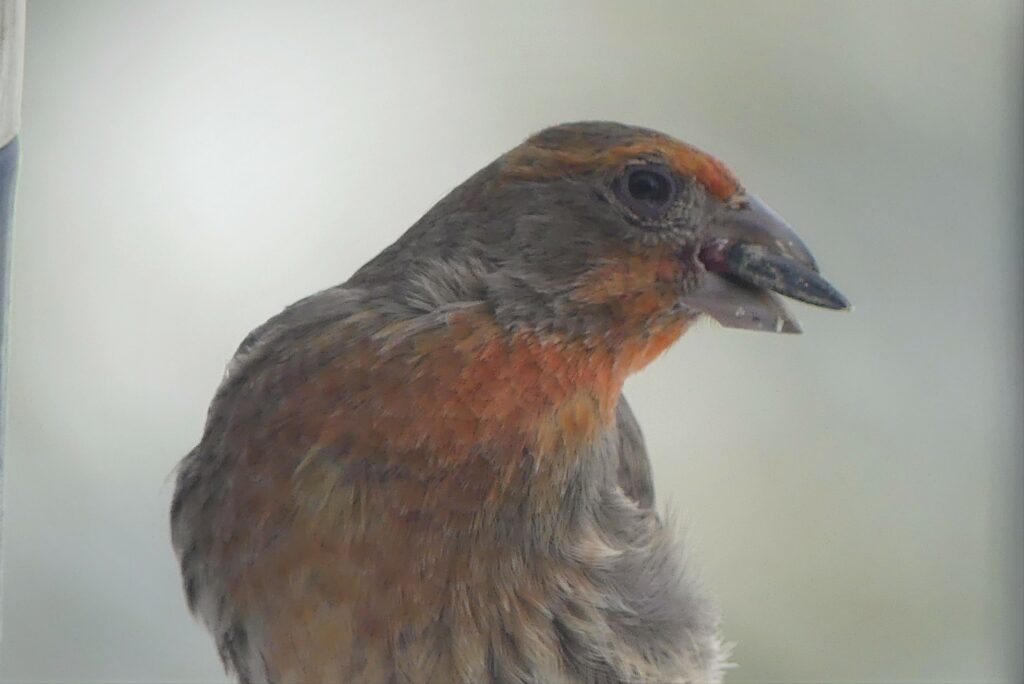
How does one describe House Finches? Striped bodies, head and chest of various shades varying from yellow to orange to pink to red. Flocking, chattering, perching at the top of of trees, stout-billed seed-eaters. Perched among the cones of a Blue Spruce in bright sun one morning, this perky House Finch looked like a Christmas decoration! Members of the Fringillidae family, there are 17 species, including many of our familiar visitors: crossbills, Evening and Pine Grosbeaks, redpolls, goldfinches, house finches, Cassin’s finches, and siskins. Many of these species are reported in decline and we can’t take them for granted.
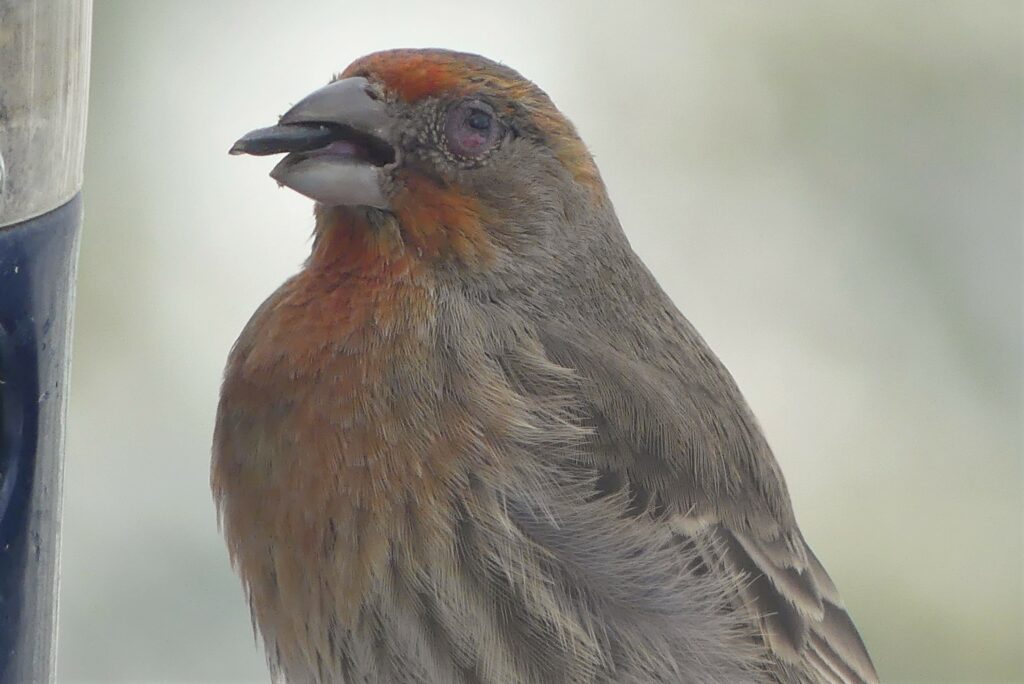
House Finch at the feeder with normal-appearing right eye
Same bird as above with head rotated to reveal abnormal left eye
Although I can’t diagnose the cause of the unusual-appearing eye, knowing that there are diseases among Finches that can be transmissible and deadly, this was message enough to send me out to take down the feeders, clean them and the area and not hang them out for a week.
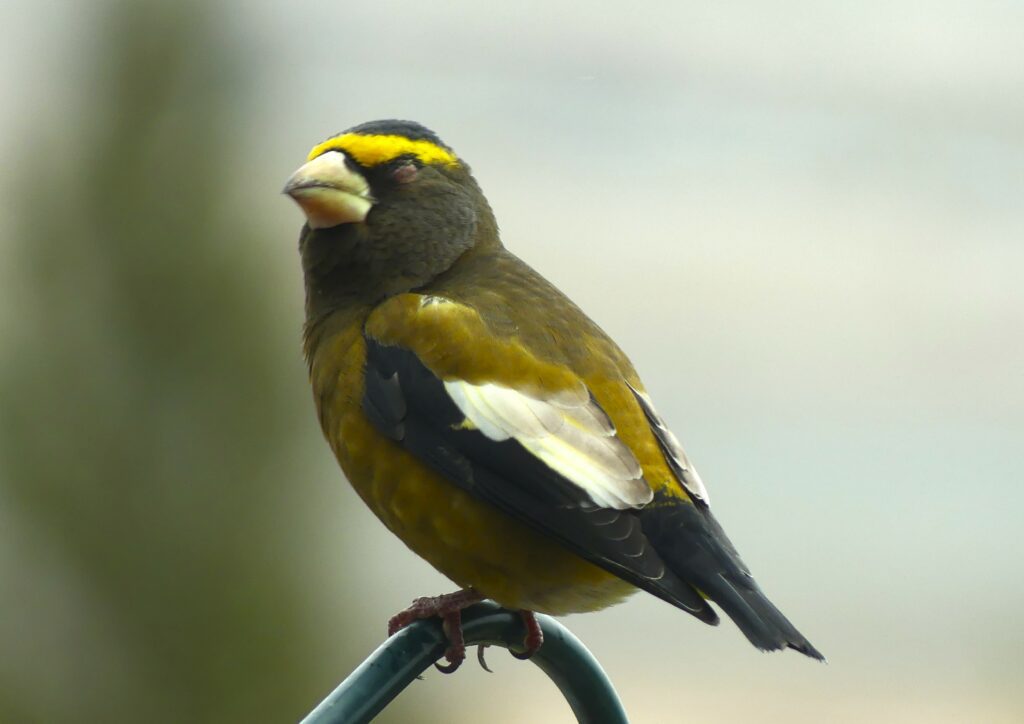
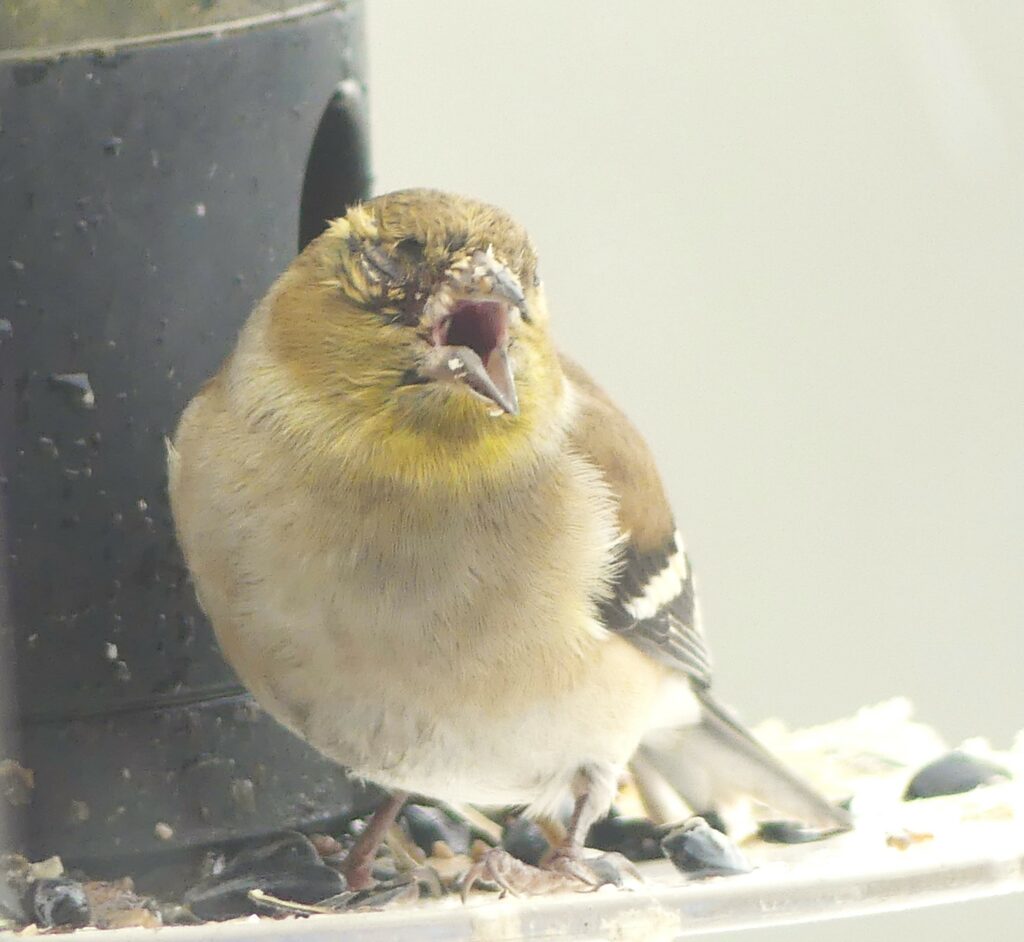
The following are images of birds that I have observed with eye problems. These appeared at my feeder in four different years and were the only ones observed in those years.
Evening Grosbeak with unusual-looking eyeAmerican Goldfinch with swollen eye with dischargeFemale House Finch with eye problem
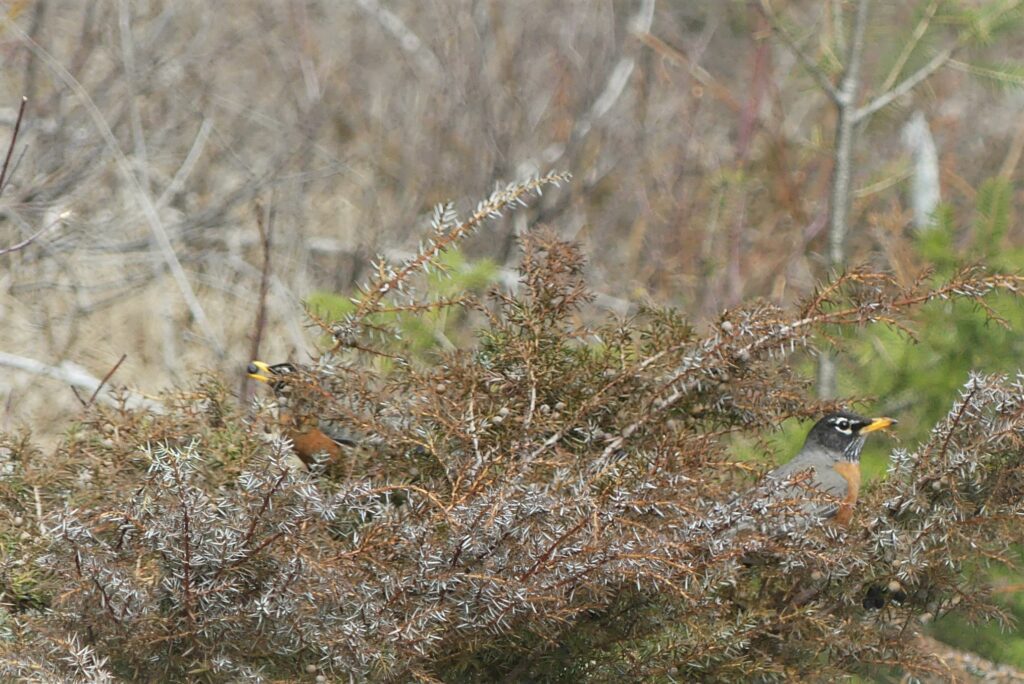
Juniper is a woody plant that provides habitat and food for a number of bird species year ’round. For more information about local Juniper species and the birds that utilize them in all seasons…
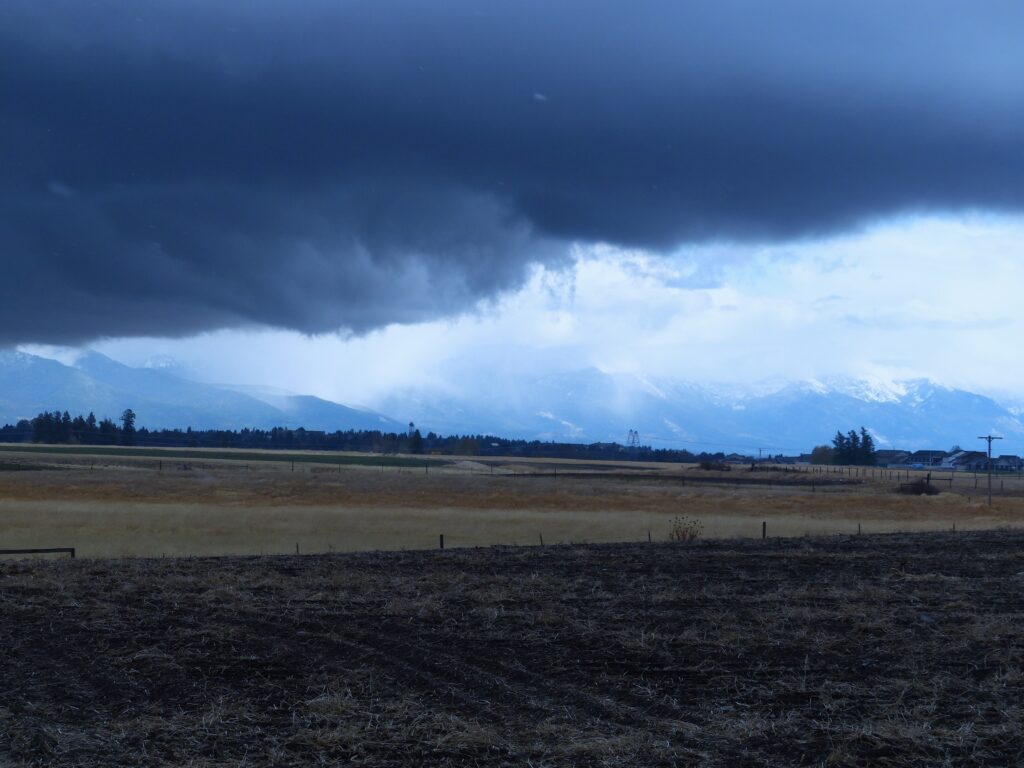
October 21, 2020 1:16 p.m. As I drove along West Valley Drive, the sun made a quick exit behind dark clouds, and I made a turn toward the ponds along Clark Road and West Springcreek Road to observe the dramatic change.
American three-toed WoodpeckerP.dorsalisBlack-backed Woodpecker P.arcticus
The above woodpeckers have been seen in the West Valley with increasing frequency in the last few years. To learn more about these unusual birds and why they are here, read on.
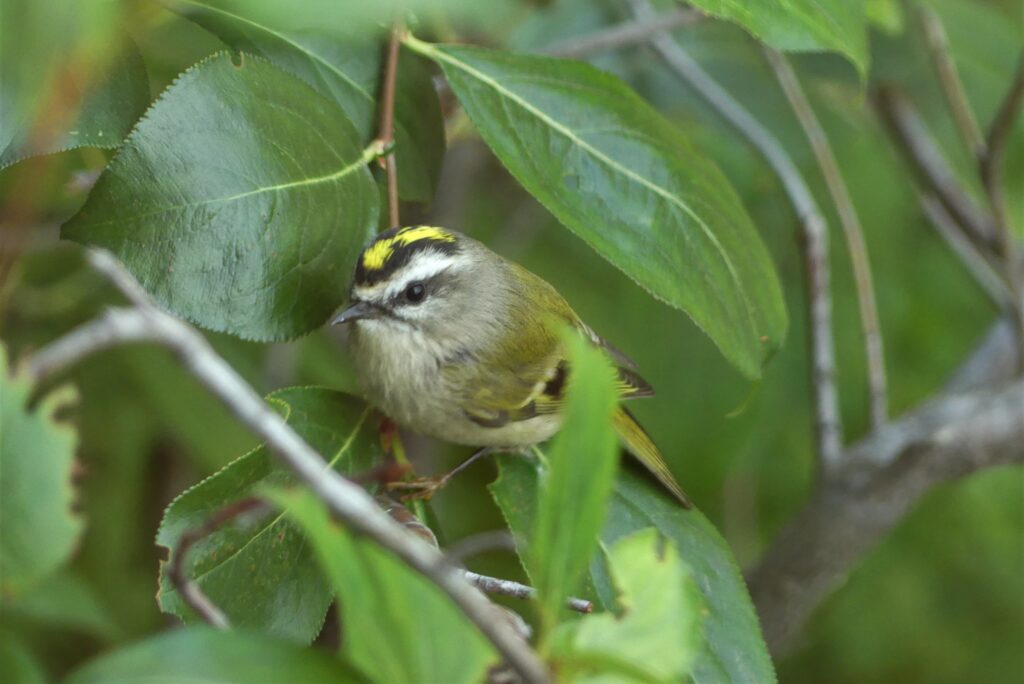
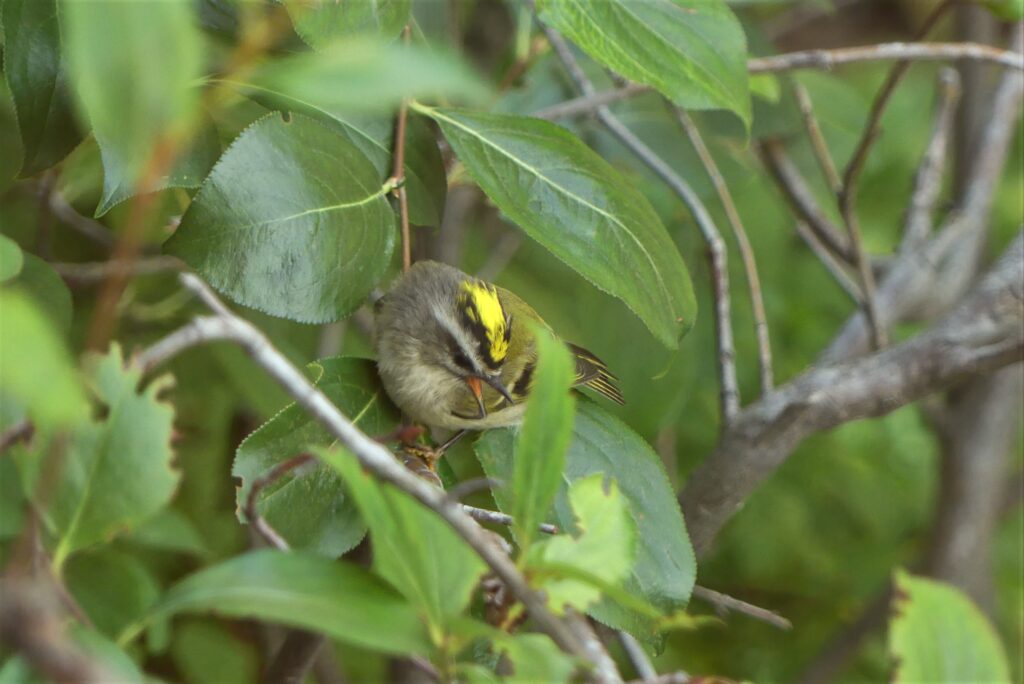
The Golden-crowned Kinglet is a permanent resident of conifer forests in our area. Regulus comes from Latin, meaning “little king”; satrapa is of Greek origin, meaning “ruler who wears a golden crown”. Males have a patch of orange feathers between the yellow, but they rarely display them. I’m assuming this one is a female, but it’s possible it’s a male in a peaceful mood!
At only a half-inch longer than our smallest bird, the Calliope Hummingbird, and weighing a mere .2 of an ounce, it’s no wonder we don’t see this little one very often. This high-energy little insectivore usually travels with others of its kind seeking food. They hover at the ends of twigs to gather microscopic mites, aphids, and aphid eggs; in summer their choice of insects is greater, and they occasionally find fruit to add to the protein sources. In winter, their most nourishing food is inchworms, the caterpillar of the geometrid moth, that they find frozen to twigs – mostly of conifers, but occasionally on maples, too.
The female Golden-crowned Kinglet constructs a hammock-like nest of moss, lichen, spider silk, rabbit hair, twigs, feathers, and other plant materials. Then she lays 8 to 11 bee-sized eggs in two layers, using her warm legs to incubate the lower layer! Usually, birds with a low success rate in raising young or migrating have big broods; Golden-crowned Kinglets’ survival challenge is overwintering in our cold climate on a low carbohydrate diet.
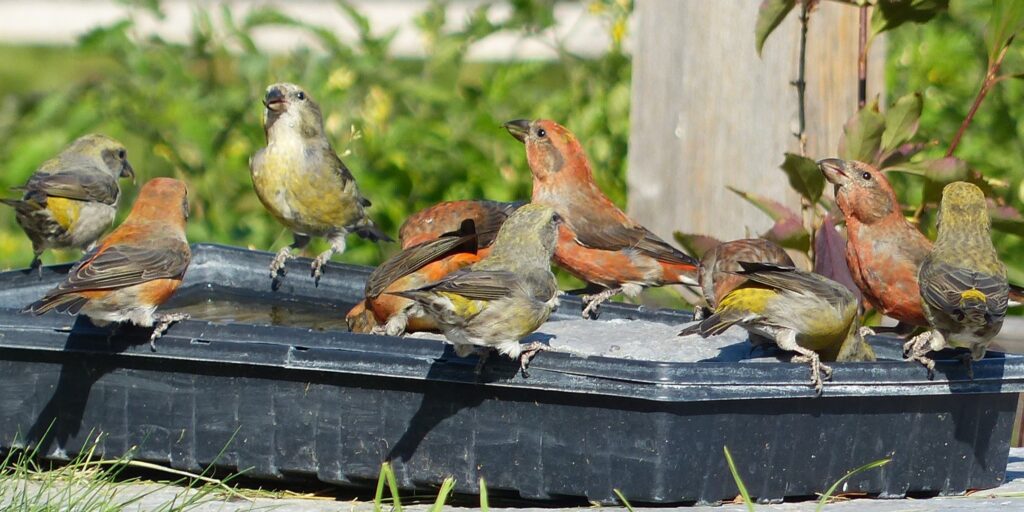
A few of the flock of Red Crossbills at their daily visit for water 10.02.2020
The only species in the world with crossed bills and many other unique traits that are under scientific scrutiny, Crossbills visit our valley sometimes during periods of heavy cone crops on our Douglas fir and Ponderosa pine trees. Though I rarely saw them feeding on cones during the summer of 2020, a flock of Red Crossbills and Pine siskins made daily visits to our yard for water. The rustle of taffeta petticoats alerted me to their arrival as they landed in the larch trees behind the water pans by the garden. The brown-striped attire of juvenile Crossbills gave me some difficulty distinguishing them from the ever-present Pine Siskins when many of them landed in the water pan at once! Read on for more about these colorful, entertaining, unique birds!
Snakes usually take us by surprise when we are walking along a path or across the lawn. They may register at first as a stick in the path, but our brain suddenly alters the message and I jump as the “stick” slithers away. Here are some different snakes I have encountered in the West Valley.
Editor’s note: Captions on these images are transcribed from the reverse side of the photo. For more images from Barbara’s collection, click here.
In 1910, there were disastrous fires in northern Idaho and northwestern Montana when hundreds of thousands of acres of timberlands were destroyed; many lives were lost, and much property outside of the forests was destroyed.
In May, 1911, many timberland owners and other owners of other property in northwestern Montana met and organized the Northern Montana Fire Association (NMFA), a non-profit organization for protecting life and property in the region. A.E. (Albert) Boorman became the Chief Fire Warden and secretary/treasurer of the organization.
The boundaries of the area covered by the NMFA were from Whitefish south to Nirada (north of Hot Springs) and from Kalispell west to Lost Prairie, McGregor Lake, and Flathead Mine. In 1921, the NMFA charged $0.015 per acre to anyone – forest owner, rancher, homesteader – who appreciated the availability of a firefighting crew in the area should the need arise. As A.E. Boorman said in a Daily Interlake interview in 1921, the organization charged just enough to cover costs “and no more.”
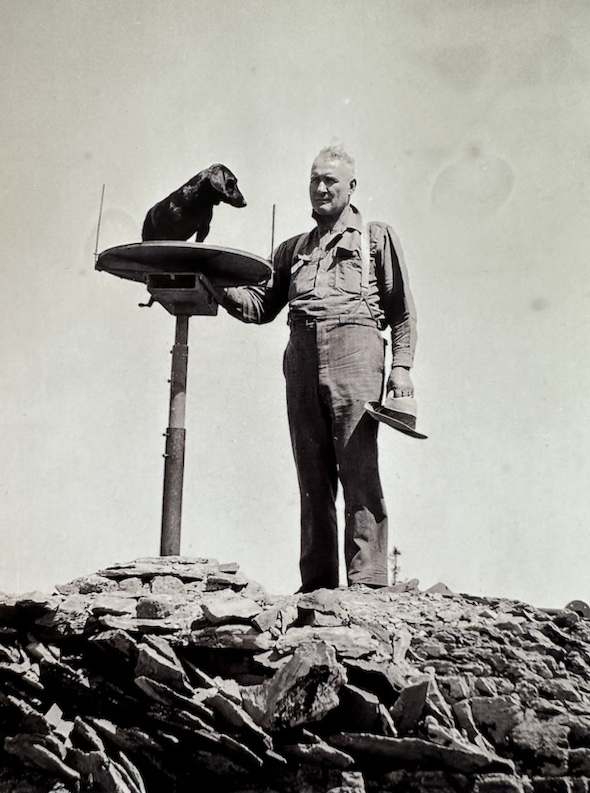
A. E. Boorman, Blacktail Lookout. Probably July 10, 1934.
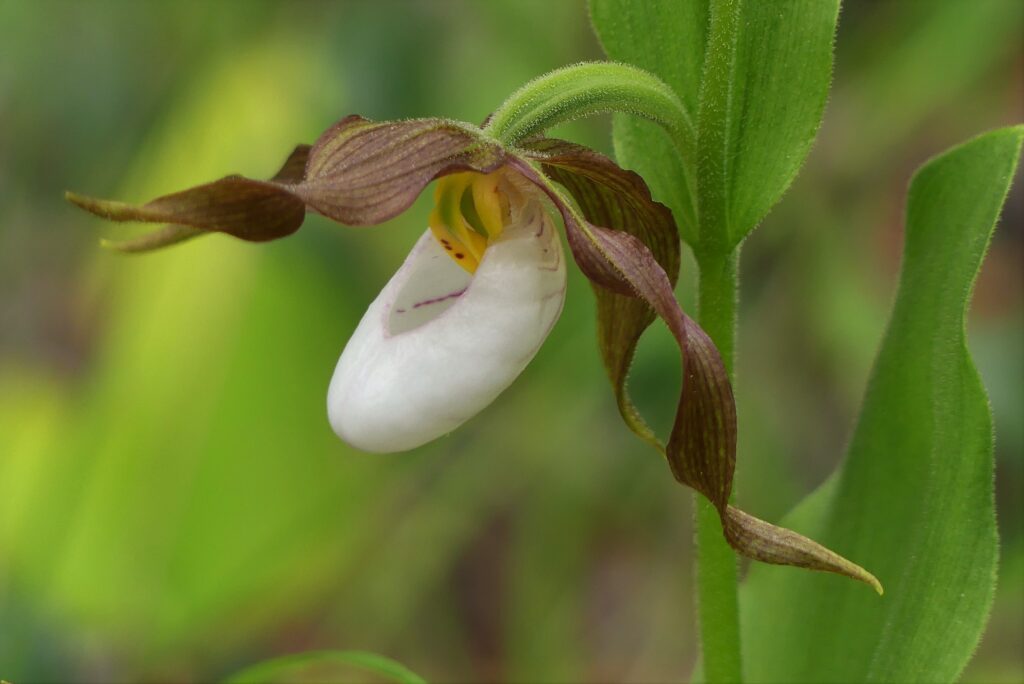
The Mountain Lady’s Slipper, aka White Lady’s Slipper, is a striking sight, whether as a single stalk like this one or a in big clump. Although their very existence requires an amazing amount of chance and even the support of a fungal partner, they find a niche that works for them in our area. I visited this solitary plant at least once every month from June to October, 2022. Read on to watch its progress.
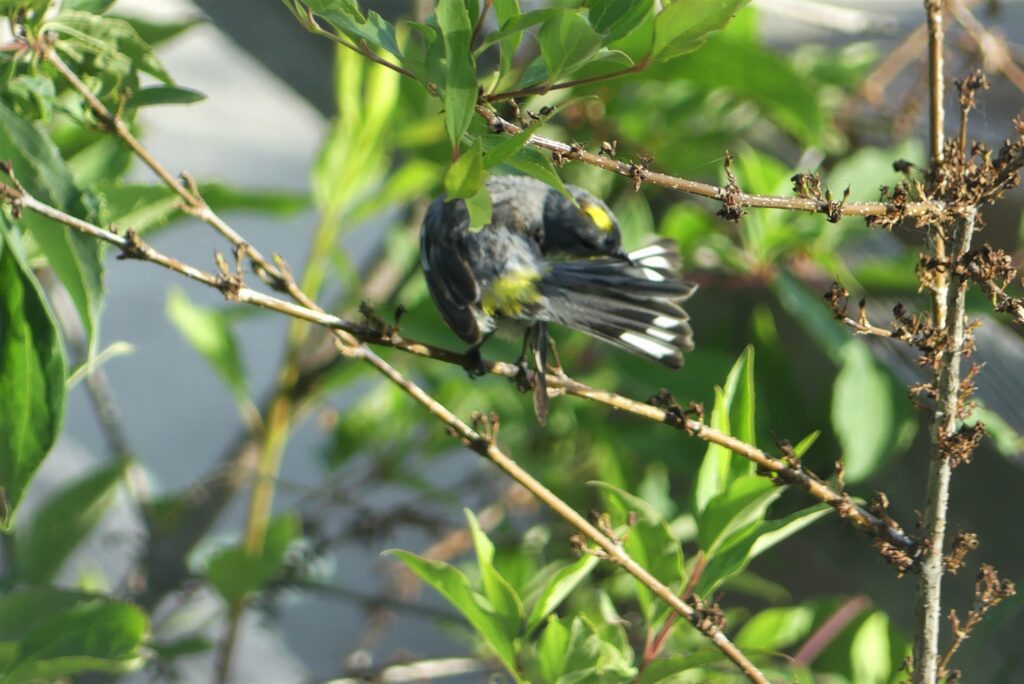
Members of the Wood-Warblers’ family, Yellow-rumped Warblers are one of the earliest Warbler species to arrive in the West Valley. There are two main populations: “Audubon’s” breeds mainly in the mountains of the western U.S. and into British Colombia; “Myrtle” breeds from the eastern U.S. across Canada to Alaska.
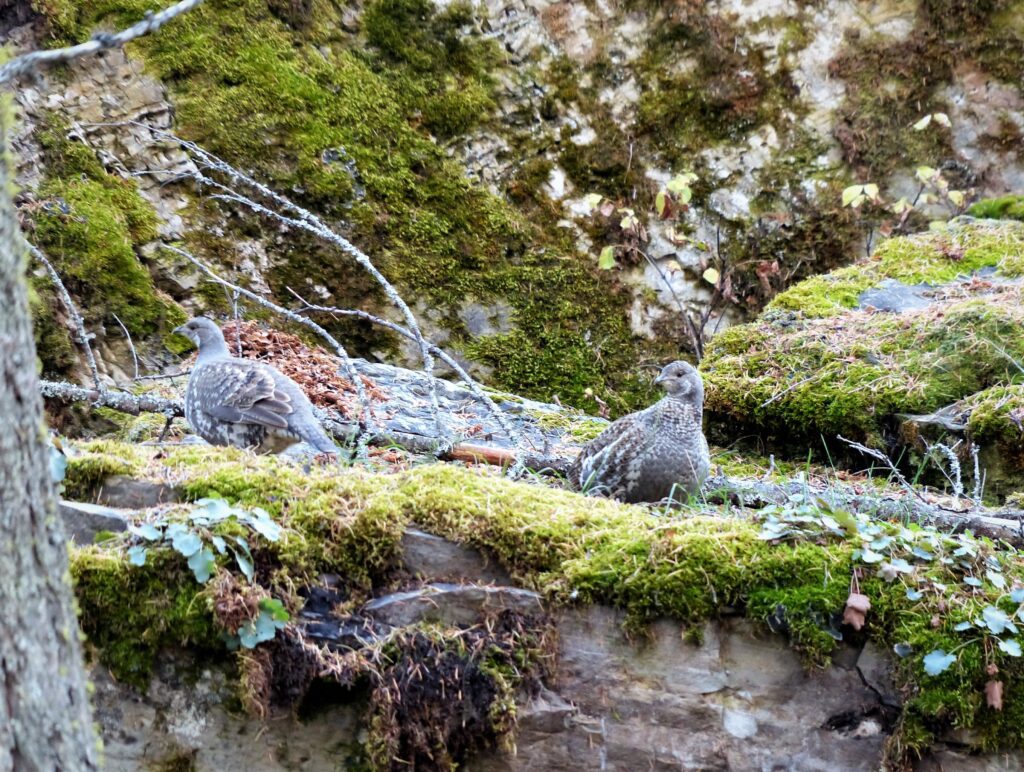
NOW, we’ve finished with all the non-native game birds; in Part III we’ll cover the native Montana game birds. Read on for more about Dusky Grouse, Ruffed Grouse, and Spruce Grouse.
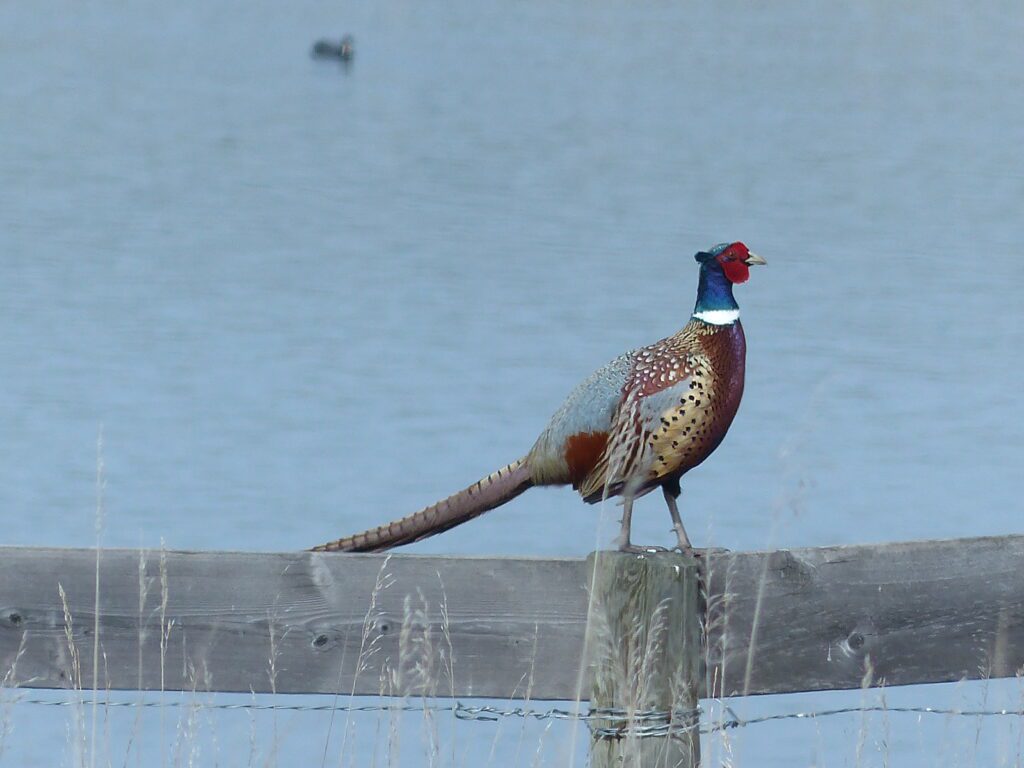
Ring-necked Pheasants (Phasianus colchicus), native to China, were introduced to Montana prior to 1895. The male pheasants, flamboyantly-feathered birds with crazy-quilt plumage, are easily recognized and quite commonly seen near water, around feed lots, in hedgerows, and even in our backyards. The ground-nesting females have mottled brown colors that camouflage them as they incubate a dozen eggs at a time and tend one or two clutches of chicks per summer. Read on for more pictures of Pheasant activity and other non-native game birds we may see.
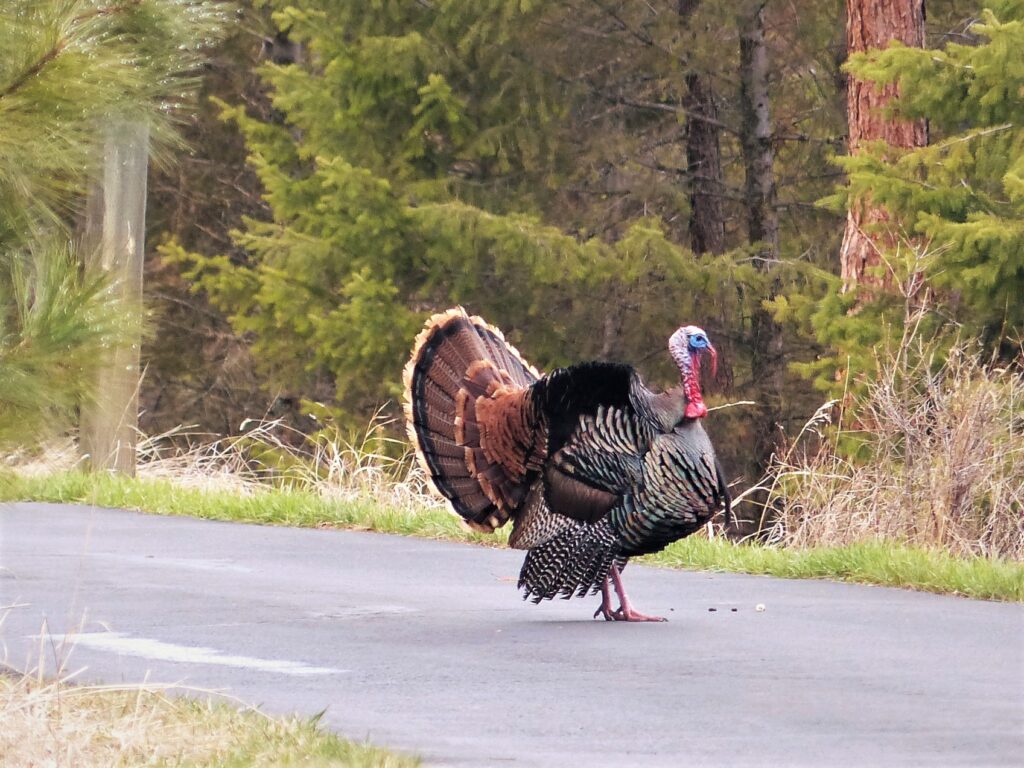
We have seven species of Upland Game Birds in our area: Wild turkeys; Ring-necked Pheasants; Hungarian (Gray) Partridge; Ruffed Grouse; Blue Grouse; and Chukar Partridge. As noted in discoveringmontana.com, prior to the 1950’s, upland bird hunting was not well-managed in Montana. Popular game birds were heavily hunted to the point that populations began to suffer. Starting in the ’50’s, it was recognized that limiting hunting would allow these species and their habitats to be self-sustaining and healthy. Today, Montana Fish, Wildlife, and Parks controls and monitors hunting and harvesting upland bird species.
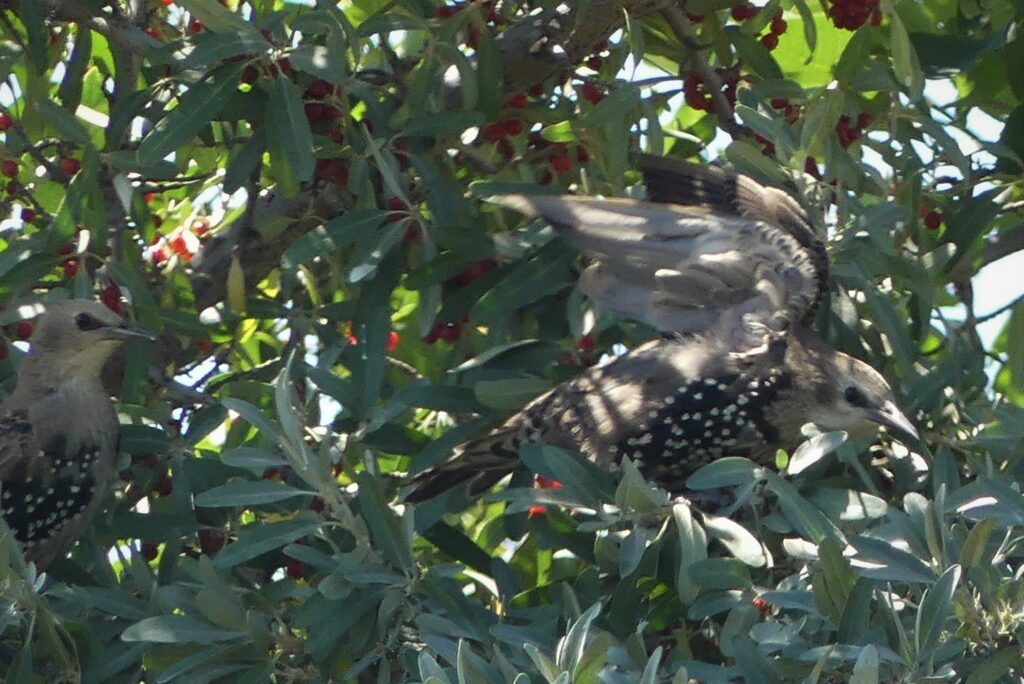
What are those beautiful birds feeding on the shiny red berries of roadside shrubs? They are the size of adult birds, but they don’t resemble any I can think of!