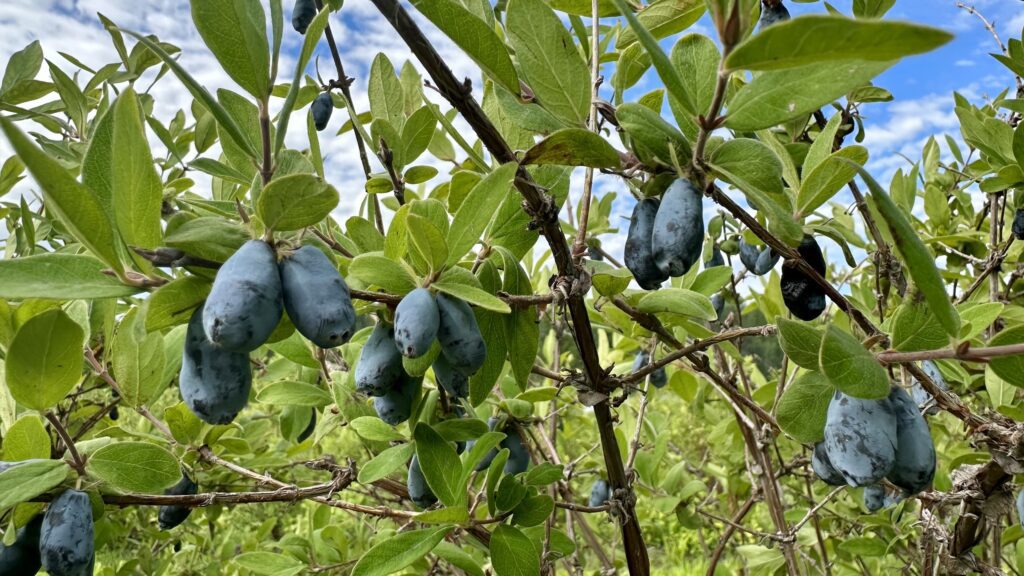
In northwest Montana, wild huckleberries rule the berry world. (Never mind that what we call huckleberries are not actually huckleberries at all, but rather a species of blueberry. I realize I could be shot for saying this.) But lately, another berry–this one cultivated–has been making its appearance in the West Valley area–honeyberries.
We have several beds of bee balm (bergamot), both native varieties and cultivars, planted around our property to attract bees and hummingbirds, which it does in huge numbers. It’s not uncommon find more than a dozen species of bees foraging for nectar on a single bed.
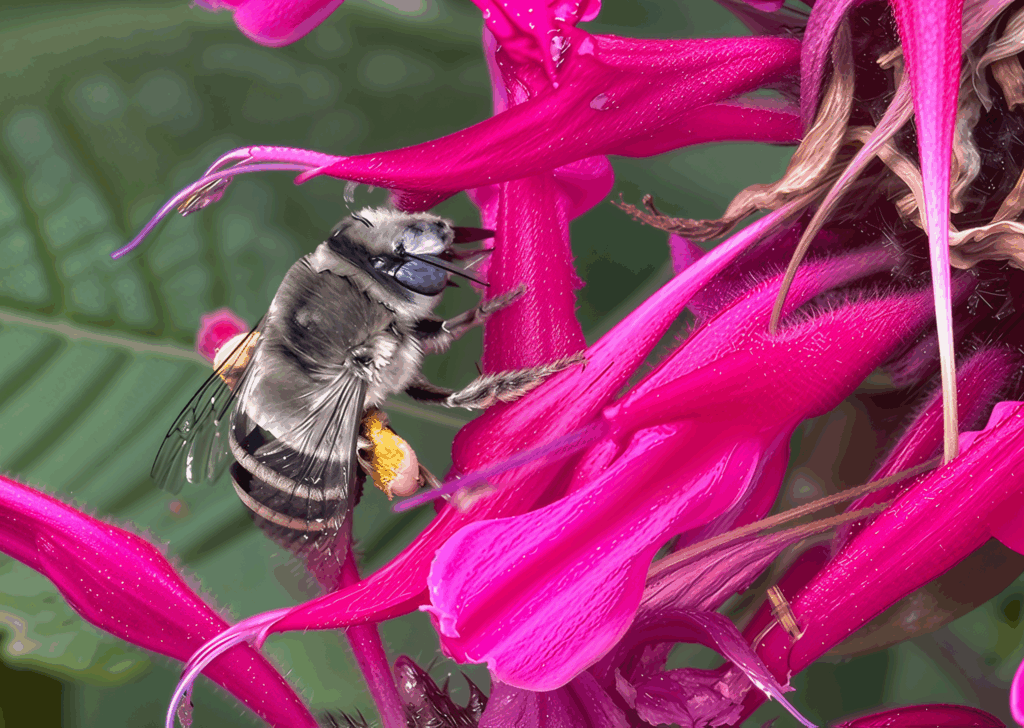
Lately, I’ve noticed a virtual invasion of a bee species that is new to me–a small, gray striped bee that looks like a cross between a honey bee and a bumblebee. True to form, it’s neither. It turns out that this is an urbane digger bee (Anthrophora urbana).
Editor’s note: This article has been updated to include some information and images from Pat Jaquith,
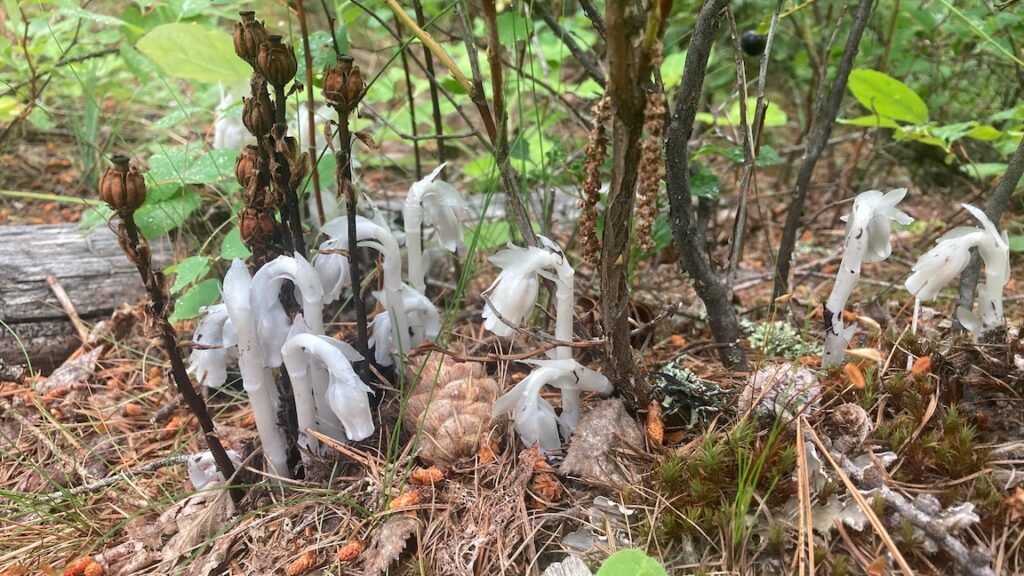
Ghost pipe, which is known by many other names including ghost flower, corpse plant, and Indian pipe, may be found in the West Valley area. If you do run across any, please take a few photos and then leave it alone, for reasons that will be explained below.
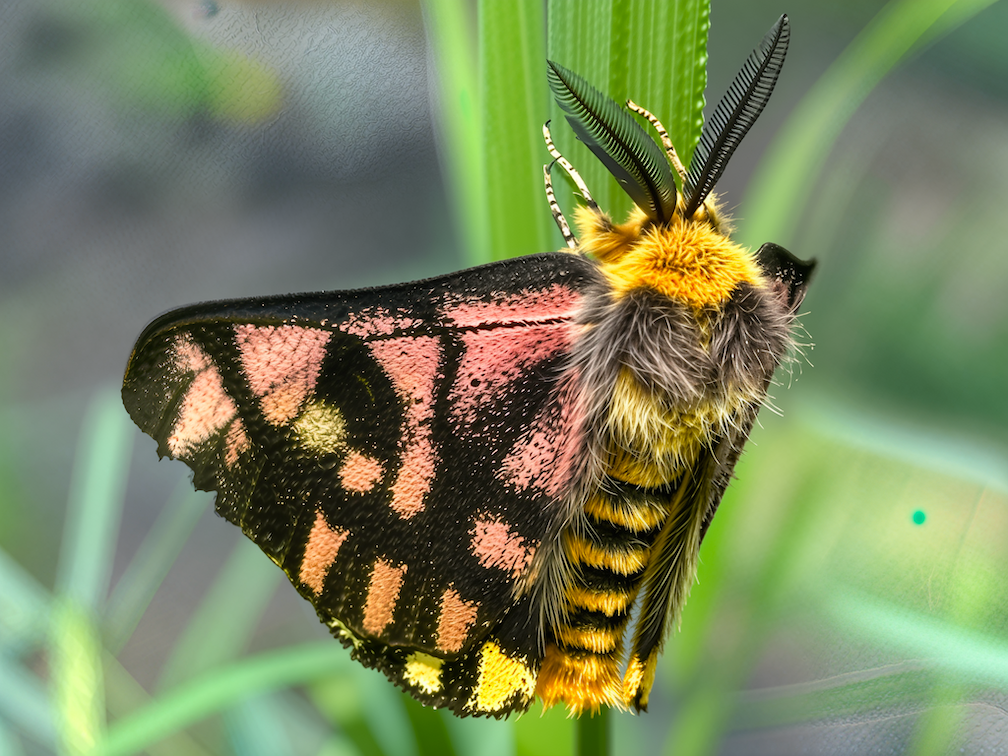
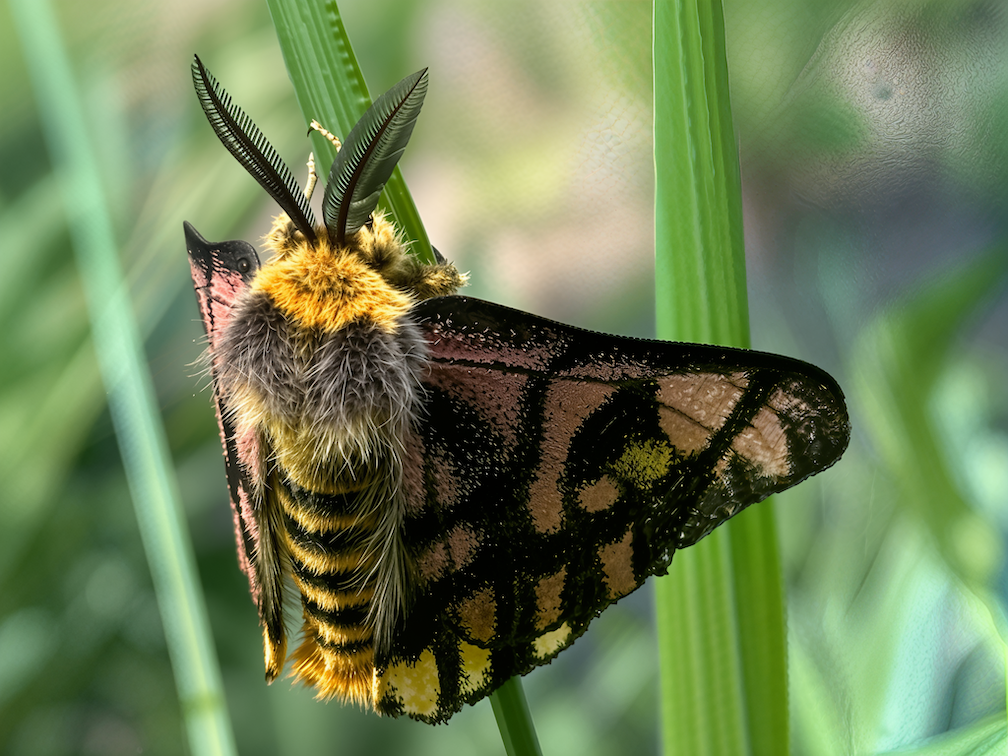
It’s always fun to run across a species that you have never encountered before, and that was the case for me today when I observed this Western Sheep Moth while I walking the trails in Happy Valley.
Western Sheep Moths are native to the western US. Their main range is southern California and the Sierra Nevada mountains, and while they are not common here in the valley, there are several reports on iNaturalist of encounters with them in our area.
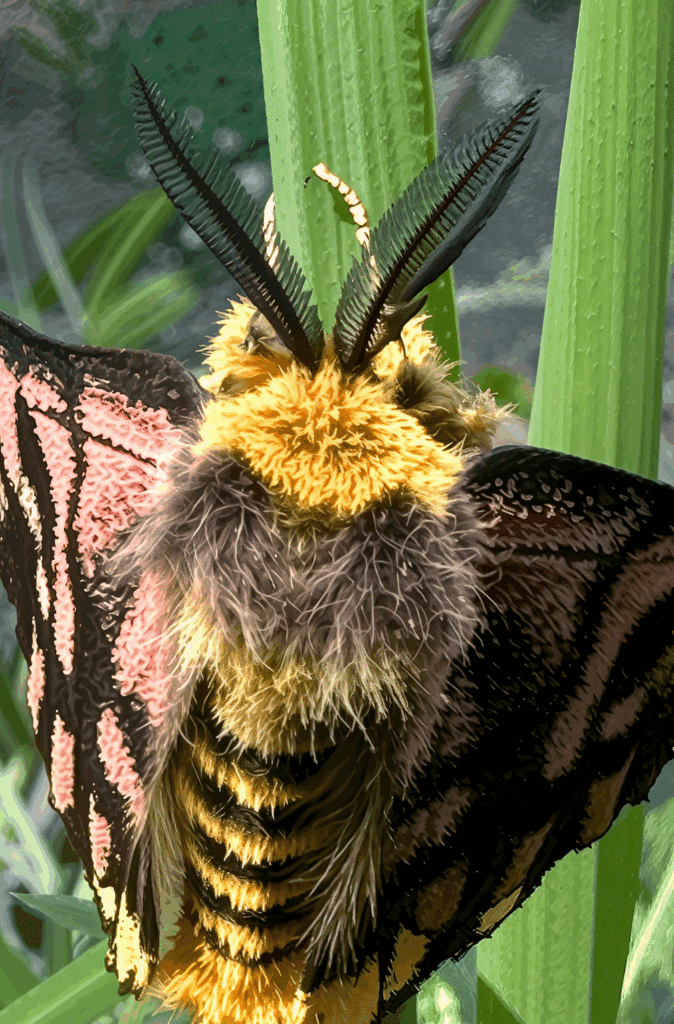
Unlike many moth species, Western Sheep Moths are daytime flyers, and rather large as local moths go–a bit smaller than a Luna Moth with an average wingspan of roughly three inches. Their identifying characteristics include pink, orange and yellow wing spots, black and yellow striped abdomen, prominent feathery antennae, and a tuft of bright yellow fur across the top of the thorax.
Antennae and thorax detail.
Western Sheep Moths lay their eggs in the summer months on roses (Rosaceae), both wild and cultivated. Their caterpillars (larvae) feed on them. They are also known to feed on buckthorns, an invasive species here in Montana. While they are not important pollinators, they are known to inadvertantly serve this function.
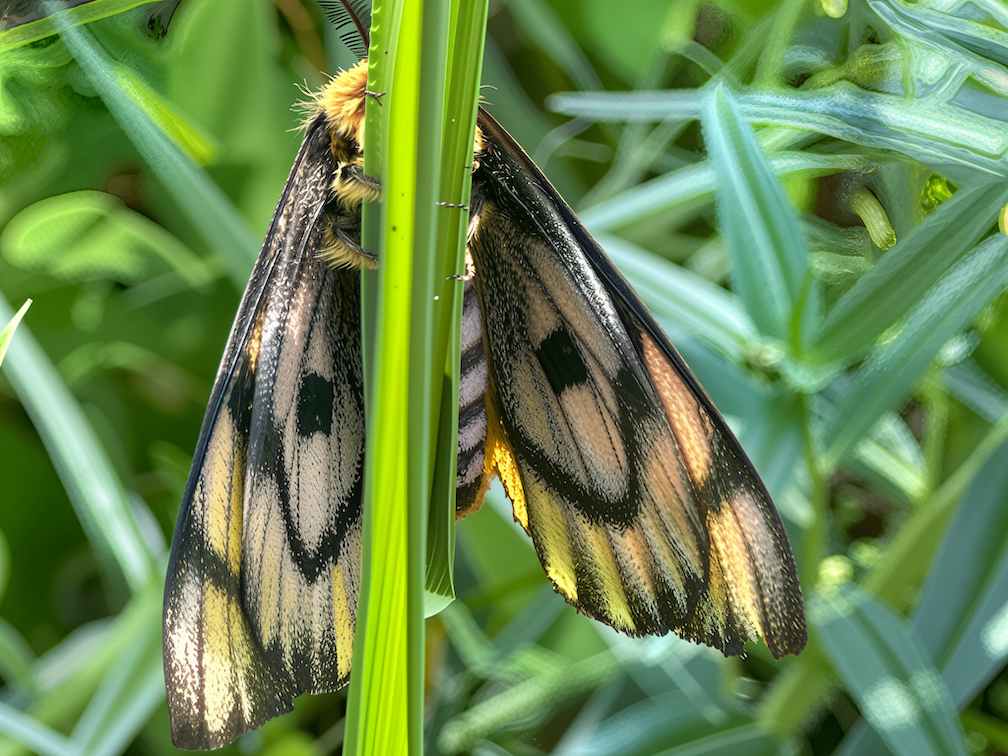
Wester Sheep Moth underwing.
Why are they called Sheep Moths? It turns out that they can be pests for sheep farmers, as adultsthelarvae (see Parker’s clarifying comment, below) will feed on the wool of domesticated sheep, degrading the quality and quantity of the wool. Sheep moths can cause a 15% drop in the quantity of wool produced by a flock.They are also known to invade homes and feast on wool and other clothing. They are prey for many birds species, and they are known to eat some insects.
Have you encountered a sheep moth in your wanderings? Do you see them as pests? Part of the ecosystem? Let me know in the comments.
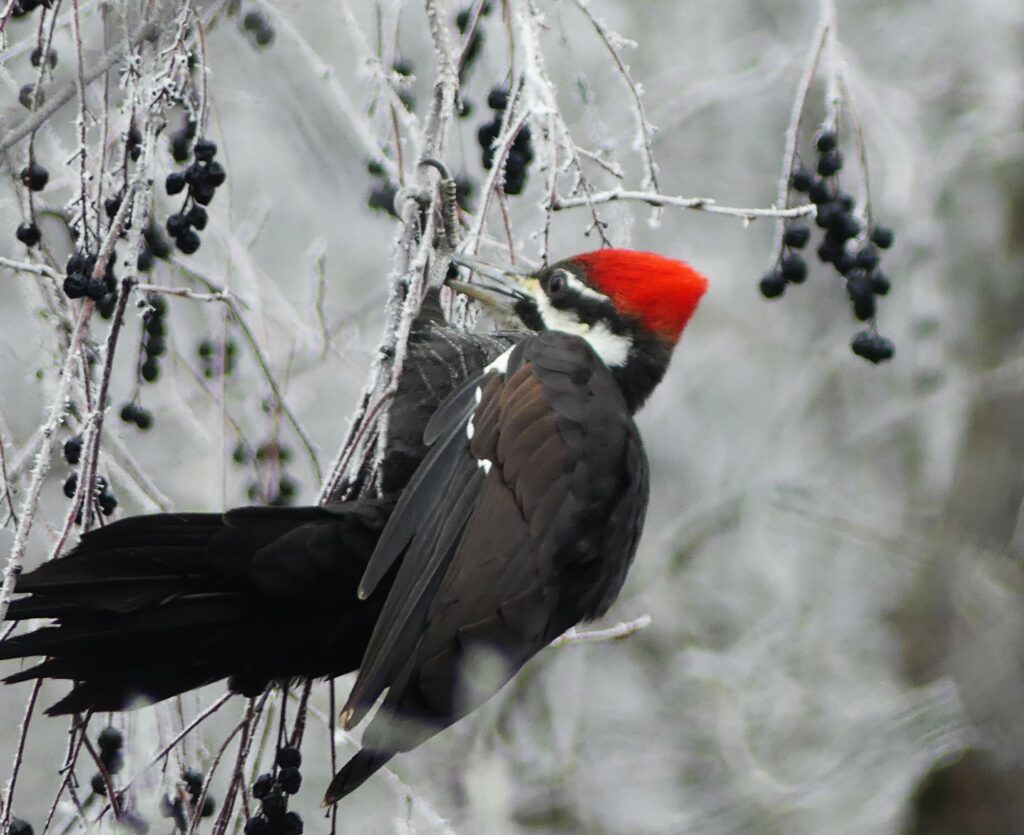
Pileated Woodpecker picking Common Buckthorn drupes 1.27.23
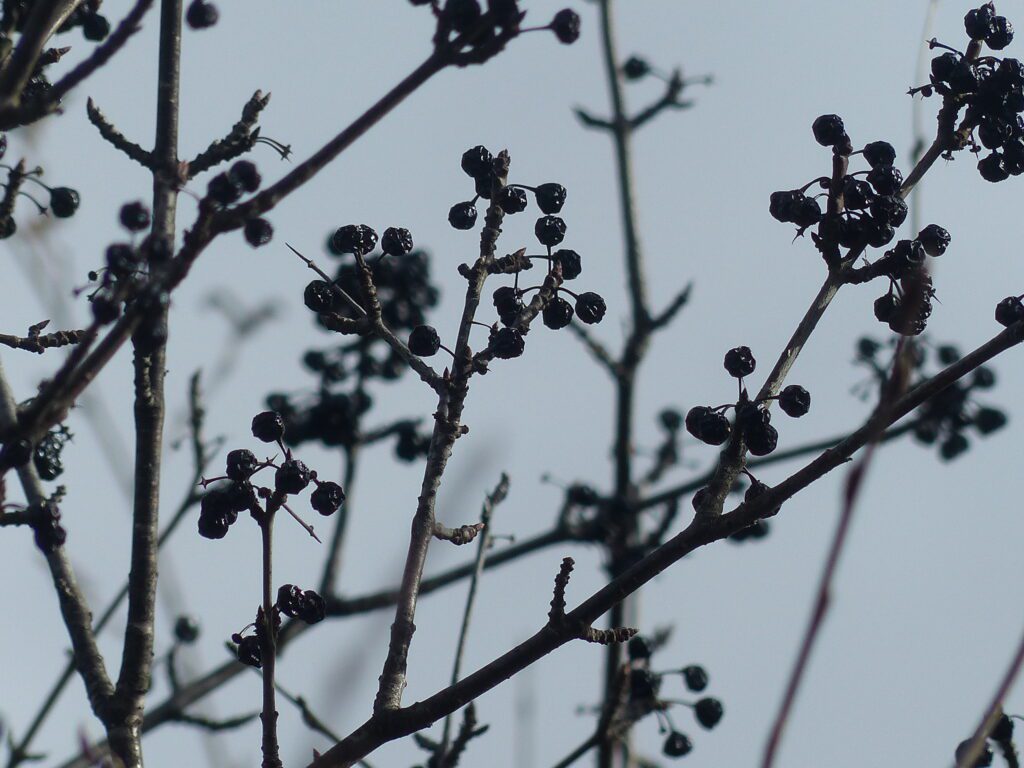
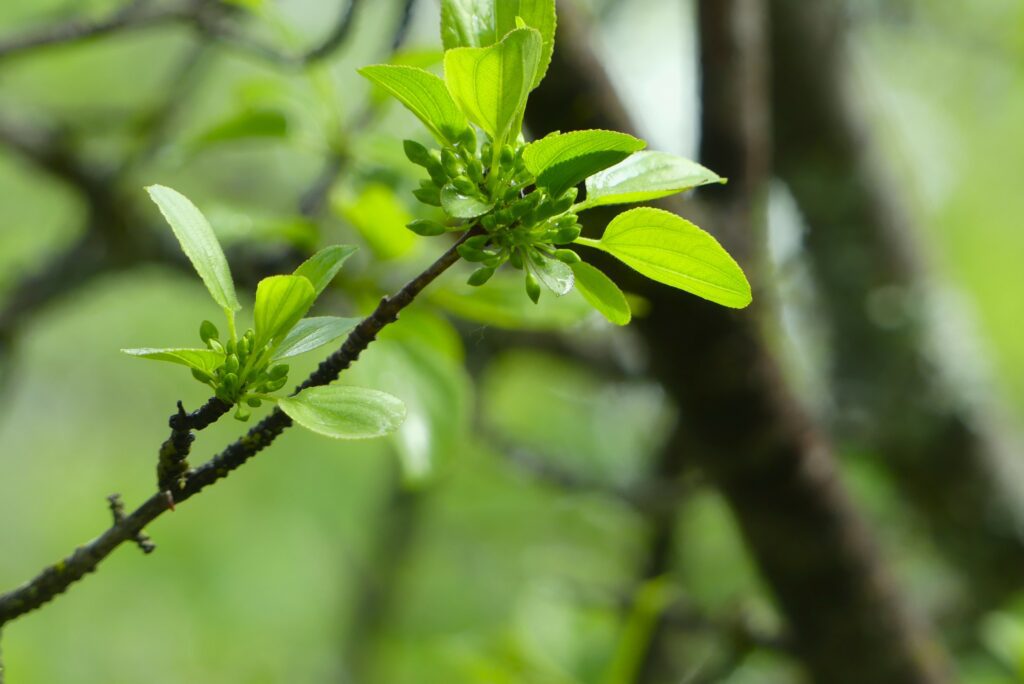
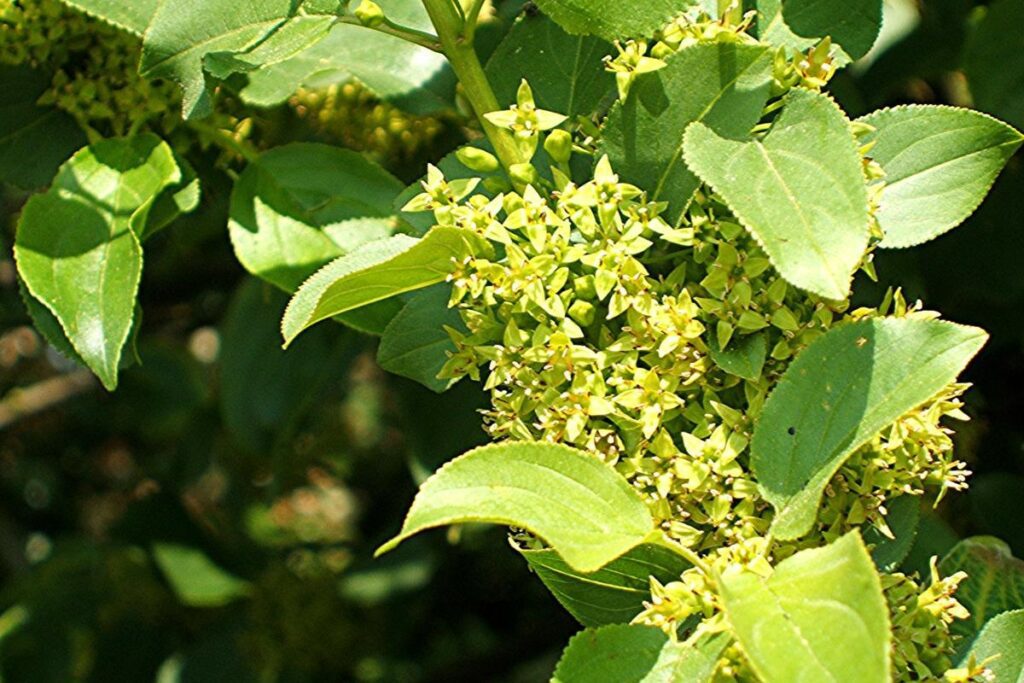
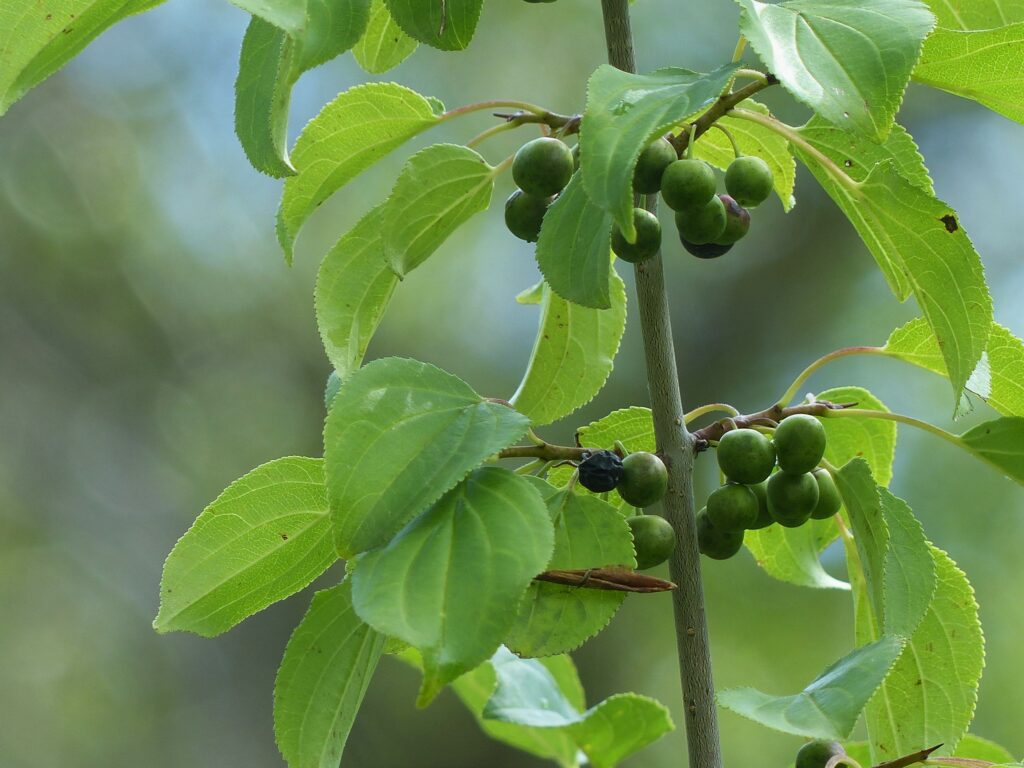
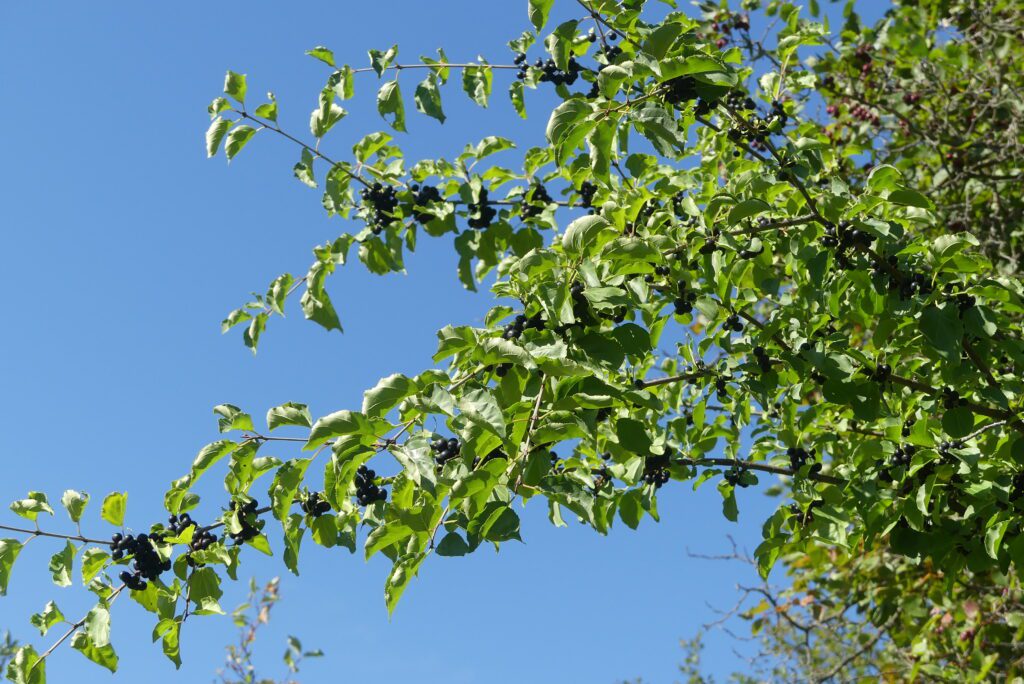
Common Buckthorn aka Rhamnus cathartica hides in plain sight. If you have walked in Lawrence Park or Owen Sowerwine in Kalispell or in many other areas along the local wetlands, you may have noticed the overwhelming prevalence of some shrub/trees that have thorns and lots of black fruits a little smaller than Chokecherries. The State of Montana recognizes this tree, native to Eurasia, as a Noxious Weed. It was introduced many years ago as an ornamental at a time when few people realized that many plants can be well-behaved in their native land because there are natural controls – insects or mammals that eat them and keep them in check or weather that checks their growth. However, in our country, none of those natural predators exist, and given time, the plant flourished to the extent that native plants are choked out. Cathartica refers to the fact that the plant (fruit) causes diarrhea. Birds are attracted to the fruits that ripen in late fall and persist throughout the winter. However, the birds gain no nutrition because of the catharsis it causes.
Bark of Common Buckthorn4.23 Drupes persistCedar Waxing feeding on dried drupes 4.26.22Common Buckthorn in bud 5.20.25Flowers May-JuneBranch with green drupes 8.23.199.07.23 Most Rhamnus cathartica drupes have 4 seedsEarly November, 2024
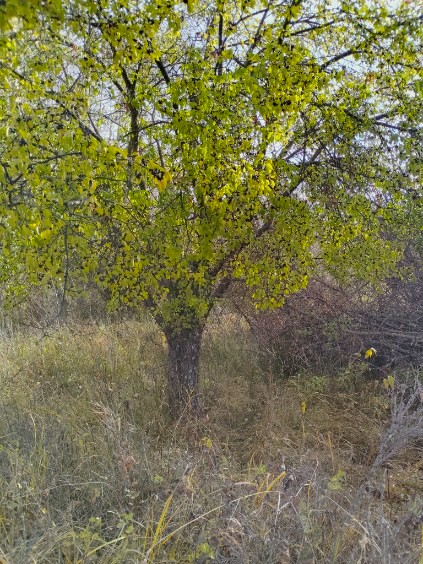
Bright yellow-green leaves haven’t dropped. When all the other deciduous trees have lost their leaves, this characteristic makes Common Buckthorn easy to identify.
Saplings no taller than 4′ and .5″ in diameter may have drupes. The tree above must be quite old.
If you have questions about identifying or controlling Noxious weeds, contact Your local Extension Service Your local weed control district Montana Department of Agriculture
Editor’s note: This article is a followup to this article from August 2024. The many uses of hemp are discussed in detail in that article.
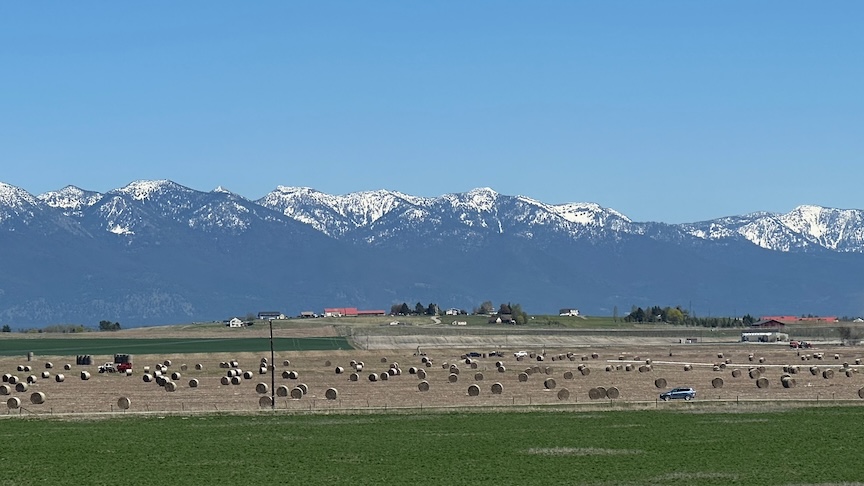
If you have driven down West Valley Drive north of West Reserve this spring, you have probably noticed the large number of hemp bales in the fields on either side of the road near the intersection with Coclet.. There are only two hemp growers in the valley and this operation of about 400 acres total between the two fields is one of them.
Editor’s Note: The smaller images on this page my be enlarged by clicking on them.
Part I focuses on some of the local birds that raise their offspring in cavities, that is, holes in trees, man-made house-like structures, and holes in earthen areas. Part II will cover some of the birds I have discovered raising their young in more exposed locations. I marvel at their ability to overcome the challenges that weather, predators, and life with dependents without physical barriers must present.
A Western Wood-Pewee fashioned a nest of grass, rootlets and bits of other natural material on a lichen-covered limb of a Douglas fir tree. There are many needle-laden branches overhead that provide shade and divert rain drops. When she returns to the nest, she always lands on a different branch and little by little approaches the nest site as if she doesn’t want to reveal the location to others. I had the unique opportunity to observe all of this in reverse. I was in the area to visit a plant I was studying. As I cast my gaze around the location so I could note landmarks to help me return, I noted “something looks different about this branch.” Indeed, the lump overhead looked like a little nest! At first, I wondered if the nest had overwintered. It was a few feet higher than I could reach, so I only could observe, not touch. As I continued to look up, movement caught my attention: it was the owner of the nest, intent on getting to the empty nest. I froze in place and before I could blink, the bird arrived. I paused just close enough to get a couple of pictures before abandoning the area. I returned several times that summer to monitor the plant; I’d look to see if the bird was on the nest before getting close, but finding the well-camouflaged nest was never easy.
Editor’s Note: The smaller images on this page may be enlarged by clicking on them.
Beautiful West Valley is the chosen home of many species of birds thanks to the varied agricultural uses, ponds and wetlands, and forested areas. Locating an appropriate homesite and constructing a new nest every year must be a daunting task for animals with a beak and two wings as principal tools! Observing birds making nests and raising their families every spring is a delightful time of discovery for me. In the following pages, I will share some of the avian nesting activities I have been fortunate to observe in our area.
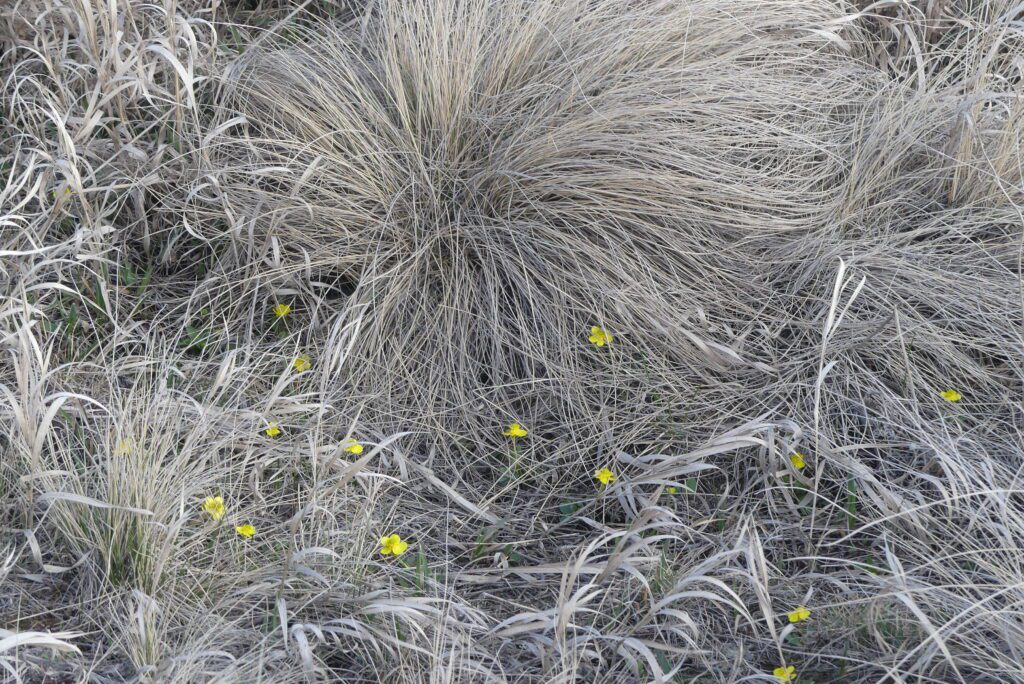
Like a bird incubating eggs, Bunchgrass growing on sunny hilltops protects and warms the ground for many ephemerals like Ranunculus glaberrimus.
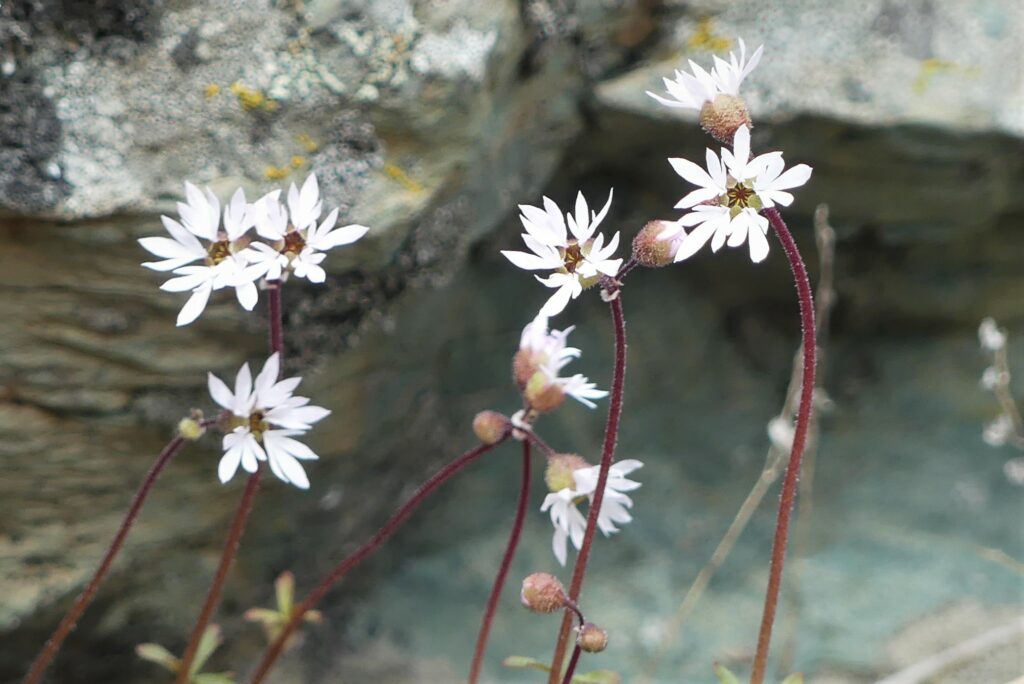
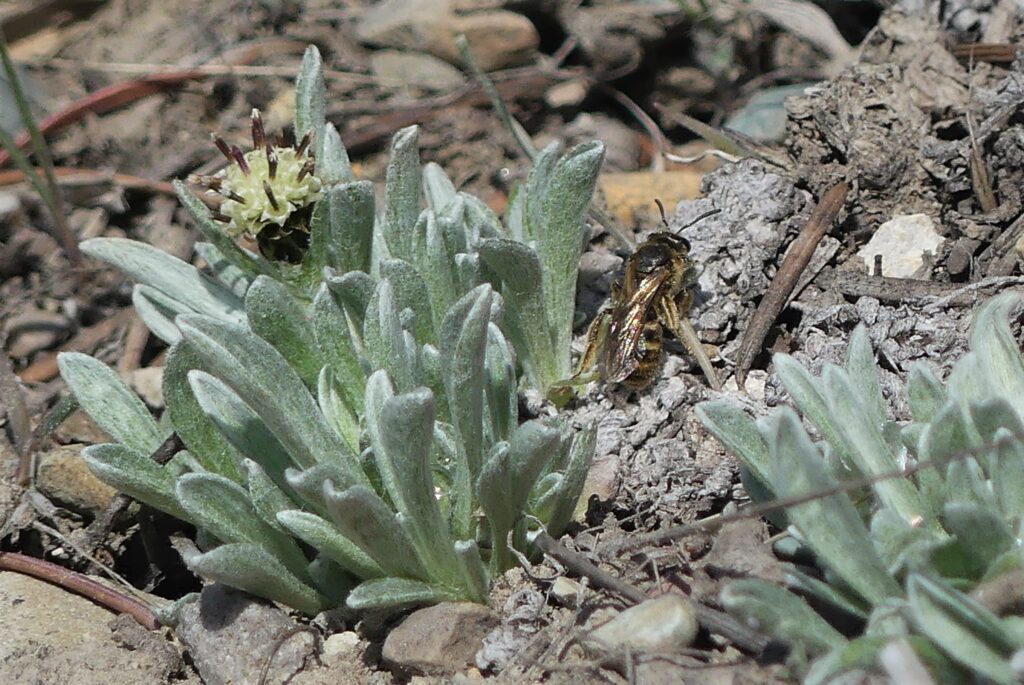
Lithophragma parviflora (Little Woodland Star) and Antennaria dimorpha (Cushion Pussytoes) often appear very early in sheltered areas warmed by west-facing stony outcrops. Tachinid flies are early-appearing pollinators of these flowers.
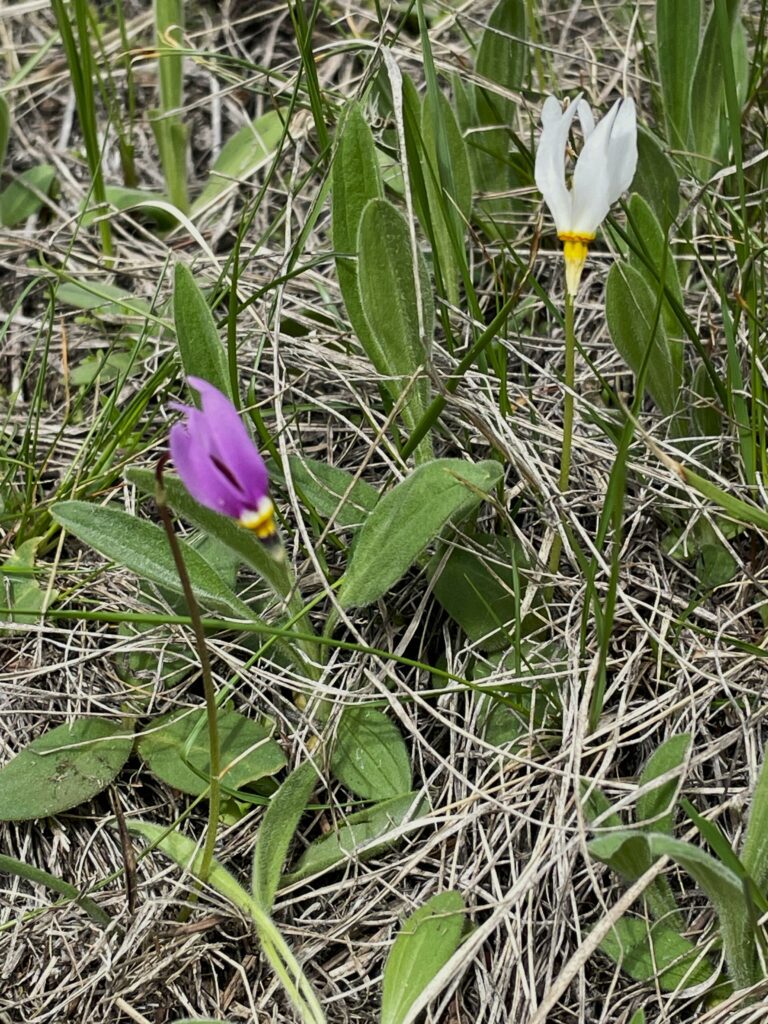
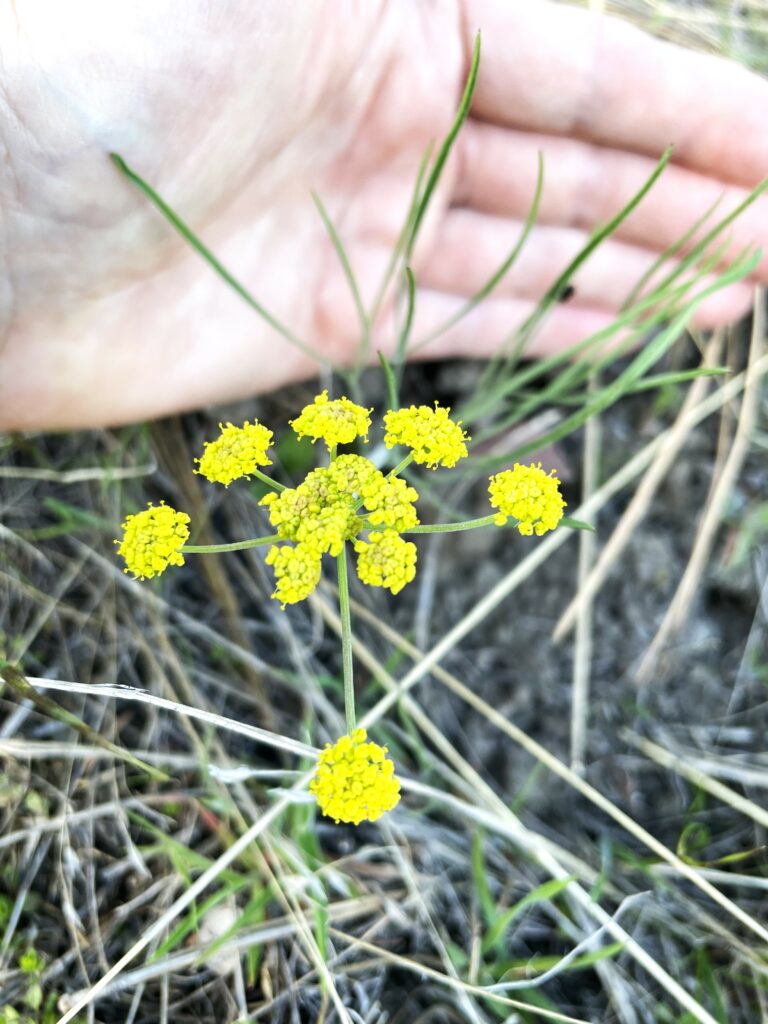
Dodecatheon conjugens (Shooting Star) and Lomatium triternatum (Nine-leaf Desert Parsley grow in an old pasture where grass will be two feet tall in another month.
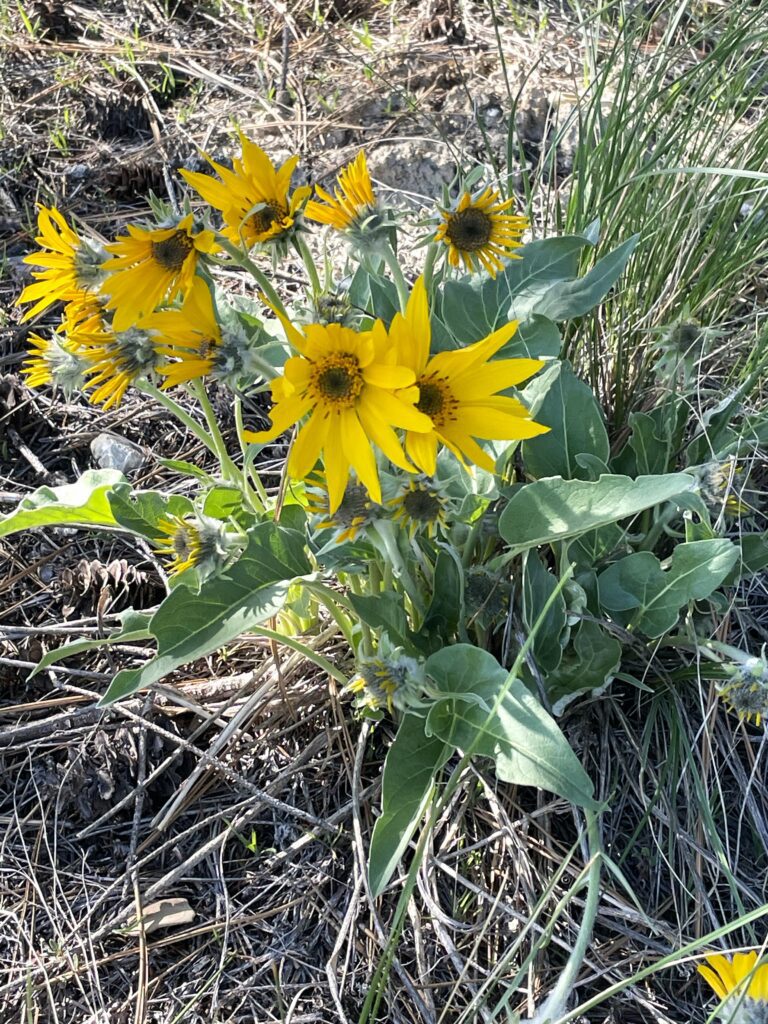
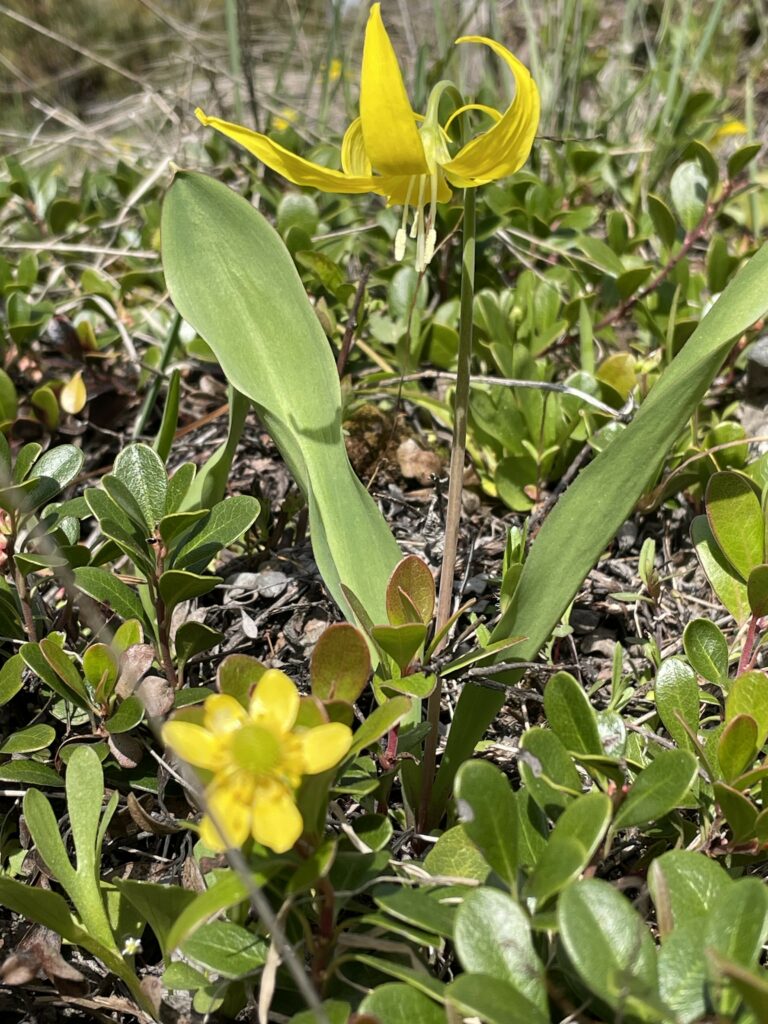
Balsamorhiza sagittata (Arrowleaf Balsamroot) Ranunculus glaberrimus (Early Buttercup) and Erythronium grandiflorum (Glacier Lily) are so precocious that sometimes they get covered with snow while in full flower and recover as if they had welcomed the extra gift of water.
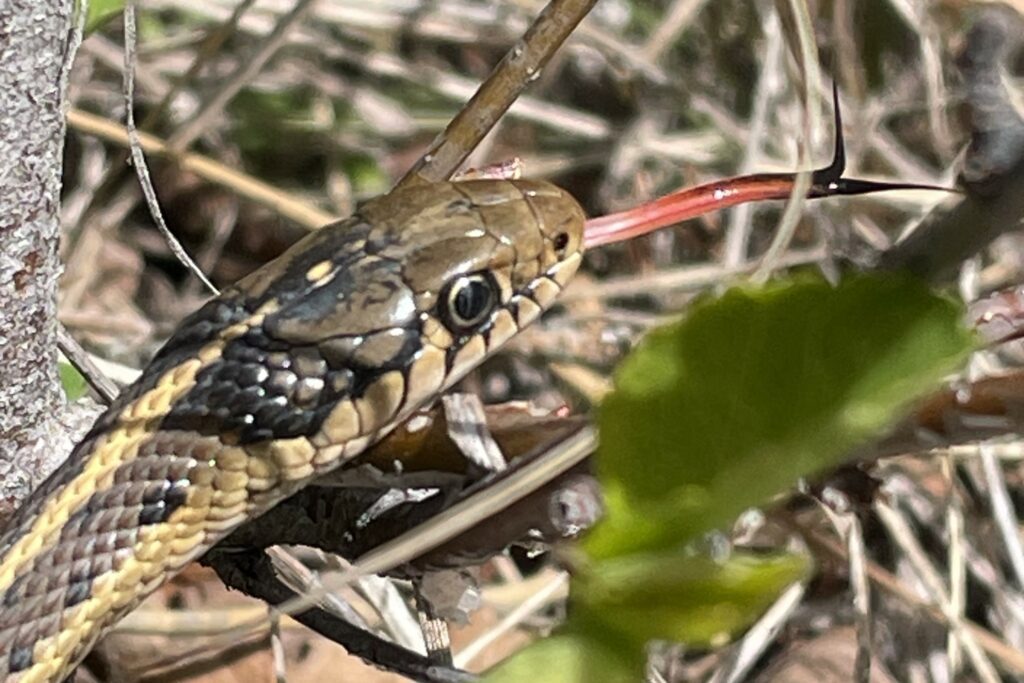
Oops! One of those surprises you can get while looking at the ground in search of early flowers! Recently emerged from hibernation, this garter snake was coiled around the stems of a young Serviceberry shrub in a sunny patch of soon-to-open Early Buttercups!
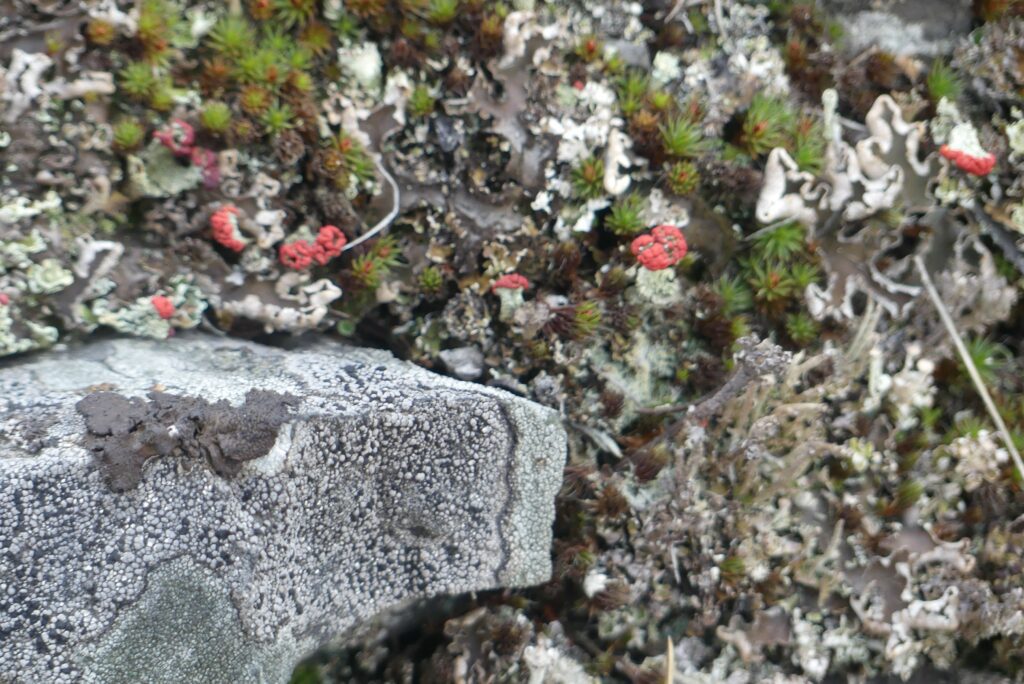
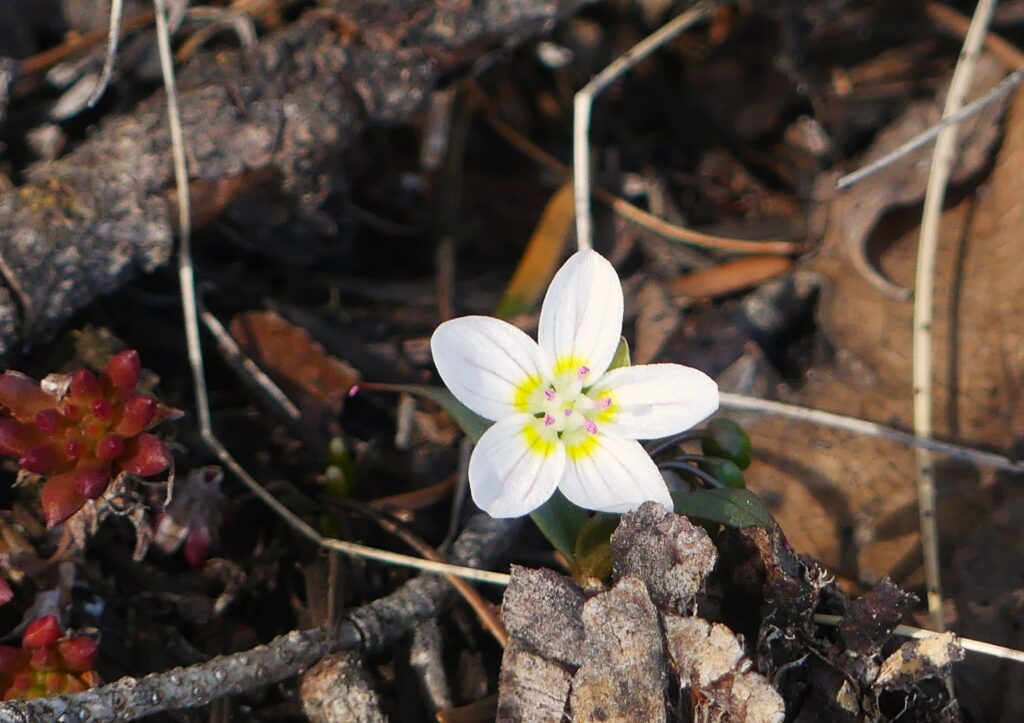
Cladonia pleurota (Red fruit Pixie cup lichen) Claytonia lanceolata (Spring Beauty)
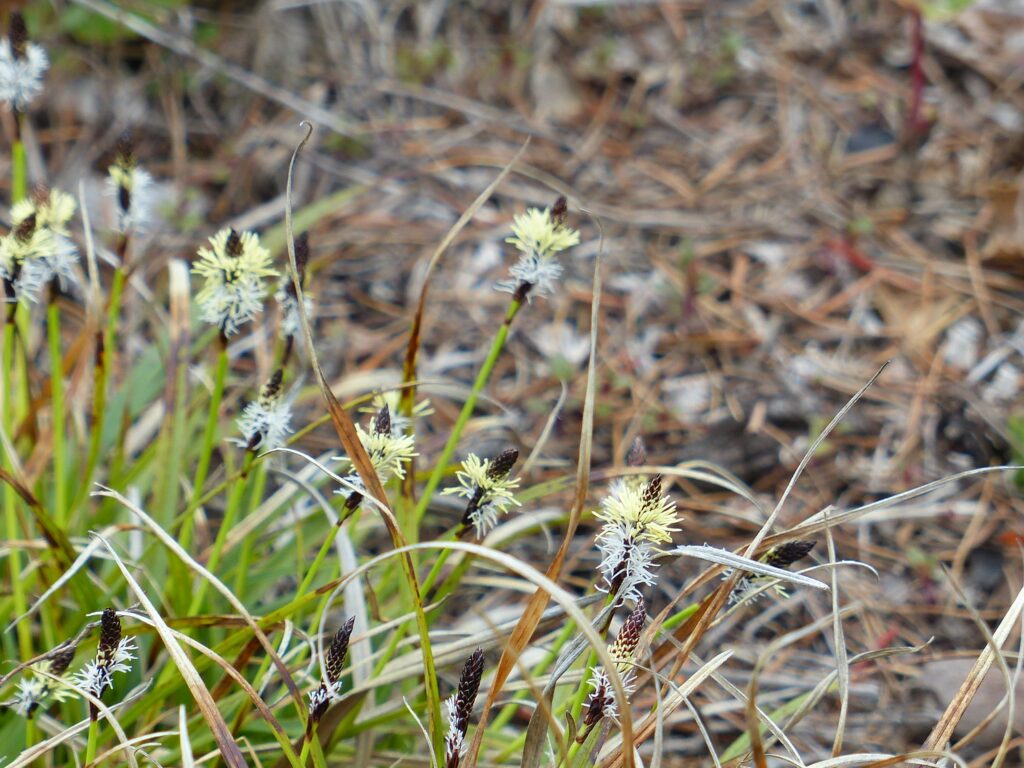
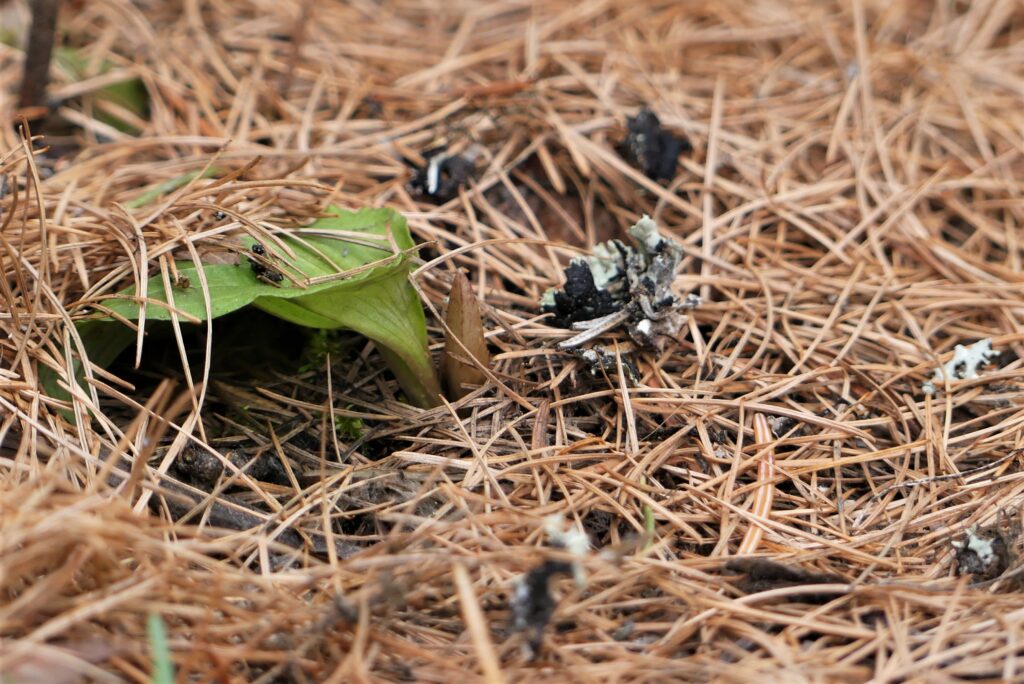
Carex concinnoides (Northwestern Sedge) and a wonderful discovery of the first appearance of a Calypso bulbosa(Fairy slipper orchid) plant, a little plant that will blossom in May!
There’s a bite of cold in that wind and snow on the mountains. Back roads slip from ice to mud in a single step. Winter visitors wing over snow-bent grasses as if to say “Farewell!” and Pintails fill the open water still enclosed by ice. FOY (First-of-the-Year) birds, flowers, songs meet with excitement. In sheltered places, the sun warms the ground and our faces. Let’s check it out!
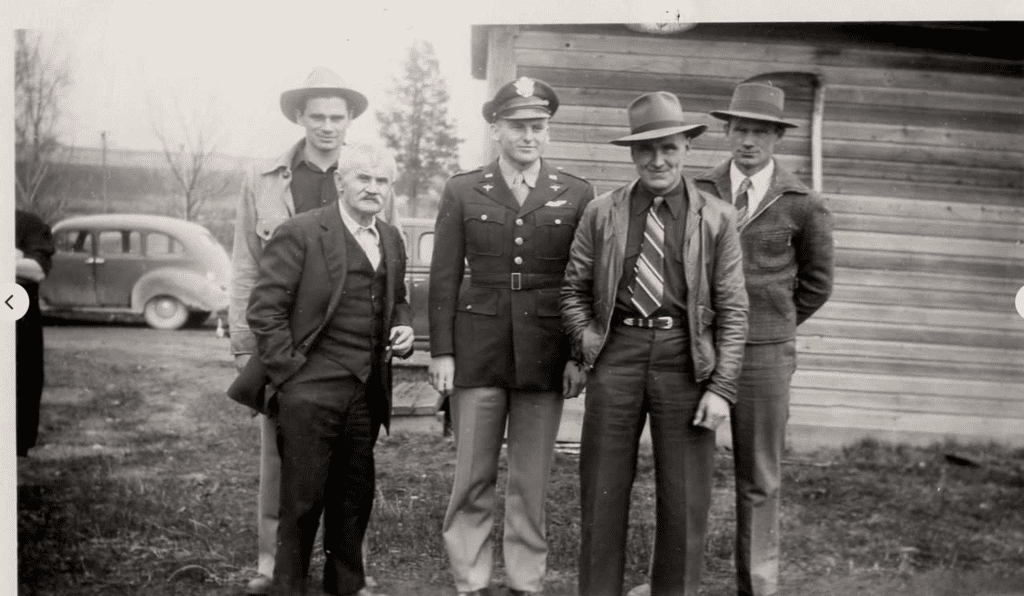
The following is the text of an interview with Mabel Grosswiler (Mrs. Carl Grosswiler) published in the Daily Inter Lake in November, 1949.
In 1875 an immigrant boy from Switzerland landed in New York to join his brother. Their father had accidentally drowned when they were very young, and the widowed mother never saw her boys again after they came to America. Frank Xavier Grosswiler was just 18 years old when he came to America.
A brief photoessay of some beautifully varied ice, snow and frost manifestations from the north shore of Flathead Lake. As you approach the edge of the open water, marvel at the effects of wave action, multiple thawing and refreezing, snow, wind, and temperature changes on the ice. Also look carefully to find some stunning examples of tiny air bubbles trapped in clear ice as they try to make their way to the surface. Something new in every step.
If you go, wear spikes and bring poles. Also, remember that this area is closed on March 1 to protect critical breeding habitat for a wide variety of birds.
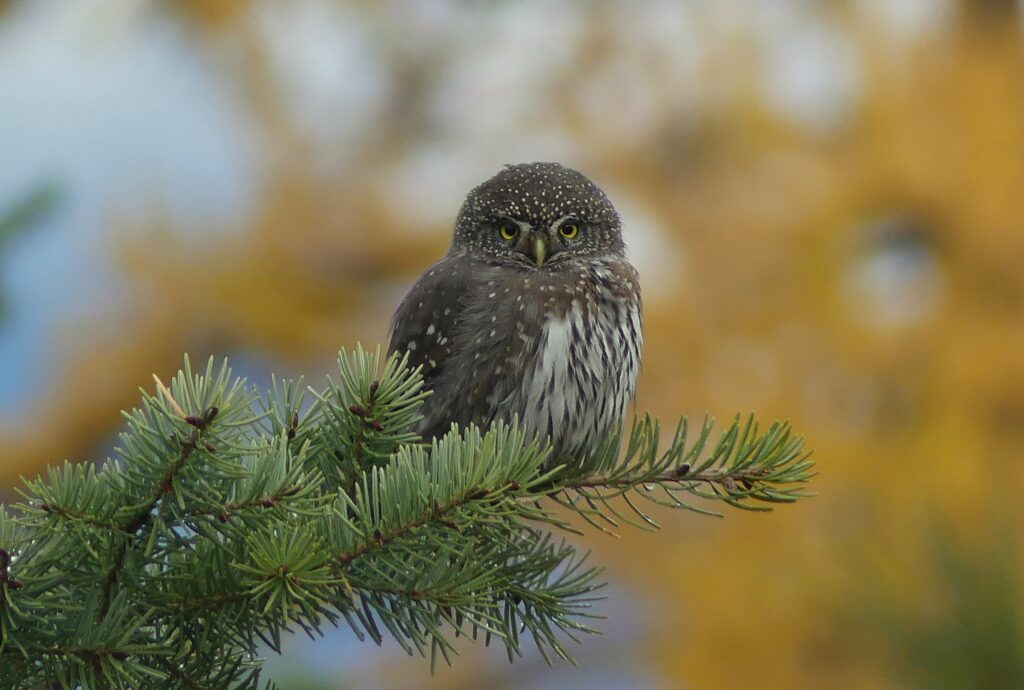
The Northern Pygmy-owl takes the prize for being the smallest owl in Montana. Tiny, but fierce, this little bird that stands 6-7 inches in height and weighs 2 to 3 ounces predates small to medium-sized birds (chickadee to blue jay sizes), small rodents and squirrels, insects, and has been known to successfully kill a domestic chicken with its sharp talons, strong down-curved beak, and amazing determination.
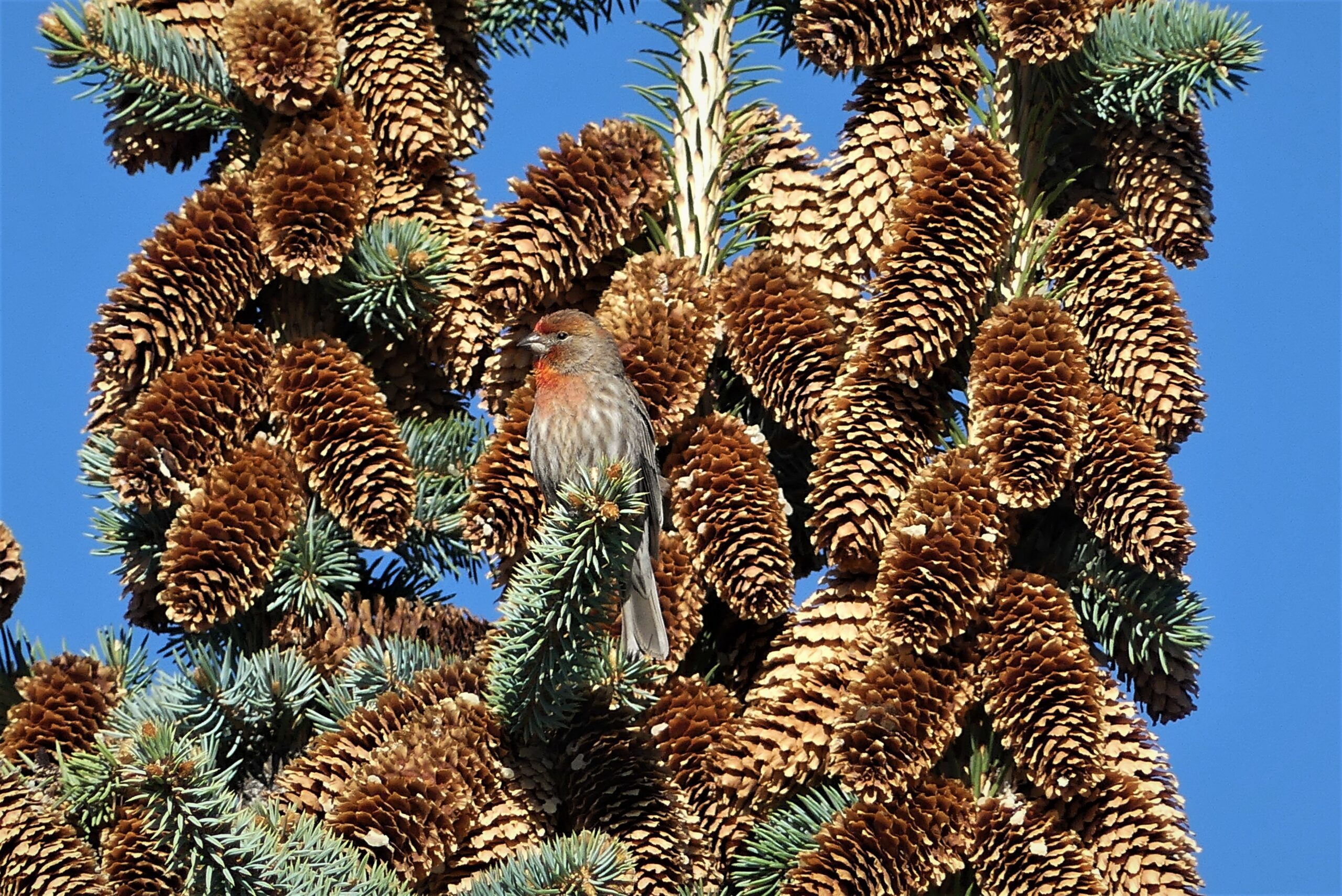
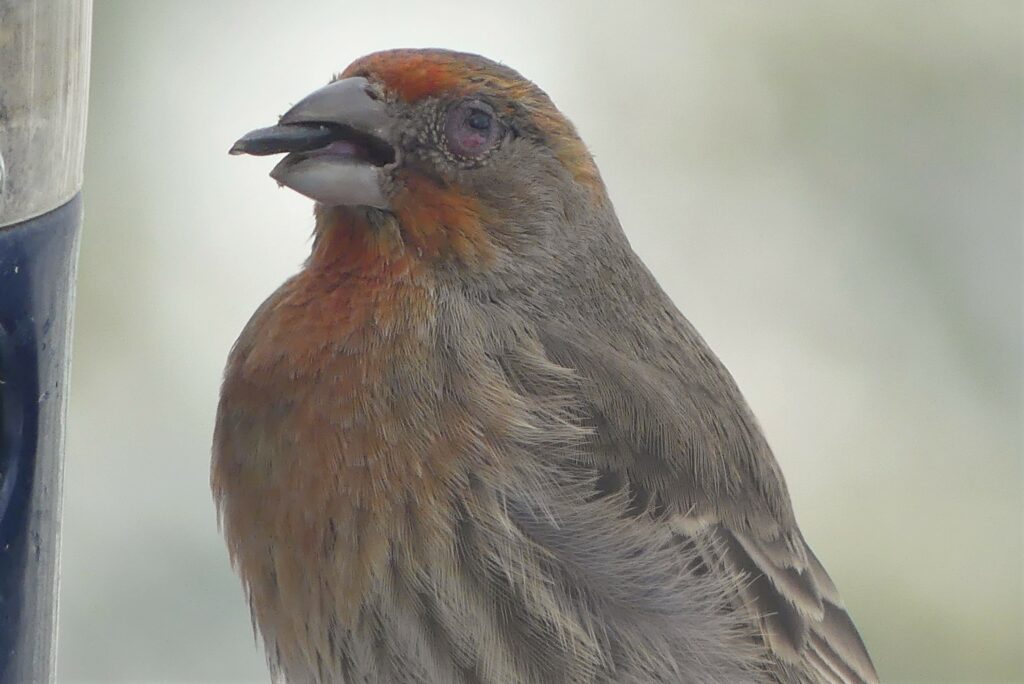
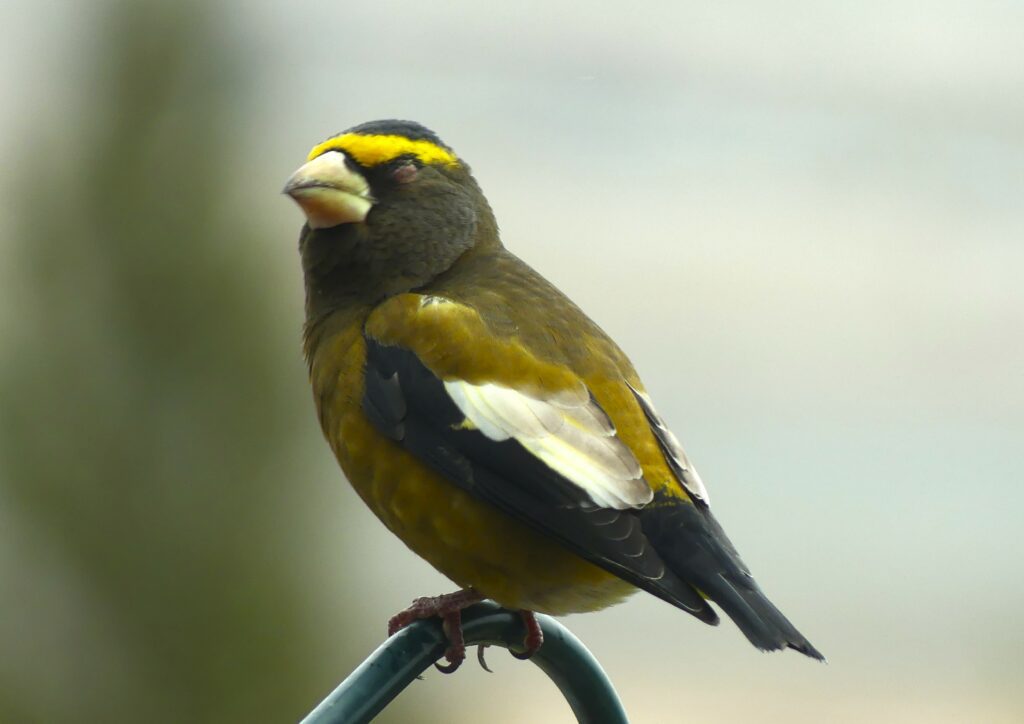
How does one describe House Finches? Striped bodies, head and chest of various shades varying from yellow to orange to pink to red. Flocking, chattering, perching at the top of of trees, stout-billed seed-eaters. Perched among the cones of a Blue Spruce in bright sun one morning, this perky House Finch looked like a Christmas decoration! Members of the Fringillidae family, there are 17 species, including many of our familiar visitors: crossbills, Evening and Pine Grosbeaks, redpolls, goldfinches, house finches, Cassin’s finches, and siskins. Many of these species are reported in decline and we can’t take them for granted.
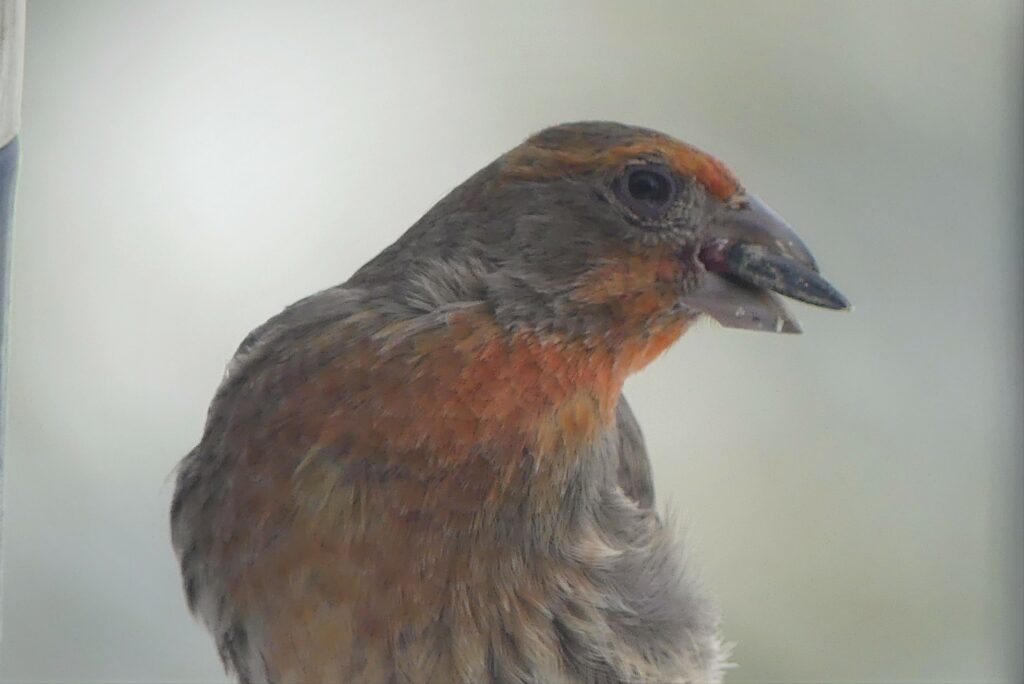
House Finch at the feeder with normal-appearing right eye
Same bird as above with head rotated to reveal abnormal left eye
Although I can’t diagnose the cause of the unusual-appearing eye, knowing that there are diseases among Finches that can be transmissible and deadly, this was message enough to send me out to take down the feeders, clean them and the area and not hang them out for a week.
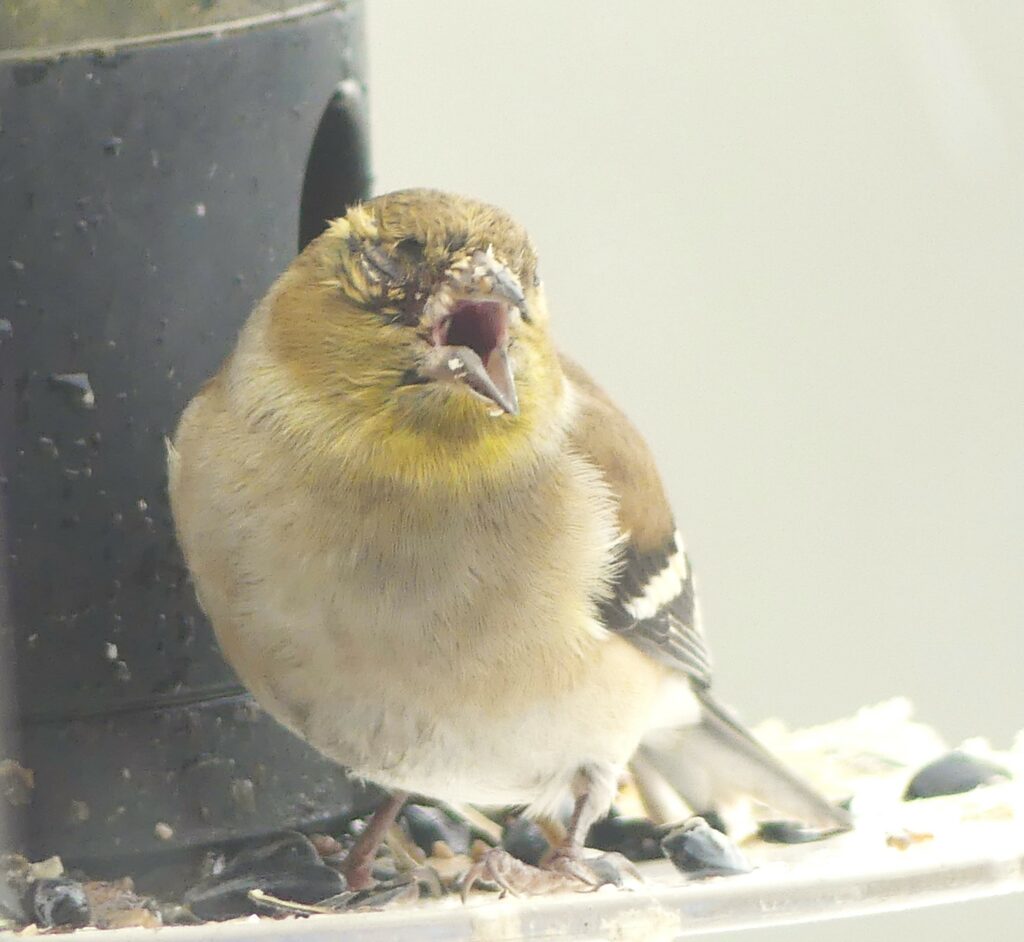
The following are images of birds that I have observed with eye problems. These appeared at my feeder in four different years and were the only ones observed in those years.
Evening Grosbeak with unusual-looking eyeAmerican Goldfinch with swollen eye with dischargeFemale House Finch with eye problem
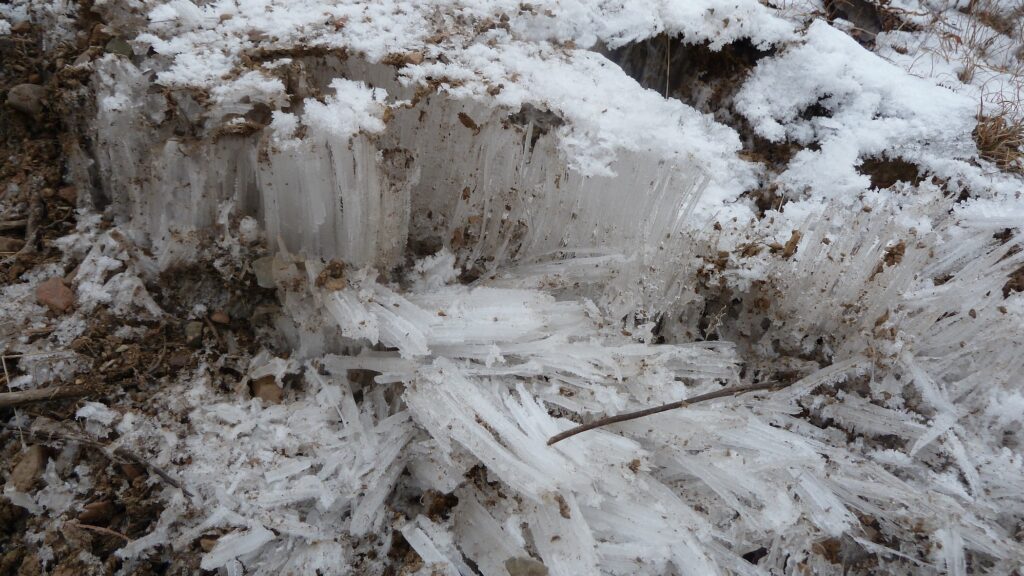
Over the past few years, we’ve presented several articles here on our web site dealing with different forms of ice–or more properly, frozen water or water vapor. Here are some: