Ashley Creek Ditch Revisited

by Pat Jaquith
pat@westvalleynaturalists.org
Jeanine and Kevin Butler
nammy@montanasky.com
Skip Via
skip@westvalleynaturalists.org

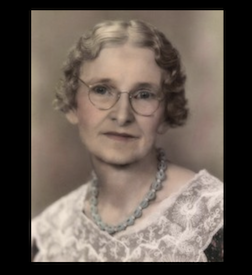
Editor’s Note: This is a followup story to The Ashley Creek Ditch, originally published here in February 2023. That article tells the story of the establishment of the irrigation ditch and its importance to valley farmers and families in the early 1900s.

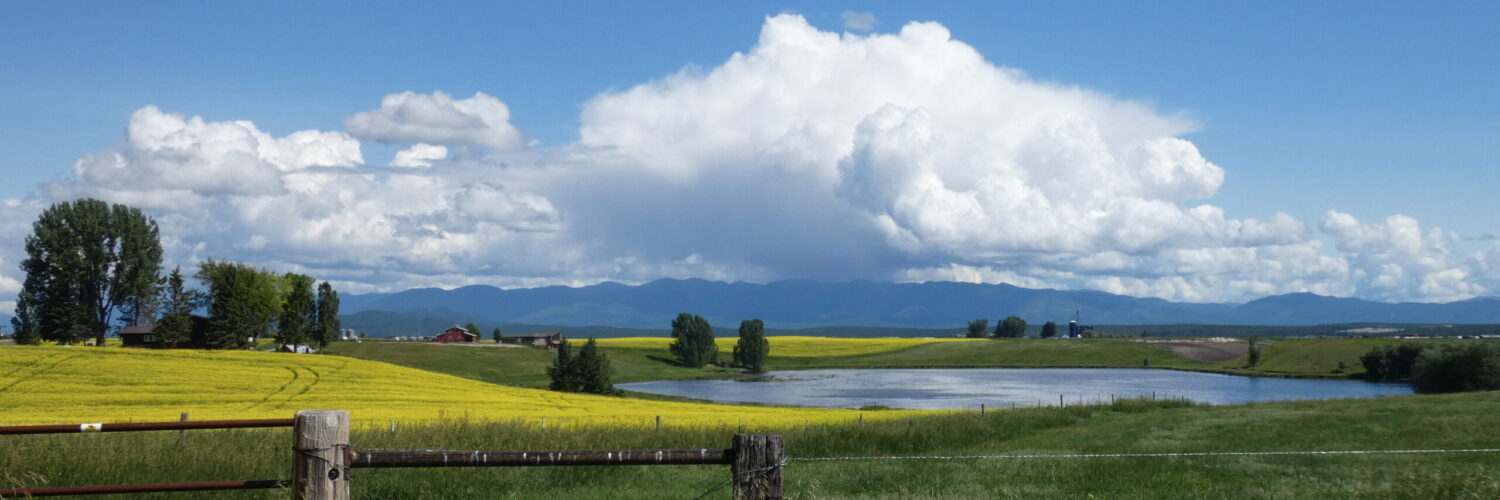
The original Ashley Creek Ditch is no longer in existence as a contiguous waterway. Most of the ditch has been plowed under, paved, built on, or otherwise reclaimed from its original purpose. But there are a couple of remnants of the waterway still around. Pat Jaquith (with permission of the current property owners) was able to locate some sections and take a few photos. We are not disclosing the exact location of the ditch as parts of it are on private property.

Continue Reading →
Flathead Valley Hydrology Presentation

by Skip Via
skip@westvalleynaturalists.org

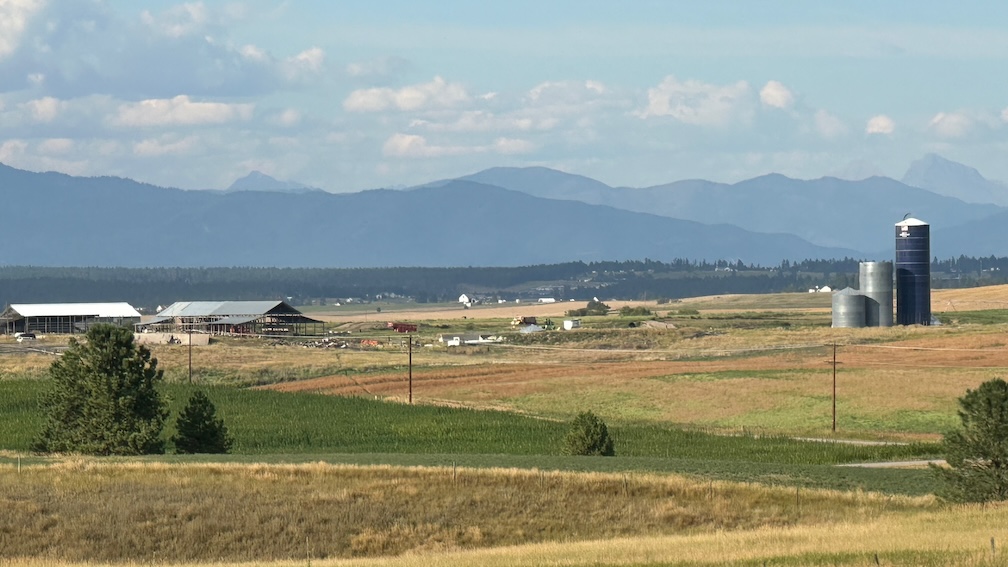
This is a recreation of a presentation given to the Flathead Audubon Society in April 2024 during the Warbler Weekend at Tally Lake. I had several goals for the presentation. One was to lay out in a very basic way the geological history of our valley–how we got here and why things are the way they are. Another was to look at some basic hydrology issues in our valley–streams, lakes, and other resources–in the context of the constant geological and developmental changes that we are experiencing, both natural and human caused. Finally, I wanted to put all of these issues into a context that might help us think about what the future holds for us in terms of our access to water, wildlife, and recreation in the valley.

This presentation intentionally raises more questions than it provides answers. I would welcome comments, suggestions, criticisms, and other points of discussion.

Continue Reading →

Growing Hemp in the Valley

by Skip Via
skip@westvalleynaturalists.org

Hemp field on the corner of Coclet and West Valley Drive.

If you have driven down West Valley Drive this summer, you have probably noticed a new agricultural crop growing in a couple of the fields near Coclet. It’s hemp, and I wanted to know more about it.

Continue Reading →

White Shouldered Bumblebee

by Skip Via
skip@westvalleynaturalists.org

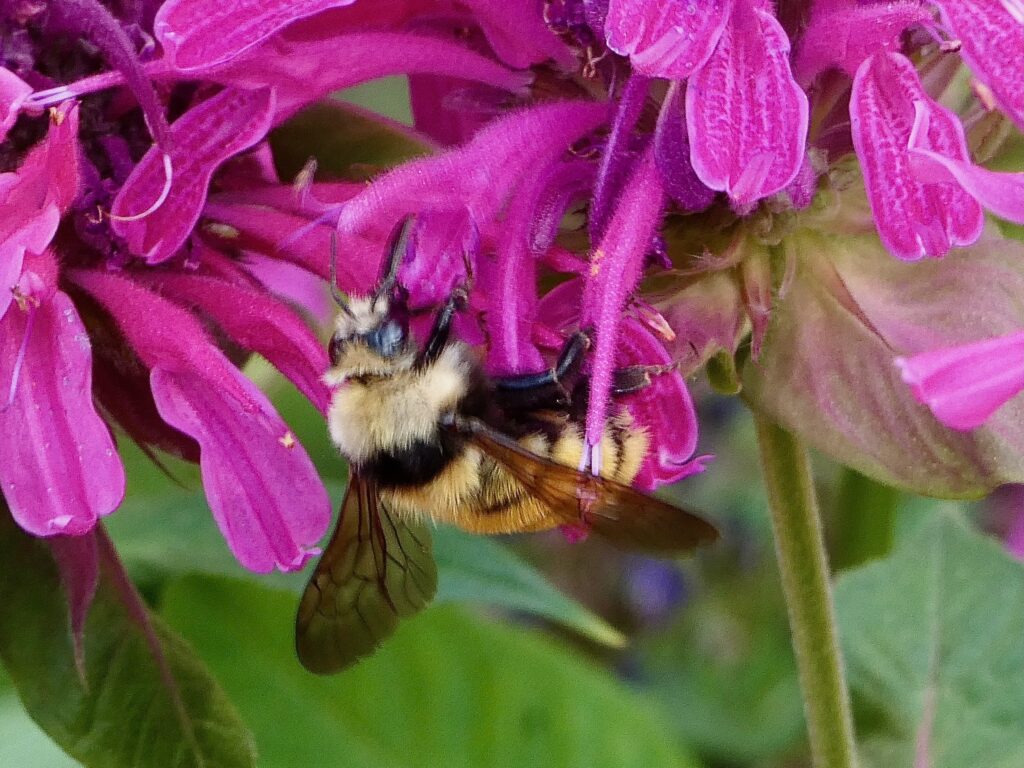
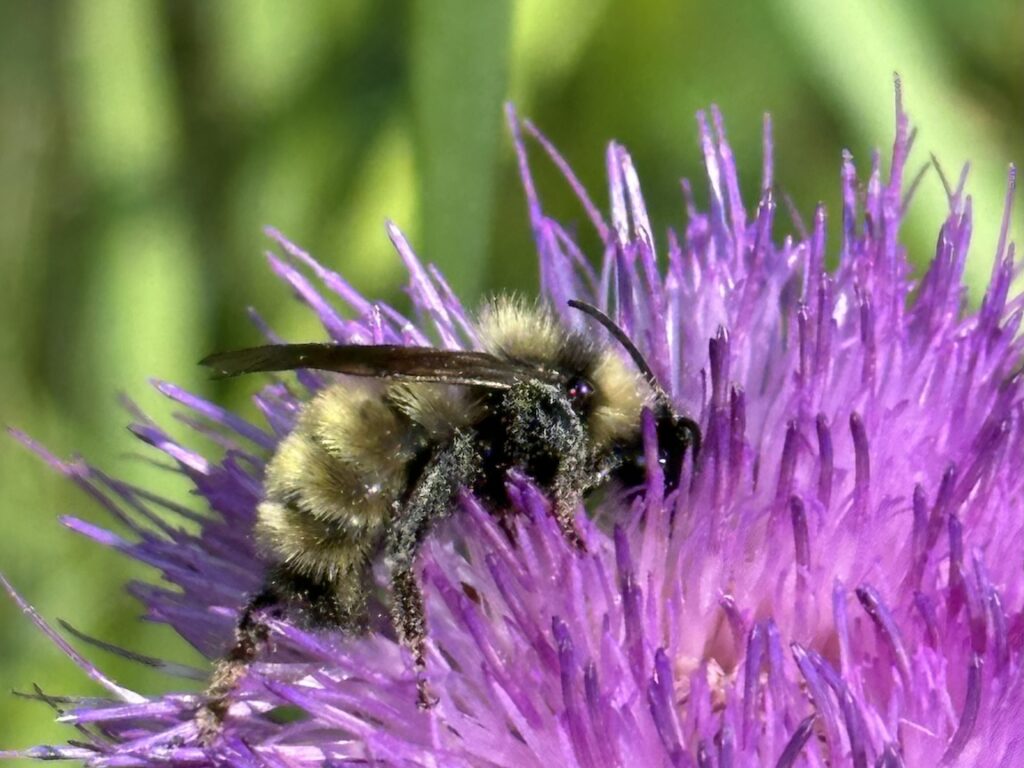
As an aspiring bee person, I try to keep close tabs on the different species of bees that I come across in the valley and environs. When a new-to-me species comes along, I try to find out as much about it as I can. In that regard, for the past week or so I’ve observed a large, distinctively marked species hanging around various flowers in my yard in fairly strong numbers–several can usually be found feeding on the bee balm near our deck, as seen in these photos.

Continue Reading →

Hydrology Snapshot, July 2024

by Skip Via
skip@westvalleynaturalists.org

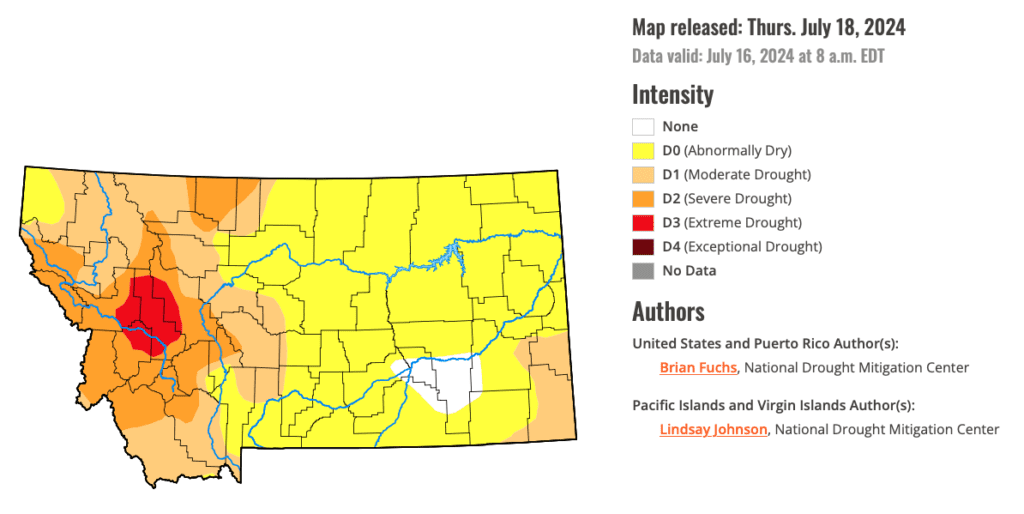
A year ago, when most of the valley was in the throes of an extreme drought, I posted an article titled Hydrology Snapshot, July 2023 in which I started the process of keeping track of some issues related to water usage, precipitation, and water management in the Flathead Valley.

It’s now mid-July 2024. We’re still experiencing drought conditions, but the severity has been downgraded to moderate/severe. Droughts are rated on a 5 point scale: D0 (Abnormally dry), D1 (Moderate), D2 (Severe), D3 (Extreme), and D4 (Exceptional). 99.62% of the Flathead is considered to be in Moderate (D1) conditions as of this writing.

Source: U.S. Drought Monitor, July 18, 2024
Continue Reading →

The Mystery of the Neighborly Bees

by Skip Via
skip@westvalleynaturalists.org

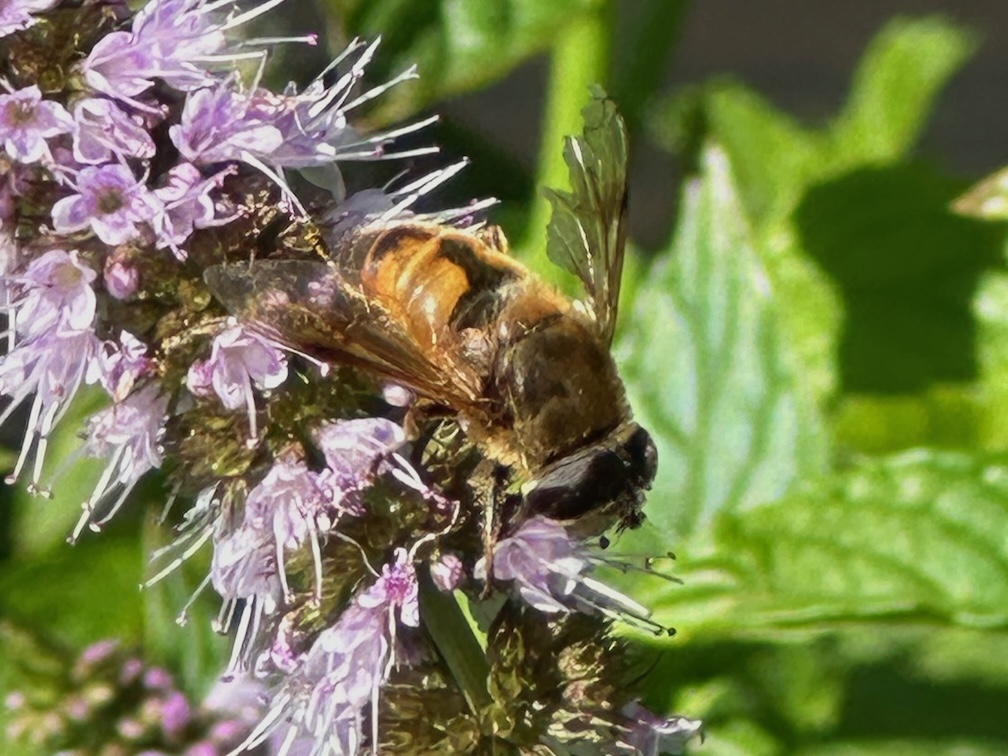
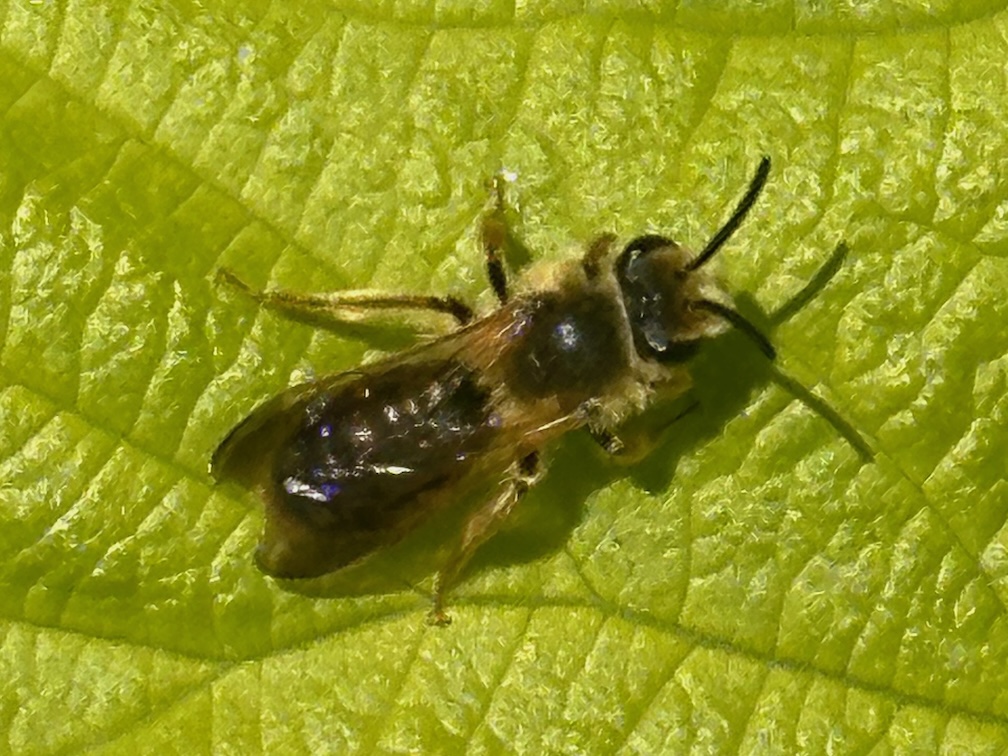
On our back deck just outside our kitchen window, we have a hops plant growing (profusely!) against and over a retaining wall. In the past few days, I’ve noticed that in the late morning hours (9:00 – 11:00 am) the plants leaves are swarmed by dozens of small bees. Curiosity peaked, I decided to see what was going on.

Continue Reading →

Elk Feeding Behavior

by Skip Via
skip@westvalleynaturalists.org

In the video below, you’ll see something I have never seen (or heard of) before–an elk feeding underwater, in a moving stream, no less. In my 35 years in Alaska, I observed many moose feeding this way, but almost always in ponds or lakes, never in a moving stream.

This video was taken in mid-June at the CSKT Bison Range, so I hesitated to includes it here as it’s not exactly local to our area. But I’m quite curious whether or not anyone else has observed this feeding behavior in elk. If you have, please leave a comment. And if you have any photos…

YouTube player

Nevada Bumble Bees

by Skip Via
skip@westvalleynaturalists.org

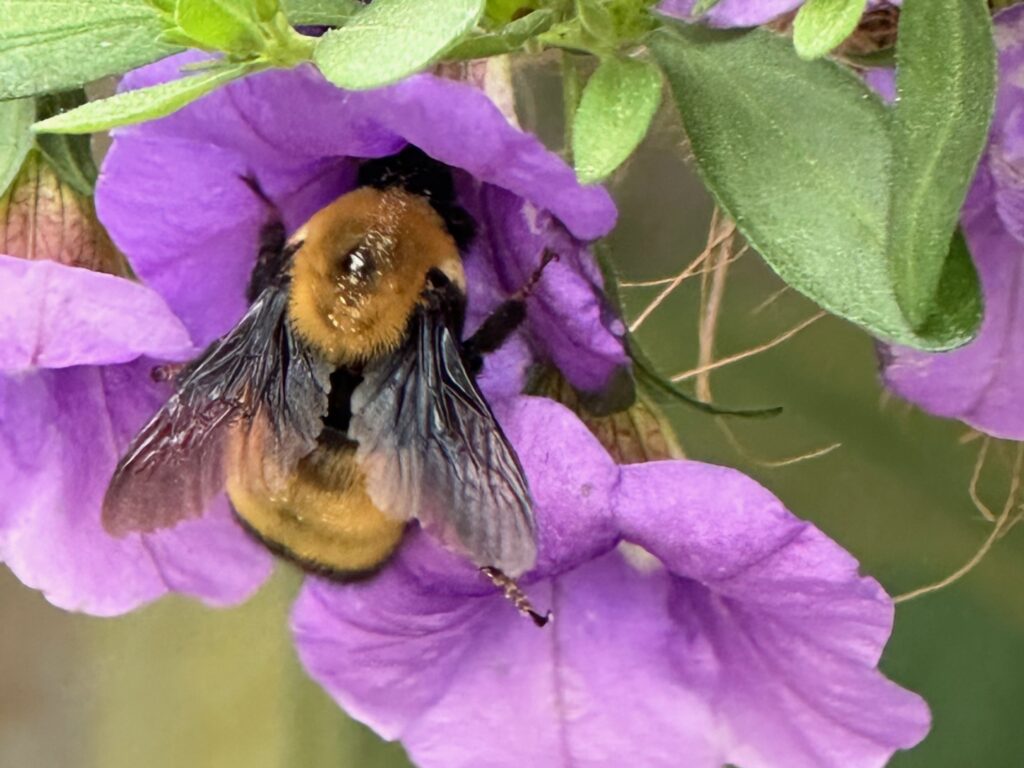
I love bees, so it’s always a treat to encounter a native species that is new to me. That was the case a couple of days ago with the Nevada Bumble Bee, when I first encountered several feeding on some creamy pea vine (vetch family) in Happy Valley and the next day on my back deck with her head deeply embedded in some petunias in some hanging flower baskets. They’re hard to miss–they’re very large (queens are nearly an inch long), have lots of dense yellow/orange fur on their thorax and abdomen, and their buzz is considerably louder than any other species I have encountered. Males and females are very similar except that the females and queens have black heads, whereas the males have yellow heads. That’s why I think the bee pictured below is a female, possibly a queen given her size.

Nevada Bumble Bee female, possibly queen.
Continue Reading →

Painted Ladies

by Skip Via
skip@westvalleynaturalists.org

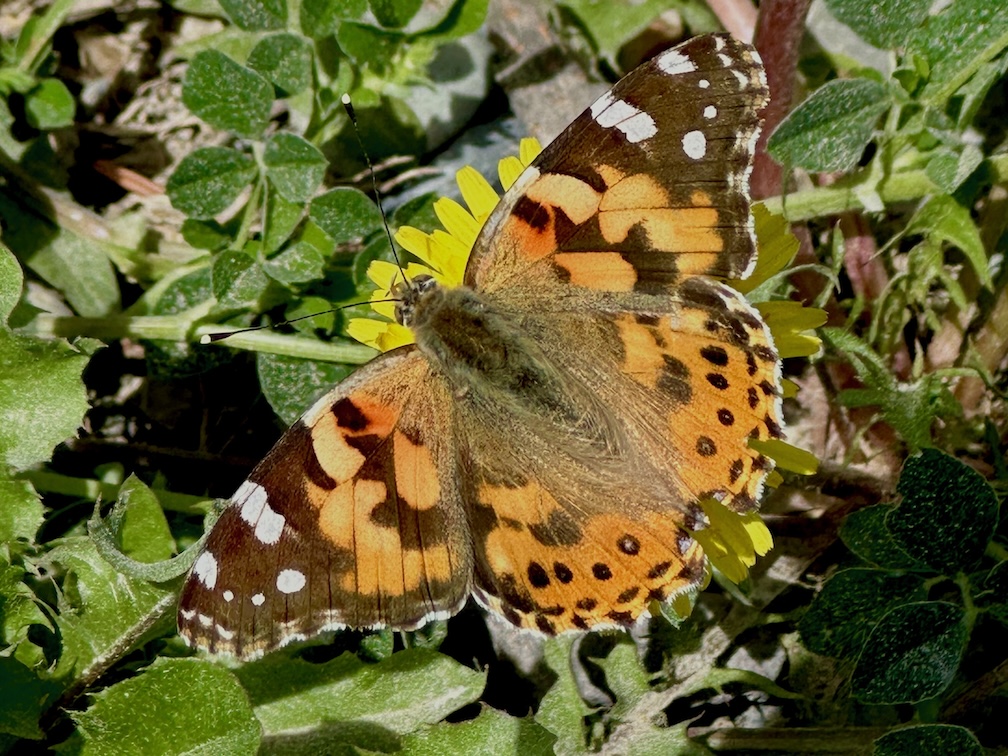
Butterflies are often difficult to photograph, so I was pleased to finally get a good opportunity to photograph a Painted Lady butterfly. Looking back over my collection of butterfly photos, I realized that this was the first I had ever photographed, and likely one of the first I have ever positively identified, perhaps due to their general resemblance to several other local species such as crescents, tortoiseshells, and checkerspots when they are not standing still, which is most of the time.

Painted Lady Butterfly

That prompted a little research into the species, which yielded some interesting information.

Continue Reading →

What Are Pollinators?

English Inquiry Project by Sawyer S., West Valley School

What is a pollinator and what positive effects do they have on us humans?

What is a pollinator? This is something one may ask themself but not truly know. A pollinator is anything that carries pollen from the stamen to the stigma. This transfer must happen for the plant to produce. From squash to wheat, this is necessary for production. When someone says pollinator, one generally thinks of bees but this is not always the case. Pollinators include wind, water, bees, wasps, moths, butterflies, birds, and even small mammals including bats.

Continue Reading →

Stories from Spring Creek Cemetery

by Karen Leigh (watercolors)
karenleigh174@gmail.com
and Linda De Kort (story)
fldekort@gmail.com

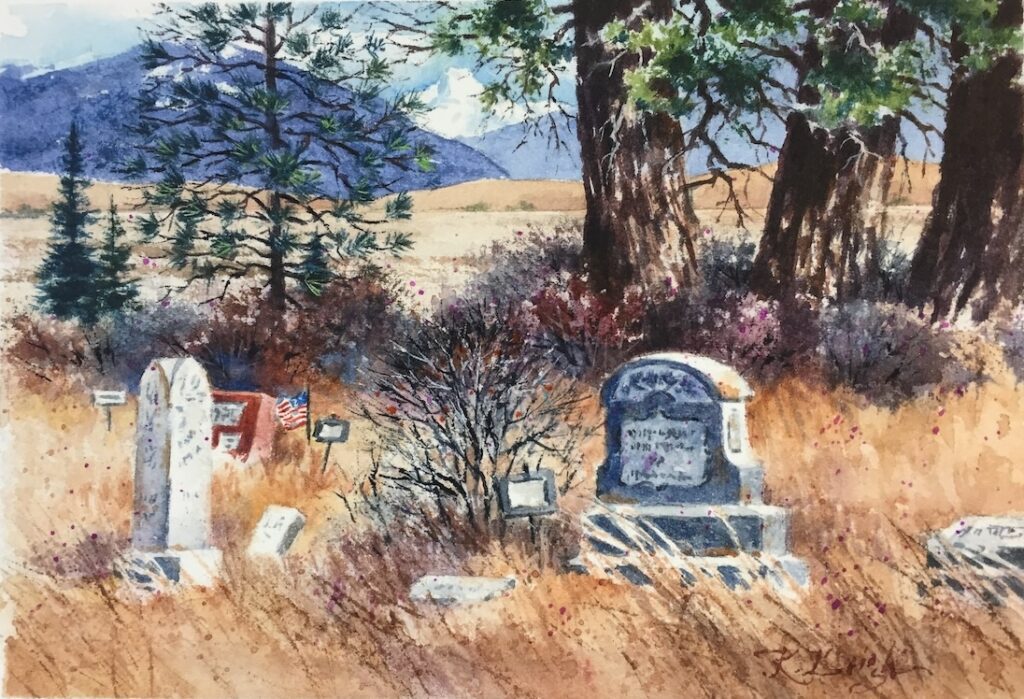
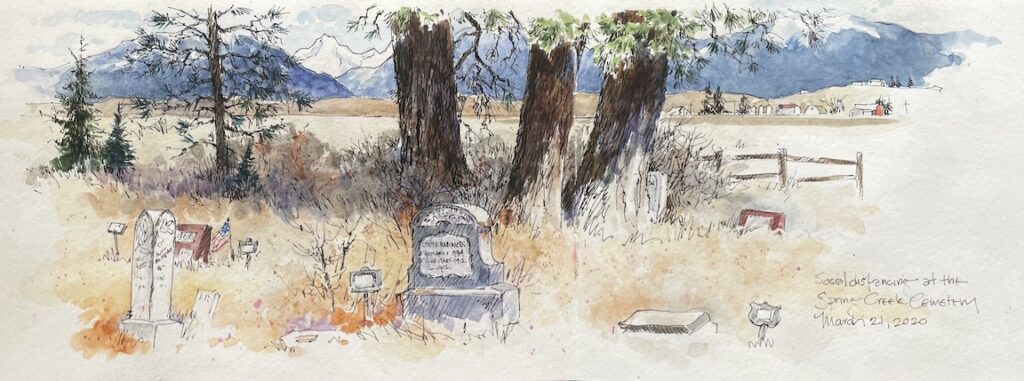
Spring Creek Cemetery is a beacon for artists. Its intriguing history and serene surroundings invite contemplation and artistic expression. During the COVID pandemic, local artist Karen Leigh found solace in sketching and painting at the cemetery. She has generously shared her sketches with West Valley Naturalists and they are presented below. Karen says there are stories to be told by each one of the markers and inscriptions. It’s inspiring to remember those who rest here and reflect on their lives of yore.

West Valley Pioneer: Myron Miles Nicholson

by Jeanine Buettner
nammy@montanasky.com

Myron Nicholson was born in Port Byron, Illinois on July 29, 1873. Mr. Nicholson spent his early years farming in Illinois. On November 25, 1900 he married Miss Emma Osborn. That same year he moved to Chicago and engaged in the manufacture of brooms.  He then entered the Moody Bible Institute and became a Baptist minister. He served the church at Hubbard, Minnesota in 1903 and at Sherburn, Minnesota from 1904 until 1909 when he moved to Belt, Montana. A year later he moved to the Flathead and bought a farm five miles northwest of Kalispell. He retired from farming in 1937 and moved to Kalispell. He was a deacon of the local Baptist church and substituted as minister on many occasions.  

Continue Reading →

West Valley Pioneer: James O’Boyle

by Jeanine Buettner
nammy@montanasky.com

James O’Boyle was born to Charles and Margaret O’Boyle on March 15, 1848. His father was employed by the Earl of Antrim, Hugh Seymour McDonnell (1812-1844) at the Earl’s estate in Deerpark Glenarm, County Antrim, Ireland. In 1868, at the age of 21, James set sail for New York and finding his way to Missouri for a few years. A forty-two day trip up the Missouri River brought him to Fort Benton, Montana Territory.

Continue Reading →