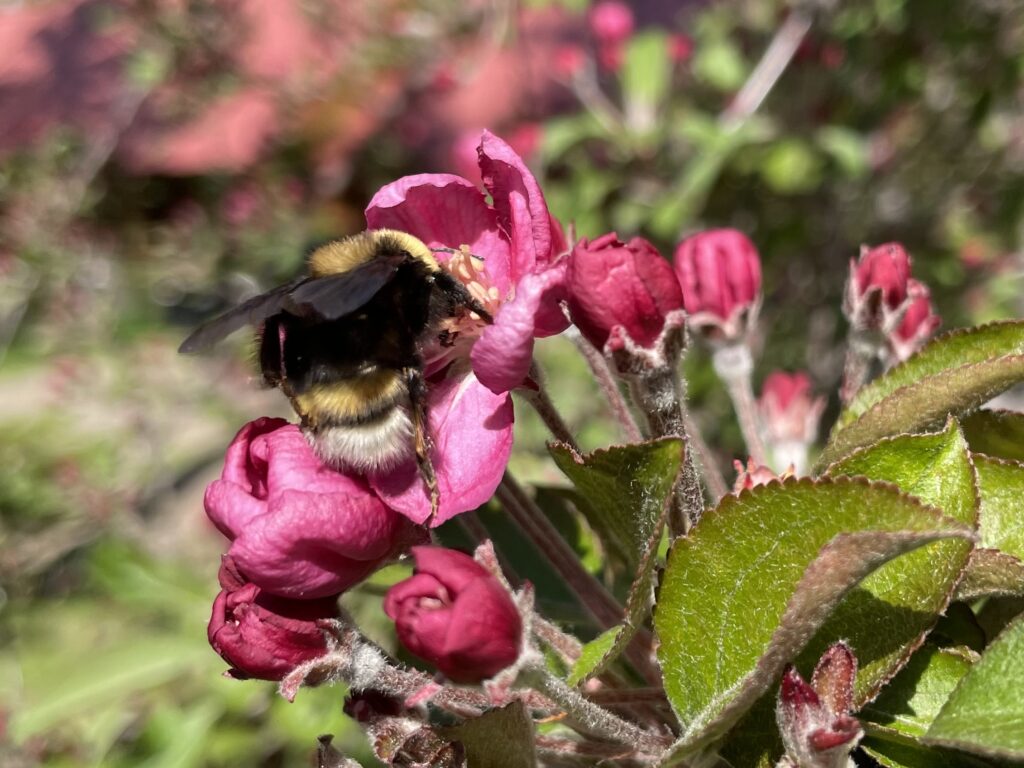
A Western Bumblebee

By Skip Via
skip@westvalleynaturalists.org

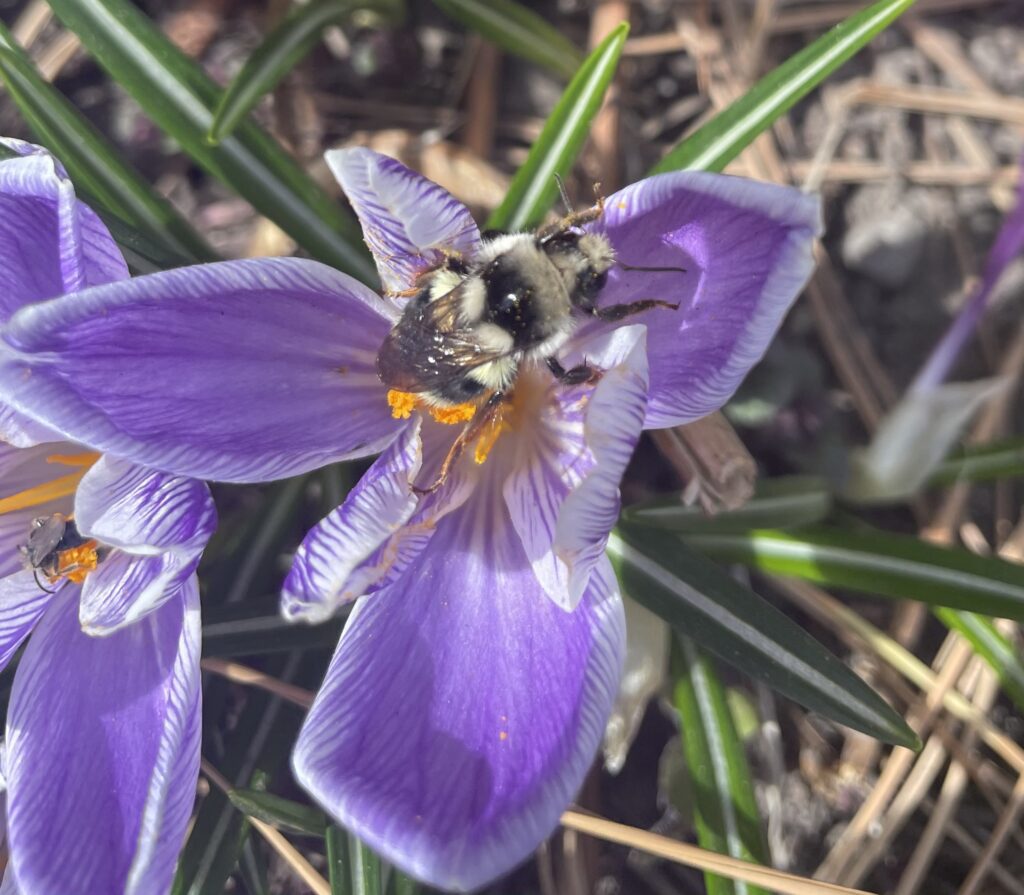
Ever since reading Tris Hoffman’s excellent post on the Western bumblebee (read it here: A Very Special Bee), I’ve been on the lookout for a specimen that I could photograph. Today, I found one jamming it’s head into the emerging blossoms of a crabapple tree in our yard. Here are the photos—read Tris’s post for information about it’s scarcity (the West Valley area is still a good place to see them) and ways to increase their numbers.
Continue Reading →

Mid-Spring

by Pat Jaquith
pat@westvalleynaturalists.org

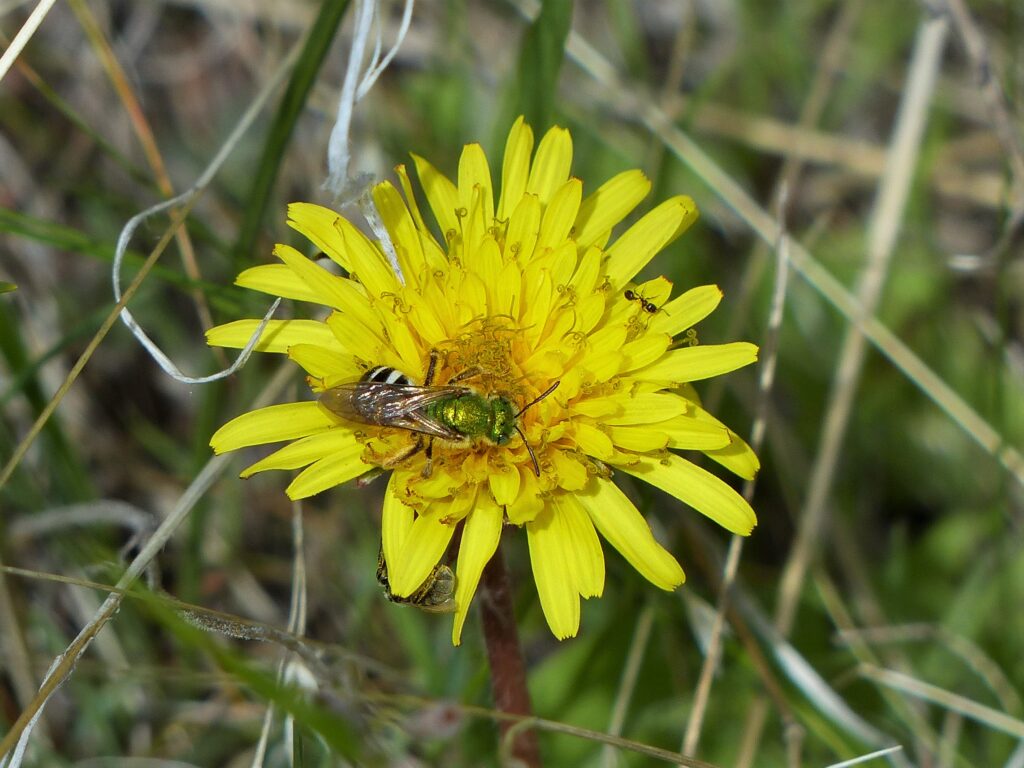
Dandelion with Sweat Bee, Ant, and another bee 5.07.17

Busy as a bee! The pace of changes becomes fairly frantic in May. Lawns are “greening up”, perennial plants are showing color giving insects something to come out for; birds are arriving now that there are insects they can feed to growing hatchlings; the soil has warmed up and dried out enough to be worked so farmers are out there early and late… read on for more pictures and notes about this cascade of events!

Continue Reading →

A Very Special Bumblebee

by Tris Hoffman, Flathead National Forest Weed Coordinator
silversagebrush@hotmail.com

The Western Bumblebee is a species that was once common and widespread throughout the western U.S. and Canada.  For a variety of reasons, both known and unknown, populations of this bee are in serious decline.  It has mostly vanished west of the Cascades.  Thankfully, West Valley is a place (perhaps a refuge?) where the bees may still be found.  

Continue Reading →

Early Spring

by Pat Jaquith
pat@westvalleynaturalists.org

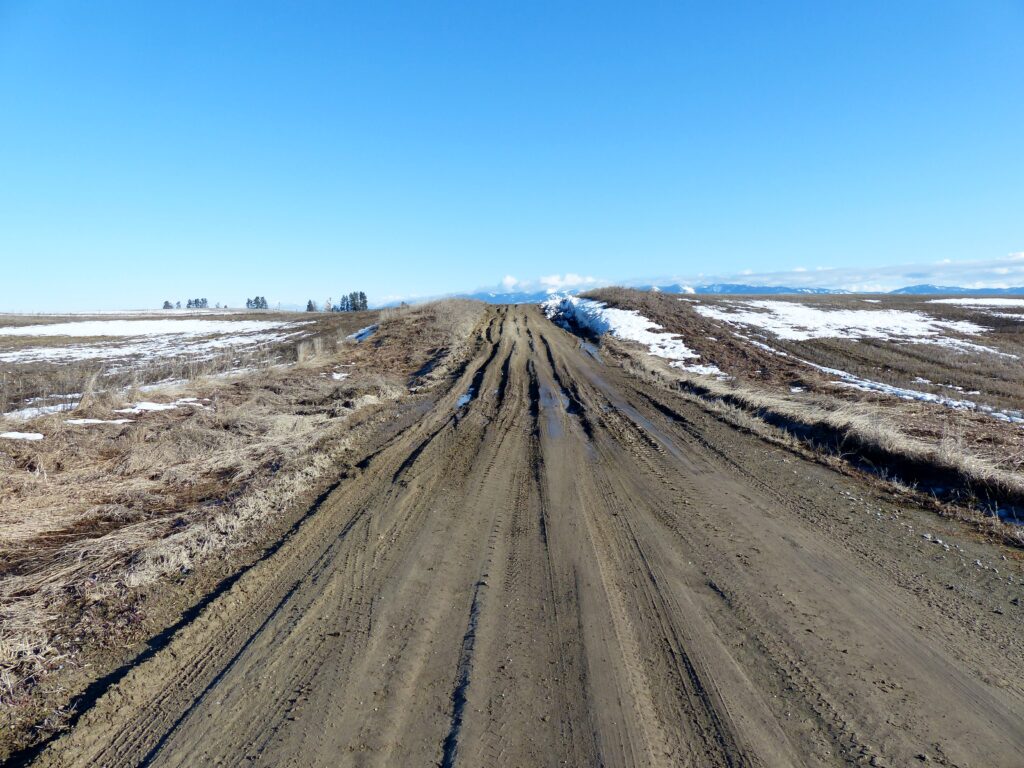
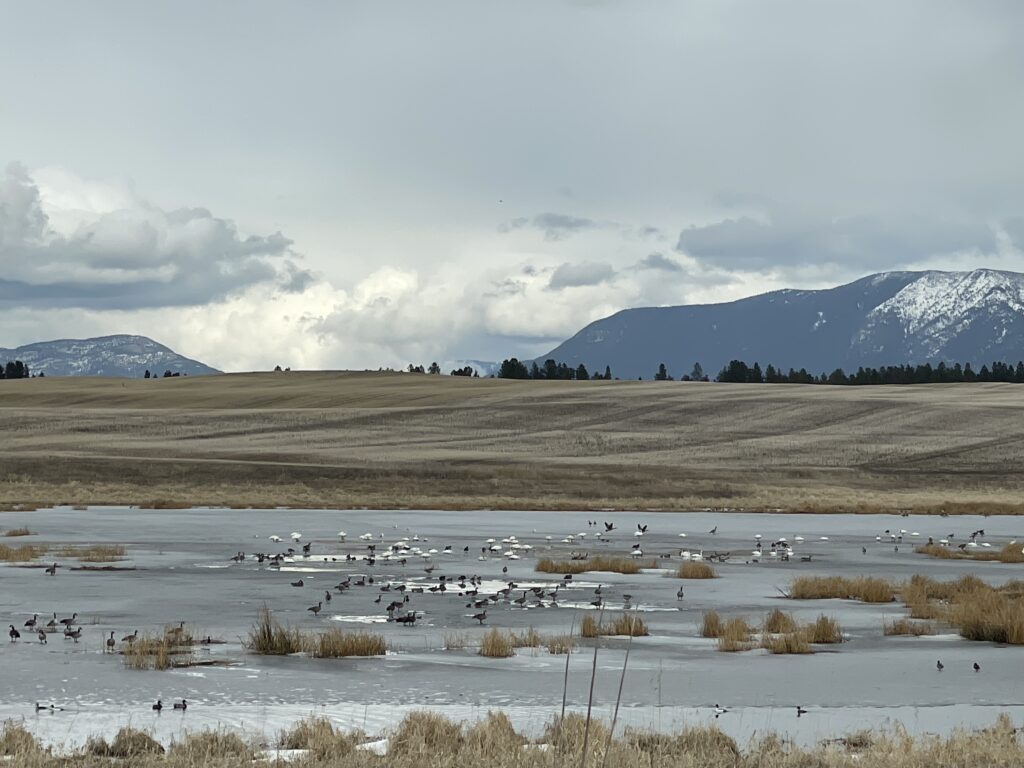
Winter is melting into summer. Every day is a surprise: will the snow retreat today? or will we experience a fall-back into freezing temperatures and even get some snow? When will we see some green in the in the cold, black soil of fields that were sown last fall? When will we see the first-of-the-year (FOY) Sandhill Crane? Who can guess correctly the day of ice-out on the potholes? How many geese, ducks, swans fit in the one open pool? Are those trees really starting to blossom? Will I be able to leave that heavy coat home? Read further for some of my FOY’s!

Continue Reading →

The Three Musketeers of Wasps

by Tris Hoffman, Flathead National Forest Weed Coordinator
silversagebrush@hotmail.com

Walt Disney got it wrong:  The bald-faced hornet

When Disney adapted A.A. Milne’s Winnie the Pooh into a cute animation, he made mistake.  If the “Bear of Very Little Brain” wanted honey, he should have looked for a large hollow tree. The illustrations in Milne’s original stories show Pooh climbing a large tree, but he is not going after the papery egg-shaped nest that the animated bear seems to obsess about.  Disney’s globular gray nest would never provide Pooh with honey, because that is a typical nest of a bald-faced hornet.

Continue Reading →

Barns are Noble

By Skip Via
skip@westvalleynaturalists.org

If you came here looking for the latest Harry Potter book, you probably should go to Barnes & Noble.

But if you came here because you, like me, can’t pass a barn without thinking about the stories behind it and the practical structural aesthetics of the building, then welcome. I have a thing for barns—old, new, and falling down.

This is just an uncommented photo essay—some images taken around the valley (and slightly beyond, in a couple of cases)—and not a history. But I hope that any readers that know anything about any of these barns will leave a comment and tell us a story.

This is part one of a photo essay series of West Valley barns. You may view the other parts here:
Barns, Part Two
Barns, Part Three
Barns, Part Four
Barns, Part Five

Continue Reading →